May 2025
Programs & News – Oregon & Washington
Washington’s Recycling Reform Act Signed by the Governor
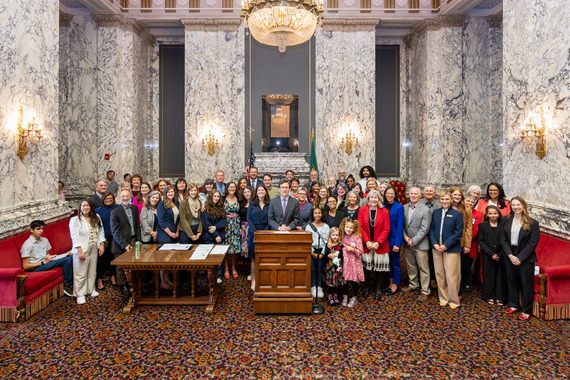
With the passage of the Engrossed Second Substitute Senate Bill (E2SSB) 5284, the Recycling Reform Act, on May 17, Washington becomes the seventh state to enact packaging EPR legislation, following Maine, Oregon, California, Colorado, Minnesota, and Maryland. Spearheaded by Representative Liz Berry and Senator Liz Lovelett, the Recycling Reform Act establishes an EPR system for most paper and packaging products in Washington. The Recycling Reform Act builds upon more than five years of efforts including the 2023 WRAP Act and the 2024 ReWRAP Act.
Dept. of Ecology will start rulemaking in January 2026. An Advisory Council will be established, statewide lists of accepted recyclables will be developed, and needs assessments will be conducted. Service providers including waste management companies and local governments will need to register with Ecology to receive reimbursement. A producer responsibility organization (PRO) must register with Ecology by March 2026. The PRO must develop and submit a program plan to the Advisory Council and Ecology, which is expected to be approved by July 2029. The PRO is only expected to implement the program in 2030. See an overview of the Recycling Reform Act here.
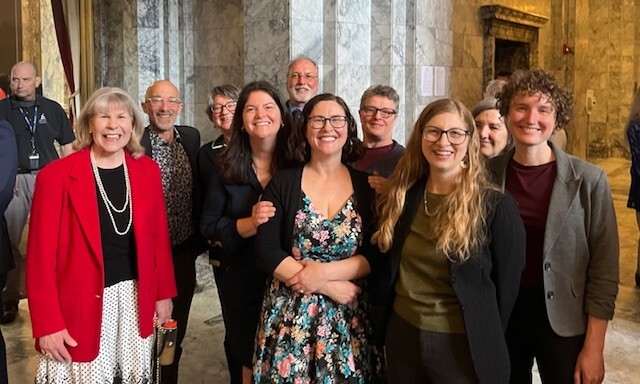 Some of the NWPSC members and other folks that have been key in the passage of the Recycling Reform Act - from left to right: Susan Fife-Ferris in the red jacket (Seattle Public Utilities), David Stitzhal (Full Circle Environmental), Heather Trim (Zero Waste Washington), Rep. Liz Berry, Sego Jackson (formerly with Seattle Public Utilities and one of the founding members of the NWPSC); Sen. Liz Lovelett; Kara Steward (Dept. of Ecology); McKenna Morrigan (Seattle Public Utilities); Janine Bogar (Dept. of Ecology); Hannah Scholes (King County Solid Waste Division).
Fixing Washington’s Solar Panel Stewardship Program
On April 22, 2025, Governor Ferguson signed the Engrossed Second Substitute Senate Bill (E2SSB) 5175, Concerning the photovoltaic module stewardship and takeback program. Washington’s solar panel stewardship law, which passed in 2017, requires Washington’s solar panel industry to share the responsibility of managing what remains of solar panels at their end-of-life. E2SSB 5175 amends the 2017 law to delay the date by which solar panel manufacturers must have an Ecology-approved stewardship plan to sell their solar panels in or into Washington, from July 1, 2025, to January 31, 2031. E2SSB 5175 also establishes an advisory committee to engage stakeholders and develop recommendations to resolve issues with the law. The advisory committee’s work culminates with Ecology submitting a report to the legislature by December 1, 2028, with recommended changes to the law. would2025
Improvements to Washington’s Safe Medication Return Program
Also, passed as law, HB 1422 improves the state’s drug take-back program, Safe Medication Return, by increasing the annual operating fee for program operators, modifying the annual reporting requirements, enforcement regulations, and conducting a review of the Department of Health’s fee-setting authority. Unfortunately, the initial bill was stripped of many other elements that would have improved the program further.
Washington Passes Right to Repair Laws for Digital Electronic Products and Wheelchairs
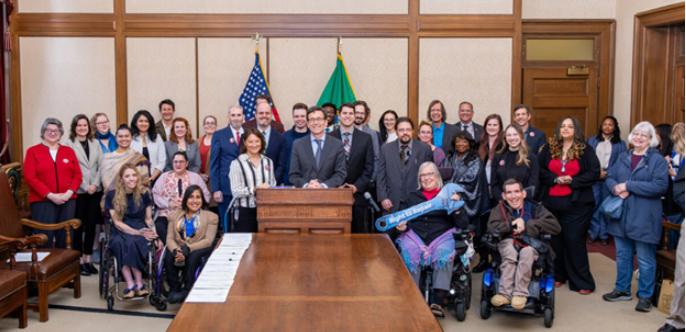
On May 21, 2025, Governor Ferguson signed two Right-to-Repair laws: HB 1483 for digital electronic products (includes most consumer electronics and household appliances) and SB 5680 for mobility devices such as wheelchairs and mobility scooters. With the passage of HB 1483, Washington becomes the sixth state to pass a right-to-repair law for consumer electronics. The laws require manufacturers to provide access to parts, tools, and instructions/information to independent repair providers and owners on how to fix their products. Rep. Gregerson has championed Right-to-Repair for many years. After many meetings and consultations, Microsoft, Google, and Apple all chose to support the final iteration of HB 1483. Only two other states, California and Colorado, have passed right-to-repair legislation for wheelchairs and other mobility devices, similar to SB 5680.
PaintCare Publishes 2024 Annual Reports in Oregon and Washington
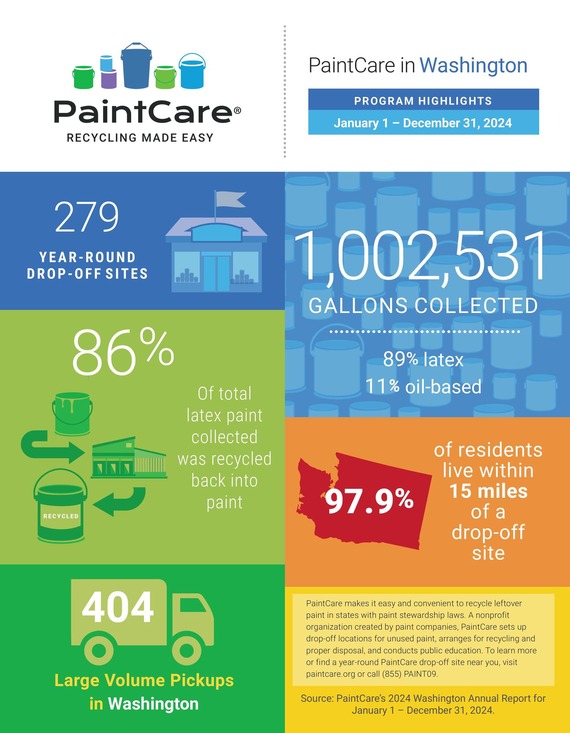
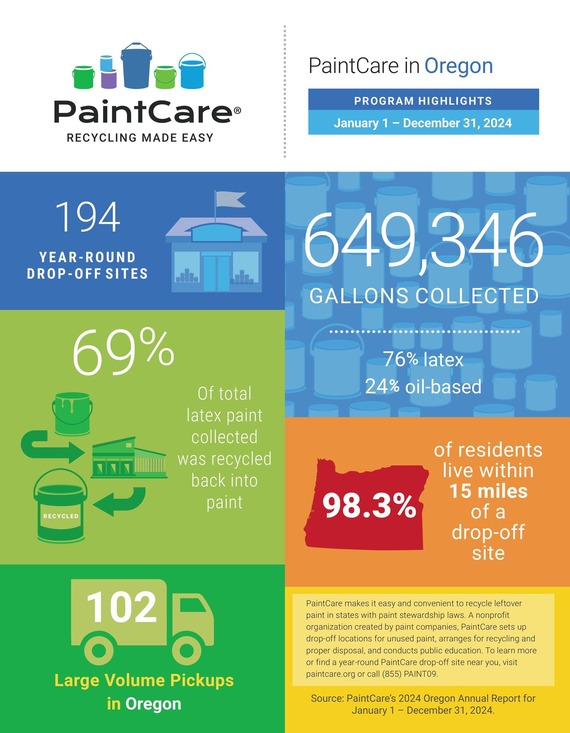
PaintCare just published the 2024 annual reports for their programs in Washington and Oregon, highlighting the programs’ successes in 2024. In 2024, Washington’s program collected 1,002,531 gallons of latex and oil-based paint, and Oregon’s program collected 649,346 gallons, both of which were above their 2023 collection quantities. The reports also highlighted the programs’ collection convenience. In Washington, there were 279 active year-round drop-off sites, with 97.9% of Washington residents living within 15 miles of one of these drop-off sites. In Oregon, there were 194 active year-round drop-off sites, with 98.3% of Oregon residents living within 15 miles of a drop-off site. Along with PaintCare’s annual reports, PaintCare also published one page infographics regarding 2024 program highlights in both Washington and Oregon.
Programs & News – Other States
Packaging Groups Support Combo EPR, Bottle Bill Legislation in Rhode Island
Colorado and Nebraska Passed Battery EPR
The battery EPR movement has gained significant traction in recent years, continuing into 2025 with Nebraska Governor Jim Pillen signing LB 36, the Safe Battery Collection and Recycling Act, into law on May 20th. This is Nebraska’s first EPR law and reflects years of policy development, and incorporates best practices from states like Washington, which passed its battery EPR law in 2023. As well, the Colorado legislature has passed SB25-163, the Battery Stewardship Act, which, if signed by the Governor, will establish another battery EPR program in the U.S. Over a dozen other states have introduced battery EPR bills in 2025, including Oregon, and the legislative movement shows no signs of stopping.
Maryland becomes Sixth State to Pass Packaging EPR
Just a few days before Washington passed their packaging EPR law, Maryland Governor Wes Moore signed SB 901 into law, becoming the sixth state in the U.S. to enact packaging EPR legislation. The law requires packaging producers to fund and manage the recycling system, marking a major milestone in the state’s effort to reduce waste, boost packaging reuse, recycling, and composting, and build a more circular economy. Kelly Doordan, Executive Director of Trash Free Maryland, who was instrumental in the passage of this law, stated, “Packaging is a significant contributor to Maryland’s trash and litter, and this new law represents a landmark opportunity to reduce waste and improve packaging recycling and environmental impacts.
California Unveils New SB 54 Text
Following California Governor Gavin Newsom’s order in March to restart the regulations process for SB 54, California’s packaging EPR law, CalRecycle released revised draft regulations on May 16 and is accepting public feedback on proposed changes through June 3. Industry stakeholders have viewed the new regulations as improvements, with Larine Urbina, Senior Vice President of Communications at CAA, stating that “CalRecycle’s revised draft regulations for SB 54 provide clarity on several key areas, including producer obligations, reporting timelines and the requirement for producers to join Circular Action Alliance.” Circular Action Alliance (CAA), the PRO selected by CalRecycle to implement SB 54, published a producer data reporting timeline for California, which requires producers to submit their supply data by November 15, 2025.
Legislation
Oregon
-
Battery EPR HB 2062, would require producers of covered batteries or battery-containing products to implement a battery producer responsibility program to fund and manage the collection and processing of batteries and battery-containing products at their end-of-life.
- HB 2062 had a work session in the House Committee on Climate, Energy, and the Environment on April 8th. The bill was amended and referred to the House Committee on Ways and Means.
-
Amendments to Oregon’s Deposit Return System for Beverage Containers:
-
HB 3940-A would place a surcharge on the sales of beverage containers for purposes of wildfire prevention and response. Beverage container surcharge has been removed and alternate funding options including the use of unredeemed deposits are being explored.
-
SB 992 would authorize the Oregon Liquor and Cannabis Commission to approve one or more alternative access redemption centers has moved to its second chamber.
- SB 992 has passed the legislature and is now awaiting the Governor’s signature.
Events & Webinars
Harnessing Data to Demonstrate the Social Return on Investment
Product Stewardship Institute (PSI) – 2025 U.S. Product Stewardship Forum
Association of Oregon Recyclers (AOR) - 2025 Annual Conference
Jobs & Opportunities
Oregon Department of Environmental Quality is looking for a Materials Management Grant Coordinator
-
Position Type: Full time, hybrid optional
-
Salary: $5,838 - $8,966 monthly
Seattle Public Utilities is looking for a Large Waste Generator Specialist
-
Deadline: 6/3/2025 4:00 PM Pacific
City of Redmond is looking for a Solid Waste and Recycling Program Administrator
- Salary: $95,892.00 - $129,468.00 Annually
- Job Type: Regular, Full-time
- Deadline: 6/8/2025 11:59 PM Pacific
The Product Stewardship Institute (PSI) is looking for a Senior Associate for Policy and Programs
-
Location: Remove/Hybrid; Boston, Mass. base preferred.
-
Compensation: $75K - $80K plus generous benefits package
The National Stewardship Action Council (NSAC) is looking for a Deputy Director
-
Location: Remote Anywhere in the United States
-
Compensation: $130K negotiable based on experience.
Engage with the Northwest Product Stewardship Council. Add your voice and join the Northwest Product Stewardship Council (NWPSC) as an Associate, Steering or Community member. Follow the NWPSC on Twitter (@StewardshipNW) for product stewardship information from Washington, Oregon and elsewhere.
|