February 2025
Programs & News – Oregon & Washington
What is the Recycling Rate in Washington State?
At public hearings in the state legislature on HB 1150 (the Recycling Reform Act) there seems to be confusion about what the recycling rate in Washington state actually is. It is understandable why there is confusion as it depends on how and what you measure, but also because the recycling industry is not transparent and does not report on how much actually gets recycled (something that EPR would do). Here’s a breakdown of the various recycling rates in Washington:
-
The best available estimate of the recycling rate of consumer packaging and paper products (which are the focus of the Recycling Reform Act) is 40% (for the year 2021).
- Often confused with the recycling rate, is the recovery rate at 49% (for the year 2021) covers much more that consumer packaging and paper products.
- The recovery rate calculation includes materials collected for recycling and other forms of recovery such as composting and incineration in the nominator, and the recoverable portion of solid wastes generated, including municipal solid waste and other waste types disposed in the denominator. This includes much more than consumer packaging and paper products such as construction & demolition waste and organic waste.
- [Waste generation and recovery data (2021) from Dept. of Ecology (version 5/22/2023)]
- The Recycling Partnership estimates a residential recycling rate in Washington of only 23%, but is calculated on national data using assumptions for various factors.
Respond to the E-Cycle Washington Local Government/Community Satisfaction Survey by March 1
E-Cycle Washington is one of the country’s longest running producer-funded electronics recycling program – it just completed its sixteenth year of operations. Ecology and the Washington Materials Management & Financing Authority (WMMFA) want your feedback on how the program is working in your county or city. Please take a few minutes to fill out the Local Government/Community Satisfaction Survey to provide your thoughts on the E-Cycle Washington program and how the program can improve. Comments must be submitted by March 1, 2025.
Battery Stewardship Rulemaking in Washington - the next Advisory Committee meeting on March 6
Ecology is holding the next Battery Stewardship Rulemaking Advisory Committee meeting on March 6, 2025 10:00 AM Pacific Time. Staff will revisit rule key concepts from previous meetings and will present on what to expect next in the rulemaking process. Staff will also ask for feedback on the draft rule language document from all participants during the meeting. Advisory committee meetings are open to the public to attend. Register here or see the Ecology rulemaking website for more information.
Ecology is soliciting comments on draft rule language during an informal comment period. You can comment on the draft rule language document. The comment period will be open February 25, 2025 at 12:00 AM – March 30, 2025 at 11:59 PM.
 Daniel Campbell / Unsplash
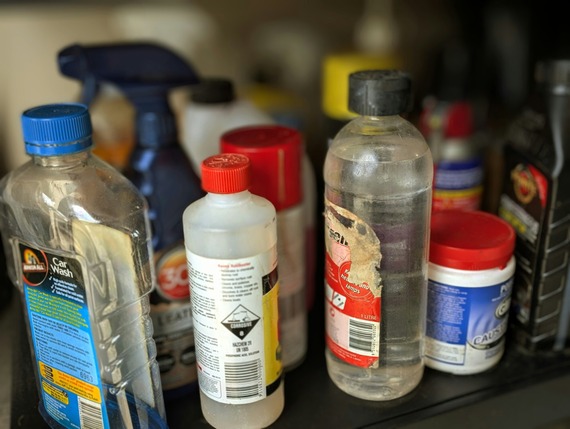
The Chelan County Moderate Risk Waste Facility in WA Collected of 76.4 Tons of Household Hazardous Waste in 2024 more than 40% of the Waste is managed through PaintCare
The Chelan County Moderate Risk Waste Facility continues to see growth in the amount of household hazardous waste (HHW) it is safely disposing of for recycling, with the facility recycling 76.4 tons of HHW in 2024. The facility opened in December 2019 and accepts a wide range of HHW products from residents, including antifreeze, pesticides, motor oil, gas, and latex and oil-based paint, which the facility collects through PaintCare, Washington’s paint stewardship program. The majority of the HHW collected is recycled, as opposed to being used as an energy resource or incinerated, with 69% of the materials received in 2024 being recycled.
Packaging Producers Dodging Oregon EPR Program Face Penalties and Shaming
With 2025 deadline approaching fast for Oregon’s packaging EPR program, obligated packaging producers who have yet to register with Circular Action Alliance (CAA) are expected to struggle to meet these deadlines and comply with the legislation. EPR Consultant Michael Washburn stated in a recent January interview that he believes many of the unregistered producers in Oregon are still unaware of the law while others are knowingly dodging it. Recently, CAA published a multitude of registration and reporting resources on its website to aid producers in meeting the upcoming deadlines for Oregon’s law.
PaintCare Submits Proposal to Amend Stewardship Plan in Washington
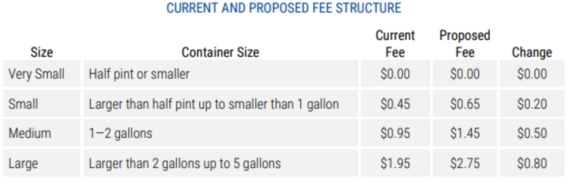
In late December 2024, PaintCare sent the Washington Department of Ecology a proposal to amend its program plan for Washington’s Architectural Paint Stewardship Program. The proposed plan amendment establishes a new fee structure, which PaintCare argues is essential for the program’s sustainability. PaintCare highlights the change is necessary as paint sales in Washington have been much lower than expected, resulting in a significant shortfall in program revenue. Therefore, PaintCare argues that the eco-fee consumers pay at the point of sale must be increased to cover the program’s expenses.
Programs & News – Other States
Circular Action Alliance Submits Draft Program Plan in Colorado
On February 1st, Circular Action Alliance (CAA) submitted its initial packaging EPR program plan in Colorado to the Producer Responsibility Advisory Board. The Advisory Board will review CAA’s draft program plan and send their recommendations to the Colorado Department of Public Health & Environment (CDPHE), at which time public comment will open on the draft plan. CAA has already been approved to serve as the Producer Responsibility Organization (PRO) for Oregon and California’s packaging EPR program, and OR DEQ is currently reviewing CAA’s final program plan, submitted in late 2024.
EPR and Bottle Bills Enter a Crowded Legislative Agenda in 2025
State EPR legislation has become commonplace in recent years, and experts don’t expect 2025 to be any different, with over 50 unique EPR bills already being introduced in the 2025 legislative session. With the flurry of growth in EPR in recent years, lawmakers are becoming more familiar with the complexities of passing and implementing effective EPR laws, especially for packaging, thanks in part to insights from the five states going through the implementation process for their packaging EPR laws. Battery EPR bills, which enjoyed some success last year with Illinois passing their battery EPR program, have also gained significant momentum in 2025, as the threat of fires from lithium-ion batteries at waste and recycling facilities has prompted the industry to rally around EPR for these materials.
Right-to-Repair Movement Continues to Grow
Electronics right-to-repair has gained significant traction in recent years, with California, Colorado, Minnesota, New York, and Oregon all enacting legislation, and 10 bills have already been introduced in the 2025 legislative session, and supporters anticipate far more to come. 49 of the 50 states have filed some kind of right-to-repair bills over the past several years, and large industry players have indicated their support, including Google and the Consumer Technology Association (CTA). With right-to-repair legislation coming into effect in July 2024, based on New York’s law, U.S. PIRG published a report card scoring 21 products on the availability of repair materials, and in response to a low score, Sony has released 200 repair manuals.
Legislation
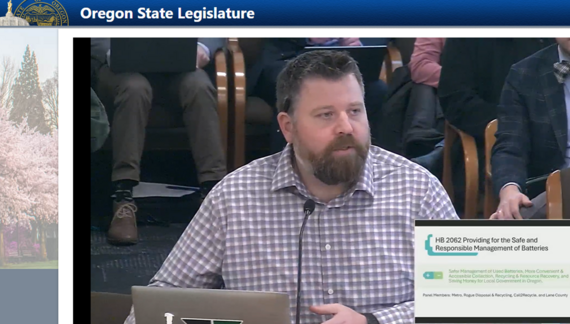 (House Commitee on Climate, Energy, and Environment, 2/18/25)
Oregon
-
Battery EPR HB 2062, would require producers of covered batteries or battery-containing products to implement a battery producer responsibility program to fund and manage the collection and processing of batteries and battery-containing products at their end-of-life.
-
E-Cigarettes EPR SB 1020, would require producers of inhalant delivery systems, e-cigarettes, to join an inhalant delivery system producer responsibility organization and implement a program for the collection and proper disposal of these devices.
- SB 1020 was introduced in early February and referred to the Senate Committee on Labor and Business.
-
Amendments to Oregon’s Deposit Return System for Beverage Containers:
-
HB 2068, would expand convenient access to redemption centers for Oregon residents to redeem empty beverage containers. The legislation would allow for the establishment of alternative redemption centers and producer responsibility organization depot redemption centers to improve convenient access for Oregon residents. HB 2068 was introduced in early January and referred to the House Committee on Climate, Energy, and Environment.
-
HB 2921 would modify provisions related to the siting and approval of full-service redemption centers for empty beverage containers. HB 2921 was introduced in early January and referred to the House Committee on Climate, Energy, and Environment.
-
SB 329 would direct cooperatives and retail stores to expand the use of reusable cans or bottles. SB 329 was introduced in early January and referred to the Senate Committee on Energy and Environment.
-
SB 869 specifies hours during which dealers must accept returns of beverage containers.SB 869 was introduced in early January and referred to the Senate Committee on Energy and Environment.
Washington
-
Recycling Reform Act – EPR for Packaging and Paper Products HB 1150 / SB 5284 would create an EPR program for consumer packaging and paper products in Washington. This bill builds upon the 2023 WRAP Act and 2024 ReWRAP Act, but aligns with the model policy passed in Minnesota last year. One key difference is that local governments and other service providers that want to be part of the program and receive reimbursement would be required to register as a service provider. The bill requires performance targets to be established that will reduce plastic packaging and increase reuse, return, recycling and composting rates. It also requires producers to fund a Reuse Financial Assistance Program to support the development of reuse systems.
-
Recycling Refund Act – Deposit-Return System for Beverage Containers (aka Bottle Bill) HB 1607 / SB 5502 would require beverage producers to develop and implement a statewide deposit-return (recycling refund) program for beverage containers that increases recycling, refill and reuse rates through a Recycling Refund Producer Responsibility Organization (RRPRO). Consumers would be charged a refund value (deposit) of 10 cents on every covered beverage container. When the covered beverage containers are returned to collection (redemption) sites, consumers are then redeemed the refund value. Covered beverage containers include beverages in glass, metal, or plastic bottles or cans with a capacity of one gallon or less, except drugs, infant formula, milk, and meal replacement liquids. Other beverage containers could also be covered, if proposed by the RRPRO and approved by Ecology.
-
Electric Vehicle Battery EPR HB 1550 / SB 5586 (sponsored by Rep. Street and Sen. Stanford) would require battery providers be responsible for the end-of-life management of spent electric vehicle (EV) batteries separately from the batteries in the Battery Stewardship Law. There is an alternative bill sponsored by Sen. Wilson (SB 5045) that would expand the current Battery Stewardship Law to include EV Batteries.
- A striker SHB 1550 passed out of the House Committee on Environment & Energy on February 20th. It is scheduled for a Public Hearing in the House Committee on Appropriations on February 25th.
-
The striker establishes who is responsible for the reuse, repurposing, remanufacturing, or recycling of the battery. It defines roles for battery providers, secondary handlers and users, battery recyclers, persons seeking to discard an EV battery, and Ecology.
-
Textiles EPR HB 1420 would require apparel and textiles producers to finance and coordinate the collection, transportation, sorting, repair, recycling and responsible management of used apparel and textiles through extended producer responsibility (EPR). It builds on the Responsible Textile Recovery Act (SB 707) that passed in California last year.
-
Mattress EPR HB 1901 would require manufacturers to be responsible for the proper end-of-life management of their mattresses, boosting the recycling and reuse of these products in Washington. This bill builds upon the success of Oregon’s mattress stewardship program, which began operating this year.
-
Solar Panel Stewardship Amendment HB 1789 / SB 5175 would delay Washington’s Solar Panel/Photovoltaic Module Stewardship Takeback Program, extending the implementation timeline to ensure a successful program rollout. It also establishes an Advisory Committee to develop recommendations for the program implementation.
-
Amending Safe Medication Return HB 1422 would ensure that drug manufacturers, through their program operators, pay all department costs related to Safe Medication Return and encourages performance parity between program operators.
Events & Webinars
Washington Climate Partnership – Comprehensive Climate Action Plan: Waste and Materials Virtual Roadshow
SWANA, NAHMMA & NSAC on EPR & Hazardous Waste: a three-part webinar series focused on EPR and policy solutions for hazardous and hard-to-manage products.
-
The Solid Waste Association of North America (SWANA), the North American Hazardous Materials Management Association (NAHMMA), and the National Stewardship Action Council (NSAC) will host three webinars:
-
Wednesday, March 12, 2025: Extended Producer Responsibility (EPR) 101 for HHW: What’s Worked & What’s Coming
-
Wednesday, April 16, 2025: Extended Producer Responsibility (EPR) for Products that Cause Fires: Batteries, Compressed Gas Tanks, MarineFlares & More
-
Thursday, May 29, 2025 : How Do We Turn Off the Tap: Ending the Sale of Hazardous Products with No End-of-Life Plan
-
This series is free for SWANA, NSAC, and NAHMMA members. Register for individual webinars at $75 each or get full access to all three webinars for $200.
-
Learn more and register here: https://swana.swoogo.com/webseries/7807625
North American Hazardous Materials Management Association (NAHMMA) – 2025 Northwest Chapter Conference
Washington State Recycling Association (WSRA) – 2025 Annual Conference
Product Stewardship Institute (PSI) – 2025 U.S. Product Stewardship Forum
Association of Oregon Recyclers (AOR) - 2025 Annual Conference
Jobs & Opportunities
The National Stewardship Action Council (NSAC) is looking for a Deputy Director
King County Solid Waste Division: Strategy Analyst (Project Program Manager II)
King County Solid Waste Division: Equity, Racial, and Social Justice Manager
King County Solid Waste Division: Communications Supervisor
Engage with the Northwest Product Stewardship Council. Add your voice and join the Northwest Product Stewardship Council (NWPSC) as an Associate, Steering or Community member. Follow the NWPSC on Twitter (@StewardshipNW) for product stewardship information from Washington, Oregon and elsewhere.
|