January 2025
Programs & News – Oregon & Washington
 Ryan Caron King, WNPR
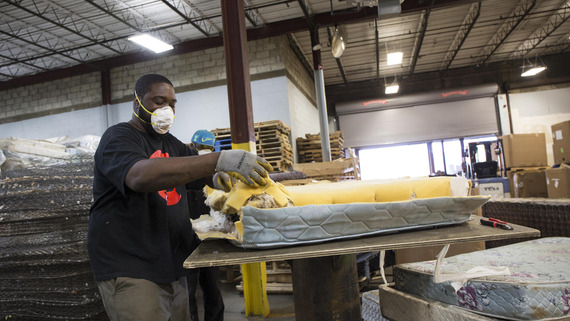
Oregon Kicks Off Mattress Stewardship Program
Get your comments in for Battery Stewardship Rulemaking in Washington - Comment Period Ends January 31
Ecology is accepting informal comments to the Battery Stewardship Law rulemaking concepts until January 31, 2025. Comments can still be submitted on any of the previous rule concepts, which can be found on the Ecology rulemaking website. Also found on the website are comments submitted so far, upcoming meetings and more information about the battery stewardship rulemaking process.
E-Cycle Washington Local Government/Community Satisfaction Survey
E-Cycle Washington is one of the country’s longest running producer-funded electronics recycling program – it just completed its sixteenth year of operations. Ecology and the Washington Materials Management & Financing Authority (WMMFA) want your feedback on how the program is working in your county or city. Please take a few minutes to fill out the Local Government/Community Satisfaction Survey to provide your thoughts on the E-Cycle Washington program and how the program can improve. Comments must be submitted by March 1, 2025.
Six EPR-Related Bills in WA and Counting…
The 69th legislative session in Washington started January 13, 2025. Product stewardship and EPR are no longer novel or niche policies as we have noted six EPR-related bills introduced:
1. EPR for Packaging and Paper Products known as the Recycling Reform Act (HB 1150 / SB 5284) builds upon previous years’ efforts to create a coordinated, transparent statewide system for residential recycling that will increase both reuse and recycling significantly.
2. EPR for Textiles (HB 1420), based on the Responsible Textile Recovery Act (SB 707) that passed in California last year, would establish a producer responsibility program for apparel and textiles in Washington.
3. EPR for Electric Vehicle Batteries: HB 1550 (sponsored by Rep. Street) would create a separate program to collect and manage used EV Batteries There is an alternative bill sponsored by Sen. Wilson (SB 5045) that would expand the current Battery Stewardship Law to include EV Batteries.
4. HB 1422 would amend the producer-funded and operated Safe Medication Return program to ensure that all of the Department of Health’s costs are covered and encourage parity between operators.
5. To address the lack of participation by manufacturers, SB 5175 would delay the implementation of the Solar Panel Stewardship Law to 2029 and improve the law by establishing an Advisory Committee.
The legislative session this year runs until April 27, 2025. There might also be an EPR bill for Mattresses. See more about the bills introduced below.
Life Cycle Assessments Loom Large for the Outcome of EPR Programs
Of the five states implementing packaging EPR programs, Oregon remains the only state utilizing life cycle assessments (LCAs) as the primary means to identify and establish producer fees to encourage producers to use packaging with a relatively lower environmental impact. In the Oregon program, the top 25 producers in the state are required to develop LCAs every two years for 1% of their products sold or distributed for sale in Oregon, while smaller producers are allowed to voluntarily submit LCAs if they want to earn a reduction on their fees. Although LCAs have sparked debate over whether they take into account all necessary factors to determine a packaging’s environmental impact, Oregon remains steadfast that LCAs are the most comprehensive and effective means to assess a packaging’s environmental repercussions from cradle to grave.
New Legislation Looks to Overhaul, Modernize Recycling Systems in Washington State
For the third consecutive legislative session, Washington has introduced EPR for packaging and paper product legislation (HB 1150 / SB 5284), aimed at overhauling, modernizing, and approving the state’s recycling system by requiring producers of packaging and paper products to manage and fund the collection, transportation, and processing of these products. Currently, only 58% of Washington jurisdictions offer curbside recycling services, and over half of all paper and packaging in the state is sent to landfills. Washington’s legislation aims to improve the stagnated recycling rates for paper and packaging in the state and ensure that all Washington residents have convenient access to collection opportunities.
Programs & News – Other States
 Nadja Bertoldt Jensen / Unsplash
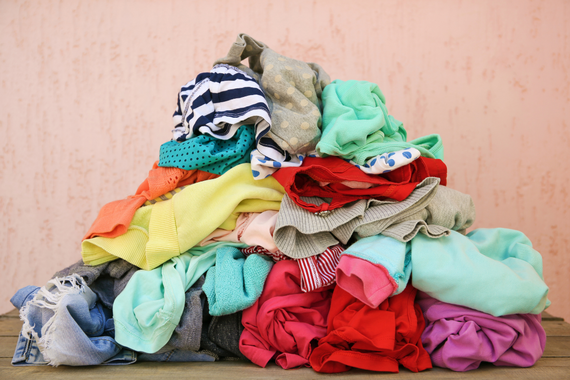
California Becomes First State to Impose Extended Producer Responsibility on Textiles
In 2024, California became the first state to pass an EPR for textiles law, the Responsible Textile Recovery Act of 2024 (RTRA), with specific requirements to be imposed starting in 2026. Producers of covered apparel and textile articles must form and join a PRO by January 2026, which must be approved by CalRecycle, the entity designated to oversee the program, by March 1, 2026. With California’s program inching closer to implementation, other states have begun to consider their own textiles EPR program, including Washington, which introduced a textiles EPR bill (HB 1420) earlier this month.
Policy Roundup: Batteries, Right to Repair are Hot Topics
As the 2025 legislative session starts up, two main topics related to electronic waste have risen to the forefront: EPR for batteries and Right to Repair for consumer electronics. So far in the 2025 legislative session, four states have introduced bills relating to Right to Repair for consumer electronics: Connecticut, Illinois, Virginia, Washington, and Missouri. EPR for batteries has also picked up steam in 2025, with both Hawaii and Washington looking to expand the types of batteries covered und have all introduced bills to establish battery EPR programs in their state.
Legislation
 John Cameron/Unsplash
Oregon
-
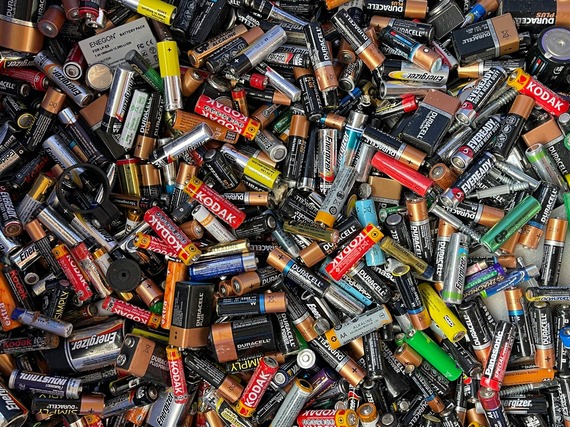
Battery EPR HB 2062, would require producers of covered batteries or battery-containing products to implement a battery producer responsibility program to fund and manage the collection and processing of batteries and battery-containing products at their end-of-life. HB 2062 was introduced in early January and referred to the House Committee on Climate, Energy, and Environment.
- Amendments to Oregon’s Deposit Return System for Beverage Containers:
- HB 2068, would expand convenient access to redemption centers for Oregon residents to redeem empty beverage containers. The legislation would allow for the establishment of alternative redemption centers and producer responsibility organization depot redemption centers to improve convenient access for Oregon residents. HB 2068 was introduced in early January and referred to the House Committee on Climate, Energy, and Environment.
- HB 2921 would modify provisions related to the siting and approval of full-service redemption centers for empty beverage containers. HB 2921 was introduced in early January and referred to the House Committee on Climate, Energy, and Environment.
- SB 329 would direct cooperatives and retail stores to expand the use of reusable cans or bottles. SB 329 was introduced in early January and referred to the Senate Committee on Energy and Environment.
- SB 869 specifies hours during which dealers must accept returns of beverage containers.SB 869 was introduced in early January and referred to the Senate Committee on Energy and Environment.
Washington
-
Recycling Reform Act – EPR for Packaging and Paper Products HB 1150 / SB 5284 would create an EPR program for consumer packaging and paper products in Washington. This bill builds upon the 2023 WRAP Act and 2024 ReWRAP Act, but aligns with the model policy passed in Minnesota last year. One key difference is that local governments and other service providers that want to be part of the program and receive reimbursement would be required to register as a service provider. The bill requires performance targets to be established that will reduce plastic packaging and increase reuse, return, recycling and composting rates. It also requires producers to fund a financial assistance program to support the development of reuse systems.
-
Recycling Refund Act – Deposit-Return System for Beverage Containers (aka Bottle Bill) HB 1607 / SB 5502 would require beverage producers to develop and implement a statewide deposit-return (recycling refund) program for beverage containers that increases recycling, refill and reuse rates through a Recycling Refund Producer Responsibility Organization (RRPRO). Consumers would be charged a refund value (deposit) of 10 cents on every covered beverage container. When the covered beverage containers are returned to collection (redemption) sites, consumers are then redeemed the refund value. Covered beverage containers include beverages in glass, metal, or plastic bottles or cans with a capacity of one gallon or less, except drugs, infant formula, milk, and meal replacement liquids. Other beverage containers could also be covered, if proposed by the RRPRO and approved by Ecology.
- SB 5502 had a public hearing in the Senate Committee on Environment, Energy & Technology on January 29th.
-
Electric Vehicle Battery EPR HB 1550 (sponsored by Rep. Street) would require producers to be responsible for the end-of-life management of electric vehicle (EV) batteries. Producers must create their own program to collect and manage used EV batteries. HB 1150 has a Stakeholder Meeting on February 5, 2025. There is an alternative bill sponsored by Sen. Wilson (SB 5045) that would expand the current Battery Stewardship Law to include EV Batteries. SB 5045 had a public hearing in the Senate Committee on Environment, Energy & Technology.
-
Textiles EPR HB 1420 would require apparel and textiles producers to finance and coordinate the collection, transportation, sorting, repair, recycling and responsible management of used apparel and textiles through extended producer responsibility (EPR). It builds on the Responsible Textile Recovery Act (SB 707) that passed in California last year.
-
Solar Panel Stewardship Amendment SB 5175 would delay Washington’s solar panel/photovoltaic module stewardship takeback program, extending the implementation timeline to ensure a successful program rollout. It also establishes an Advisory Committee to develop recommendations for the program implementation.
- SB 5175 was heard in the Senate Committee on Environment, Energy & Technology on January 17th.
- It is scheduled for executive session in the Senate Committee on Environment, Energy & Technology on February 7th.
-
Amending Safe Medication Return HB 1422 would ensure that drug manufacturers, through their program operators, pay all department costs related to Safe Medication Return and encourages performance parity between program operators.
Events & Webinars
 Chris Montgomery/Unsplash
Coast Waste Management Association (CWMA) Showcase Presentations of Funding & Resource Opportunities for our Industry
-
January 31, 10:00 – 11:30 am PT
Product Stewardship Institute and Oregon DEQ – Understanding the Covered Exemption under ORS 459.A869(13) in Oregon’s Packaging EPR Law
-
February 4, 9:00 – 10:30 am PT
Mattress Recycling Council (MRC) – State Program Review
-
February 19, 2025, 12 – 12:45 pm PT
Washington State Recycling Association (WSRA) – 2025 Annual Conference
-
May 19 – 21, 2025 in Spokane, Washington
Product Stewardship Institute (PSI) – 2025 U.S. Product Stewardship Forum
-
June 3 – 5, 2025 in Chicago, Illinois
Association of Oregon Recyclers (AOR) - 2025 Annual Conference
-
June 23-25 in Bend, Oregon
Engage with the Northwest Product Stewardship Council. Add your voice and join the Northwest Product Stewardship Council (NWPSC) as an Associate, Steering or Community member. Follow the NWPSC on Twitter (@StewardshipNW) for product stewardship information from Washington, Oregon and elsewhere.
|