December 2024
Programs & News – Oregon & Washington
 Oregon on Track to Implement EPR for Packaging and Paper Products Next Year
Oregon’s Environmental Quality Commission passed the for , addressing key topics like fees and ancillary areas like product design. , paid by the PRO, will be up to $15 million or 10% of the three-year average of PRO expenditures annually. The rules also introduced producer pre-registration, requiring products to submit 2024 supply data to CAA by March 31, 2025.
On December 6, Circular Action Alliance (CAA) submitted its to the Oregon Department of Environmental Quality (OR DEQ) for . Public comment on the plan is open until January 17, 2025, and can be submitted to RethinkRecycling@deq.oregon.gov
Recycling Reform Act is on the Governor’s Budget in Washington
Gov. Inslee's proposed 2025-27 budgets includes the Recycling Reform Act (EPR for Packaging & Paper Products) as well as amendments to the Solar Panel Stewardship Law. The Recycling Reform Act builds on the ReWRAP Act from the last legislative session, but it is expected to be more similar to the EPR bill that passed in Minnesota earlier this year.
Comment Period Ends January 31 for Battery Stewardship Program Rulemaking
Washington Department of Ecology held a Battery Stewardship Rulemaking meeting on December 16, where they presented four rule key concepts detailed in the read-along document: Education and Outreach, Role of Retailers, Disposal and Collection Requirements, and Demonstrable Costs to Local Governments. Ecology is accepting informal comments to these rulemaking concepts until January 31, 2025.
Comments can still be submitted on any of the previous rule concepts, which can be found on the Ecology rulemaking website. Also found on the website are comments submitted so far, upcoming meetings and more information about the battery stewardship rulemaking process.
Seattle Times Op-Ed: Don’t Count Out the Effectiveness of Commingled Recycling
In response to a Seattle Times Opinion Column, “How commingled recycling fails us,” Susan Fife-Ferris, Seattle Public Utilities (SPU) Solid Waste Manager and NWPSC member, shares Seattle’s success with their commingled recycling system. Seattle’s commingled recycling system has one of the highest recycling rates in the U.S., recycling nearly three-quarters of all recyclable materials discarded by residents and sending fewer materials to the landfills today than 24 years ago, even with a 35% population increase.
Programs & News – Other States
 Nadja Bertoldt Jensen / Unsplash
Maine Adopts Final Rules for EPR for Packaging Law
On December 5th, the Maine Board of Environmental Protection (BEP) finalized the rules for their packaging EPR program after over a year of deliberations and soliciting hundreds of comments from various stakeholders. Members of Maine’s business community, including the Maine Chamber of Commerce and Ameripen, called for a pause in the rulemaking process, worried Maine’s proposed packaging EPR structure diverged too much from the other five state’s models; however, BEP moved ahead regardless with finalizing their rules.
EPA Calls for National EPR Framework and More Effective Composting
The U.S. Environmental Protection Agency (EPA) released the “National Strategy to Prevent Plastic Pollution” in late November, outlining actions to protect communities from the impacts of plastic production and discussing how government agencies, businesses, non-profits, and communities can take action to prevent plastic pollution. One of the recommendations highlighted in the report was a call for developing a national EPR framework. The report also called for a more robust composting system for certified compostable products to be developed and implemented here in the U.S.
Talks on Creating a “Paris Treaty for Plastics” Just Stalled – Here’s Why, and What Happens Next
The Intergovernmental Negotiating Committee on Plastic Pollution just concluded the fifth and final meeting (INC-5) in a series of negotiations to develop an international, legally binding agreement on plastic pollution. Ultimately, the negotiations stalled, with no agreement on the scope of the vital treaty to curb ocean pollution and other plastic pollution-related issues. The World Economic Forum (WEF) hosted a podcast with Clemence Schmid, Director of the Global Plastics Action Partnership at WEF, where she shared what she had learned from the INC-5, discussing why negotiations stalled and what might happen now.
Events & Webinars
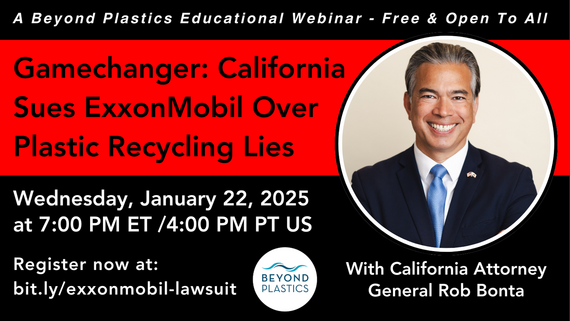 Beyond Plastics – Webinar with California Attorney General Rob Bonta about the lawsuit against ExxonMobil, the largest producer of single-use plastic polymers, for its role in deceiving the public about plastic recycling and chemical recycling.
January 22, 2025 at 4pm PT
Learn more and register here.
Washington State Recycling Association (WSRA) – 2025 Annual Conference
May 19 – 21, 2025 in Spokane, Washington
Learn more and submit a presentation proposal here.
Product Stewardship Institute (PSI) – 2025 U.S. Product Stewardship Forum
June 3 – 5, 2025 Wheeling, Illinois (Chicago)
Learn more and register here.
Association of Oregon Recyclers (AOR) - 2025 Annual Conference
June 23-25 in Bend, Oregon
Learn more and submit a proposal here.
Jobs & Opportunities

City of Portland: Waste Policy and Program Coordinator
The Portland Bureau of Planning and Sustainability is hiring a Waste Policy and Program Coordinator (Coordinator II – CPPW) to be based in Portland, Oregon. The Portland Bureau of Planning and Sustainability (BPS) is a leader in land use planning, climate action, environmental stewardship, and urban design. In this role, the Waste Policy and Program Coordinator will develop policies and programs to promote the environmental, economic, and social sustainability of Portland’s waste collection systems. For more information on the role and how to apply, visit https://www.governmentjobs.com/careers/portlandor/jobs/4737168/waste-policy-and-program-coordinator-coordinator-ii-cppw.

King County: Re+ Cities and Partners Program Manager
The Solid Waste Division (SWD) is recruiting for an enthusiastic team player to provide recycling subject matter expertise and technical assistance to Cities and Division staff. The work will include technical assistance per each city’s needs, such as exploring opportunities for food waste prevention and diversion, downstream due diligence regarding recyclables, grant writing, sustainable purchasing, assisting with hauler contract language, and policy development and implementation. Additionally, it will support hauler engagement by providing guidance on best practices, fostering collaboration on waste reduction initiatives, and ensuring alignment with regional goals.
Engage with the Northwest Product Stewardship Council. Add your voice and join the Northwest Product Stewardship Council (NWPSC) as an Associate, Steering or Community member. Follow the NWPSC on Twitter (@StewardshipNW) for product stewardship information from Washington, Oregon and elsewhere.
|