NWPSC November 2023 Newsletter
King County, Washington sent this bulletin at 11/30/2023 03:46 PM PST
November 2023
PROGRAMS & NEWS
Pulp and Paper Industry’s position on EPR in the context of the Northwest
Earlier this month, Heidi Brock, President and CEO of the American Forest & Paper Association (AF&PA), wrote an Op-ed in WasteDive cautioning about including paper products in EPR policies for packaging in the U.S. Their position is that paper and cardboard have high recycling rates and therefore EPR policies must differentiate between materials.
According to AF&PA data, nearly 68% of paper consumed in America was recycled. This unfortunately does not correlate with recycling and waste data in Oregon and Washington states - the recycling rate in both states is below 60%. While paper is among the material categories that has the highest recycling rates, it is important to note that the amount of paper and cardboard currently going to landfill is by far the greatest of all recyclable materials: over 1 million tons of recoverable paper and cardboard goes to landfill in Oregon and Washington – more than all other packaging categories combined! The greatest potential to divert material going to landfill is with paper and cardboard.
While the current efforts to recycle paper is commendable, we can observe that many jurisdictions across the world in Europe, Asia and Canada that have EPR programs are able to achieve recycling rates of paper & cardboard greater than 80%. Common for all these programs are that paper and cardboard are not excluded, but included as all materials collected by recycling programs must contribute their fair share of the costs of recycling.
The Complicated Truth about Recycling
Oliver Franklin-Wallis, author of “Wasteland: The Secret World of Waste and the Urgent Search for a Cleaner Future,” wrote an op-ed in the New York Times that reflects the state of recycling in the U.S. He describes the concerns about recycling particularly related to plastics and the impacts of recyclables exported to Asia. His solution is not to give up on recycling, but fix it by learning from other places in the world where recycling rates are much higher and phasing out packaging and products that are not recyclable or that contain toxic substances.
CalRecycle seeks PRO applicants for California Packaging EPR Law
CalRecycle is seeking applications from prospective producer responsibility organizations (PROs) through January 1, 2024. The PRO will play a key role in ensuring California’s program is successfully run and reaches the mandated goals of cutting single-use plastic in packaging by 25%, recycling 65% of single-use packaging, and ensuring all packaging in California is recyclable or compostable by 2032. Earlier this year, Colorado selected Circular Action Alliance (CAA), a non-profit PRO consisting of 18 major retailers and CPGs, as their PRO. Once CalRecycle chooses California’s PRO, all producers in California must join the PRO by January 1, 2027.
Updated Policy Paper: EPR for Packaging – Ideas for Integrating Climate Mitigation
The West Coast Forum on Climate and Materials Management has just updated and re-released a short white paper that identifies four policy options to better incorporate climate considerations into EPR for packaging:
- Fund waste prevention and reuse
- Set goals/mandates for waste prevention and reuse
- Require evaluation and disclosure of environmental impacts
- Optimize the recycling system to achieve the greatest reduction in GHG emissions
The updated document now includes annotations with descriptions of and links to research reports and other documents that elaborate upon the four options and justify the idea that climate outcomes should be included in EPR policy (as opposed to just increasing recycling quantities and assuming that will optimize climate benefits).
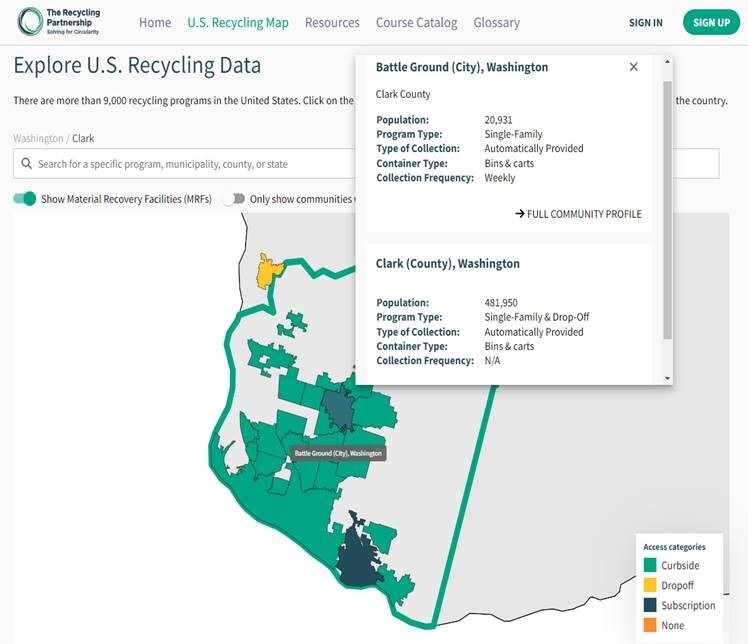
Check whether The Recycling Partnership correctly describes your recycling program
The Recycling Partnership, an industry-led non-profit, has mapped over 9,000 recycling programs across the U.S as well as all the Material Recover Facilities (MRFs). Residents can see what is accepted as recyclable in their community in the U.S. Recycling Data Map. Local governments and communities can should check whether the recycling data is accurate – in terms of accessibility and what items are accepted as recyclable.
NERC Event Highlights 3 Trends to Watch in EPR Implementation
The Northeast Recycling Council (NERC) held their annual fall conference in Providence, Rhode Island, earlier this month, where leaders from across the country came together to discuss and present on emerging waste and recycling topics and issues. One such topic was packaging EPR, where three trends seemed to dominate the discussion: eco-modulation, aligning definitions among states, and how EPR for packaging will improve and expand processing infrastructure.
EVENTS & WEBINARS
-
The West Coast Climate Change and Materials Management Forum: December 7, at 10 am PT the Forum Leadership Team is hosting a 90-minute full membership meeting to discuss the status of ongoing work in several areas related to climate change and materials management, including updates on:
- Climate Pollution Reduction Grants (CPRGs)
- Consumption-based Emissions Inventories (CBEIS)
- Legislation that has passed this year in support of climate change and materials management
- New reports and resources released this year on climate change and materials management.
Presenters include representatives from Washington Department of Ecology, OR Department of Environmental Quality, StopWaste, and the City of Seattle. We hope you can attend and share what you are working on in this space, as well as your interests in future work or tools, and what you might be able to help advance or create. Register here.
- The Oregon’s Recycling Council Meeting: December 7 from 8:30 am to 11 am. During this meeting the council will discuss several topics, including the equity study, the programs plan review process, specifically identified materials, and covered product exemptions. Register here.
- Plastic Pollution and Recycling Modernization Act – Fourth Rulemaking Advisory Committee meeting: January 31,at 9 am PT. Register here.
JOB OPPORTUNITIES
- The City of Portland is hiring for a Waste Policy Manager to lead the city’s policy team in developing and evaluating waste and materials-related policies and programs to continually improve Portland’s waste collection system and achieve our equitable and sustainable materials management goals. The Waste Policy Manager will be responsible for City policies, code, franchise agreements, and administrative rules that govern collection and materials management. The position will also engage in local and state-level legislation and create partnership with local, regional, and state level partners. For the job description and application instructions: View job description and application instructions.
- The Product Stewardship Institute (PSI) is hiring for a Policy and Program Manager to work closely with the chief executive officer, the policy team, and PSI’s members and partners to conduct research, facilitate policy dialogue, and develop product stewardship and EPR policy models, programs, and legislation. The Policy and Program Manager will lead, coordinate, and collaborate on initiatives related to packaging, textiles, batteries, and other products and materials as they rise in priority for our members. View job description and application instructions.
- The Product Stewardship Institute (PSI) is hiring a Marketing & Communications Coordinator to work with the Marketing and Communications Manager and work collaboratively with all team members to promote PSI’s work. The coordinator will work closely with PSI’s government members and corporate, environmental, academic, and international partners to educate diverse stakeholder groups about EPR policies and programs and support them in advocating for producer responsibility solutions. View job description and application instructions.
Engage with the Northwest Product Stewardship Council
Add your voice and join the Northwest Product Stewardship Council (NWPSC) as an Associate, Steering or Community member.
Follow the NWPSC on Twitter (@StewardshipNW) for product stewardship information from Washington, Oregon and elsewhere.
 The Northwest Product Stewardship Council (NWPSC) is a coalition of government agencies in Washington and Oregon working on solid waste, recycling, resource conservation, environmental protection, public health and other issues. Together with non-government agencies, businesses and individuals, we form a network that supports product stewardship and extended producer responsibility (EPR) policies and programs. For more information, contact info@productstewardship.net or visit us at www.ProductStewardship.net.
Subscribe to the NWPSC Newsletter and read our past newsletters. For current subscribers: update your email, password, or unsubscribe on the Subscriber Preferences Page (you will need to use your email address to log in). If you have questions or problems with the subscription service, please visit subscriberhelp.govdelivery.com.