|
Behind the Kitchen Curtain is a quarterly newsletter from Public Health - Seattle & King County about safe food handling for food business owners and employees. This newsletter aims to keep our partners and constituents informed and maintain relationships between us and our customers.
We want to help protect people and businesses by managing foodborne illness risks and ensuring safe food practices. Behind the Kitchen Curtain will include information about regulatory updates, seasonal food safety issues, and other helpful resources.
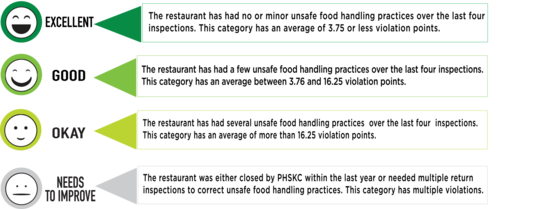 Over the last few years, we’ve talked to hundreds of restaurant operators and customers about the Food Safety Rating System. We learned that:
- Customers like having food safety information easily accessible.
- Restaurant owners and operators feel incentivized to improve their food safety practices.
- Customers and operators say the zip code rating adjustment is confusing. It makes it hard for operators to know how to improve their ratings.
Starting in the third quarter of 2023, we will remove the zip code rating adjustment and apply uniform grade breaks for all restaurants (see the image above). This means that all restaurants will be compared to the same standards, and it will be easier for operators to know what to do to improve their food safety rating.
In the next couple of weeks, we will send restaurant operators a letter with more information about this change.
Data obtained from field visits completed from January 1 – May 31, 2023
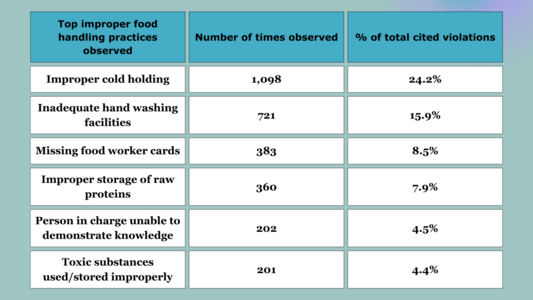 What can you do to address an improper food handling practice?
-
Improper Cold Holding - Monitor food temperatures regularly. Warmer weather is quickly approaching; make sure to service cold-holding units routinely. Keep refrigerators closed as much as possible, and do not over-stock food in units, as this may prevent airflow.
-
Inadequate Hand-Washing Facilities - All hand-washing sinks in the restaurant should be in good repair and easily accessible for employees to wash their hands. This includes ensuring each sink has hot water, soap, and paper towels available and that the sink is not obstructed by other equipment/utensils.
-
Missing Food Worker Cards - Every food worker should have an up-to-date food worker card available on-site. New employees must have a card within two weeks of hire. Check your staff’s food worker cards regularly to ensure they are renewed before they expire.
-
Improper storage of raw proteins - Always store raw proteins below and away from other foods. Store them according to their final cook temperatures: Fish, beef, seafood, lamb, pork, and raw shell eggs should be stored above ground meats; raw poultry should be kept below all other foods.
-
Person in charge unable to demonstrate knowledge - Always have one “Person in Charge” on-site during operations. This person must be able to identify risks for foodborne illness and take preventative and corrective actions to mitigate those risks.
-
Toxic substances used/stored improperly - Ensure all chemicals in your facility are appropriately labeled (including labeling sanitizer spray bottles and soap bottles). Store all your chemicals below and separate them from food, contact surfaces, equipment, and single-use items.
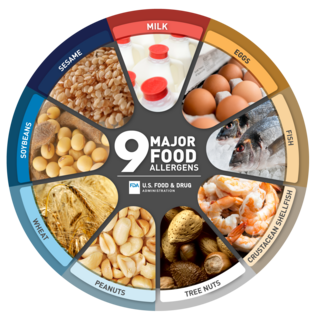 |
The nine major food allergens
Many of us are likely familiar with most of the major food allergies. These include peanuts, tree nuts, and wheat - foods that can cause an allergic reaction. In some cases, these reactions can be life-threatening. This year, the FDA added another major food allergen – sesame.
It's an excellent time to remind ourselves how to handle and plan for food allergies safely. If you prepare or handle food for others – whether in a food establishment or at home – there are key things you can do to keep people safe.
Know the allergens
This year, sesame officially became the ninth major food allergen. The others are milk, eggs, fish, crustacean shellfish, tree nuts, peanuts, wheat, and soybeans. Each of these can potentially cause allergic reactions, varying from mild to life-threatening. The FDA requires that food labels identify any major food allergens used to make the food.
Have a plan
It would be best to have a plan for serving customers with food allergies. Use different areas and equipment for preparing and cooking major food allergens. If this isn't possible, wipe down surfaces and wash equipment thoroughly before preparing food for customers with allergies. To effectively remove allergens, and minimize cross-contamination, use this cleaning method for work surfaces:
- Scrape leftover food and grease into the trash.
- Wash with hot, soapy water.
- Rinse with hot, clean water.
- Wipe on sanitizer with a clean cloth.
- Air dry – don't use a towel (they can spread germs).
Your plan should also include having staff ask customers if they have any food allergies.
Label food packaging and menus
Restaurants that package food need to ensure those items are properly labeled. This includes listing any major food allergens in the product on the label. You should also provide ingredient lists for menu items or make the information available upon request.
Train staff
The CDC found that many restaurant staff hasn't received food allergy training. If you own or operate a food establishment, it's important to remind and retrain staff on this information. The Person In Charge must be able to describe the major allergens and what symptoms they could cause in an allergic person.
Staff training should include the following:
- Ensuring staff know the major food allergens and can answer customer questions.
- Understand how to keep customers safe from allergic reactions.
The Washington Food Worker Card course includes a section on allergies that staff can refer to.
 As of March 1, 2023, Risk 3 Category food establishments in King County need access to a Certified Food Protection Manager (CFPM). A valid CFPM certificate must be available during routine inspections.
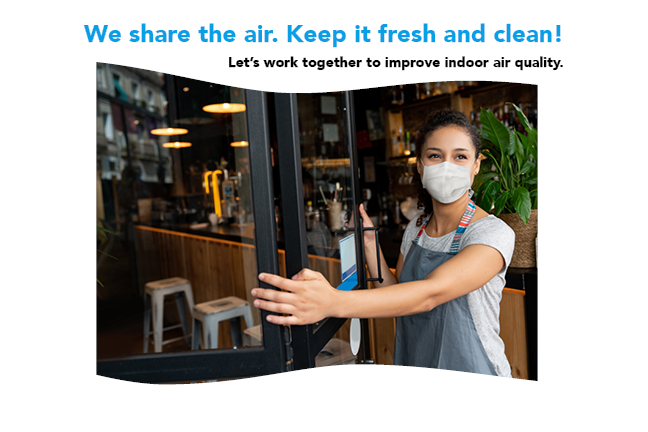 You may be eligible to receive a free HEPA air cleaner from Public Health! If you are interested in this, or a no-cost indoor air site evaluation, please fill out this form. After receiving the form, we'll schedule a site visit to assess your air quality needs. If you qualify for a HEPA air cleaner, we'll provide one free of charge.
If you have any questions, please send us an email at IAQinfo@kingcounty.gov.
|