|
We want to thank all the businesses and organizations that attended our webinar on October 28 to learn how to improve indoor air quality for their participation. We treasure your contributions and time with us, and we hope you have come away with valuable and profitable information.
If you missed it, we look forward to seeing you next time!
In the meantime, if you need technical assistance to improve your business' ventilation and indoor air quality, and to see if you may qualify for receipt of a HEPA air filtration unit, please complete this form to the best of your ability. Our staff will respond as soon as possible.
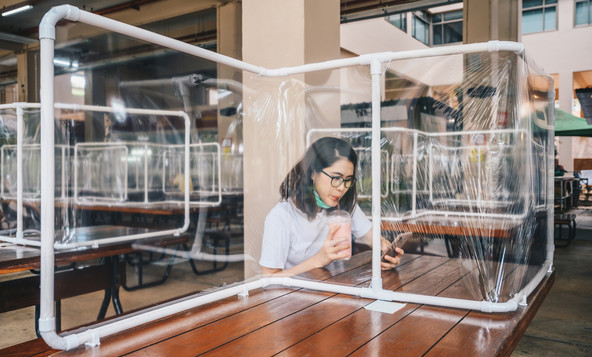
Clear barriers have sprung up at restaurants, stores, nail salons, and school classrooms, but most of the time, they do little to stop the spread of the coronavirus. The latest research indicates that plastic dividers are ineffective at containing virus-loaded aerosols. Erecting plastic barriers can change the airflow in a room, disrupt normal ventilation, and create “dead zones,” where viral aerosol particles can build up and become highly concentrated.
In a poorly ventilated indoor space or with a disrupted airflow, exhaled aerosols may linger in certain areas for much longer, potentially creating an environment with an increased risk of COVID-19 or other virus transmissions.
The effectiveness of barriers depends on the space. It is complicated to know if the barrier will make things worse. Therefore, experts agree that using layers of protection can reduce the spread of COVID-19: ventilation and air filtration, adding a HEPA filter, getting vaccinated, social distancing, and wearing a mask while indoors.
 |
|
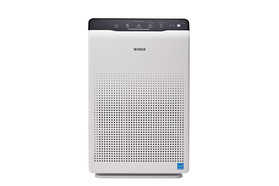
Portable air filters can effectively reduce the risk of contracting COVID-19 and other viruses.
For more information about the efficiency of HEPA filters, click here.
|
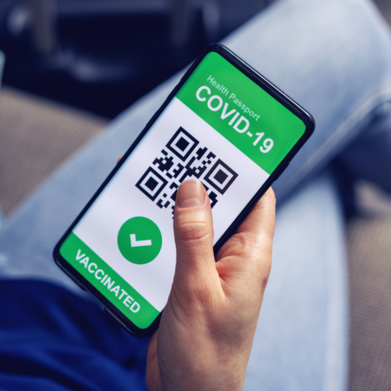
Starting this week, customers are required to verify full vaccination status or a negative test to participate in outdoor public events of 500 or more people and indoor entertainment and recreational establishments and events such as live music, performing arts, gyms, restaurants, and bars. This temporary policy aims to protect customers and workers, preserve local hospital capacity, and help keep businesses open.
As with other Public Health orders, King County will focus on education and outreach to support people in following the health order. If there are complaints of patrons or businesses egregiously not following the order, County officials will contact businesses and event organizers and take action as feasible.
Employers, their employees, and volunteers must implement this Order equitably and may not discriminate based on an individual's race, national origin, religion, or age. Businesses and venues should provide reasonable accommodation for those who are unable to provide proof of vaccination due to a disability.
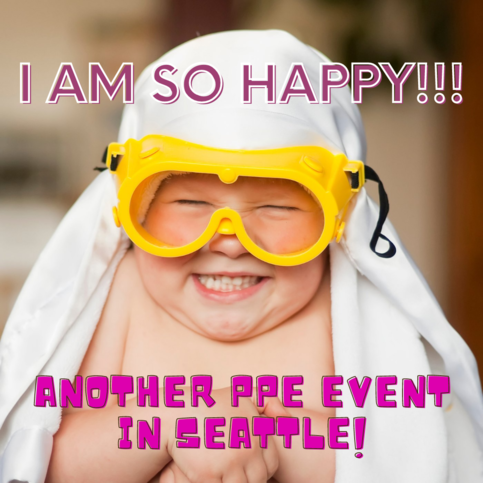
King County is distributing complimentary Personal Protective Equipment (PPE) to county restaurant workers regardless of whether they have attended previous events.
One representative from your restaurant is encouraged to attend to collect PPE for all restaurant employees.
What: 50 surgical masks, 32 oz. hand sanitizers, ten KN90s, and ten cloth masks.
When: Tuesday, November 2, 2021, from 9 a.m. - 1 p.m.
Where: King County Warehouse: 3417 1st Ave S. Seattle, WA 98134
Email at rcecc.logs@kingcounty.gov if you have any additional questions. List “Mask Pop-up Event” in the subject line. We suggest you RSVP below to be sure we are bringing enough PPE for everyone attending the event.
Current COVID-19 guidance in King County page.
Minimize risk of COVID-19.
King County Schools COVID-19 Response Toolkit and Back-to-school Toolkit.
Downloadable signs to print and post.
Frequently asked questions about coronavirus.
Vaccination Verification Business Resources.
Small Business Stabilization Fund (for businesses with an active City of Seattle license).
|