|
|
Leading with Environmental Justice and Racial Equity in the 2020 SCAP
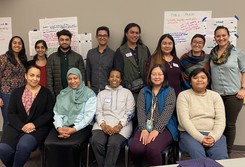
As part of King County’s commitments to action on climate change and equity and social justice (ESJ), the 2020 Strategic Climate Action Plan (SCAP) includes a new Sustainable & Resilient Frontline Communities (SRFC) section focused on climate equity and community-driven policy guided by the Climate Equity Community Task Force (CECTF).
The CECTF is made up of 22 multi-ethnic, multi-racial, and cross-sector community leaders who represent frontline communities and whose experiences afford unique strengths and insights into climate resilience strategies and practices. Frontline communities are those that will be disproportionately impacted by climate change, these are the populations that face historic and current inequities, often experience the earliest and most acute impacts of climate change, and have limited resources and/or capacity to adapt.
The CECTF developed community-driven and equity-oriented climate actions through a year-and-a-half-long process. These recommendations recognize the agency of Black, Indigenous, and People of Color (BIPOC) and frontline communities in climate work and recognizes the importance of uplifting climate actions with multiple co-benefits, that promote equity, recognize intersectionality and the impact of climate change as a threat multiplier to other social issues (such as affordable housing, green jobs and pathways, and food security).
The final 2020 Strategic Climate Action Plan, including the Sustainable & Resilient Frontline Communities section and the work of the Climate Equity Community Task Force, is being transmitted by King County Executive Dow Constantine to the King County Council in August 2020.
|
Puget Sound Sage Releases Climate Change & Energy Justice Report

A King County partner and Climate Equity Community Task Force (CECTF) member, Puget Sound Sage, has recently released their report on energy justice and communities of color titled, “Powering the transition: Community Priorities for a Renewable and Equitable Future.” The King County Climate Action Team is the government partner for Puget Sound Sage on the 100% Renewable and Equitable Cities Initiative that this report is a part of. This comprehensive research and their participation on the CECTF has helped inform the 2020 Strategic Climate Action Plan, especially the new Sustainable & Resilient Frontline Communities Section.
"[This report is] the culmination of two years of organizing and research with Indigenous, Black, Brown, and low-income communities who call South Seattle and South King County home. This work outlines our community’s top energy policy priorities. We heard opinions from hundreds of community members about climate change, renewable energy, transportation, housing, utilities, and more. Despite our community’s great diversity of identities and experiences, clear patterns emerged." - Puget Sound Sage
You can access the full report here.
|
Public Health Insider: Racism is a Public Health Crisis
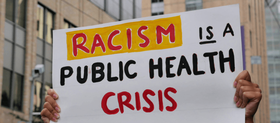
King County Executive Dow Constantine and Public Health — Seattle & King County Director Patty Hayes recently declared that racism is a public health crisis.
"King County government and Public Health – Seattle & King County are committed to working in stronger and better resourced partnerships with community organizations and leaders to disrupt and dismantle racism and protect the health and well-being of Black, Indigenous People, and People of Color [BIPOC]. We recognize that historically and currently King County has been complicit in maintaining and perpetuating structural racism, and that as an institution we must be a vital player in dismantling oppressive systems that are grounded in white supremacy." Read the full article on the Public Health Insider.
Achieving climate justice requires bold action that addresses racial injustice. The King County Climate Action Team has worked, in collaboration with community members and stakeholders, to identify equitable climate actions that mitigate the disproportionate burden of climate change impacts on BIPOC communities throughout the development of the 2020 Strategic Climate Action Plan (SCAP). There is a lot of work to be done and King County is committed to addressing existing and historic racial injustices, including taking equitable climate actions in the 2020 update of the SCAP.
|
|
|
|
|
|
You can learn more about County climate actions and strategies on our website. Find information on our Strategic Climate Action Plan (SCAP), Partnerships and Collaborations, and Initiatives and Programs. Learn more about climate change, its impacts in King County, and what you can do.
|
|