|
|
Welcome to Immunization Insider, a monthly newsletter from the Office of Immunization at the Washington State Department of Health (DOH). Here you'll find the latest news and information on vaccine related topics. For important news and updates between issues, visit the Immunization Insider WA Portal.
- Latest News
- Clinical Updates
- Upcoming Events & Learning Opportunities
- Resources
|
|
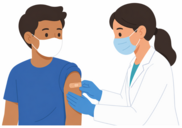
Flu is spreading earlier than usual this season, especially on the West Coast. Washington State Department of Health experts urge everyone to get their flu vaccine now. A child in Colorado has died from flu, marking the first reported child flu death of the 2026–27 season. Getting vaccinated now helps protect you before holiday gatherings. Read more about the early flu season.
A new flu vaccine option, mFLUSIVA, is available for adults 50 and older. It is the first flu vaccine to use mRNA technology. In a clinical trial, it worked better than a standard flu vaccine at preventing flu-like illness.
Share these key messages with your community:
- Everyone 6 months and older, including pregnant people, should get a flu vaccine each year.
-
Flu vaccination helps prevent serious illness and protects our communities.
-
You can get your flu vaccine at pharmacies, clinics, and other locations. It can also be given at the same visit as other vaccines, including the COVID-19 vaccine.
Learn more and find resources:
|
|
|

Washington has confirmed three human cases of bird flu (H5N1) in Yakima County, including one death. The person who died had other health conditions and contact with infected dairy cows. The other two people had milder illnesses. There is no evidence of the virus spreading between people. While bird flu can cause serious illness, the risk to the public remains low. Washington has reported 34 infected dairy herds in the past 30 days, most in Yakima County.
Pasteurized milk sold in stores is safe to drink because heating kills the virus. Avoid raw milk and products made from raw milk. People who work with dairy cows or other animals that may be infected should take steps to protect themselves. Share this flu vaccine information flyer for agricultural workers Stay Safe From Seasonal Flu | Spanish (PDF).
|
|
|

On October 5, 2026, the Montana Department of Public Health and Human Services reported that an unvaccinated child died in September from complications of Haemophilus influenzae type b (Hib) infection. Hib can cause serious illness and death, but the disease is rare in the US. Cases have dropped by more than 99% since the Hib vaccine became available for infants in 1989. In 2024, the Centers for Disease Control and Prevention (CDC) reported 14 cases of Hib across all age groups. Learn more from the Montana Department of Public Health and Human Services.
The Hib vaccine is part of the routine childhood vaccine schedule. Children usually receive a series of doses starting at 2 months old, with a booster at 12–15 months. Children younger than 5 who missed doses may need catch-up vaccines. Some older children and adults with certain health conditions also need the vaccine. Parents and caregivers should talk with their child’s health care provider to make sure their child is up to date on recommended vaccines. For more information, visit the CDC’s Hib vaccination recommendations.
|
|
|
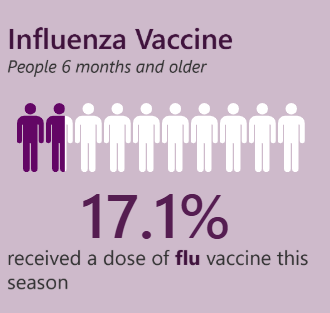
The Office of Immunization at the Washington State Department of Health updated its Respiratory Immunization Dashboard with 2026–27 data for flu, COVID-19, and RSV vaccines. The dashboard shows vaccination rates by location and population group, as well as the number of doses given in Washington. It is updated every Wednesday by 3 p.m. Data show flu and COVID-19 vaccination rates have declined over the past three seasons. Read more about the data and resources to support vaccination.
More Data Added to Demographics Dashboard
The Washington Tracking Network’s Demographics Dashboard now includes population data from 2010 to 2025 for counties, Regional Accountable Communities of Health, and census tracts. You can also filter race and ethnicity data using definitions that better reflect people with more than one racial identity.
|
|
|
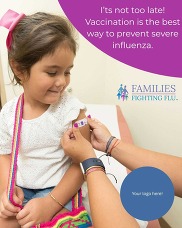
Families Fighting Flu is continuing their new tradition of extending National Influenza Vaccination Week (NIVW) into two weeks of education, awareness, and engagement. This year, the theme is: The 10 Flu Fighters of NIVW!
There are exciting opportunities for partners to get involved, including hosting an interactive Ask-Me-Anything session with a medical professional, launching new educational resources and interactive pages, sharing campaign activities, tools, and opportunities to amplify our collective impact and more. Visit the Families Fighting Flu NIVW resources page regularly for new resources and updates.
|
|
|
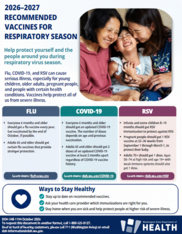
Flu, COVID-19, and RSV Materials
Flu, COVID-19, and RSV can cause serious illness, especially in young children, older adults, pregnant people, and people with certain health conditions. Vaccines help protect against severe illness. Share these new, easy-to-read flyers with your community!
Recommended Immunization Schedules
New translations of the adult immunization schedule and the 2026–2027 respiratory season vaccine chart are now available. Share these easy-to-read resources to help people understand which vaccines are recommended at every age.
|
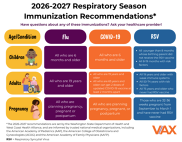
Vax Northwest has a family-friendly poster with vaccine recommendations for the 2026–27 respiratory season. Health care providers can add their clinic’s logo and share the poster with families.
|
|
|
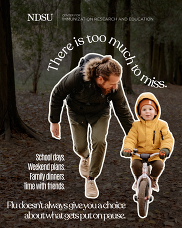
Looking for trusted information to share this respiratory season? The Center for Immunization Research and Education’s (CIRE) free Respiratory Season Social Media Toolkit includes easy-to-share graphics and messages about preventing respiratory illness and the importance of vaccines. Health care providers, organizations, and community partners can use these resources to help keep their communities informed and healthy. |
|
 |
|
|
 |
|
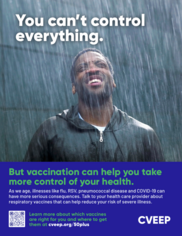
Respiratory illness season is here. Champions for Vaccine Education, Equity and Progress (CVEEP) has a free toolkit for adults ages 50 and older. The toolkit includes educational materials, newsletter text, graphics, and social media posts to help your organization share trusted information and encourage vaccination. |
|
|
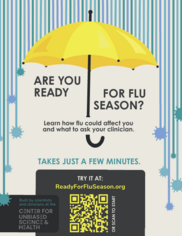
Are you ready for flu season? The Center for Unbiased Science & Health (CUSH) has a free online tool to help adults 18 and older learn how the flu could affect them. It takes less than two minutes to complete on a phone. Users get information about their flu risk, answers to common questions about flu vaccines, and questions to ask their health care provider. The tool provides general information, not medical advice.
Clinics, pharmacies, libraries, and workplaces can download free printable flyers with a QR code that opens the tool. Choose a design that fits your space, print it, and post it in a waiting room or another place where people will see it. Public health experts, doctors, and pharmacists helped develop the tool.
|
|
|
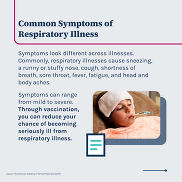
Looking for ways to share trusted flu information with your community? Explore these resources for families, health care providers, and community partners.
From the Public Health Communications Collaborative
From Families Fighting Flu
|
|
|

Want to learn more about respiratory vaccines? These articles offer helpful tips, answers to common questions, and personal stories about why protection matters. Explore these quick reads to learn more about COVID-19, flu, and RSV vaccines and how they help protect people from serious illness.
|
|
|
Confused by the many opinions about vaccines online? You’re not alone! The FACTSinnated newsletter from Unity Consortium helps parents, grandparents, and young people sort facts from confusing information. Experts share clear, trusted information about vaccines for teens and young adults, based on the latest research and health guidance.
The newsletter also answers questions from families and young people. Readers can explore common vaccine concerns, learn how to judge health information, and get answers to questions about what they see online or hear from health care providers. Visit FACTSinnated on Substack to read the newsletter, subscribe for updates, and suggest questions for future issues.
|
|
|
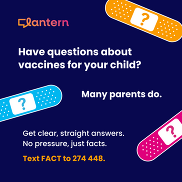
Lantern, a national nonprofit, launched FACT, a free text-message series for parents of children ages 0–12 who have questions about vaccines. Parents receive one short message each week for eight weeks. Messages explain how vaccines work, what they contain, how safety is tested, and how vaccines protect children from serious diseases.
The goal is to give parents clear, helpful information without pressure or judgment. Healthcare providers can share this resource with families. To sign up, text FACT to 274448 or visit mylantern.org/fact. Use the partner toolkit to share this widely with families in your community.
|
|
|
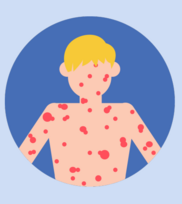
A new report found that five separate measles cases brought into Washington in January 2026 led to 26 infections. The cases were linked to a large measles outbreak in South Carolina. Of the 26 people who got measles, 24 were unvaccinated. No one needed hospital care. The report shows how quickly measles can spread and how important it is to respond quickly.
Washington State Department of Health, local health departments, and federal partners worked together to track cases, investigate possible exposures, share public health information, and help people follow guidance to stay home and avoid spreading measles. Most people with measles followed isolation guidance, which likely helped limit the spread. The report highlights the important role of public health teams in protecting communities during an outbreak. Read the full CIDRAP report for more details.
|
|
|
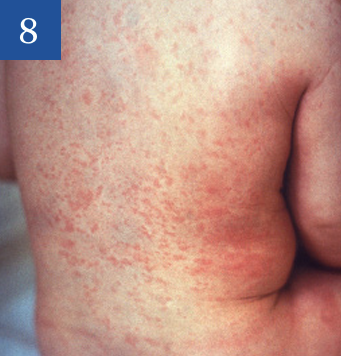
The Children’s Hospital of Philadelphia’s Vaccine Education Center released a new video featuring Dr. Paul Offit about serious health problems caused by measles. The video explains three common causes of hospitalization and death: pneumonia, dehydration, and swelling of the brain. It also covers three lesser-known effects:
-
Immune amnesia can weaken the immune system’s ability to fight infections a person was once protected against.
-
Acute demyelinating encephalomyelitis (ADEM) is a rare but serious condition that causes swelling in the brain and spinal cord.
-
Subacute sclerosing panencephalitis (SSPE) is a rare brain disease that can develop years after measles and is always fatal.
As measles cases rise, the video highlights the importance of staying up to date on the measles, mumps, and rubella (MMR) vaccine. Watch the video.
|
|
|

The World Health Organization (WHO) reviewed new vaccine research in October 2026. For human papillomavirus (HPV), experts support one vaccine dose for girls ages 9–14 and people up to age 30. For diphtheria, experts stressed that outbreaks happen when people miss routine vaccines or booster doses. Strong vaccination programs help prevent outbreaks.
For yellow fever, experts support using smaller vaccine doses during outbreaks when supplies are limited. For mpox, experts reviewed how vaccines can protect people at higher risk, but more research is needed for some groups. For polio, experts recommended three doses of inactivated polio vaccine (IPV) for infants to strengthen protection.
The ongoing Bundibugyo virus disease (BVD) outbreak shows why vaccine research is important. The Ebola vaccine Ervebo is not yet proven to protect against this type of virus. A new study that began October 23, 2026, will test whether Ervebo and other vaccines can help. Until more is known, outbreak response depends on finding cases early, caring for sick people, tracing contacts, and protecting communities. Read the full update.
|
|
|

Flu-related emergency department visits are rising in Washington, pointing to an early start to the 2026–2027 flu season. Health care providers should watch for seasonal flu and possible bird flu infections. The Centers for Disease Control and Prevention (CDC) and the Association of Public Health Laboratories have updated their flu testing recommendations for this season.
Providers should ask patients with respiratory symptoms about possible bird flu exposure. If bird flu is suspected, providers should use PCR testing and subtype all positive influenza A samples to identify the virus. Read and share the Provider Alert with health care professionals in your area.
|
|
|

Facility administrators and staff can help prevent illness by encouraging handwashing, considering masks, and asking sick people to stay home or away from others. Contact your local health department if a resident or client tests positive for flu or COVID-19, or if two or more people develop respiratory symptoms within 72 hours. Review your facility’s plans for infection prevention and care for sick residents and clients.
|
|
|
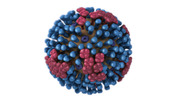
The October issue of epiTRENDS focuses on flu and preparing for the 2026–27 respiratory virus season. Flu can cause serious illness, especially in young children, older adults, pregnant people, and people with certain health conditions. DOH recommends a flu vaccine every year for everyone 6 months and older. The flu and COVID-19 vaccines can be given at the same visit.
The article also explains how health officials track flu, identify new virus strains, and respond to outbreaks. Flu, COVID-19, and RSV may spread at the same time, increasing the risk of serious illness and putting pressure on hospitals. Vaccination helps protect people and communities. Read the October epiTRENDS: Influenza for more details and resources. For prior issues or for a self-subscription, visit the epiTrends page.
|
|
|

The Zoonotic and Vector-borne Disease Program at the Washington Department of Health has created Rabies Academy, a free online training with nine short modules. The course covers rabies, how to assess possible exposures, lab testing, and communication. It is designed for public health staff, veterinarians, health care providers, animal control teams, and others who respond to rabies concerns. Continuing education credits are available for veterinarians and registered sanitarians.
Reported suspected rabies exposures in Washington have increased, making staff training and clear communication especially important. Staff can find more tools, including guidance, recorded trainings, and templates, on the DOH rabies resources webpage. The CDC also offers updated rabies treatment guidance and training videos. Please share these resources with staff who may respond to rabies calls.
|
|
|

Health care providers can find tools and trusted information to help prevent measles, respond to outbreaks, and answer questions from patients and families on the new Measles Collaborative website.
The National Foundation for Infectious Diseases (NFID) created the Collaborative with medical groups, public health organizations, and measles experts. Providers can sign up for monthly updates about new resources. Public health agencies and medical organizations can also join as partners.
|
|
|
Clinicians can build their skills with free, interactive vaccine education escape rooms. These games use real-life patient situations to help clinicians practice answering questions about vaccines and feel more confident talking with patients. Explore these free games:
|
|
 |
|
|
|
Healthcare providers are finding new ways to build trust and talk with families about vaccines.
Strategies include making clear, confident vaccine recommendations, listening to families’ concerns, focusing on their biggest questions, and avoiding the pressure to address every concern in one visit. Providers also recommend improving vaccine access, sharing trusted resources, working as a team, and partnering with community groups. Celebrating small successes can also help keep care teams motivated.
Read the full article from the Children’s Hospital of Philadelphia (CHOP) for more tips and ideas: Providers Share Successful Strategies for Vaccine Conversations
|
|
 |
|
|
Thursday, November 19, 2026
12 p.m. PT
Register here
The Washington State Department of Health Childhood Vaccine Program is leading this training webinar for health care providers and staff who order vaccines. Learn how to use the new Vaccine Ordering Essentials: Six Steps to Success online training and its companion Vaccine Ordering Guide to place accurate, timely vaccine orders. The session also covers the latest respiratory season guidance and vaccine ordering updates.
|
|
|
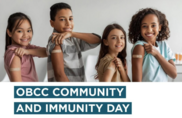
Join Odessa Brown Children’s Clinic (OBCC) for a free community event with groceries, socks, toys, and routine vaccines for children and teens!
When: Saturday, November 21, 2026, from 11 a.m.–2 p.m.
Where: OBCC Othello at Lenny Wilkens Recreation Center
3939 S. Othello St., Suite 101, Seattle, WA 98118
Everyone is welcome! Children and teens ages 18 and younger can receive routine vaccines, including flu, COVID-19, and RSV immunizations. Please bring vaccination records. A parent or guardian must attend with anyone receiving vaccines.
Register today! Pre-registration is encouraged, but walk-ins are welcome. Questions? Call 206-987-7210. Stay up to date on the latest resources and information on the OBCC Facebook page.
|
|
|
Connecting Care and Prevention: The Nurse’s Role in Immunization
Date: Thursday, November 5, 2026
Time: 10:00 a.m. PT
Register here
This webinar explores the different roles nurses have in immunization efforts and how the full care team can work together to strengthen community trust and health outcomes.
This webinar is hosted by the North Dakota State University Center for Immunization Research and Education. This activity is approved for free continuing education credit through the Accreditation Council for Continuing Medical Education (ACCME) and the Accreditation Council for Pharmacy Education (ACPE). For more details, see the registration page.
Communicating About Respiratory Virus Season: What We’ve Learned and What’s Ahead
Date: Tuesday, November 10, 2026
Join public health leaders from the Common Health Coalition, American Academy of Pediatrics, the National Foundation for Infectious Diseases (NFID), and PHCC's Ambassador program for a conversation on the 2026–27 respiratory virus season.
In this Ask Us Anything-style webinar, public health experts and communicators will share practical strategies for building communication plans that are clear, credible, and adaptable. Drawing on lessons from recent vaccination campaigns and respiratory virus seasons, speakers will explore how to translate evolving national and new guidance into communications that work at the local level.
HPV Webinars: 2026 Rural Learning Community Sessions
Date: Wednesday, November 11, 2026
The American Cancer Society and ACS National HPV Vaccination Roundtable are offering a learning series for rural health care providers. Sessions will share practical, evidence-based strategies to improve on-time HPV vaccination, cancer screening, and other prevention efforts. Participants can learn from experts and peers and choose to attend one or more webinars.
Strengthening HPV Vaccination Conversations with the Announcement Approach
1.25 Continuing Education Hours available.
Join the American Cancer Society and St. Jude Children’s Research Hospital for an interactive training on how to make strong, timely HPV vaccine recommendations. The session offers practical tools for physicians, advanced practice providers, and clinical teams to improve HPV vaccination rates.
Storytelling for Social Change 2.0
Date: Tuesday, November 17, 2026
Join Voices for Vaccines to strengthen your vaccine advocacy through storytelling. If you attended our Storytelling for Social Change: Vaccine Advocate training, this follow-up conversation will take a deeper look at how stories can inspire change. Hear from Karen Torghele, author of Albert Sabin: The Life of a Polio Vaccine Pioneer, and Dr. Peter Orton, Director of Media Design at the Institute for Vaccine Safety at Johns Hopkins Bloomberg School of Public Health and author of The Elements of Story: How to Craft Engaging Story for Effective Communication and Presentation. Leave the webinar with practical ideas for crafting your own impactful vaccine story.
Measles 101: Something Old – Infection in Children and Adults, Something New – Congenital Measles
Date: Monday, November 30, 2026
Register here. You must create a free account or login to register.
Continuing education credit for physicians is available.
Strengthening Family Vaccination Community of Practice
Date: Wednesday, December 2, 2026
The Strengthening Family Vaccination Community of Practice is a September–November 2026 learning series that helps health centers strengthen immunization efforts through expert guidance, peer learning, and practical strategies. Sessions cover vaccine communication, community engagement, provider education, policy updates, and systems-based approaches to improving vaccination. Participants will share successful approaches, discuss common challenges, and create action plans to apply what they learn in their health centers.
The mRNA Influenza Vaccine: A New Vaccine for Older Adults
Date: Wednesday, December 9, 2026
Time: 9:00 a.m. PT
Register here
The Children’s Hospital of Philadelphia (CHOP) is hosting another Current Issues in Vaccines webinar on December 9, 2026. Dr. Paul Offit will discuss the first mRNA influenza vaccine authorized for use in the United States and its importance for older adults. All health professionals are invited to attend. The Current Issues in Vaccines series offers continuing education credit for nurses, pharmacists, and physicians. For more information, visit CHOP’s Vaccine Webinar Series web page.
Cervical Cancer Elimination Webinar: Part of the 2026 Promising Practices Series
Date: Thursday, December 10, 2026
The American Cancer Society (ACS) and the ACS National HPV Vaccination Roundtable are hosting a cervical cancer elimination webinar. This webinar is the last in the 2026 Promising Practices webinar series around improving HPV vaccination and eliminating cervical cancer. You can view previous webinars and the slide decks by visiting the ACS website.
In Case You Missed It: Protecting Two Generations
Vax Northwest and the Washington Department of Health (DOH) hosted a webinar on October 21, 2026, to discuss vaccines recommended during pregnancy and for newborns, tips for talking about vaccines, and available resources for successful vaccine conversations.
Review the webinar's slides, resources, and references. Access the webinar recording for Protecting Two Generation: Clinical Strategies to Address Vaccination During Pregnancy and the Newborn Period on TRAIN.org. You must register to access the recording. Create a free TRAIN account, log-in, and register to access the content.
Continuing education credits are available for licensed midwives, nurses, medical assistants, pharmacists, and pharmacy techs. Attendees can also download a certificate of completion. For continuing education information email trang.kuss@doh.wa.gov.
|
|
Interested in other immunization updates too? Visit the Department of Health's email subscribers page. Enter your email address, then on the next page expand the Immunization topic, select the newsletters you'd like to receive, and click submit.
|
|
This newsletter summarizes content beginning the week of October 4, 2026 and was sent out on November 6, 2026. |
|
|
|
|