|
|
We work together to connect resources, champion equity, and strengthen health systems across rural Washington.
|
|
 The Washington State Office of Rural Health is thrilled to celebrate 15 years of National Rural Health Day by announcing our Washington Rural Health Heroes. Watch your email and the Rural Health Resource Hub for the official announcement on November 19.
Visit PowerOfRural.org to explore upcoming events from the National Organization of State Offices of Rural Health (NOSORH) and join the celebration, including the main event featured below:
The Power of Rural: Then, Now, and What's Next
Join NOSORH for a special moderated panel discussion featuring past Community Stars as they reflect on how their work began, the progress they've made, and the lessons they've learned along the way. Panelists will share their experiences, discuss how their initiatives have evolved, and offer perspectives on the future of rural health.
November 19 | 11:30 a.m. – 12:30 p.m. PT
|
|
|
Small conversations can have a big impact. Talking with patients about their pain management journey helps reduce the risk of opioid misuse and supports better patient outcomes. Created by the Washington State Health Care Authority, the Starts with One campaign is part of Washington’s efforts to prevent prescription opioid misuse, educate patients experiencing acute pain, and equip providers with practical resources to start conversations about safe pain management.
The campaign offers free, ready-to-use materials for providers and clinics, including waiting-room posters, patient-friendly rack cards, a pain management planning guide, and content for digital screens and social media. Email prevention@wearedh.com to order free print materials.
|
|
|
Claris Healthcare is looking to provide 3 Rural Health Clinics (RHCs) in Washington with $15,000 each to help cover the hardware, implementation, and setup costs of launching their own Remote Patient Monitoring (RPM) and Chronic Care Management (CCM) programs.
Many rural patients who could benefit most from remote care are also among the hardest to reach. Older adults managing multiple chronic conditions often face challenges with transportation, mobility, and access to health care services.
Remote care can help RHCs stay connected with these patients between visits, better manage chronic conditions, and establish sustainable, Medicare-reimbursable care programs.
|
|

Becker's Hospital Review is a nationally recognized health care industry publication, and its 'Rising Stars: 188 Healthcare Leaders Under 40' list honors emerging leaders chosen through nominations and editorial research - not paid placement - for the innovation and impact they've already delivered in health care.
Congratulations to Washington's Rural Rising Star!
Jason Adler, CEO, Kittitas Valley Healthcare
Mr. Adler serves as CEO of Kittitas Valley Healthcare, a public hospital district and federally designated critical access hospital in rural Washington. He joined in 2014 as a financial analyst, later served as CFO, and was promoted to CEO at age 37 in December 2024. As CFO, Mr. Adler stabilized the hospital’s labor and delivery service line, which had relied heavily on locum tenens coverage, by securing three dedicated OB/GYN physicians providing 24/7 labor and delivery coverage. In his first year as CEO, he led the hospital district’s first successful public levy in 61 years and secured 26 accepted provider offers across primary care and specialty services, reversing prior vacancy trends.
Learn more about Mr. Adler and other rising stars here.
|
|
|
|
Are you currently pursing or considering an advanced degree oriented toward nursing leadership and advancement? The Northwest Organization of Nurse Leaders (NWONL) provides scholarships in support of developing and fostering nursing leadership excellence. NWONL sponsors 2 $2,500 academic scholarships annually for member nurse leaders who are pursuing a graduate or doctorate degree with a focus on health care leadership.
|
|
|
Registration is now open for Stroudwater's 3rd Annual Swing Bed Bootcamp, a no-cost virtual event for Critical Access Hospitals and eligible Prospective Payment System hospitals.
Each year, Stroudwater works with hospitals at different stages of their swing bed journey. Even well-established programs are asking how to create a more consistent, high-performing service line. This year's Bootcamp is built around that full patient and program journey.
During the 2-hour session, Stroudwater will move from patient identification through program performance, including:
- Identifying the right patients for swing bed
- Building efficient referral, screening, and admission processes
- Strengthening documentation, compliance, and survey readiness
- Delivering coordinated interdisciplinary care and managing length of stay
- Improving discharge planning, referral development and program growth
- Understanding financial impact and the measures that define program success
November 17, 2026, 8 a.m. PT
|
|

Learn about the unique challenges facing Veterans, barriers to seeking help, and strategies for early intervention and reducing risk of exposure to lethal means.
PAUSE Lethal Means Safety - November 18, 2026, 1:00 - 2:30 p.m. PT
LEARN Saves Lives - December 16, 2026, 1:00 - 2:30 p.m. PT
|
|
|
|
Previous title: "What's changing with Apple Health (Medicaid?)". This webpage helps all audiences find general information and resources. It has links to all the other H.R. 1 webpages where you can find more detailed information for specific audiences.
Previous title: "Changes coming to Apple Health". This webpage helps Apple Health clients understand the upcoming changes to Apple Health and what they may need to do to prepare. It has contact information for HCA and DSHS.
This page title has not changed. This webpage helps Apple Health clients and stakeholders understand the upcoming federal work requirements and exemptions.
A work requirements screener has also been published at the top of the page. Clients can answer a series of questions to see if the work requirements may apply to them or if they meet an exemption.
Previous title: "Supporting clients with changes to Apple Health". This webpage helps navigators, assisters, volunteers, and community stakeholders who want to join the Community Connectors program to get the latest information about H.R. 1 each month.
Previous title: "H.R. 1 impacts". This webpage helps general stakeholders, legislators, health care providers, and health care associations learn about the impacts H.R. 1 will have on the health care delivery system.
|
|
|
1 in 8 women in the US will have breast cancer. Earlier diagnosis increases survival for both breast and cervical cancer. If your patients do not have insurance and are not eligible for Medicaid, the Breast and Cervical Early Detection Program may be able to help.
The Breast and Cervical Cancer Early Detection Program is actively working to increase access to breast and cervical cancer screening services in Eastern Washington. Individuals that are low-income, uninsured, or underinsured and between the ages of 21-64 may be eligible for breast and cervical cancer screening at no-cost. Learn more about the program by visiting the program's website.
|
|
Asthma home visiting is an evidence-based intervention that is one key component of improving indoor air quality in homes. Given that asthma home visiting programs have historically relied on unstable grant funding, asthma advocates are pursuing systems changes to create sustainable financing mechanisms.
Medical billing codes provide uniform reporting of procedures performed as well as the devices, supplies, and equipment used for a patient. Billing codes for asthma home visiting services can vary according to what services are covered by a specific state’s Medicaid program. Regional Asthma Management & Prevention (RAMP) and the National Center for Healthy Housing (NCHH) partnered to provide free technical assistance to advocates, agencies, and others needing help navigating this process in their new tool. Reach out to RAMP with questions or technical assistance.
|
|
 Discover how critical access hospitals (CAHs) and their affiliated outpatient networks can strengthen outpatient antibiotic stewardship and improve antibiotic use. This virtual webinar will explore updates to CDC’s Core Elements of Outpatient Antibiotic Stewardship and share practical strategies and real-world examples for putting the updated guidance into action.
Who should attend:
- Antimicrobial stewardship program leaders
- Infection preventionists at CAHs
- Quality improvement staff
- Laboratory and pharmacy personnel involved in antibiotic stewardship
- CAH administrators and providers
Wednesday, November 18, 11 a.m. PT
|
|
 |
|
Thank you to everyone who participated in the NRTRC Telehealth survey this year! Washington state provided 500 responses, comprising 44% of all participants. See the results here. |
|
|

DOH is seeking input to better understand infant formula availability across the state. We want to identify areas where infant formula access and related resources are limited to help shape an upcoming campaign focused on strengthening economic supports for caregivers and their children.
Rural health partners: Please complete a brief survey about infant formula and resource availability in your area. Your input will help DOH understand local needs and inform geographic areas to prioritize for the campaign.
The campaign will raise awareness of resources that support family economic stability such as the Supplemental Nutrition Assistance Program (SNAP), tax credits, and childcare assistance. Funds may be used to purchase and distribute infant formula and campaign materials such as posters, brochures, and stickers for interested food banks. A dedicated website with information and links to available resources for caregivers will be accessible through a QR code included on campaign materials.
DOH hopes to collaborate with partners in November and December, with a planned launch in early January to align with tax filing season and post-holiday family budget challenges. Your input will help ensure the campaign reflects the needs of Washington rural communities.
Questions? Contact Carolyn House-Higgins
|
|
|
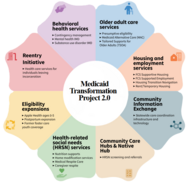
Join Washington State Health Care Authority (HCA) for this year's MTP Public Forum. MTP 2.0 is Washington’s 5-year Section 1115 Medicaid demonstration waiver, and 2026 marks the third year of the waiver. Join us for this annual event to hear about MTP program accomplishments throughout the year. We will hold a separate public forum about MTP renewal planning in early 2027.
December 1, 2026, 11 a.m. PT
|
|
|
|
ScalaNW helps emergency departments and hospitals across Washington build capacity to start medications for opioid use disorder and connect patients to ongoing opioid use disorder care.
The new ScalaNW monthly newsletter will bring together:
- New clinical protocols, guides, and information briefs
- Upcoming webinars
- Program announcements
- Success stories and data showing how hospitals are putting ScalaNW resources into practice
|
|
|
Your Washington State Office of Rural Health (WA-SORH) invites you to provide feedback on what you want to learn about and discuss in 2027. Starting early next year, WA-SORH will host various sessions designed to support Critical Access Hospitals (CAHs), Rural Health Clinics (RHCs), rural public health agencies, health care providers, community leaders and rural communities in accessing resources to support high-quality, accessible and sustainable health care delivery in rural Washington.
We want every session to be worth your time. Your answers will shape the topics, timing, and format we commit to.
How we'll use your responses:
- Topics are chosen by frequency. We will build the slate around the most commonly requested subjects.
- To host a session on a topic, we must have a qualified speaker or expert. If you know someone who could present, tell us - that helps a request move forward.
The survey should take about five minutes to complete. If you have questions, please reach out to us!
|
|
|
In January of 2028, Washington State will move from using the ASAM Criteria Third Edition to using the ASAM Criteria Fourth Edition. To help providers navigate this transition, the Washington State Health Care Authority will offer ASAM Implementation Support Webinars through January of 2028.
ASAM Criteria Fourth Edition Implementation Support Workshop: Your level of care is going away, what do you do?
Wednesday, November 18
11 a.m. to 12:30 p.m. PT
Meeting ID: 223 944 820 874 700
Passcode: Ew3FK7jk
Stay updated by visiting HCA's ASAM webpage.
|
|

This curriculum aims to equip learners with the skills needed to use AI/ML in their practice and ensure responsible and ethical use of AI/ML. Developed for medical students, primary care residents, faculty, and primary care physicians, the free Artificial Intelligence and Machine Learning for Primary Care (AiM-PC) Curriculum is available in 5 parts:
- Interview with an Innovator, Series 1: 3 videos (2 hours)
- Foundations of AI/ML in the Primary Care Clinic: 2 modules (2 hours)
- Interview with an Innovator, Series 2: 4 videos (2 hours)
- Clinical Implementation of AI/ML: 3 modules (3 hours)
- AI in Rural and Safety Net Settings
|
|
|
NEW funding opportunities posted to the Rural Health Resource Hub Funding page |
|
|
Alcohol Use Disorder (AUD) Share Decision Making Tools
To help improve treatment outcomes for people living with AUD in Washington state, Senate Bill 6228 requires that all licensed Behavioral Health Agencies provide education on medications to treat AUD. Two shared decision-making tools for AUD, developed by the UW Addictions, Drug, and Alcohol Institute can help licensed Behavioral Health Agencies meet the requirements of SB 6228 and provide patient-centered care.
All sessions will provide the same information:
-
Tuesday, November 17 - waitlist only
10 a.m. to 12 p.m.
-
Thursday, November 19 - waitlist only
8:30 a.m. to 10:30 a.m.
-
Thursday, December 10
10:00 a.m. to 12:00 p.m.
Register Here
Understanding Access to Care for Rural Residents with Disabilities
In this webinar, researchers from the University of Minnesota Rural Health Research Center will share results from a project examining access to care for rural residents living with a disability. They will also share results from the National Health Interview Survey examining differences in barriers to care and use of preventive services by rural-urban location and disability status. Additionally, 2 case studies of programs in Minnesota and Idaho that support the transportation needs of rural residents with disabilities will be discussed.
November 16, 2026, 9:00 a.m. PT
Register Here
Workforce and Talent Development Seminar Series
Assess your organization’s current workforce practices, work through real-world recruitment and retention challenges, brainstorm solutions with peers, and build a focused quality improvement action plan you can take back to your organization.
Learn more and apply by November 20, 2026
Statewide Antimicrobial Stewardship Call
Thursday, December 3, 2026
Comagine Health, the Washington State Hospital Association, UW Medicine, and WA DOH partner together to support statewide antimicrobial stewardship calls. These calls include discussing stewardship topics, sharing relevant updates, identifying ways that the DOH stewardship team can provide further support, and facilitating communication and collaboration.
Register Here
Testosterone Use in Menopausal Women
This workshop examined the current scientific evidence and critical knowledge gaps in this area to help inform future research and potential drug development. Watch the full recording on FDA’s YouTube channel to hear the scientific discussion and key perspectives shared during the meeting.
Menopause and Mental Health: Hidden in Plain Sight
Mental health symptoms in the menopause transition are common, yet frequently attributed to other causes, leaving many women feeling dismissed or misdiagnosed. This session highlights the overlooked links between hormonal change and mood, anxiety, sleep, and cognitive disruption—and offers clear, evidence-based strategies for screening and treatment.
1.0 contact hour (0.5 pharmacology)
Register Here
Overcoming Barriers to Increase Access to the Program of All-Inclusive Care for the Elderly (PACE)
In a recent webinar, the Center for Health Care Strategies and the National PACE Association explored opportunities to expand access to PACE.
The National Consortium of Telehealth Resource Centers (NRTRC) created a Telehealth Roles and Responsibilities Toolkit to provide a comprehensive operational and clinical reference guide to key roles supporting telehealth delivery. The resource offers detailed role descriptions and practical guidance to help organizations understand the diverse functions involved in delivering effective virtual care.
|
|
Questions? Contact us at RuralHealth@doh.wa.gov |
|
|
|
|