|
|
Welcome to Immunization Insider, a monthly newsletter from the Office of Immunization at the Washington State Department of Health (DOH). Here you'll find the latest news and information on vaccine related topics. For important news and updates between issues, visit the Immunization Insider WA Portal.
- Latest News
- Clinical Updates
- Upcoming Events & Learning Opportunities
- Resources
If you use the Washington State Immunization Information System (WAIIS), please take a few minutes to complete our IIS Partner Survey. Your feedback will help us set priorities and improve the services and support we provide.
|
|
 |
|
|
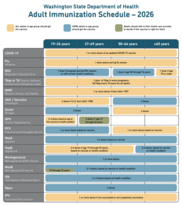
All vaccines recommended by DOH remain available at no cost for children younger than 19 through Washington's Childhood Vaccine Program at participating providers. Uninsured adults ages 19 and older can receive recommended vaccines at no cost through the Adult Vaccine Program.
|
|
|
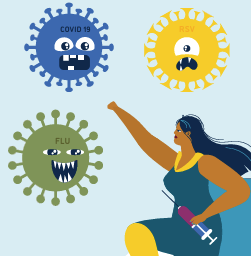
Respiratory viruses such as flu, COVID-19, and RSV can cause serious illness, especially for young children, older adults, pregnant people, and people with certain health conditions. Vaccination and preventive treatments can help protect you and your family during respiratory virus season.
Who should get a flu vaccine?
-
Everyone 6 months and older should get a flu vaccine every year. Getting vaccinated by the end of October gives your body time to build protection before flu spreads widely.
-
New flu vaccine option for adults 65 and older: A new mRNA flu vaccine option, mFlusiva, is available this year for adults 65 and older. The preferred flu vaccines for this age group include: Fluzone High-Dose, Fluad adjuvanted, Flublok recombinant, and mFlusiva mRNA.
Who should get a COVID-19 vaccine?
-
Everyone 6 months and older should get an updated COVID-19 vaccine. The number of doses you need depends on your age and previous COVID-19 vaccinations.
-
Washington’s COVID-19 vaccine standing order allows people 6 months and older in Washington to receive a COVID-19 vaccine without needing a prescription from your health care provider.
-
Children and adults at higher risk for severe illness or with weak immune systems should get 1 or more doses of COVID-19 vaccine.
-
Adults ages 65 and older: Get 2 doses of an updated COVID-19 vaccine at least 2 months apart, whether or not you have received COVID-19 vaccines before.
Who should get RSV protection?
-
Infants and some young children age 8-19 months should receive RSV immunization to protect them against RSV.
-
Pregnant people should get 1 RSV vaccine at 32–36 weeks of pregnancy between September through March 1, to help protect their baby.
-
All adults ages 75 years and older, those who are ages 50-74 years and at increased risk for RSV, and 19 years and older with weak immune systems should get 1 dose of RSV vaccine.
|
|
|
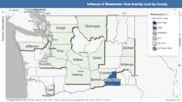
Want to see what’s happening with flu, COVID-19, and RSV across Washington? The Washington State Department of Health (DOH) has updated its Respiratory Illness Wastewater Dashboard with new features that make the data easier to explore and understand.
-
See flu activity statewide: A new view shows influenza A activity across Washington.
-
Follow recent trends: New 7-day trend lines show changes in influenza A, influenza B, and RSV.
-
Understand COVID-19 variants: Updated displays make variant data easier to interpret.
-
Learn how to use the dashboard: A new tutorial video walks you through the dashboard and its features.
Check out the updated dashboard and see what the data can tell us about respiratory illness activity in Washington.
|
|
|
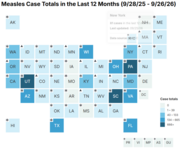
Two New Measles Cases in Clark County
People who were exposed and are not vaccinated may be at risk. If you were exposed and develop measles symptoms, call your health care provider before going to a clinic or office.
So far this year, Clark County has reported 21 measles cases. Of these, 19 people were not vaccinated. Visit Measles Cases in Washington State for more information on tracking measles across our state.
Independent Measles Tracker
Looking for another way to track measles cases in the U.S.? The U.S. Disease Tracker has an easy-to-use measles page with case information from 2025 to present, including data by state. The tracker is maintained by Johns Hopkins University in collaboration with the Association of State and Territorial Health Officials (ASTHO) and the Council of State and Territorial Epidemiologists (CSTE).
|
|
|
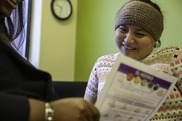
October is Health Literacy Month! Clear, understandable health information helps people make informed decisions about their health, including decisions about vaccines.
Health literacy means being able to find, understand, and use health information. As public health professionals, we can support health literacy by sharing information that is plain-language, culturally and linguistically appropriate, and accessible.
When communicating about vaccines, use clear answers to common questions such as who needs a vaccine, when to get it, and where to get vaccinated.
|
|
|

What does an empty chair mean to you? On October 5, World Meningitis Day brings communities together to remember people affected by meningitis and highlight the importance of prevention, including vaccination.
This year, the American Society for Meningitis Prevention (ASMP) is inviting people to participate in the #MyEmptyChair Campaign. Each empty chair represents a life impacted by meningitis—someone we’ve lost, a survivor, or a reminder of how quickly meningococcal meningitis can change a life.
The idea is simple: every empty chair = a life impacted by meningitis
This empty chair is for Joseph. Joseph’s mom and ASMP advocate, Aracelly, and Joseph's closest friends gathered at the Seymour Marine Science Center in California, a place that holds special meaning for them, to share memories, honor his life, and participate in the My Empty Chair Campaign on what would have been his 26th birthday. Read Joseph's story.
|
|
|
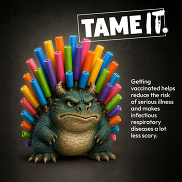
Looking for ready-to-share respiratory season resources? Several national organizations have new tools to help you promote vaccination and prevention in your communities.
-
National Respiratory Communications Initiative: The new Tame It Social Media Toolkit includes ready-to-use graphics and social media copy. Unbranded and co-brandable materials feature flu, COVID-19, RSV, and pneumococcal disease—and show how vaccination can help keep these illnesses in check.
-
Vaccinate Your Family: The Respiratory Season Toolkit offers resources to help families PROTECT, PREPARE, and PREVENT respiratory illnesses throughout the season.
-
National Hispanic Medical Association: Bilingual respiratory illness resources bring trusted vaccine information together for families and providers, including RSV flyers and quick-reference cards for parents. Get a first look at Mamá Protectora, their upcoming campaign empowering mothers as health advocates for their families.
-
Public Health Communications Collaborative: Find ready-to-share social media graphics, carousels, and other resources to help answer questions about respiratory viruses and promote flu, COVID-19, and RSV vaccination. New English and Spanish resources will be added throughout the season.
Save these resources and share them with your communities this respiratory season!
|
|
|
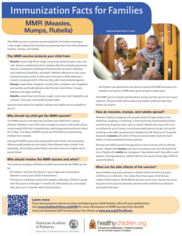
These short, easy-to-read fact sheets in English and Spanish can help clinicians answer common vaccine questions and support conversations with families. They cover topics such as how serious a disease can be, how it spreads, vaccine side effects, and more. Handouts can be printed or shared digitally before or after a vaccine visit. Each fact sheet also links families to more information from HealthyChildren.org through a QR code or link.
Explore the resources and share them with families at your next vaccine visit!
|
|
|
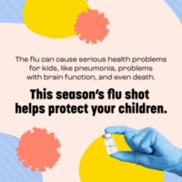
The Vaccine Resource Hub (VRH) provides accurate resources about vaccines in over 50 languages. In addition to handouts, VRH has short videos, social media content, and other vaccine guides. Check out their one page guide for using their site here. The VRH is a part of Public Good Projects, a public health nonprofit.
|
|
|

We usually think of vaccines as a way to prevent infections. But researchers are also studying vaccines that could help treat cancer after it develops.
These are called therapeutic cancer vaccines. Instead of training the immune system to fight a virus or bacteria, they help the immune system recognize and attack cancer cells. Because each person’s cancer can be different, some of these vaccines may be personalized to a person’s specific cancer.
Researchers are studying new approaches, including mRNA cancer vaccines. Recent clinical trials have shown promising results, but more research is needed before these vaccines are widely available.
Want to learn more? Keep reading to explore how therapeutic mRNA vaccines work, what researchers have learned from recent melanoma trials, and the challenges that remain.
|
|
|

-
Vaccine or human rabies immune globulin (HRIG) administration at the wrong anatomic site.
-
Combining the vaccine and HRIG in the same syringe.
-
Administering the vaccine and HRIG in the same anatomic site.
-
Using an incorrect rabies vaccine schedule.
Health care providers should carefully assess a person’s risk of rabies before giving treatment. When treatment is needed, providers should follow CDC recommendations for post-exposure prophylaxis (PEP).
|
|
|
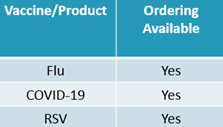
COVID-19 vaccine ordering is now open in the IIS for providers who selected COVID-19 vaccine on their provider agreement.
Key Ordering Information:
-
Orders are processed Wednesdays. The first processing day will be Friday, October 2 because of the federal fiscal year-end. Wednesday processing will resume the following week.
-
Supply is limited. COVID-19 vaccine is under allocation, so the number of doses available each week will be limited.
-
Submit orders early. Allow at least 3 days for order approval. Orders must be in “Pending State Approval” status by the end of the business day before the processing day.
-
Orders may be reduced. If demand is greater than available supply, orders will be adjusted based on the Vaccine Allocation and Equity Plan.
Have 2025–2026 COVID-19 vaccine? Stop using and return remaining doses once you receive your first shipment of the 2026–2027 formulation. Reconcile your IIS inventory using “Spoiled” and “Expired BUD.” Submit the return before inactivating the vaccine in the IIS.
|
|
|

-
AAFP recommends that all adults get a flu vaccine and an updated COVID-19 vaccine each year.
-
Adults age 65 and older should get Fluzone HD, Flublok, Fluad, or the newly approved mFLUSIVA flu vaccine that offers stronger protection, when available.
-
Adults should receive 1 dose of RSV vaccine, including those ≥75 years; adults 50-74 years with chronic heart or lung disease; adults of any age with weakened immune systems; adults with certain other underlying medical conditions; and adults residing in nursing homes or long-term care facilities. For health care personnel: RSV vaccination should be based on individual health and age/risk eligibility, not occupational status alone.
Key points for vaccine implementation and acceptance:
-
Recommend vaccines confidently and early: Use a presumptive recommendation (“You are due for your flu and updated COVID-19 vaccines today.”), followed by brief shared decision-making. A strong clinician recommendation is among the most reliable predictors of adult vaccine acceptance.
-
Offer coadministration: Flu, COVID-19 and RSV vaccines can be given at the same office visit with no minimum interval and may be coadministered with other routine vaccines.
-
Use every encounter as a vaccine opportunity: Previsit planning, standing orders and EHR prompts keep vaccination from being deferred.
- Maintain continuity when vaccines are given elsewhere: Ensure timely documentation back into the EHR/immunization information system (IIS).
|
|
|

These expert answers can help health care providers prepare for the 2026–27 respiratory season. More seasonal content is being updated, and Immunize.org will share updates as new sections are ready.
|
|
|

The Vaccine Integrity Project (VIP), based at the University of Minnesota’s Center for Infectious Disease Research and Policy (CIDRAP), has announced plans to conduct independent systematic reviews of the scientific evidence on meningococcal and pneumococcal vaccines for children and young adults. The reviews will examine the safety and effectiveness of currently licensed vaccines, disease burden and epidemiology, and evidence for populations at increased risk of severe disease.
The reviews will build on previous evidence assessments conducted by the CDC’s Advisory Committee on Immunization Practices (ACIP) and evaluate research published since those reviews. Researchers will assess peer-reviewed studies, surveillance data, real-world vaccine effectiveness, and post-licensure safety evidence. The reviews will also examine evidence related to coadministration with other routine childhood vaccines and identify gaps in the existing evidence.
|
|
|

Congenital measles is rare—but clinicians need to know what to look for. As measles cases increase, infants born to people who had measles during pregnancy may be at risk.
Affected infants may have fever, rash, and jaundice and can become seriously ill. Some infants may have no symptoms at birth but could face long-term health problems.
The American Academy of Pediatrics (AAP) has added a new Congenital Measles: Frequently Asked Questions page to Red Book Online. The resource covers signs and symptoms, evaluation and treatment, infection prevention, follow-up, and prevention.
For clinicians: Add this resource to your measles toolkit and share it with colleagues who care for pregnant people, newborns, and infants.
|
|
|
The Department of Health has released their newest epiTRENDS bulletin for September 2026. EpiTRENDS releases monthly and covers epidemiology and public health practice in Washington state. This issue covers Diphtheria and the recent rise in cases.
|
|
|
Strengthening HPV Vaccination Conversations with the Announcement Approach
October 6, 2026, 9:00 a.m. PT
November 12, 2026, 11:30 a.m. PT
1.25 Continuing Education Hours available.
Join the American Cancer Society and St. Jude Children’s Research Hospital for an interactive training on how to make strong, timely HPV vaccine recommendations. The session offers practical tools for physicians, advanced practice providers, and clinical teams to improve HPV vaccination rates.
Fact and Fiction on Measles and Respiratory Virus Vaccines
Date: October 6, 2026
Time: 9:00 a.m. PT
Webinar Registration
Join infectious disease experts from Georgetown, Emory, and the Children’s Hospital of Philadelphia as they discuss:
-
COVID-19 vaccine recommendations and availability.
-
The new flu mRNA vaccine.
-
Recommendations for expectant parents.
-
The ongoing measles outbreak in Pennsylvania.
The event is co-hosted by the Expert Vaccine Analysis Team (EVAT) and the Association of Health Care Journalists.
Breast Cancer Vaccines: Training the Immune System to Fight Cancer
Could vaccines help fight breast cancer? Join the Indiana Immunization Coalition and Indiana Cancer Consortium for a special webinar exploring new research at the intersection of vaccines, immunology, and breast cancer. Dr. Kathy Miller, MD, will share how vaccines may train the immune system to recognize and fight cancer and how this research could shape the future of cancer prevention, treatment, and survivorship. Dr. Miller is a professor of oncology and medicine at the Indiana University School of Medicine.
Building Partnerships for Childhood Vaccination
Continuing Education Credit is available.
Strong community partnerships can help families find trusted vaccine information and access recommended vaccines. This final webinar in a three-part series will bring together experts to share lessons learned, best practices, and resources for collaboration among community organizations, schools, health care providers, and local leaders. Learn how communities across the country are working together to support vaccine confidence, improve coordination, and make it easier for families to get vaccinated.
Don't Lose Ground: Measles Outbreaks, Then & Now
Raasti Kayani, an award-winning journalist and youth vaccine advocate, is hosting a screening of her mini-documentary, “Don’t Lose Ground,” about the West Texas measles outbreak in 2025. A Question-and-Answer panel will be held afterward and includes Dr. Paul Offit and Dr. Andrea Kesack.
Strengthening Family Vaccination Community of Practice
October 7 and 21 2026, 11:00 a.m. PT
November 4, 2026, 11:00 a.m. PT
December 2, 2026, 11:00 a.m. PT
The Strengthening Family Vaccination Community of Practice is a September–November 2026 learning series that helps health centers strengthen immunization efforts through expert guidance, peer learning, and practical strategies. Sessions cover vaccine communication, community engagement, provider education, policy updates, and systems-based approaches to improving vaccination. Participants will share successful approaches, discuss common challenges, and create action plans to apply what they learn in their health centers.
From Unvaccinated to Immunologist: Using Story to Build Trust in Vaccine Conversations
Continuing Medical Education and Continuing Pharmacy Education Credit are available.
The North Dakota State University Center for Immunization Research and Education will host a live webinar on October 14 featuring Elisabeth Marnik, PhD, an immunologist and science communicator who grew up in a family that distrusted science and vaccines. Marnik will discuss how personal experiences can shape vaccine decision-making and responses to scientific information, and how storytelling can help build trust and support more effective vaccine conversations. Learn more information about the webinar at the NDSU website.
HPV Webinars: 2026 Rural Learning Community Sessions
October 14, 2026, 11:00 a.m. PT
November 11, 2026, 11:00 a.m. PT
The American Cancer Society and ACS National HPV Vaccination Roundtable are offering a learning series for rural health care providers. Sessions will share practical, evidence-based strategies to improve on-time HPV vaccination, cancer screening, and other prevention efforts. Participants can learn from experts and peers and choose to attend one or more webinars.
What’s new with flu this season? Join Immunize Colorado for its annual What’s New With the Flu? webinar featuring Dr. Suchitra Rao. Get an update on the 2026–2027 flu season, along with the latest information on respiratory viruses and immunization. This educational webinar is open to health care providers, public health professionals, vaccine advocates, and anyone interested in staying up to date this flu season.
HPV Webinars: 2026 Promising Practices Series
October 15, 2026, 11:00 a.m. PT: Session 5: Provider & Team Champions for HPV Vaccination
December 10, 2026, 11:00 a.m. PT: Session 6: Cervical Cancer Elimination
The American Cancer Society and ACS National HPV Vaccination Roundtable are hosting a multi-session webinar series for health care professionals. Sessions will cover evidence-based strategies to improve HPV vaccination for adolescents ages 9–13 and support cervical cancer elimination. Experts will share practical strategies and real-world examples. Attend one or more sessions.
2026-2027 Respiratory Disease Season and Maternal Immunization
Continuing Medical Education is available.
Join the Society for Maternal-Fetal Medicine (SMFM) for a free webinar on respiratory disease and maternal immunization. SMFM experts will share the latest information on maternal COVID-19, flu, RSV, and Tdap vaccines, including their safety and effectiveness and their role in protecting pregnant people, babies, and infants. Speakers will also discuss respiratory illness prevention, vaccine counseling, billing tips, and resources for health care professionals and patients. The webinar is intended for maternal-fetal medicine specialists and fellows, obstetricians, and other members of the health care team.
Protecting Two Generations – Clinical Strategies to Address Vaccinations During Pregnancy and the Newborn Period
Certificates of completion are available; CE approval is pending.
Supporting vaccination during pregnancy and the newborn period can help protect both parent and baby. Join Vax Northwest, convened by WithinReach in partnership with the Washington State Department of Health, for a free webinar on navigating vaccine recommendations and coordinating care during pregnancy and early infancy. Hear from experts in infectious disease, pharmacy, midwifery, and pediatrics and gain practical insights you can use in your practice. This is webinar 2 of 2. Webinar 1 of 2 was on September 23 and called On the Front Lines of Trust – Vaccine Conversations for Perinatal Health Staff.
A PATH to Successful Vaccination for Neurodivergent Individuals
Learn practical ways to make vaccination visits more comfortable and supportive for children with neurodevelopmental conditions. Katharine Harlan Owens, MSN, RN, PHN, from the UC Davis MIND Institute, will share tools such as coping plans, visual supports, and social narratives to help children prepare for and participate in vaccination. Discover strategies you can use right away to create more inclusive, trauma-informed vaccination experiences. This webinar is co-sponsored by the California Immunization Coalition and the Sacramento Valley Immunization Coalition.
Measles Update: What You Need to Know & How to Respond
As measles cases increase across the country, staying informed and prepared is important. Join the Indiana Immunization Coalition for a timely webinar featuring Dr. Anna-Kathryn Burch, MD, Division Director of Pediatric Infectious Diseases at Prisma Health Children’s Hospital–Midlands in South Carolina.
Dr. Burch will provide an update on measles activity in the U.S., discuss current trends, and share guidance for immunization and public health professionals on responding to increased cases. This webinar is designed for anyone who works with patients, supports vaccination efforts, or communicates about immunization in their community.
Meningococcal Disease: Recognizing the Risks, Preventing the Impact
Continuing Education Credit may be available.
Meningococcal disease can spread quickly and cause serious, lifelong health problems. Join the University at Albany for a webinar that will explore the current state of meningococcal disease, including recent increases in serogroup Y cases in New York, and review current vaccine recommendations. A meningococcal disease survivor will also share their personal experience and the lasting impact of the disease. The webinar is designed for health care and public health professionals.
Storytelling for Social Change 2.0
Join Voices for Vaccines to strengthen your vaccine advocacy through storytelling. If you attended our Storytelling for Social Change: Vaccine Advocate training, this follow-up conversation will take a deeper look at how stories can inspire change. Hear from Karen Torghele, author of Albert Sabin: The Life of a Polio Vaccine Pioneer, and Dr. Peter Orton, Director of Media Design at the Institute for Vaccine Safety at Johns Hopkins Bloomberg School of Public Health and author of The Elements of Story: How to Craft Engaging Story for Effective Communication and Presentation. Leave the webinar with practical ideas for crafting your own impactful vaccine story.
|
|
Interested in other immunization updates too? Visit the Department of Health's email subscribers page. Enter your email address, then on the next page expand the Immunization topic, select the newsletters you'd like to receive, and click submit.
|
|
This newsletter summarizes content beginning the week of September 6, 2026 and was sent out on October 2, 2026. |
|
|
|
|