
Wildfire smoke resources for schools
Washington State Department of Health sent this bulletin at 06/01/2026 07:30 AM PDT
Is your school ready for wildfire smoke?
It's Smoke Ready Week!
This is an important time to make or review readiness plans, share your plans with school communities, and check your buildings for concerns and supplies.
Find resources and updates below to help your school or district get ready.
📋
|
Check the Washington Smoke Blog for current air quality data, forecasts, and health information. Read the latest blog entry, "The 2026 Wildfire Season is Fast Approaching." You can also use EPA’s AirNow mobile app. Click on the “Smoke” tab at the bottom for the fire and smoke map. Your area may experience agricultural burning or prescribed fires. Find out how to get updates and plan for other smoky activities. |
|
|
|
This year, the Smoke from Fires webpage has a brand new look! This page includes answers to key questions about smoke, health, and how to protect people. Find all the resources in this email there. The page links to the Smoke from Fires Toolkit webpage with guidance like:
|
|
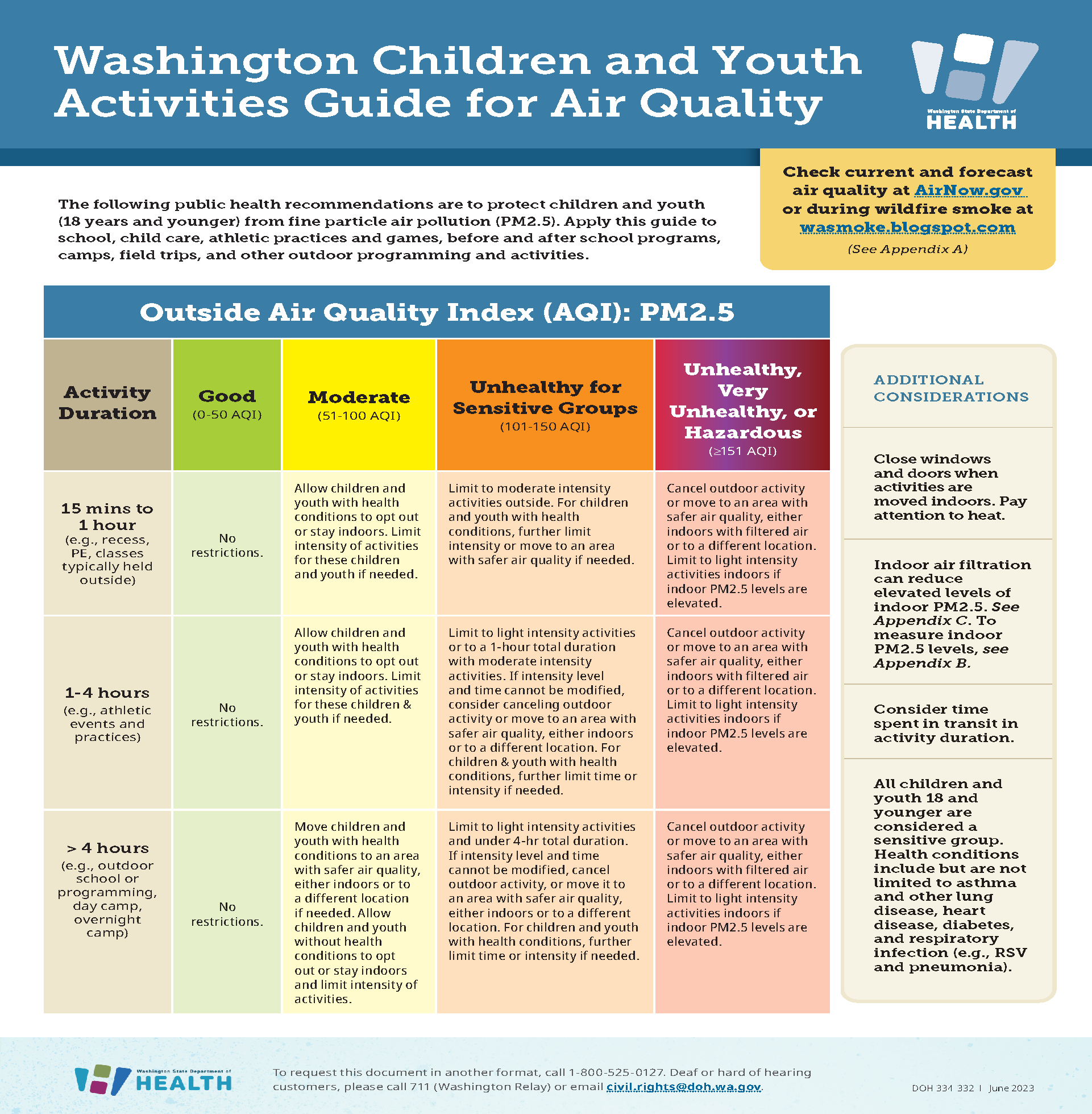
Washington Children and Youth Activities Guide for Air Quality (PDF) Find public health recommendations to protect children and youth from fine particle air pollution, or PM2.5. It can apply to:
Appendices A and B have guidance on using air monitoring data and sensors. 🌡️Appendix D covers Considerations for when Heat and Poor Air Quality Overlap. |
|
|
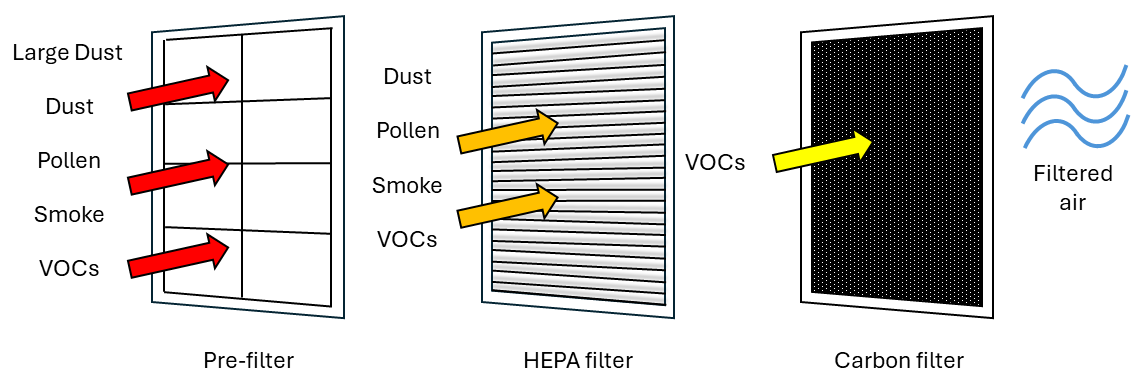
The updated Portable Air Cleaner webpages include information on choosing and using portable air cleaners. NEW! View the List of Portable Air Cleaners Meeting DOH Recommendations (PDF). Before purchasing, check that a portable air cleaner meets four basic criteria –that it has:
Then learn where to place portable air cleaners, when to run them, and which settings to use. Remember to keep them maintained. |
|
|
|
The Improving Ventilation and Indoor Air Quality During Wildfire Smoke Events (PDF) includes recommendations for schools to be prepared prior to, and during, wildfire smoke season.
|

More Information about School Environmental Health and Safety:
     
|
|
To request this document in another format, call 1-800-525-0127. Deaf or hard of hearing customers, please call 711 (Washington Relay) or email civil.rights@doh.wa.gov |
 |