|
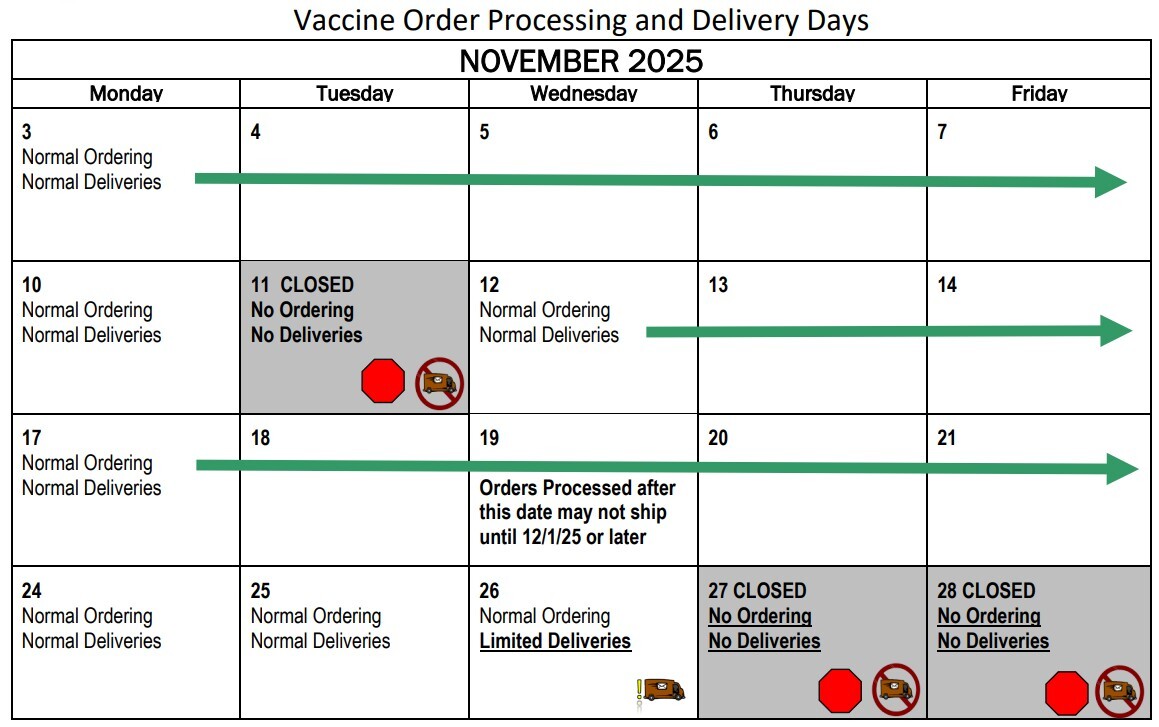
With the holidays quickly approaching, please be mindful of shipping delays, limited or no shipping days, and plan your vaccine orders accordingly. You can place an order off your typical schedule if needed. Please ensure your accountability reports are up to date prior to placing orders to ensure expedited processing. It's also a good idea to update your shipping hours in your provider agreement if needed. Check out the holiday shipping calendar on our website for more information.
Reminder: DOH Offices will be closed Tuesday, November 11th.
Did you know that if you refer a child to a pharmacy or other facility that is not enrolled in the Childhood Vaccine Program for routine or seasonal vaccines this may result in parents being charged for the vaccine and administration fees (especially uninsured children and kids enrolled in Medicaid)? Pharmacies also may not be able to vaccinate children under a certain age based on their collaborative agreement with a licensed healthcare professional.
This is why providers who participate in the Childhood Vaccine Program are expected to offer all routine and seasonal vaccines to their patients to ensure access to vaccines at no or low cost. This is especially important in rural areas where health care access is limited. Offering all vaccines in your practice also helps reduce the time and money parents may spend traveling elsewhere for vaccines and increases the likelihood of parents vaccinating their children.
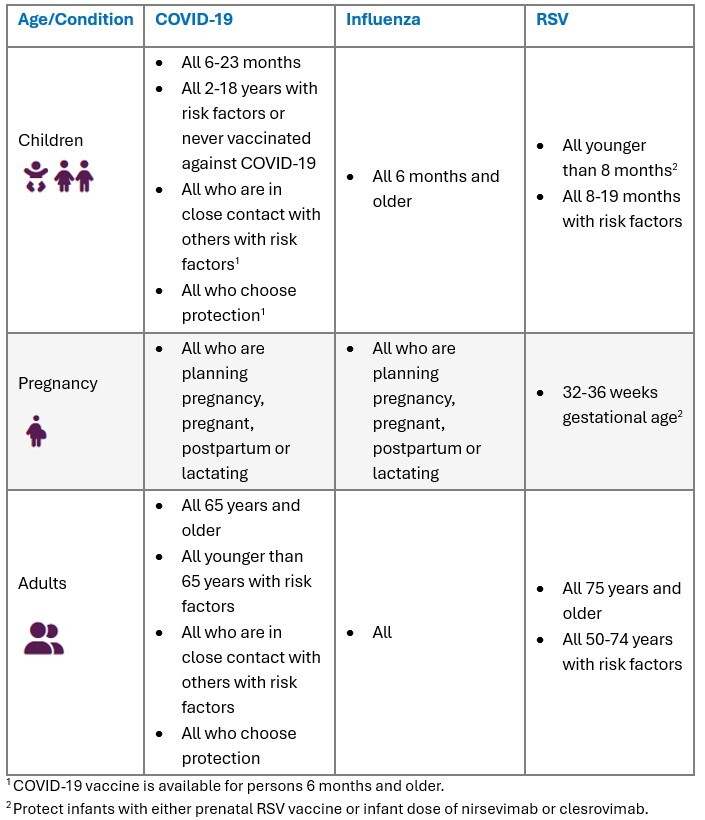
DOH affirms the West Coast Health Alliance (WCHA) respiratory vaccine recommendations that were announced for the 2025-2026 season. These recommendations have been reviewed and are supported by the Washington Vaccine Advisory Committee (VAC).
COVID-19 vaccine has benefits for all individuals 6 months and older, and is recommended for those in the specified age and risk groups below and for all who choose protection. Influenza vaccine is recommended to all individuals 6 months and older. RSV immunization is recommended for those in the specified age and risk groups.
MMRV Vaccine Guidance
DOH MMRV vaccine guidance aligns with WCHA recommendations, the American Academy of Pediatrics' (AAP) science-based guidance, and has been reviewed and supported by the Washington Vaccine Advisory Committee (VAC).
- DOH recognizes multiple safe and effective options to immunize children against measles, mumps, rubella, and chickenpox, including MMR, varicella, and MMRV vaccines. Choosing the right vaccine should be a shared decision between parents and healthcare providers.
- For children 12 months through 4 years old, DOH continues to recommend the MMRV vaccine as an option when appropriate based on clinical considerations and shared decision-making.
- DOH continues to offer MMRV for children under 4 through the CVP.
Ordering Update
- All respiratory products (flu, COVID-19, and RSV) are available for provider ordering through the Childhood Vaccine Program (CVP) and Adult Vaccine Program (AVP).
- Providers may continue to order MMRV for children under 4 through CVP.
Helpful Resources
Thank you for your continued partnership in protecting Washington communities through immunization.
A recording of the October 16th Childhood Vaccine Program (CVP) Respiratory Season Updates and COVID-19 Storage and Handling webinar is now available on our Training webpage, along with the training slides.
If you have any questions, please contact us at WAChildhoodVaccines@doh.wa.gov.
Please review the following shelf life information for this season's COVID-19 vaccines and take into account when placing orders. As always, we recommend placing smaller, more frequent orders to minimize vaccine wastage. Quantities should be limited to the amount of vaccine that can be utilized within a 4-6 week period for Pfizer and Moderna vaccines, or within a 2 week period for Sanofi/Novavax vaccines.
- Moderna
- Initially, providers should anticipate dating between 3-6 months. As the season progresses, dating may be shorter.
- Pfizer
- Vaccines for person 12y+ will arrive refrigerated with at least 12 weeks of remaining shelf life
- Vaccines for children 5-11y will arrive ultracold with at least 3 months of remaining shelf life when stored at ultracold storage temperatures
- As the season progresses, dating may be shorter
- Sanofi/Novavax
- Provider should anticipate product expiry to be 12/31/2025
- Sanofi is working with FDA on shelf-life extension this season
The Pierce County Immunization Coalition and Washington Vaccine Association are hosting a webinar on October 30, 2025 at 12PM PT for healthcare staff and vaccine providers. A team from One Vax Two Lives will discuss the benefits of vaccination in pregnancy. This University of Washington group's mission is to provide medically and scientifically accurate information about vaccination to pregnant and breastfeeding individuals.
Register Here
Join Vax Northwest on November 19, 2025 at 12 PM PT for “Speak with Confidence: Immunization Recommendations During Pregnancy and Beyond.” Learn from experts about vaccine recommendations for pregnant patients and newborns.
CE credit has been requested for nurses and licensed midwives and the webinar will be recorded. Open to midwives, nurses, medical assistants, OB GYNs, all prenatal care providers and anyone else interested in the topic.
Register Here
FDA approved AstraZeneca’s FluMist nasal spray (live attenuated influenza vaccine) for self- and caregiver-administration for persons 2 through 49 years old. A caregiver (18 years or older) should administer FluMist to children 2 through 17 years. Find out more about ordering, eligibility, insurance, shipping, administration guidance, documentation. The self-administered FluMist home program is not available through the WA Childhood Vaccine Program (CVP) or the Adult Vaccine Program (AVP).
Self-administered doses of FluMist are electronically reported to the WA Immunization Information System (WAIIS). The vaccine name is Influenza, live, trivalent, intranasal, self/caregiver admin, PF. Providers should be aware of the possibility for invalid doses and the need for a second dose for some patients. More information is below.
- There may be increased doses of FluMist, MMR, or varicella showing up as invalid due to a shorter than recommended interval between live vaccines. If not given on the same day, a 28-day minimum interval is recommended between live vaccines, including FluMist, MMR, or varicella for optimal immune response. For example, a 4-year-old patient who received self-administered FluMist, then MMR and varicella less than 28 days later will have the MMR and varicella doses flagged as invalid. The MMR and varicella doses will need to be repeated. If FluMist is given too soon after MMR or varicella, the FluMist needs to be repeated.
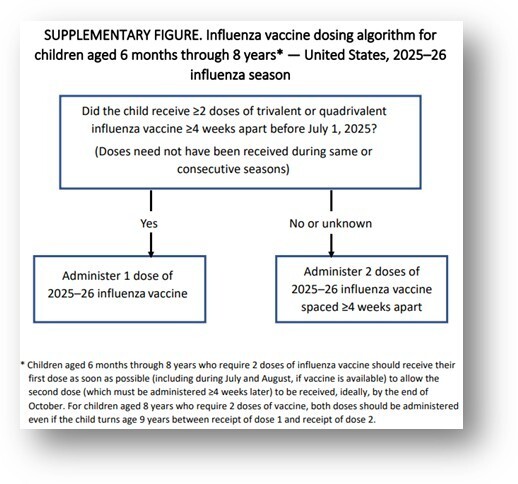
- In addition, a child 6 months through 8 years who did not receive 2 or more flu vaccine doses before July 1, 2025 or whose vaccination history is unknown require 2 doses of flu vaccine this season. Providers should reinforce this recommendation with parents/guardians.
 |
The American Hospital Association developed the United Against the Flu 2025 Flu Toolkit with sample social media posts and graphics
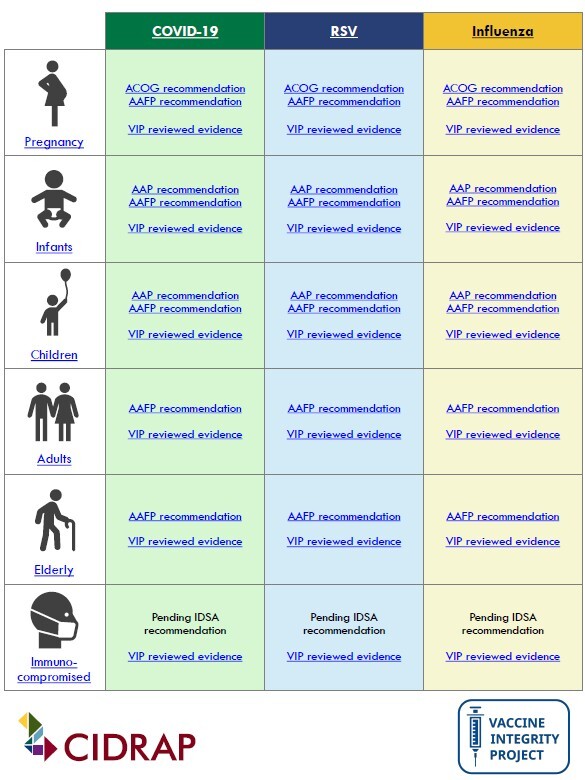
The Vaccine Integrity Project recently published an interactive table infographic that links users to current professional medical society guidance. They will update the table when recommendations are added or revised.
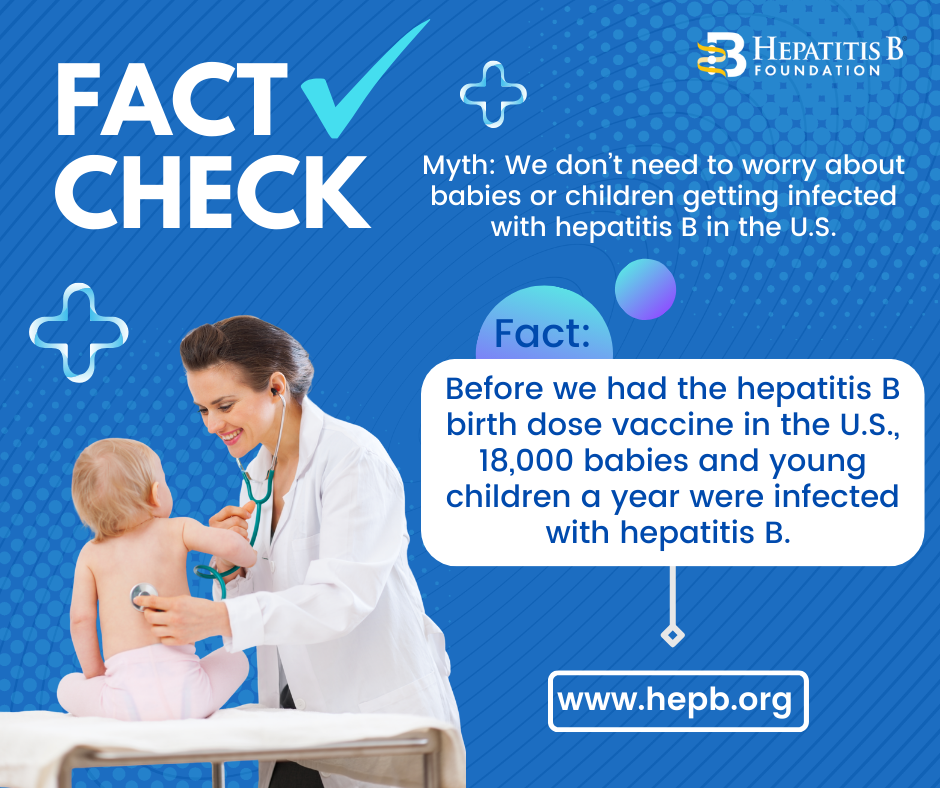
To emphasize the critical importance of the hepatitis B birth dose for newborns, the Hepatitis B Foundation created a comprehensive media toolkit. This resource includes fact sheets, ready-to-use social media messages, and other materials to help you and your organization share accurate, consistent information about protecting infants from hepatitis B. View the toolkit here.
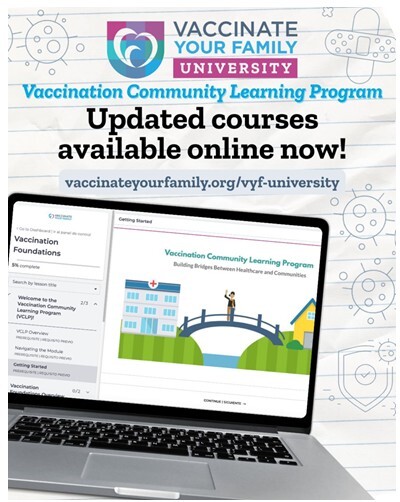
These courses, called the Vaccination Community Learning Program, is offered to build vaccine knowledge, communication skills, and confidence to promote vaccination in your communities. All courses are free, mobile-friendly, and accessible from anywhere. This program is an updated and expanded version of the Vaccination Community Navigator curriculum originally designed for Community Health Workers.
You may have noticed that an updated Vaccine Information Statement (VIS) for the COVID-19 vaccine has not yet been released. Providers should use the current version of the COVID VIS that’s available until an updated version is provided by the CDC. Keep an eye on future Vaccine Blurbs - we will let you know when an updated VIS is available!
|