|
|
Welcome to the Vaccines for Respiratory Illnesses Newsletter! Here you'll find the latest news and information on respiratory illness vaccine related topics.
- Latest News
- Clinical Updates
- Training and Events
- Resources
|
|
|
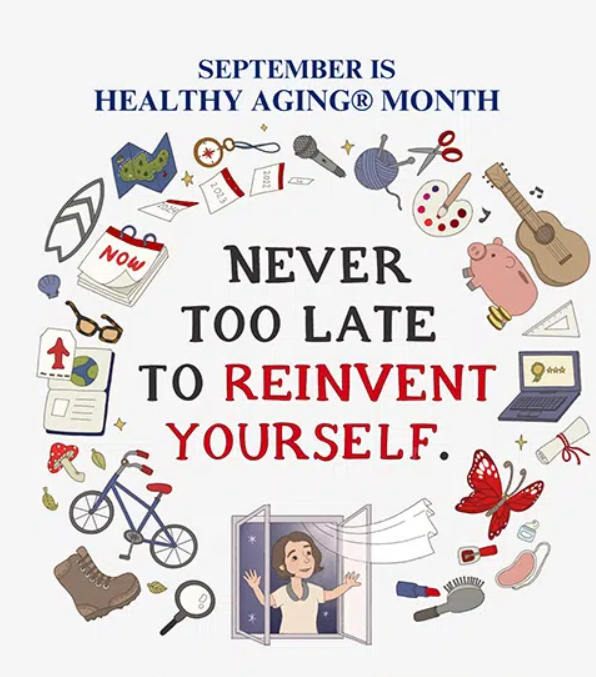
This year’s theme, “Never Too Late to Reinvent Yourself” reminds us that no matter your age or stage, it’s always possible to chart a new course—whether it’s through a career shift, new lifestyle habit, or personal growth goal. Unlike past years’ focus on just sustaining vitality, 2025 is about transforming your future with purpose and excitement. Perhaps transforming your future involves staying up to date on the vaccines recommended for you at every age…
Why Vaccines Still Matter in Older Adulthood
“There’s a quiet misconception that vaccines belong to childhood: doctor visits, school forms, check-the-boxes. But the reality is that vaccines remain just as relevant in older adulthood.
The immune system – our body’s natural defense system – declines as we age. That can make certain vaccines from childhood less effective over time, which is why boosters may be recommended. It also means familiar illnesses, like flu, shingles, pneumonia, RSV, and COVID-19, can lead to more serious and long-term complications, such as hospitalization and death. Vaccines give our bodies the extra help it needs to fight off these infections.”
To read the rest of the article from the Alliance for Aging Research visit: Why Vaccines Still Matter in Older Adulthood
|
|
|
A: High-dose influenza vaccine (brand named Fluzone High-Dose, by Sanofi) and adjuvanted influenza vaccine (brand named Fluad, by CSL Seqirus) are FDA-licensed for use in people age 65 years and older. In June 2024, the CDC’s Advisory Committee on Immunization Practices, or ACIP, recommended that high-dose or adjuvanted influenza vaccines are options for vaccination of adults age 18 through 64 who have had a solid organ transplant and are on immunosuppressive medication regimens.
ACIP did not express any preference for these options over any age-appropriate influenza vaccines for solid organ transplant recipients because there is no definitive evidence at this time that these products work better than other brands for transplant recipients. However, they are used by some transplant specialists under the theory that they are equally safe and might work better. This flexible ACIP recommendation allows for insurance coverage of these options when used by healthcare providers who work with solid organ transplant recipients. There are no other circumstances where these products are recommended for use in people younger than age 65 years, including those with other types of immunocompromising conditions.
|
|
|
In response to recent federal actions that have undermined the independence of the Centers for Disease Control and Prevention (CDC) and raised concerns about the politicization of science, Washington, California, and Oregon are beginning the process to provide evidence-based unified recommendations to their residents regarding who should receive immunizations and to help ensure the public has access and credible information for confidence in vaccine safety and efficacy.
Hawaii to join West Coast Health Alliance with Washington, California, and Oregon
Roughly 24 hours after the launch of the West Coast Health Alliance, Hawaii is joining Washington, California, and Oregon to provide unified recommendations on immunizations to residents based on science.
Dear Health Care Providers and Health System Partners,
To help reduce confusion and address urgent access barriers, we are reaching out to share updated information regarding COVID-19 vaccine recommendations and authorizations in Washington state.
DOH continues to recommend that everyone 6 months and older, including pregnant people, stay up to date with the current COVID-19 vaccine to help protect against severe illness, hospitalization, and death. DOH supports evidence-based COVID-19 vaccine recommendations from trusted national medical associations including the American Academy of Pediatrics for those 6 months-18 years, the American College of Obstetrics and Gynecology for all pregnant individuals, and the American Academy of Family Physicians for adults 19 years and older.
To support Washingtonians in their efforts to protect themselves from COVID-19 infection using the best available science, effective today DOH is issuing a statewide standing order for COVID-19 vaccines. This standing order under the direction of the State Health Officer, authorizes qualified health care professionals to vaccinate individuals aged 6 months and older, including pregnant persons, who do not have contraindications to the vaccine. Please review the standing order and FAQs on the DOH website and share with your networks as appropriate.
Additionally, Washington Governor Bob Ferguson together with Governor Gavin Newsom of California and Governor Tina Kotek of Oregon announced the formation of the West Coast Health Alliance on September 3, 2025. This regional partnership ensures public health policies continue to support safety, efficacy, transparency, access, and trust.
If you have questions about insurance coverage, we recently shared updated information on COVID-19 vaccine insurance coverage. This includes key details on coverage and billing through Apple Health (Medicaid) and private insurers.
Hopefully, this standing order will assist many in continuing to access COVID-19 vaccines. The barriers to COVID-19 vaccination are complex, and the standing order is just one part of the solution. As we work to minimize barriers, we acknowledge that challenges will remain this respiratory virus season, and many may still experience difficulty accessing vaccines. DOH is actively monitoring these issues and working toward solutions. We remain committed to science-based vaccine policy and to ensuring vaccine access and equity for everyone in Washington, and we will keep you informed of any future developments.
Thank you for your continued partnership.
Warm regards,
Tao Sheng Kwan-Gett, MD MPH
State Health Officer
Washington Department of Health
taosheng.kwan-gett@doh.wa.gov
360-522-2223 | doh.wa.gov
Jamilia Sherls, DNP, MPH, RN, CPN, CDP
Director, Office of Immunization
Washington State Department of Health
Jamilia.Sherls@doh.wa.gov
564-669-0120 | doh.wa.gov
|
|
|
On August 27, 2025, the White House fired Centers for Disease Control and Prevention (CDC) Director Susan Monarez after she refused to resign. It’s unclear how long Jim O’Neill might remain in the interim CDC role or whether he’s a candidate for the permanent position. He is expected to retain his deputy secretary role at Health and Human Services while leading the CDC. The September Advisory Committee on Immunization Practices (ACIP) meeting will be the first real test for O'Neill. Can he restore scientific processes, including transparent reviews, expert briefings, and evidence being vetted and posted before votes?
Related news: At least four other officials also submitted their resignations on August 27, 2025, in a massive shakeup at the agency: Dr. Debra Houry, the CDC’s chief medical officer; Dr. Demetre Daskalakis, director of the National Center for Immunization and Respiratory Diseases; Dr. Daniel Jernigan, the director of the National Center for Emerging and Zoonotic Infectious Diseases; and Dr. Jennifer Layden, director of the Office of Public Health Data, Surveillance and Technology.
|
|
|
The CDC website confirms an ACIP meeting for September 18-19, 2025. Any member of the public can submit a written public comment to ACIP. The docket opened to receive written comments on September 2, 2025. Written comments must be received by September 13, 2025.
On the agenda: the newborn hepatitis B dose, infant RSV protection, COVID-19 vaccination for healthy children and young adults, and the combined measles-mumps-rubella-varicella shot. Revisiting so many long-standing childhood immunizations at once would be unprecedented. If recommendations are weakened, Medicaid, the Children's Health Insurance Program and the Vaccines for Children program could restrict coverage, creating new barriers for families.
|
|
|
Please review the important updates below regarding COVID-19 vaccines.
FDA Approval of Updated Vaccines
On August 27, 2025, the U.S. Food and Drug Administration (FDA) approved COVID-19 vaccines for the 2025–2026 season manufactured by Moderna, Pfizer, and Sanofi/Novavax. Details are available at Coronavirus Disease 2019 (COVID-19) | FDA.
On the same date, the FDA revoked the Emergency Use Authorization (EUA) for Novavax COVID-19 Vaccine, Adjuvanted; Moderna COVID-19 Vaccine; and Pfizer-BioNTech COVID-19 Vaccine. See Emergency Use Authorization--Archived Information | FDA for details.
Use of 2024–2025 Vaccines
-
Children 6m–11y (EUA vaccines): Vaccines with revoked EUAs must no longer be administered.
- Persons 12y+: These products have been delisted effective August 27 by Moderna and Pfizer. Please stop administering the 2024–2025 vaccines.
Disposal of 2024–2025 Vaccines
To reduce administration errors, providers should:
- Remove all 2024–2025 COVID-19 vaccines from storage, even if unexpired.
- Reconcile 2024–2025 COVID-19 vaccine inventory in the IIS by categorizing the vaccines as “Spoiled” with the reason noted as “Expired BUD”. Please do not inactivate the lot until submitting the return.
- After reconciling your inventory, complete the online Vaccine Returns process to receive a return label for these doses.
Next Steps
Ordering guidance for 2025–2026 vaccines will be shared as soon as we receive notice from CDC. Please stop administering last season’s vaccines and begin using the new formulation once received.
The American College of Obstetricians and Gynecologists (ACOG) reaffirmed support for Covid-19 vaccination during pregnancy and released updated clinical guidance regarding vaccination during pregnancy against COVID-19, influenza, and RSV. The three guidance documents, all of which recommend maternal immunization, lay out the full body of current scientific evidence that underscores the safety and benefits of choosing to be vaccinated against these respiratory conditions during pregnancy.
-
COVID-19 Vaccination Considerations for Obstetric–Gynecologic Care: ACOG recommends that patients receive an updated COVID-19 vaccine at any point during pregnancy, when planning to become pregnant, in the postpartum period, or when lactating.
-
Influenza in Pregnancy: Prevention and Treatment: ACOG recommends that everyone who is or will be pregnant during influenza season receive any age-appropriate injectable influenza vaccine as soon as it is available, during any trimester of pregnancy.
-
Maternal Respiratory Syncytial Virus Vaccination: ACOG recommends a single dose of Abrysvo RSV vaccine (Pfizer) when seasonally appropriate (generally September through January), to prevent RSV lower respiratory tract infection in infants. Eligibility criteria include no maternal history of previous RSV vaccination and gestational age between 32 and 36 6/7 weeks’ gestation.
|
|
|
The American College of Cardiology (ACC) released vaccination recommendations for adults with cardiovascular disease, urging immunization against COVID-19, influenza, respiratory syncytial virus (RSV), pneumonia, and herpes zoster (shingles). People with heart disease are at higher risk for poor outcomes from respiratory virus infections, such as hospitalization and death.
The guidelines highlight helpful supplementary material, including patient handouts and communication approaches for cardiologists.
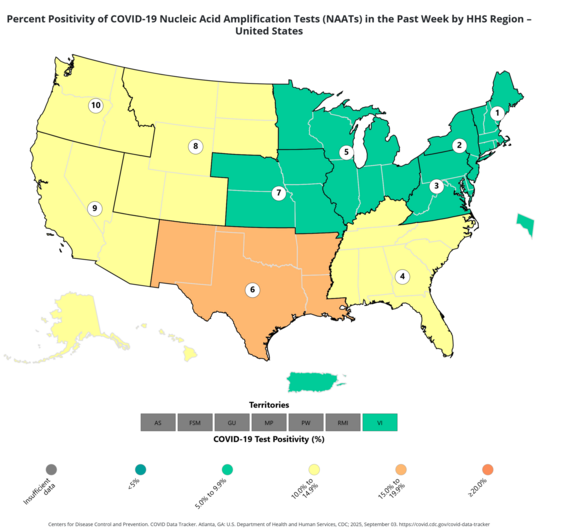
The CDC reported a nationwide rise in COVID-19 activity with test positivity rates nearing 10% and several states exceeding 15%. While deaths and hospitalizations remain stable, officials attribute the uptick to new variants, waning immunity, and seasonal gatherings. The agency noted that emergency department visits for COVID-19 are increasing across all age groups. Public health communicators may want to monitor both the trajectory of the Stratus (XFG) variant and ongoing updates to vaccine guidance.
|
|
|
In response to new CDC recommendations for routine use of an additional RSV preventive antibody product in infants, Immunize.org published the clinical resource: Standing Order for Administering Clesrovimab RSV Preventive Antibody (Enflonsia, by Merck) to Infants. Immunize.org also updated its existing Standing Order for Administering Nirsevimab RSV Preventive Antibody (Beyfortus, by Sanofi) to Infants and High-Risk Young Children.
The new preventive antibody product, Enflonsia, is an option for protection of infants younger than age 8 months before or during their first RSV season. There is no preference between Beyfortus and Enflonsia for eligible infants. The Beyfortus standing orders template was updated to note that the other two options for protection of infants during their first RSV season are to administer Enflonsia to the infant or to administer the Abrysvo RSV vaccine (Pfizer) during pregnancy. Only Beyfortus is licensed and recommended for older children, age 8 through 19 months, who are at high risk for severe RSV disease and are entering their second RSV season.
Immunize.org is also updating the Abrysvo standing orders for vaccination during pregnancy to note the alternative options of Beyfortus or Enflonsia for infant RSV protection. Health care providers should resume evaluating for RSV vaccination during pregnancy in September and plan for RSV immunization of older infants and high-risk children in October.
Related Information: CDC released four new resources for health care professionals on RSV prevention products. These materials are available on the CDC’s Respiratory Syncytial Virus (RSV) Immunizations webpage.
Immunize.org’s popular standing orders templates for the 2025–26 influenza season are now available. These templates help you simplify providing influenza vaccine to people in your practice age 6 months and older, whether you are using an injectable influenza vaccine or a live attenuated influenza vaccine.
These templates are designed to be used with any formulation of influenza vaccine. They acknowledge the June 2025 ACIP vote to no longer recommend use of multi-dose vial formulations containing thimerosal as a preservative and note that CDC’s website states (as of 8/30/2025) that there is no evidence of harm caused by the low doses of thimerosal in vaccines, other than minor reactions like redness and swelling at the injection site.
Influenza Vaccine Products for the 2025–2026 Influenza Season, Immunize.org’s one-page reference document, is also available. For each vaccine, the manufacturer, trade name, common abbreviation, dosage form, mercury content, age range, vaccine product (CVX) code, and product billing (CPT) code are listed.
|
|
|
Connecting the Dots: Influenza Vaccination is a one-page resource guide designed to support your program’s flu vaccination efforts. This guide contains the latest tools, materials, and initiatives in one convenient place, helping immunization programs, health care providers, and community partners access what they need quickly and easily.
The guide is organized into three categories:
- Health Education – learning resources for immunization program staff, partners, and health care providers
- Health Communication – tools for effectively communicating about influenza disease and vaccination to patients and the public
- Program Planning – programmatic and clinic operations resources to streamline influenza vaccination activities
Updated monthly, Connecting the Dots serves as a centralized, go-to reference for influenza vaccination resources. If you have a resource to suggest for the next update, please email AIM.
|
|
|
The Morbidity and Mortality Weekly Report (MMWR ) series is prepared by the Centers for Disease Control and Prevention (CDC). The MMWR series is the agency’s primary vehicle for scientific publication of timely, reliable, authoritative, accurate, objective, and useful public health information and recommendations.
|
|

Current Issues in Vaccines- Aluminum Adjuvants: Separating Fact from Fear
September 10, 2025 10:00 AM PST
Register Today!
Dr. Offit will be discussing aluminum adjuvants. Continuing education credits will be offered. Questions submitted during the event will be addressed and posted online within a week of the event. Slides will also be posted along with a link to the archived event.
NHMA Salud+Policy Town Hall Series: Clearing the Air on Respiratory Protection for the Latino Community
Sept. 10, 2025 at 10:00 AM PST
Register Today!
Join trusted clinicians, public health leaders and policy experts for a virtual Town Hall on protecting Latino communities from respiratory illnesses. This session will cover vaccine education, prevention strategies and equity-driven approaches to reduce health disparities and improve community health outcomes.
DOH Webinar: Influenza, COVID-19, and RSV
September 11, 2025 at 12:00 PM PST.
Register Today!
The Washington Department of Health (DOH) will host a webinar to discuss influenza, COVID-19 and RSV epidemiology, vaccination coverage, clinical overview, vaccine recommendations, and vaccine ordering and distribution. The webinar will be recorded and continuing education (CE) credits will be available for nurses, medical assistants, and pharmacists/pharmacy technicians. Please note that a Train.org account is required to register for the webinar and receive CE credits.
Preparing for Respiratory Virus Season: A Review of Maternal Immunization Guidance and Communication Strategies to Increase Vaccine Uptake and Confidence
September 17, 2025 at 3:00 PM PST
Register Today!
In preparation for respiratory virus season, this webinar, hosted by the Maternal Immunization Task Force, will support health care professionals seeking to protect pregnant patients and their families against COVID-19, influenza, and respiratory syncytial virus (RSV), by reviewing vaccine clinical guidance for pregnant people and discussing effective communication strategies to help increase vaccine acceptance and demand.
|
|
|
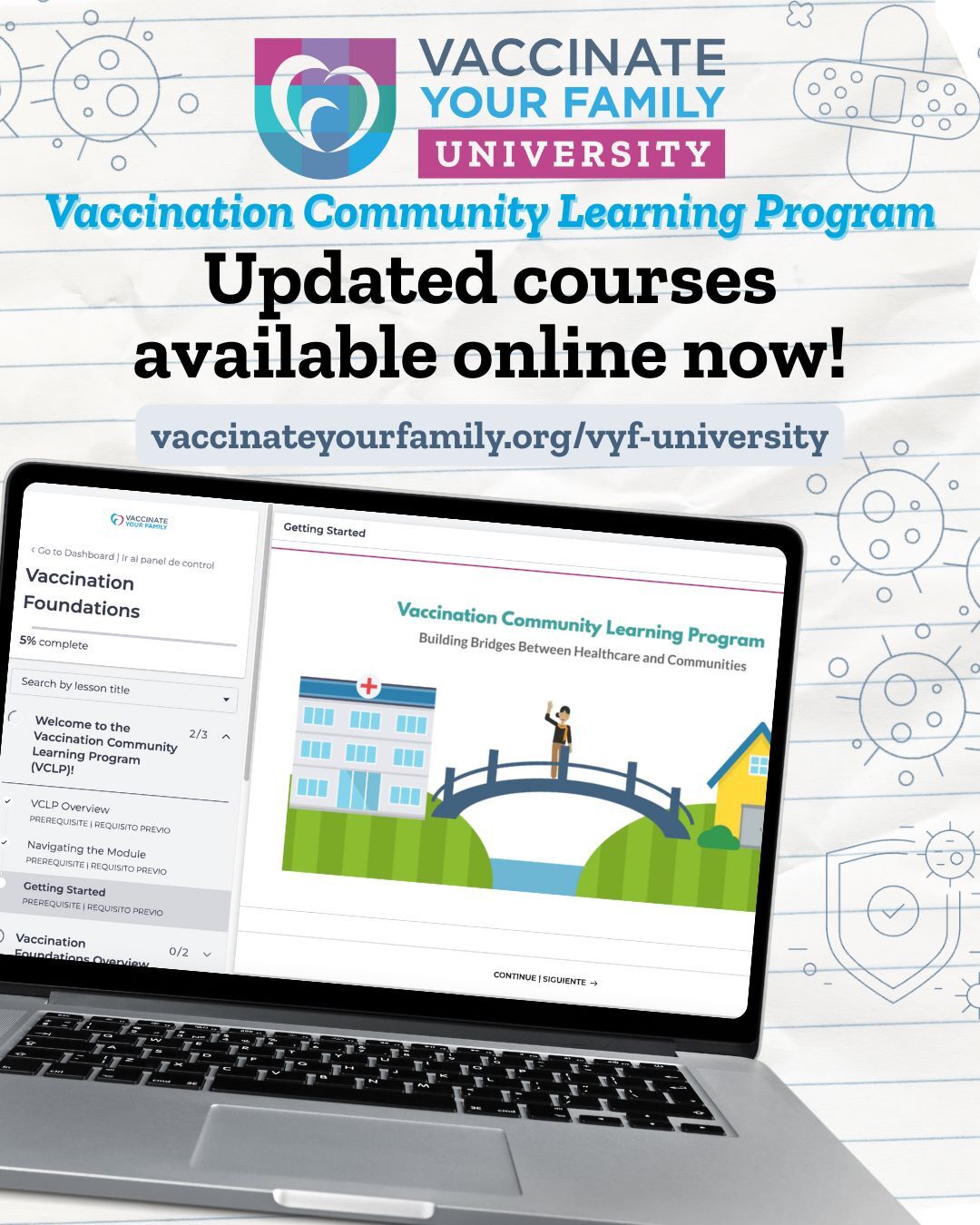
Vaccinate Your Family is pleased to share their new free, interactive, self-paced educational offering called the Vaccination Community Learning Program (VCLP). The VCLP is the newly updated and expanded version of our popular Vaccination Community Navigator curriculum, which was originally designed for Community Health Workers.
These courses help ANYONE build vaccine knowledge, communication skills, and confidence to promote vaccination in their communities. All courses are free, mobile-friendly, and accessible from anywhere. Right now, the VCLP is only available in English and Spanish is in development.
What’s different about VCLP
-
Self-paced eLearning – Courses built in interactive formats for a more engaging learner experience
-
Opportunities to practice – whether it’s through quizzes, discussion prompts, or real-world scenarios, you’ll have plenty of opportunity to practice what you’ve learned
-
Modular design – Bite-sized lessons make it easy to learn in short bursts
-
Plain language & culturally responsive – Designed for everyone
-
Mobile-friendly – Works seamlessly on phones and tablets
-
New and updated content – All content has been fully reimagined with up-to-date vaccine information and inclusive examples.
We hope you will share this offering with anyone seeking support communicating effectively about vaccines and/or enroll in the course yourself.
|
|
|
|
FOR SCHOOLS AND CHILD CARE FACILITIES
FOR LONG-TERM CARE FACILITIES
|
|
|
|
|
|
|
If you aren't already signed up for Vaccines for Respiratory Illnesses Newsletter, please visit the Department of Health's email subscribers page here. Once you enter your email, on the next page expand the Immunization topic, select Vaccines for Respiratory Illnesses Newsletter, and click submit.
|
|
This newsletter summarizes content beginning the week of August 24, 2025, and was sent out on September 5, 2025. |
|
|
|
|