|
|
As we emerge from the 4th of July weekend, we recognize that true freedom includes the ability to access healthcare, housing, and opportunity. That’s why it’s important to stay informed about policy changes that could impact our communities across Washington. We will be sharing information about the Trump administration’s policies and how these changes could show up in the lives of people across the state in this newsletter and upcoming meetings. While many of the harmful policy changes are not set to take effect until late 2026, it’s important to understand what may be ahead so we can collectively prepare.
This newsletter includes:
Have a question we can help address or a resource we should include in the future? Please email Community.Collaborative@doh.wa.gov.
|
|
Wednesday's Community Collaborative Meeting |
|
|
Join us for Wednesday’s Community Collaborative meeting July 9 at 3:30 p.m. where we have two primary agenda items:
- Meghan Jernigan, DOH’s federal relations deputy director, will share what we know about the impacts of the sweeping budget reconciliation bill, and a timeline for future changes that are likely to impact health and wellbeing of Washingtonians.
- Nichole Peppers with Southwest Accountable Community of Health (SWACH) and JP Anderson of CHOICE Regional Health Network, along with Maria Courogen from Washington DOH, will share about the work of Accountable Communities of Health, including Community Care Hub work and investments in community organizations and community-based workforce.
Join us on Zoom from 3:30 p.m. to 5:00 p.m. at https://kauffmaninc.zoom.us/j/93116904570
Come ready with your questions!
As always, meeting slides will be posted on WaPortal.
|
|
Background: Federal Policy and Budget |
|
|
Governor Ferguson released three press announcements about the impact of the budget reconciliation bill including:
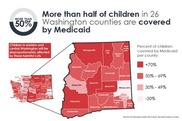
1. Devastating impacts to Medicaid. Kaiser Family Foundation estimates Washington will lose at least $3 billion per year in federal Medicaid dollars each year for the next 10 years. At least 250,000 Washingtonians will lose Medicaid coverage and tens of thousands likely to be priced out of the state’s health care exchange. |
|
 |
2. All Washingtonians on Supplemental Nutrition Assistance Program will see benefits reduced. Each of the 1 million Washingtonians who receive assistance from SNAP will see their benefits reduced under the reconciliation bill and more than 130,000 Washingtonians could lose their benefits altogether.
3. Clean energy investments at risk. The bill passed out of Congress today puts at least $8.7 billion in Washington’s clean energy investments at risk. The U.S. Climate Alliance estimates the bill’s removal of wind and solar energy tax credits will raise Washington households’ electricity costs by $115 per year by 2029.
The bill has several provisions directly targeting refugees and other humanitarian entrants, with most groups cut off from Medicaid, Medicare, Children’s Health Insurance Program (CHIP), and Affordable Care Act access starting next year. Read more here.
DOH has created a new WaPortal hub for information about its interactions with the federal government.
Last week, Washington joined a multistate coalition filing a lawsuit against the Trump Administration for illegally sharing personal health data with ICE. Learn more about the lawsuit. Also, the Health Care Authority has posted this Q&A about the incident.
On June 26, Washington State Public Health Association, Washington State Association of Local Public Health Officials and federal experts shared about the range of public health programs set to be eliminated. Review slides or the Webinar recording, Passcode: icKW?f2M.
|
|
Background: Accountable Communities of Health |
|
|
Accountable Communities of Health (ACHs) are independent, regional organizations that work with their communities on specific health care services and health-related social needs (HRSN) activities. Learn more.
Each ACH serves a specific region of the state. Although each ACH is unique, they share a common approach to improving the health of their communities and changing health care delivery. Washington's nine ACHs are:
|
|
|
“One discovers the light in darkness, that is what darkness is for; but everything in our lives depends on how we bear the light. It is necessary, while in darkness, to know that there is a light somewhere, to know that in oneself, waiting to be found, there is a light.”
James Baldwin
|
|
 Photo of wildflowers on the Olympic Peninsula near Lake of the Angels.
|
|
|
NOTE: We are working to find balance in the benefits and costs associated with translation. If you would like to share this or any part of this newsletter in another language, please email Community.Collaborative@doh.wa.gov and we will work with you to translate into the language(s) needed.
Estamos trabajando para encontrar un equilibrio entre los beneficios y costos asociados con la traducción. Si desea compartir esto o alguna parte de estos materiales en Español, por favor envíe un correo electrónico a Community.Collaborative@doh.wa.gov y trabajaremos con juntos con usted para traducir.
|
|
|
|