|
|
Welcome to the Vaccines for Respiratory Illnesses (VRI) Newsletter! Here you'll find the latest news and information on respiratory illness vaccine related topics.
- Latest News
- Clinical Updates
- Training and Events
- Resources
|
|
|
The VRI Newsletter will take a brief summer pause through July 10th. We’ll resume sending out the newsletter on Friday, July 11th. Have a safe and healthy start to your summer!
|
|
|
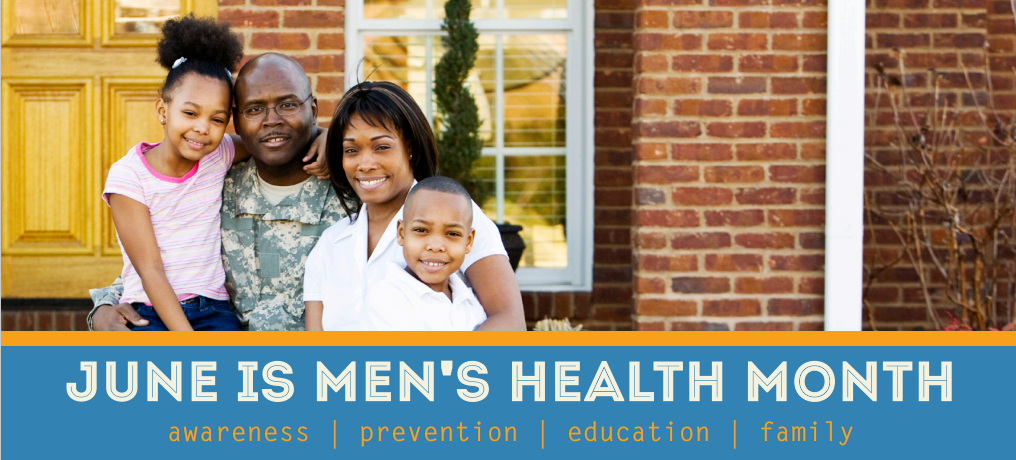
National Men's Health Week is June 9–15, ending on Father's Day. This annual observance encourages men of all ages to prioritize their health and seek preventive care including recommended vaccines.
Compared with women, men generally die earlier, become ill at a younger age, and develop more chronic illnesses, but are up to 50% less likely to seek medical care. According to CDC, more than 14% of adult men are in fair or poor health.
Encourage men to get up to date with vaccination. Men can learn what they may need in this easy-to-read version of CDC’s Recommended Immunizations for Adults. In addition to vaccines needed by age or health status, some may need additional vaccines based on their occupation. CDC resources on Traveler’s Health address vaccines needed for international travel. Also see Immunize.org's resource, Vaccinations for Men Who Have Sex with Men, for information about additional vaccines recommended for them, including mpox vaccine.
The HPV vaccine is critical cancer prevention for all young adults and teens, helping to prevent HPV-associated cancers of the mouth, throat, and genitals. Currently, about 16,000 HPV-associated cancers occur in men each year. All males age 9 through 26 years should be protected from HPV-related cancers through vaccination; men age 27 through 45 years should talk with their health care provider to decide if they would benefit.
A: Infants who will travel outside the United States should be up to date for all routinely recommended vaccines. In addition:
- One dose of MMR is recommended for infants age 6 through 11 months before international travel. This dose does not count toward the two doses needed to complete the childhood schedule.
- Infants 6 through 11 months of age traveling to an area at risk for hepatitis A exposure also should receive a dose of hepatitis A vaccine. This dose does not count toward the two doses needed to complete the childhood schedule. Infants younger than age 12 months traveling to a hepatitis A endemic area are not recommended to receive immune globulin for prevention of hepatitis A because immune globulin could interfere with the response to MMR.
Varicella vaccine is not recommended before age 12 months, even for travelers. For other vaccine recommendations for travelers, consult the CDC travel website at wwwnc.cdc.gov/travel.
|
|
|
The Washington State Department of Health (DOH) is pleased to announce the appointment of Dennis Worsham as Washington’s new Secretary of Health, effective July 7. Appointed by Governor Bob Ferguson, Worsham brings more than 32 years of public health leadership and expertise to the role.
Worsham currently serves as the first Director of the Snohomish County Health Department – the same agency where he began his public health career in the 1990s as a HIV/STD/Hepatitis Program manager and health educator for the LGBTQ+ community during the height of the HIV/AIDS epidemic. His career includes executive leadership roles at local and state levels, including Deputy Secretary for Health at DOH and Interim Director of Public Health – Seattle & King County. His broad experience at Public Health – Seattle & King County includes roles as Deputy Director, Chief of Policy, Community Partnerships and Communications, Regional Health Officer, and TB Control Program manager.
|
|
|
On June 9, 2025, under the leadership of Health and Human Services Secretary Robert F. Kennedy, Jr., the agency removed the 17 sitting members of the Advisory Committee on Immunization Practices (ACIP) committee and will replace them with new members currently under consideration. HHS released a set of Frequently Asked Questions (FAQs) regarding the recent unprecedented removal of all currently serving ACIP members.
The National Foundation for Infectious Diseases (NFID) recently published a blog post featuring statements from partner organizations regarding ACIP. They will continue to update as they receive notice of additional partner statements.
CDC is scheduled to convene the ACIP on June 25–27 at CDC headquarters in Atlanta, Georgia. Recommendation votes are scheduled for COVID-19, HPV, influenza, meningococcal, and RSV vaccines. Additionally, the agenda includes discussion of vaccines targeting anthrax, chikungunya, cytomegalovirus (CMV), Lyme, and pneumococcal diseases.
|
|
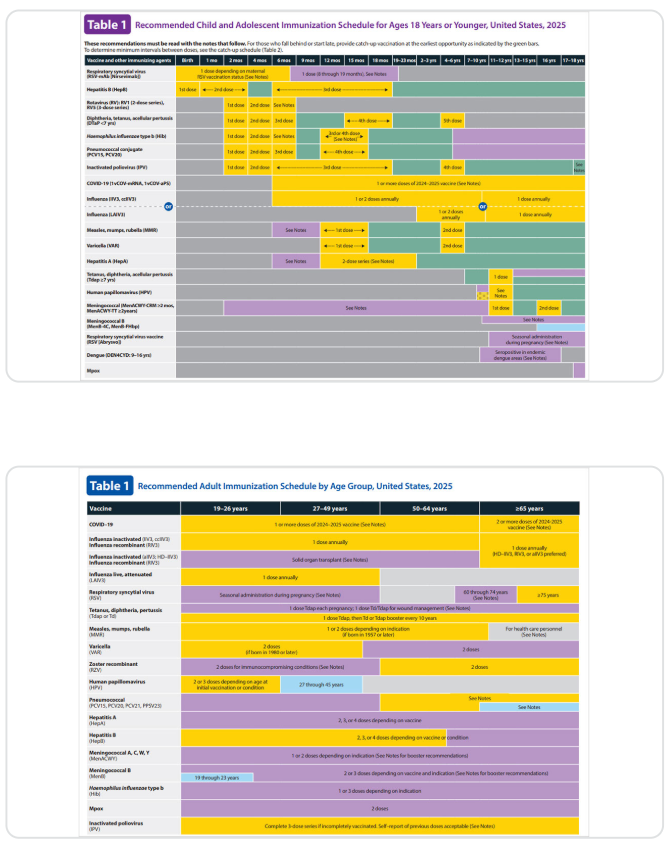
HHS Secretary Robert F. Kennedy Jr. announced changes to the recommendations for COVID-19 vaccines for healthy pregnant people and healthy children. The Centers for Disease Control and Prevention (CDC) posted updated versions of the immunization schedules.
Here is a summary of the COVID-19 vaccine recommendation changes on the CDC immunization schedules:
- The Child and Adolescent Immunization Schedule now reflects shared clinical decision making for all children and adolescents aged 6 months to 17 years, including those who are moderately or severely immunocompromised.
-
Vaccines For Children (VFC)-eligible children can be vaccinated after a shared clinical decision with their healthcare provider.
- More information about the Advisory Committee on Immunization Practices' (ACIP) shared clinical decision-making recommendations, guidance, and implementation considerations can be found online here.
- The notes section has been updated accordingly. We encourage you to review the notes carefully.
- No changes were made to the recommendations for persons who are aged 18 years and older and not pregnant.
- For the Child and Adolescent schedule and the Adult schedule, pregnancy is now shaded gray to reflect no guidance/recommendation.
The COVID-19 virus continues to pose serious health risks in Washington state, including hospitalizations, long COVID, and preventable deaths. These risks are most prominent in pregnant people, young children, older adults, people with chronic conditions, and those who remain unvaccinated. Providers should continue to offer and administer COVID-19 vaccines to all patients 6 months of age and older who are eligible to receive them. Please feel free to reach out to the Childhood Vaccine Program (WAChildhoodVaccines@doh.wa.gov) or the Adult Vaccine Program (WAAdultVaccines@doh.wa.gov) if you have questions.
|
|
|
On May 30, FDA licensed mNexspike (Moderna) to prevent COVID-19 disease in adults age 65 years and older as well as those age 12 through 64 years with at least one underlying condition that elevates their risk for severe outcomes from COVID-19.
Among other differences, a dose of mNexspike contains 10 mcg of messenger RNA, compared to 50 mcg in Moderna’s Spikevax messenger RNA vaccine. FDA posted the mNexspike package insert and approval letter.
At its June 25–27 meeting, ACIP will consider its recommendations for use of all available COVID-19 vaccines.
Respiratory Diseases
Track COVID-19, flu, and respiratory syncytial virus (RSV) disease activity by region across the state on DOH's Respiratory Illness Data Dashboard. Learn how to stop the spread of these illnesses by visiting our COVID-19, flu, and RSV pages.
Flu
Seasonal flu activity is low nationwide. A total of 241 influenza-associated pediatric deaths occurring during the 2024-2025 season have been reported to CDC. This is the highest number of pediatric deaths reported in any non-pandemic influenza season since the condition became reportable in 2004. Weekly US Influenza Surveillance Report: Key Updates for Week 22, ending May 31, 2025 | FluView | CDC
Influenza-like activity is minimal in Washington. So far in 2025, there have been 463 deaths from flu and 3 of those were pediatric deaths. Washington State Influenza Update Note: The Washington State Department of Health Influenza Update reports will be produced monthly for weeks 21-39 this summer and will resume a weekly reporting cadence beginning on week 40 this fall.
Measles
As of June 5, there were 1,168 confirmed measles cases reported in 34 jurisdictions across the U.S. So far in 2025, Washington has 6 measles cases in 2 counties (King and Snohomish). There have been no outbreaks in Washington this year. An outbreak is defined as 3 or more related cases. Visit the CDC measles data page for ongoing updates.
Pertussis
There are a total of 1,314 cases reported statewide so far in 2025, compared to 317 cases reported by week 22 in 2024. Infants under one year of age are among the most vulnerable to severe pertussis disease. Of the 90 infants in Washington who had pertussis so far in 2025: 80 were old enough to have received a dose of pertussis-containing vaccine, and 19 (21%) had received at least one dose. Weekly Pertussis Update for Washington State
|
|
|
Join the Association of Immunization Managers (AIM) on Tuesday, June 17, at 11 AM PST for a special webinar opportunity to discuss measles response strategies in high priority populations.
Based on feedback from Part I, this webinar will focus on strategies and engagement with Somali, Russian, and Ukrainian communities. Speakers will share examples and lessons learned from their experience addressing vaccine hesitancy in close- knit communities. This webinar will include 40 minutes of speaker presentations followed by a Question & Answer session.
|
|
|
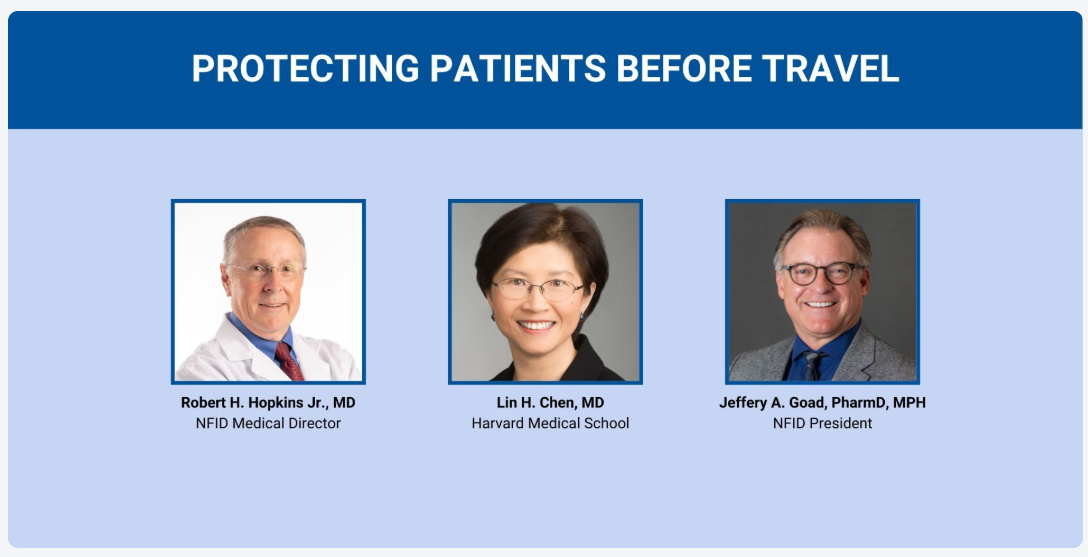
Join the National Foundation for Infectious Diseases (NFID) and the International Society of Travel Medicine (ISTM) on Wednesday, June 18, 2025 at 10 AM PST for a discussion on the importance of travel vaccines to help protect international travelers. Speakers will review current recommendations for travelers and will share implementation strategies.
At the conclusion of the activity, participants will be able to:
- Discuss vaccine recommendations for international travelers
- Identify successful strategies for implementation of travel vaccine recommendations
|
|
|
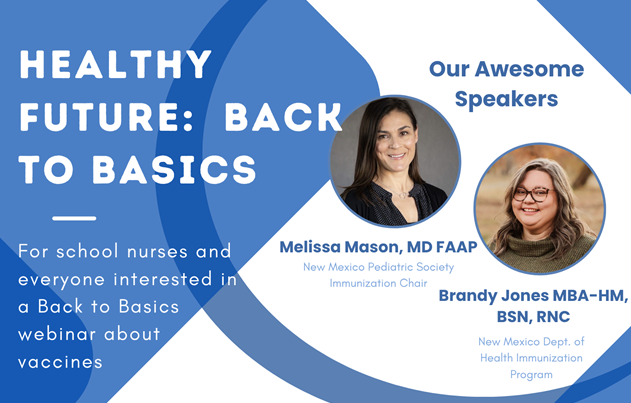
This webinar is hosted by the New Mexico Department of Health, Comagine Health, and the New Mexico Immunization Coalition. Join us on Tuesday, June 24, 2025 11:00 AM PST. This webinar will provide:
- Data on New Mexico's vaccination rates.
- An overview of vaccines that New Mexico requires for school, as well as vaccines recommended for adults- for family members of students, school staff and faculty.
- A review of diseases that vaccines protect against, especially measles- as many people are not clear about the danger these diseases pose since we rarely see them anymore.
|
|
Join the New Jersey Immunization Network on Monday, June 30, 2025 from 12-3 PM PST for discussions on:
- Key milestones in vaccine history.
- Vaccines' impact on health and economics.
- Vaccine hesitancy through history.
- Ethics of vaccine mandates, informed consent, global equity, and other issues of vaccine policy.
- Public health implications of vaccine uptake using predictive modeling and case studies.
|
|
|
|
FOR SCHOOLS AND CHILD CARE FACILITIES
FOR LONG-TERM CARE FACILITIES
|
|
|
|
|
|
|
If you aren't already signed up for Vaccines for Respiratory Illnesses Newsletter, please visit the Department of Health's email subscribers page here. Once you enter your email, on the next page expand the Immunization topic, select Vaccines for Respiratory Illnesses Newsletter, and click submit.
|
|
This newsletter summarizes content beginning the week of June 1, 2025, and was sent out on June 13, 2025. |
|
|
|
|