Vaccines for Respiratory Illnesses Newsletter - May 16, 2025
Washington State Department of Health sent this bulletin at 05/16/2025 10:00 AM PDT
Welcome to the Vaccines for Respiratory Illnesses (VRI) Newsletter! Here you'll find the latest news and information on respiratory illness vaccine related topics.
Latest News
Clinical Updates
Training and Events
Resources
Heads Up: A Summer Pause! We will be taking a summer pause for the VRI Newsletter from June 14 to July 10.
Q: What famous children's author had a daughter who contracted measles in 1962?
A: Roald Dahl. In 1986, Roald Dahl, the famous children’s author, wrote a letter to British parents, sharing his eldest daughter’s tragic story. Olivia caught measles in 1962 when she was seven. Dahl described how just when he thought she was getting better, suddenly one morning, everything changed.
Olivia developed a rare measles complication called encephalitis or brain inflammation. A year later in 1963, the first measles vaccine was licensed, a measure that would likely have saved Olivia’s life. Dahl became a vocal advocate of the measles vaccine after his daughter Olivia was killed by the disease in 1962.
When Roald Dahl shared Olivia’s story in 1986, Britain was seeing close to 100,000 cases of measles a year, yet parents were choosing not to immunize their children. What Roald Dahl was describing in 1986 was vaccine hesitancy, a delay in acceptance or refusal of vaccines despite their availability.
Fast forward to 2025, the ongoing COVID-19 pandemic has made vaccine hesitancy worse. The explosion of misinformation (false information) and disinformation (intentionally false information) on social media has hindered public acceptance of COVID-19 vaccines. Unfortunately, vaccine hesitancy is in the news again with the global resurgence of measles.
Like measles, misinformation is spreading, poll finds. Notably, 19% of adults believe the vaccine may be more dangerous than the disease. Most concerning is that parents who believe such falsehoods are more than twice as likely to delay or skip their children’s vaccines, which highlights an urgent public health communication challenge.
Read Dahl's letter, below, titled "Measles: A Dangerous Illness," was published by The Encephalitis Society Fact Sheet:
Olivia, my eldest daughter, caught measles when she was seven years old. As the illness took its usual course I can remember reading to her often in bed and not feeling particularly alarmed about it. Then one morning, when she was well on the road to recovery, I was sitting on her bed showing her how to fashion little animals out of coloured pipe-cleaners, and when it came to her turn to make one herself, I noticed that her fingers and her mind were not working together and she couldn't do anything.
"Are you feeling all right?" I asked her.
"I feel all sleepy," she said.
In an hour, she was unconscious. In twelve hours she was dead.
The measles had turned into a terrible thing called measles encephalitis and there was nothing the doctors could do to save her. That was twenty-four years ago in 1962, but even now, if a child with measles happens to develop the same deadly reaction from measles as Olivia did, there would still be nothing the doctors could do to help her.
On the other hand, there is today something that parents can do to make sure that this sort of tragedy does not happen to a child of theirs. They can insist that their child is immunized against measles. I was unable to do that for Olivia in 1962 because in those days a reliable measles vaccine had not been discovered. Today a good and safe vaccine is available to every family and all you have to do is to ask your doctor to administer it.
It is not yet generally accepted that measles can be a dangerous illness. Believe me, it is. In my opinion parents who now refuse to have their children immunized are putting the lives of those children at risk. In America, where measles immunization is compulsory, measles, like smallpox, has been virtually wiped out.
Here in Britain, because so many parents refuse, either out of obstinacy or ignorance or fear, to allow their children to be immunized, we still have a hundred thousand cases of measles every year. Out of those, more than 10,000 will suffer side effects of one kind or another. At least 10,000 will develop ear or chest infections. About 20 will die.
LET THAT SINK IN.
Every year around 20 children will die in Britain from measles.
So what about the risks that your children will run from being immunized?
They are almost non-existent. Listen to this. In a district of around 300,000 people, there will be only one child every 250 years who will develop serious side effects from measles immunization! That is about a million to one chance. I should think there would be more chance of your child choking to death on a chocolate bar than of becoming seriously ill from a measles immunization.
So what on earth are you worrying about? It really is almost a crime to allow your child to go unimmunized.
The ideal time to have it done is at 13 months, but it is never too late. All school-children who have not yet had a measles immunization should beg their parents to arrange for them to have one as soon as possible.
Incidentally, I dedicated two of my books to Olivia, the first was James and the Giant Peach. That was when she was still alive. The second was The BFG, dedicated to her memory after she had died from measles. You will see her name at the beginning of each of these books. And I know how happy she would be if only she could know that her death had helped to save a good deal of illness and death among other children.
-Roald Dahl
Latest News
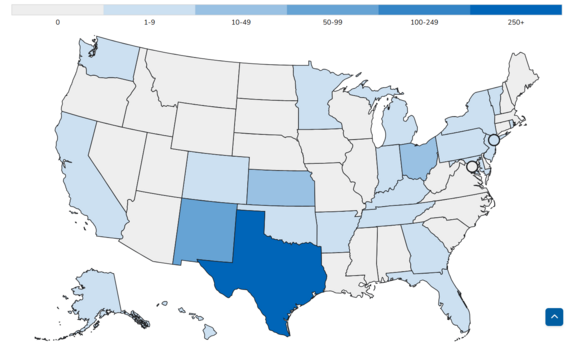
This is a map of 2025 confirmed measles cases, as of May 8, 2025.
Measles Milestone: 1,001 Confirmed Measles Cases Reported In 30 States
As of May 8, CDC reported 1,001 confirmed measles cases in 2025, with 93% of the cases associated with 14 outbreaks. North Dakota is the latest state to report confirmed cases. Most (709 of 1,001, 71%) were reported by the Texas Department of State Health Services.
In response to growing measles outbreaks involving more than half of U.S. states, CDC published a suite of new resources for public health, health care professionals, and families in communities experiencing a measles outbreak. Resources include infographics for families, images to help clinic personnel identify cases, and a Be Ready for Measles communication toolkit. A quick reference for health care professionals provides guidance for caring for patients with measles. Find all these resources on the CDC Measles Cases and Outbreaks page.
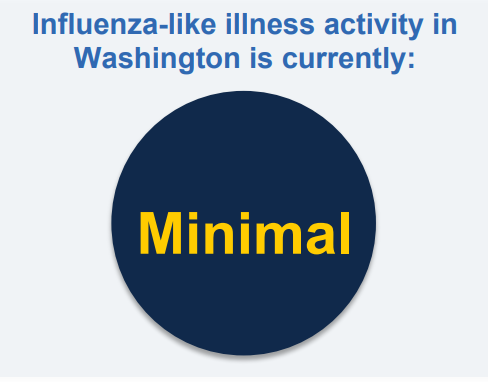
Influenza-like illness activity was minimal during week 18.
To date, 449 lab-confirmed influenza deaths have been reported for the 2024-2025 season.
To date, 227 influenza-like illness outbreaks in long term care facilities have been reported for the 2024-2025 season.
During week 18, 1.5 percent of visits among Influenza-like Illness Network (ILINet) participants were for influenza-like illness, which was below the baseline of 2.1 percent.
During week 18, 5.2 percent of specimens tested by WHO (World Health Organization) and NREVSS (National Respiratory and Enteric Virus Surveillance System) collaborating laboratories in Washington were positive for influenza.
Influenza A and Influenza B were reported to the ILINet surveillance system during week 18.
Nationwide, 216 pediatric deaths associated with seasonal influenza virus infection have been tallied so far for the 2024-2025 season, according to the Centers for Disease Control and Prevention’s FluView.
The current total of pediatric deaths exceeds the previous high reported for a regular (non-pandemic) season, which was 207 deaths reported during the 2023-2024 season. The highest tally on record is 288 deaths from the 2009-2010 flu season. Pediatric flu deaths hit 15-year high.
Maternal respiratory syncytial virus (RSV) vaccine and nirsevimab, a long-acting monoclonal antibody, help prevent infant RSV-associated hospitalizations; these products became widely available in the United States during the 2024–25 RSV season. . . .
In this ecologic analysis comparing RSV-associated hospitalization rates among infants aged 0–7 months during 2024–25 with those during pre–COVID-19 pandemic RSV seasons in two surveillance networks, rates during 2024–25 were lower by an estimated 28% and 43%. . . .
In the first RSV season with widespread availability of maternal vaccine and nirsevimab, RSV-associated hospitalization rates among infants were lower than in prepandemic seasons. Effective health care planning is needed to protect infants as early in the RSV season as possible through maternal vaccination during pregnancy or infant receipt of nirsevimab.
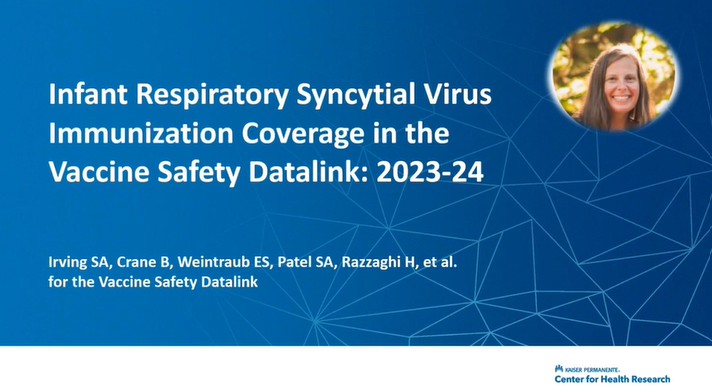
During the first RSV season in which a maternal vaccine and a monoclonal antibody for infants were available, 72% of infants were immunized, this study found.
Disparities in access to immunization existed by race and ethnicity, with the lowest uptake among Black and Middle Eastern/North African mothers.
The findings strongly suggested that clinicians and parents are following ACIP guidance.
The researchers also noted that there were disparities in access by race and ethnicity, with lowest uptake among Black (60.5%) and Middle Eastern/North African (60.2%) mothers. Rates were highest among Asian mothers (83.7%). More research is needed to identify barriers to equitable uptake. Study was also summarized in Medpage Today.
Study Suggest Dual COVID-19/Flu Shot is More Effective Than Individual Vaccines
A combined mRNA vaccine against COVID-19 and seasonal influenza appears to trigger stronger immune responses against both viruses compared to existing vaccines, late-stage clinical trial data suggests.
Although COVID-19 might have faded from news headlines, there are still an estimated 2.3 billion cases a year, and roughly 1 billion influenza cases annually as well. Despite vaccines being available to protect us against both diseases, not enough people are taking them.
The 2024-2025 flu season in the northern hemisphere has been particularly brutal, and low vaccine uptake is thought to have contributed to its severity. Several companies have been developing combination vaccines for COVID-19 and influenza in the hope that a two-in-one shot would make it easier to ensure that a higher proportion of vulnerable people get immunized against both diseases. Learn more from Gavi, The Vaccine Alliance (5/12/25).
University of Pennsylvania Will Present Virtual Seminar- Decoding the Moment: New Rules for Vaccine Approval
The University of Pennsylvania will present a 45-minute virtual seminar produced by the media company, Tradeoffs, entitled Decoding the Moment: New Rules for Vaccine Approval beginning at 11:00 a.m. (PST) on May 16, 2025.
Part of its Decoding the Moment series, the conversation will feature Paul Offit, MD, director of the Vaccine Education Center (VEC) at the Children's Hospital of Philadelphia (CHOP). The discussion will tackle the recent proposal that all “new” vaccines be tested against a placebo, and what it could mean for vaccine availability, public confidence, and disease transmission.
Some Background:
The U.S. Department of Health and Human Services (HHS) has announced a change to vaccine trial protocols: all new vaccines will now be required to undergo placebo-controlled trials. The agency describes this as a move toward greater transparency in medical product evaluation.
Some public health experts caution that while placebo use can enhance scientific rigor, it may not always be ethical or necessary when effective vaccines already exist. Implementation details are still emerging, and experts stress the importance of balancing scientific integrity, ethical standards, and public trust as this policy unfolds. The implications for vaccine development and communication will be closely watched.
IACW Respiratory Season Subcommittee Is Compiling a Directory For Grassroots Pop-up Vaccination Event Planning in Washington State
The directory will enhance access to vaccines by identifying partners who can bring vaccines directly to communities through health fairs, events, workplaces, schools and more.
The IACW is inviting pharmacies, clinics, schools, nonprofits, and others who can provide resources or “inputs” to join the directory by submitting the following intake survey. Access the directory form here.
Responses will be compiled into a public directory that will be accessible on immunitycommunitywa.org where it will be maintained by IACW and Within Reach. If you have any questions or issues with this form contact IC@withinreachwa.org.
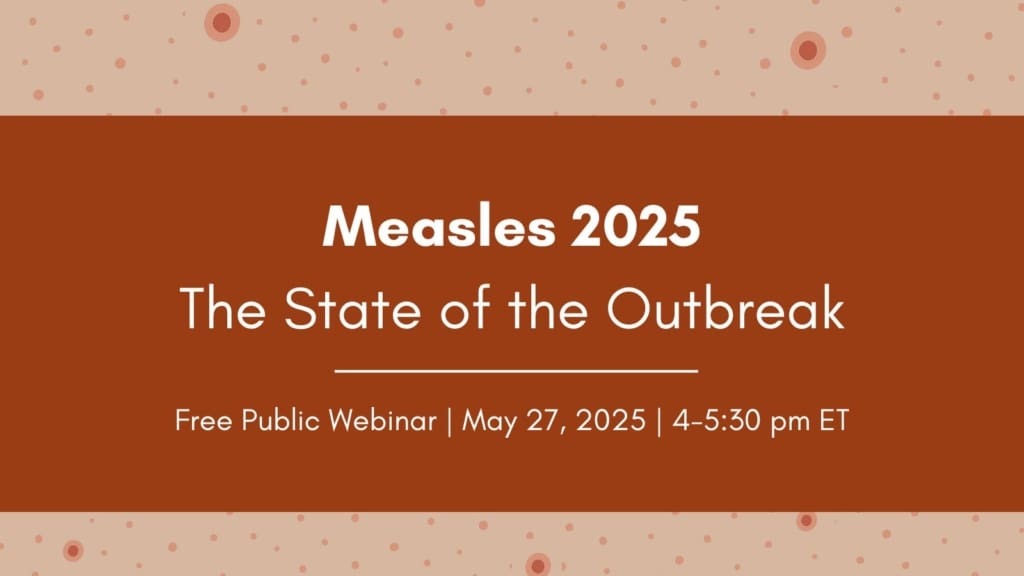
The United States is experiencing its highest rate of measles infections in decades. As of May 12, over 1,000 cases have been reported across 31 states, and 3 people have died as a result of complications from the virus. Amid this widespread and dangerous outbreak, health care providers, public health practitioners, and members of the public need to know how to protect their patients, communities, and loved ones.
This free public webinar on May 27, 2025 from 1:00-2:30 p.m. (PST) will cover:
How measles spreads and how it can be contained
Symptoms of measles and how it is diagnosed and treated
How to share accurate information about the virus
The challenge of vaccine hesitancy and declining immunization rates
Register today! The webinar is cohosted by the National Academy of Medicine, the American Public Health Association, the Association of Public Health Laboratories, the Association of Schools and Programs of Public Health, the Association of State and Territorial Health Officials, Big Cities, the Council of State and Territorial Epidemiologists, the Infectious Diseases Society of America, and the Trust for America’s Health.
Continuing education credit will be provided by the American Public Health Association.
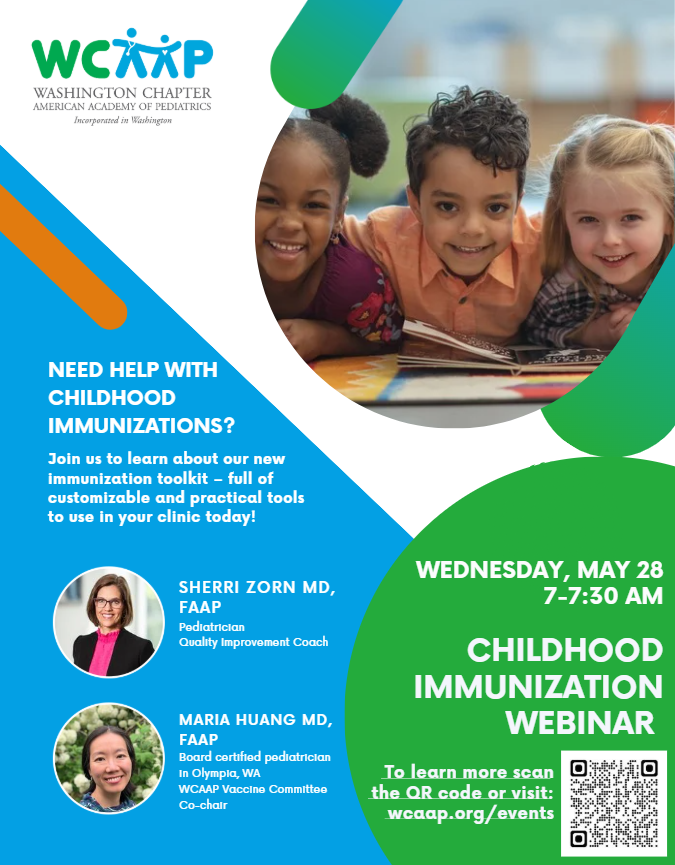
Join Us for the Launch of Our New Childhood Immunization Toolkit
The Washington Chapter of the American Academy of Pediatrics (WCAAP) is excited to announce the release of our new Childhood Immunization Toolkit, designed to support well-child visits and on-time vaccination across early childhood. We will showcase the toolkit and its practical, customizable resources during an upcoming webinar on May 28, 2025 at 7:00 a.m. (PST).
The toolkit includes practical tools like exam room posters, a take-home immunization card for parents, and a digital eBook of resources. We hope you’ll join us to explore these tools and support your team’s outreach efforts to help protect more children through timely immunization.
Here is a public view link for the webinar flyer on Canva (view only).
If you aren't already signed up for Vaccines for Respiratory Illnesses Newsletter, please visit the Department of Health's email subscribers page here. Once you enter your email, on the next page expand the Immunization topic, select Vaccines for Respiratory Illnesses Newsletter, and click submit.
This newsletter summarizes content beginning the week of May 4, 2025, and was sent out on May 16, 2025.