|
|
Welcome to the Vaccines for Respiratory Illnesses Newsletter! Here you'll find the latest news and information on respiratory illness vaccine related topics.
- Latest News
- Clinical Updates
- Training and Events
- Resources
|
|
|
March is Women’s History Month, and this year’s theme, “Moving Forward Together: Women Educating & Inspiring Generations,” highlights the contributions women have made to American history, culture, and society.

In honor of Women's History Month, we'd like you to meet four female researchers responsible for the lifesaving COVID-19 vaccines in People Magazine's Women Changing the World issue (March 4, 2021).
Dr. Kathrin Jansen- As Head of Vaccine Research and Development at Pfizer, she led a team at Pfizer involving more than 700 researchers to create a COVID-19 vaccine in months instead of the more common 10 to 15 years.
Dr. Katalin Karikó- She pioneered research with mRNA, a molecule that decodes human DNA into the proteins that our bodies are constructed from, since her days as a college student in Hungary starting in the 1970s. In 2005, she and a colleague, immunologist Drew Weissman, finally discovered how to make the new mRNA technology work. She joined BioNTech, the pharmaceutical firm that partnered with Pfizer to make the first COVID-19 vaccine from mRNA.
Dr. Kizzmekia Corbett- She was a research fellow at the National Institutes of Health and also played a pivotal role in helping to create the COVID-19 vaccine in record time. Her work on Moderna's vaccine, involved fabricating a protein that, in her words, "tricks the human immune system" into blocking the infection and disease caused by the coronavirus.
Dr. Lisa Jackson- As a senior investigator at the Kaiser Permanente Washington Health Research Institute, she led the world's first COVID-19 clinical vaccine trial, overseeing the first shot of the Moderna vaccine in Seattle on March 16, 2020, and then later pivoting to help with the final stage of the Moderna and Johnson & Johnson trials.
|
|
|
A: No. RSV vaccination is not recommended for a person younger than age 75 with hypertension and no other risk conditions. Among people age 60 through 74 years, only those with health conditions that put them at high risk of complications from RSV disease are recommended to receive a dose of RSV vaccine before age 75. These conditions are described in detail in a separate Ask the Experts video. A single dose of RSV vaccine is recommended for all adults age 75 or older who have not previously been vaccinated.
|
|
|
Public Health - Seattle & King County is informing their community of a confirmed measles case in an infant on February 26, 2025, with possible exposures at multiple locations throughout King County.
The King County infant may have been exposed to measles during recent travel abroad. Exposed individuals should check to make sure they have been vaccinated against measles. Most people in the area have immunity to measles through vaccination, so the risk to the general public is low. Learn more and view a list of locations of potential measles exposure.
Fortunately, the measles vaccine is very effective. Two doses of the measles, mumps and rubella (MMR) vaccine provides about 97% protection against getting infected by measles and that protection lasts a lifetime.
In 2024, there were three cases of measles in King County. Herd immunity, which helps prevent rapid spread of diseases among a large population, requires about 95% of people to be vaccinated against measles because it is so infectious. We are likely to see more frequent and larger outbreaks when vaccination rates are lower than that.
- An estimated 87% of 2-year-olds in King County are up to date on the MMR vaccine (having received one dose of the MMR vaccine).
- An estimated 72% of 4–6-year-olds in King County have received 2 doses of the MMR vaccine.
Infants and children under 5 years old are at risk of severe disease from measles, and receiving one dose of MMR can provide crucial protection from complications. Children are eligible for a second dose of MMR at 4 years old and parents should be encouraged to get the second dose as soon as possible instead of waiting until the child is enrolled in school.
The Department of Health has educational resources and materials to help you share information about measles disease and vaccination. Visit www.doh.wa.gov/measles. We also have a Measles Basic Information flyer available in 19 languages.
|
|
|
View The Washington State Department of Health Influenza Update for week 8 (February 16 – February 22, 2025).
State Summary
- Influenza-like illness activity was very high during week 8.
- To date, 214 lab-confirmed influenza deaths have been reported for the 2024-2025 season.
- To date, 189 influenza-like illness outbreaks in long term care facilities have been reported for the 2024-2025 season.
- During week 8, 7.9 percent of visits among Influenza-like Illness Network (ILINet) participants were for influenza-like illness, which was above the baseline of 2.1 percent.
- During week 8, 31.7 percent of specimens tested by WHO (World Health Organization) and NREVSS (National Respiratory and Enteric Virus Surveillance System) collaborating laboratories in Washington were positive for influenza.
- Influenza A and Influenza B were reported to the ILINet surveillance system during week 8.
|
|
|
The Centers for Disease Control Prevention (CDC) continues to monitor the multistate outbreak of avian influenza A(H5N1), emphasizing a One Health approach in collaboration with federal and state partners. While the risk to the general public remains low, individuals with direct exposure to infected dairy cows or poultry are at greater risk.
Recent cases in Nevada, Ohio, and Wyoming highlight the potential for severe illness, reinforcing the need for preventive measures. Genetic sequencing of the virus shows mutations that may enhance replication in mammals but do not currently impact antiviral effectiveness. Public health communicators play a crucial role in disseminating CDC guidelines to protect those at risk and mitigate potential spread.
|
|
|
Interim Estimates of Seasonal Influenza Vaccine Effectiveness (October 2024–February 2025)
The Centers for Disease Control and Prevention (CDC) released a report on the interim estimates of the 2024-2025 flu vaccine effectiveness (VE). Data from four CDC-affiliated vaccine effectiveness networks were used. Findings show:
- For children and adolescents (under 18 years old), VE in preventing flu was 32%, 59%, and 60% in outpatient settings (three networks) and 63% and 78% (two networks) for preventing hospitalization from flu.
- For adults 18 years and older, the VE in preventing flu was 36% and 54% in outpatient settings (two networks) and for 41% and 55% (two networks) in preventing hospitalization from flu.
The report states that despite the circulation of influenza A(H3N2), which is associated with lower VE, estimates are similar to past flu seasons with higher VE. Flu activity remains high in Washington state and nationwide. Increasing vaccination could seriously reduce flu related hospitalization and death.
The Department of Health has many educational materials to help you talk about the benefits of flu vaccination with your patients, coworkers, family and friends.
Visit FluFreeWA.org (WASinGripe.org) and our flu materials page to learn more.
|
|
|
Interim Estimates of COVID-19 Vaccine Effectiveness Among Adults 18 Years And Older (September 2024–January 2025)
In June 2024, CDC’s Advisory Committee on Immunization Practices (ACIP) recommended 2024–2025 COVID-19 vaccination for all persons age 6 months and older to provide additional protection against severe COVID-19. CDC released a report on the interim estimates of the 2024-2025 COVID-19 vaccine effectiveness (VE). Findings show:
- For adults 18 years and older, the VE in preventing COVID-19–associated emergency department (ED) or urgent care (UC) visits was 33%.
- For adults 65 years and older with a healthy immune system, the VE in preventing COVID-19 hospitalizations was 45%–46%, compared with not receiving a 2024–2025 vaccine dose.
- For adults 65 years and older with a weak immune system, the VE against hospitalizations was 40%.
The report states there's added benefit of 2024–2025 COVID-19 vaccination above existing protection from previous vaccination or infection. The data support CDC and ACIP recommendations that all persons age 6 months and older receive 2024–2025 COVID-19 vaccination.
The Department of Health has tools and resources to help you talk about the benefits of COVID-19 vaccination with your patients, coworkers, family and friends on our COVID-19 webpage.
|
|
|
CDC offers PneumoRecs VaxAdvisor, an app to easily determine which pneumococcal vaccines a patient needs. The app is free to use in both mobile and web versions.
CDC updated the app on December 11, 2024, to reflect ACIP’s new routine adult pneumococcal vaccination recommendations beginning at age 50 instead of age 65. On the revised app, you should see three age choices, the second being 19 through 49 years. If you see different choices, remove and reinstall the app.
Access the web version or download PneumoRecs VaxAdvisor to your mobile device:
|
|
|
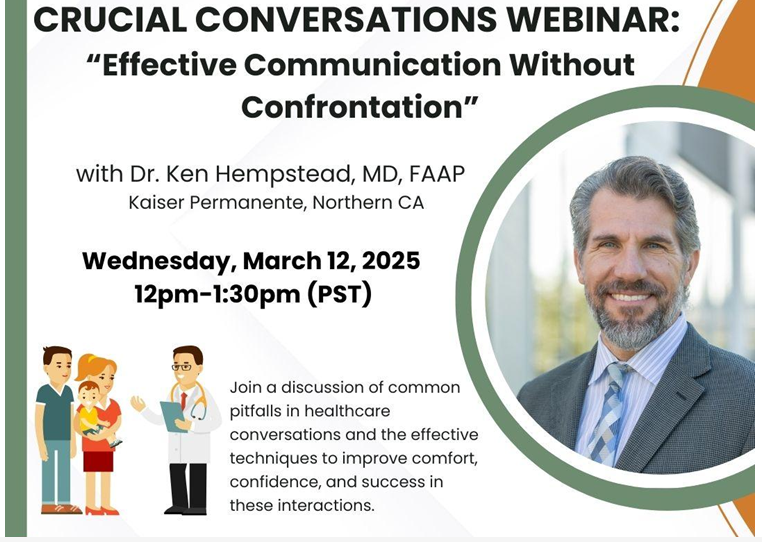
On March 12, 2025, from 12:00-1:30 PM PST, join the California Department of Public Health, California Immunization Coalition, and Dr. Ken Hempstead, MD, FAAP, a primary care pediatrician at Kaiser Permanente Northern California, for a discussion on common pitfalls in health care conversations and the effective techniques to improve comfort, confidence, and success in these interactions. There will be time dedicated to questions and discussion with Dr. Hempstead, and subject matter experts from California Department of Public Health Immunization Branch.
By the end of this interactive webinar, you'll:
- Understand why vaccinations are important for children.
- Improve confidence in having conversations with parents about vaccinations for their children.
Dr. Hempstead is renowned for his expertise in vaccine communication and has traveled nationally to educate audiences on having more effective and pleasant conversations about vaccines.
|
|
|
March is Women's History Month! Join us on March 25, 2025 from 11:00 AM-12:00 PM PST for a presentation and Question & Answer with Johanna Richlin, PhD and Temple Moore, MS.
This education event is being presented for health care providers, public health professionals, vaccine advocates, and anyone interested in immunizations
Dr. Richlin is an assistant Professor of Anthropology at the University of Maine. She will discuss her research on vaccine-hesitant women and mothers and the relationship between vaccine skepticism and latrogenesis in these groups.
Temple Moore is the Community Health Program Director at the Refugee Women’s Network. She will discuss the barriers to vaccination facing refugee, immigrant, and migrant populations in the community and the successful programs that Refugee Women’s Network developed to empower newcomer women to address those barriers in their own communities.
|
|
|
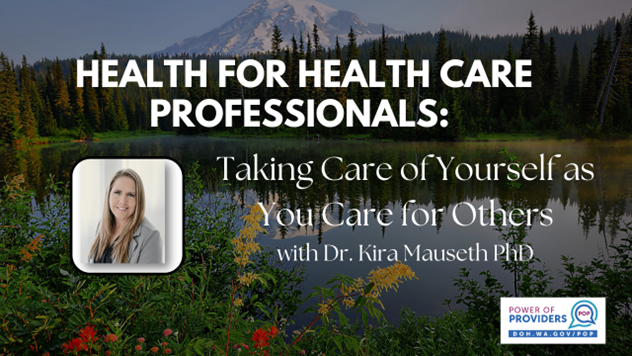
Washington State Department of Health’s Power of Providers (POP) initiative invites you to participate in an upcoming webinar series focused on behavioral health support for health care professionals.
The series will begin with Health for Health Care Professionals: Taking Care of Yourself as You Care for Others and features Washington’s prominent disaster psychologist, Dr. Kira Mauseth. The webinar will be on March 19, 2025 from 12:00-1:00 PM PST. This is part one of a three-part series. Please visit POP's webinar page for more information on the rest of the series.
The learning objectives for this webinar are to:
- Identify experiences that contribute to burnout vs restoration.
- Develop a personal plan for healthy engagement.
- Establish healthy boundaries around work and “off” time.
The webinar will be recorded and there will be live ASL interpretation. We are offering free continuing education for nurses, medical assistants, pharmacists, and pharmacy technicians.
|
|
|
Due to unforeseen circumstances, the CDC's Pink Book Training: The Epidemiology & Prevention of Vaccine Preventable Diseases course has been cancelled this year. WithinReach hopes to offer this essential training course in future years when the logistics can come together.
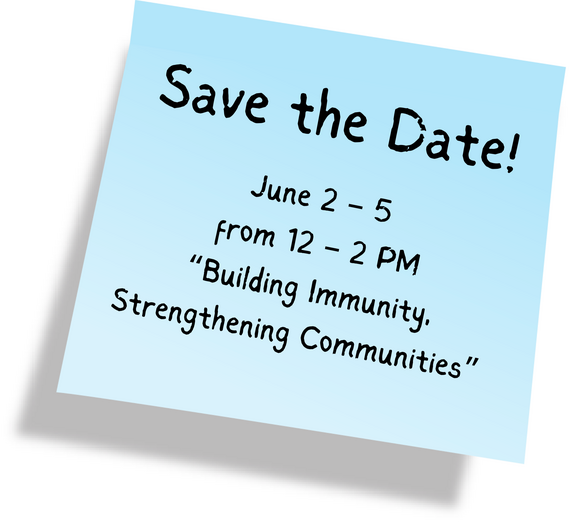
In the meantime, WithinReach is partnering with Washington Department of Health, the American Indian Health Association, and local coalitions to plan an alternate virtual learning series for health professionals “Building Immunity, Strengthening Communities” on June 2 – 5 from 12 – 2 PM. Join us for clinical best practices and strategies for vaccine administration, increasing vaccine confidence, and more. CEUs will be available, agenda and specific presentation topics coming soon. Save the date, more information to come!
|
|
|
|
FOR SCHOOLS AND CHILD CARE FACILITIES
FOR LONG-TERM CARE FACILITIES
|
|
|
|
|
|
|
If you aren't already signed up for Vaccines for Respiratory Illnesses Newsletter, please visit the Department of Health's email subscribers page here. Once you enter your email, on the next page expand the Immunization topic, select Vaccines for Respiratory Illnesses Newsletter, and click submit.
|
|
This newsletter summarizes content beginning the week of February 23, 2025, and was sent out on March 7, 2025. |
|
|
|
|