|
|
Welcome to the Vaccines for Respiratory Illnesses Newsletter! Here you'll find the latest news and information on respiratory illness vaccine related topics.
- Latest News
- Clinical Updates
- Training and Events
- Resources
|
|
|
A: Only the RSVpreF vaccine, Abrysvo made by Pfizer, is licensed and recommended for one-time use between 32 weeks and 36 weeks 6 days of gestation to prevent Respiratory Syncytial Virus (RSV)-associated lower respiratory tract disease in infants younger than 6 months old. Do not use the RSV vaccines Arexvy (made by GSK) or mResvia (made by Moderna) during pregnancy. If a pregnant person received an RSV vaccine before the current pregnancy, do not use Abrysvo during this pregnancy. Instead, counsel them that a dose of RSV preventive antibody will be needed to protect the infant from RSV after birth.
|
|
|
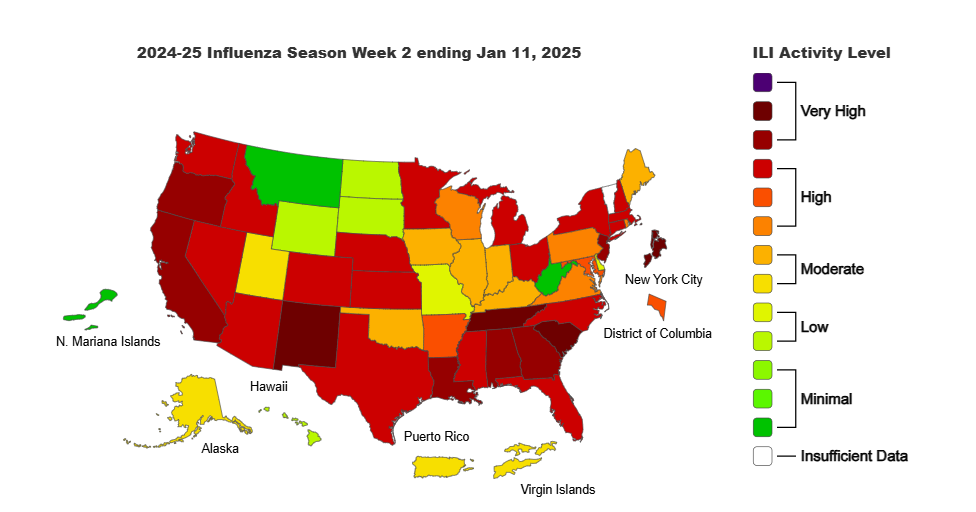
Key Points for Week 2, Ending January 11, 2025:
- Seasonal influenza activity remains elevated across most of the country and is expected to continue for several more weeks.
- Eleven pediatric deaths associated with seasonal influenza virus infection were reported this week, bringing the 2024-2025 season total to 27 pediatric deaths.
- Centers for Disease Control and Prevention (CDC) estimates that there have been at least 12 million illnesses, 160,000 hospitalizations, and 6,600 deaths from flu so far this season.
- Despite the high rates of influenza, vaccination rates continue to be lower than last season.
|
|
|
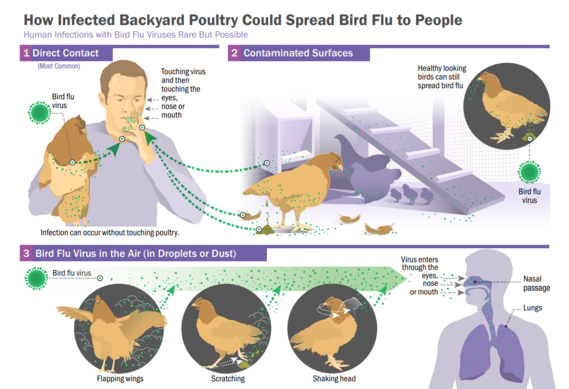
The first U.S. death from H5N1 bird flu was reported in Louisiana on January 6, 2025. The individual was over age 65 with underlying conditions who was exposed to wild and backyard birds. Despite the tragic outcome, the CDC emphasizes that the overall risk to the public remains low, with no evidence of person-to-person transmission or alarming changes in the virus spreading among animals. Learn More: LDH reports first U.S. H5N1-related human death | La Dept. of Health
Public health experts stress prevention, urging backyard poultry keepers and animal workers to practice hygiene, monitor symptoms, and report sick or dead animals. Preventive measures like thorough cooking and seasonal flu vaccinations are key to mitigating risks.
The Department of Health (DOH) has a flyer tailored for agricultural workers, which notes the importance of getting a flu vaccine to prevent seasonal flu/bird flu coinfection (it also notes the vaccine does not prevent bird flu): View Flyers: | )
|
|
|
CDC issued a Health Advisory on January 16, 2025 to clinicians and laboratories due to sporadic human infections with avian influenza A(H5N1) viruses amid high levels of seasonal influenza activity.
- CDC is recommending a shortened timeline for subtyping all influenza A specimens among hospitalized patients and increasing efforts at clinical laboratories to identify non-seasonal influenza.
- Clinicians and laboratorians are reminded to test for influenza in patients with suspected influenza and, going forward, to now expedite the subtyping of influenza A-positive specimens from hospitalized patients, particularly those in an intensive care unit (ICU).
- This approach can help prevent delays in identifying human infections with avian influenza A(H5N1) viruses, supporting optimal patient care and timely infection control and case investigation.
|
|
|
CDC published Expanded Recommendations for Use of Pneumococcal Conjugate Vaccines Among Adults Aged ≥50 Years: Recommendations of the Advisory Committee on Immunization Practices—United States, 2024 on January 9, 2025, in MMWR. Immunize.org’s clinical resources, including the pneumococcal vaccine standing orders template, already reflect this recommendation. A portion of the summary appears below.
- Before October 2024, a single dose of 15-valent, 20-valent, or 21-valent pneumococcal conjugate vaccine (PCV), was recommended for adults aged 19–64 years with risk conditions for pneumococcal disease and for all adults aged ≥65 years.
- On October 23, 2024, the Advisory Committee on Immunization Practices recommended a single dose of PCV for all adults aged ≥50 years who are PCV-naïve or who have unknown vaccination history. The risk-based recommendation for adults aged 19–49 years is unchanged.
- The updated, expanded age-based recommendation is expected to improve pneumococcal disease prevention in adults aged 50–64 years, particularly among demographic groups experiencing higher disease rates.
|
|
|
On January 7, 2025, FDA published an FDA Safety Communication, noting revisions to package inserts describing data that suggest a small increased risk of Guillain–Barré syndrome (GBS) during the 42 days after vaccination with either Abrysvo (Pfizer) or Arexvy (GSK). FDA noted that the benefits of vaccination as currently recommended continue to outweigh the risks. A portion of the safety summary appears below.
- The analyses of all GBS cases based on claims data suggest an increased risk of GBS during the 42 days following vaccination, with an estimated 9 excess cases of GBS per million doses of Abrysvo, and an estimated 7 excess cases of GBS per million doses of Arexvy administered to individuals 65 years of age and older...
- While the results suggest increased risks of GBS with Abrysvo and Arexvy, available evidence is insufficient to establish a causal relationship...
- FDA has further determined that the benefits of vaccination with Abrysvo and Arexvy continue to outweigh their risks.
- Suspected adverse events may be reported to VAERS, which is comanaged by FDA and CDC.
|
|
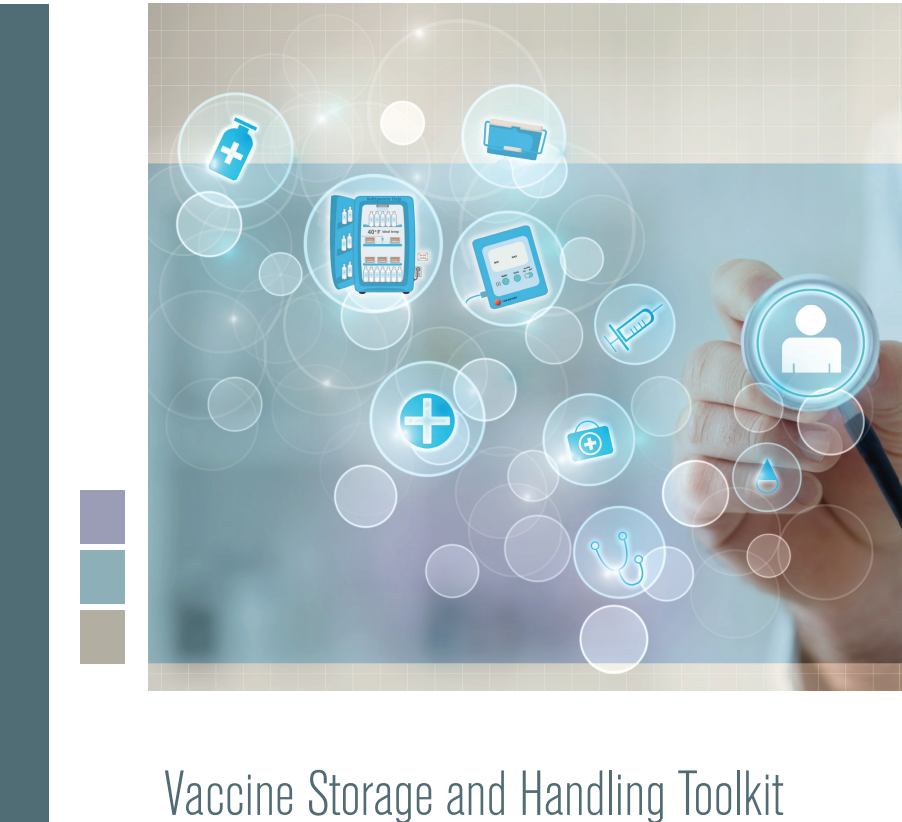
Power outages create emergency conditions that can damage your valuable vaccine inventory. For this reason, every site that stocks vaccines needs an emergency plan. Every Vaccines for Children (VFC) site is required to have one. If you don’t already have one, follow CDC’s Vaccine Storage and Handling Toolkit to create an emergency plan. Plans only work when staff are trained. This month is a good time to refresh everyone’s training. Build redundancy, flexibility, and communication into your plan. Consider:
- Equipment backup options
- Alternate storage options
- Vaccine transport plans
- Circumstances where the physical risk to staff must be prioritized over vaccines
Your plan should specify at least one facility where current staff are willing to receive and properly store your vaccine inventory if it must be relocated. CDC’s guide provides detailed instructions on monitoring temperatures during a power outage and what to do once proper storage conditions are restored. Have a printed copy of your plan available on or near your storage unit before your printer loses power!
Prevent avoidable vaccine waste by training your staff on emergency procedures, including after-hours roles and responsibilities. Then run an exercise to check understanding.
|
|
|
Deadline: February 7, 2025.
We need your insights as a primary care provider to identify and address barriers to vaccinating children aged 0-3 years. This short survey will guide efforts to improve vaccine access and uptake. It takes just a few minutes, and your input will make a difference! Thank you for helping us protect our youngest patients!
View the newest webinar released by the American Medical Women’s Association on the current maternal RSV vaccine recommendations and related coverage policies. This webinar addresses CDC guidance when discussing the RSV vaccine with pregnant individuals, as well as coding and coverage considerations.
|
|
|
|
FOR SCHOOLS AND CHILD CARE FACILITIES
FOR LONG-TERM CARE FACILITIES
|
|
|
|
|
|
|
If you aren't already signed up for Vaccines for Respiratory Illnesses Newsletter, please visit the Department of Health's email subscribers page here. Once you enter your email, on the next page expand the Immunization topic, select Vaccines for Respiratory Illnesses Newsletter, and click submit.
|
|
This newsletter summarizes content beginning the week of January 12, 2025 and was sent out on January 24, 2025. |
|
|
|
|