|
|
Welcome to the COVID-19 and other Respiratory Illness Vaccines: A Partner Newsletter! Here you'll find the latest news and information on respiratory illness vaccine related topics.
|
|
APRIL IS NATIONAL MINORITY HEALTH MONTH
We are celebrating National Minority Health Month all April long! Much of the minority health focused programming the Department of Health (DOH) has accomplished and will continue to build upon has come out of the Community Collaborative. Formerly the Vaccine Implementation Collaborative, and envisioned jointly by community leaders and DOH staff in February 2021, the Community Collaborative is a collective comprised of members from many different sectors who are involved in uplifting communities that have experienced the devastating impacts of COVID-19 through co-designing recovery efforts with the goal of eliminating further harms on Black, Indigenous, communities of color and all those facing harm due to systemic racism and oppression.
The Community Collaborative ensures an equity and social justice lens is applied in DOH planning and decision-making opportunities related to recovery efforts beyond its vaccine equity body of work. We will continue to prioritize and center communities most impacted by health inequities, by honoring their labor and voices in our decision-making process, while simultaneously creating space to foster collaboration with community-based organizations, impacted businesses, cross-sector partners, health care entities, and public health agencies.
Learn more about the Community Collaborative here.
|
|
Q: WHEN ARE YOU UP TO DATE WITH COVID-19 VACCINES?
A: The "up-to-date" definition for COVID-19 vaccination has been through many iterations. It's important to stay informed on the latest COVID-19 vaccine information in order to be sure that you and your loved ones, your patients and your community are up to date.
The 2023–2024 updated COVID-19 vaccines more closely targets the XBB lineage of the Omicron variant and could restore protection against severe COVID-19 that may have decreased over time. We anticipate the updated vaccines will be better at fighting currently circulating variants.
Below is the latest guidance:
People aged 5—64 years:
- You are up to date when you get 1 updated COVID-19 vaccine.
Children aged 6 months—4 years:
- You are up to date when you get all recommended doses, including at least 1 dose of updated COVID-19 vaccine.
Everyone aged 65 years and older:
- You are up to date when you have received 2 updated 2023–2024 COVID-19 vaccine doses. *
- *People aged 65 years and older who have not previously received any COVID-19 vaccine doses and choose to get Novavax should get 2 doses of updated Novavax vaccine, followed by 1 additional dose of any updated 2023–2024 COVID-19 vaccine to be up to date.
|
|
CDC FINDS NO LINK BETWEEN COVID-19 VACCINES AND CARDIAC DEATH IN YOUNG PEOPLE
Last week the Centers for Disease Control and Prevention (CDC) published a study by Dr. Juventila Liko and Dr. Paul R. Cieslak which looks at the assessment of risk for sudden cardiac death among adolescents and young adults after receipt of the COVID-19 vaccine. Their abstract explains:
"COVID-19 vaccination has been associated with myocarditis in adolescents and young adults, and concerns have been raised about possible vaccine-related cardiac fatalities in this age group. In April 2021, cases of myocarditis after COVID-19 vaccination, particularly among young male vaccine recipients, were reported to the Vaccine Adverse Event Reporting System. To assess this possibility, investigators searched death certificates for Oregon residents aged 16–30 years who died during June 2021–December 2022 for cardiac or undetermined causes of death.
For identified decedents, records in Oregon’s immunization information system were reviewed for documentation of mRNA COVID-19 vaccination received ≤100 days before death. Among 1,292 identified deaths, COVID-19 was cited as the cause for 30. For 101 others, a cardiac cause of death could not be excluded; among these decedents, immunization information system records were available for 88, three of
whom had received an mRNA COVID-19 vaccination within 100 days of death. Of 40 deaths that occurred among persons who had received an mRNA COVID-19 vaccine dose, three occurred ≤100 days after vaccination. Two of these deaths were attributed to chronic underlying conditions; the cause was undetermined for one. No death certificate attributed death to vaccination.
These data do not support an association between receipt of mRNA COVID-19 vaccine and sudden cardiac death among previously healthy young persons. COVID-19 vaccination is recommended for all persons aged ≥6 months to prevent COVID-19 and complications, including death."
Recent findings also support existing recommendations that children and adolescents aged 5–18 years remain up to date with COVID-19 vaccination given low vaccination coverage and waning effectiveness over time against COVID-19–related hospitalizations.
View the full report here.
View myocarditis fact sheet from DOH here.
|
|
INFLUENZA UPDATE FOR WEEK 14 OF 2024
The Washington State Department of Health Influenza Update for week 14 is available here.
State Summary"
- Influenza-like illness activity was minimal during week 14.
- To date, 108 lab-confirmed influenza deaths have been reported for the 2023-2024 season.
- To date, 79 influenza-like illness outbreaks in long term care facilities have been reported for the 2023-2024 season.
- During week 14, 1.6 percent of visits among Influenza-like Illness Network (ILINet) participants were for influenza-like illness, which was below the baseline of 1.9 percent.
- During week 14, 3.6 percent of specimens tested by WHO (World Health Organization) and NREVSS (National Respiratory and Enteric Virus Surveillance System) collaborating laboratories in Washington were positive for influenza.
- Influenza A and Influenza B were reported to the ILINet surveillance system during week 14.
You can also view historic influenza reports from past seasons.
It is not too late to receive a flu vaccine, flu activity often continues through May. CDC recommends everyone age 6 months and older get annual influenza vaccination.
Influenza (Flu) Information for Public Health and Healthcare | Washington State Department of Health
|
|
FEDERAL RETAIL PHARMACY PROGRAM CONTRIBUTIONS TO BIVALENT MRNA COVID-19 VACCINATIONS
Earlier this month the Centers for Disease Control and Prevention (CDC) published a report looking at the Federal Retail Pharmacy Program's (FRPP) contributions to bivalent mRNA COVID-19 vaccinations across sociodemographic characteristics. The study focused on the period from September 2022 to September of 2023. Pharmacies participating in the FRPP served as integral partners in national efforts to scale up vaccination capacity during the COVID-19 pandemic emergency response. This study found that among 59.8 million COVID-19 bivalent vaccine doses administered in the United States during September 1, 2022–September 30, 2023, 40.5 million (67.7%) were administered by FRPP partners. In urban and rural areas, FRPP partners administered 81.6% and 60.0% of bivalent vaccine doses, respectively.
The findings of this suggest that FRPP partnerships were critical in ensuring access to bivalent COVID-19 vaccination services in the United States and could serve as a model to address vaccination services needs for routine vaccines and during future responses to vaccine-preventable disease emergencies.
View the full report here.
|
|
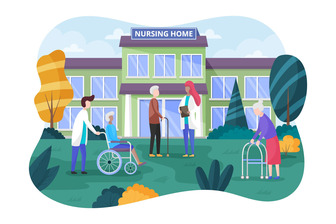
HIGH RATES OF COVID-19 INFECTION RELATED HOSPITALIZATIONS CONTINUE IN NURSING HOMES - VACCINE RATES LOW
Nursing home residents have continued to be at increased risk of developing severe COVID-19. The CDC released a study yesterday regarding low vaccination rates and high rates of COVID-19 related hospitalization in nursing homes. The study indicates a continued challenge to maintain protection against severe COVID-19 infection and COVID-19 related hospitalization of nursing home residents. Nursing homes reported weekly rates of COVID-19 associated hospitalizations ranging from 3.8 to 7.1 per 100,000 nursing home residents this last season. To further complicate the situation, only 40.5% of residents had received an updated 2023-2024 COVID-19 vaccine. Overall, the study indicates the need to continue surveillance of the situation and develop and evaluate evidence-based interventions for protecting nursing home residents. You can find the full report here.
|
|
VACCINE SHELF LIFE AND SHIPPING TIMELINE
While most Childhood Vaccine Program (CVP) vaccines shipped have at least a 12-month expiration date, it is possible for products with shorter expiration dates to be shipped to providers. In general, doses will continue to ship out until the following:
- Vaccine is <90 days from expiration for non-flu products.
- Vaccine is <30 days from expiration for flu and COVID-19 products.
If shorter dating presents an issue, it is recommended to place smaller, more frequent orders. As a reminder, all providers in the CVP are on a monthly ordering schedule. Providers are welcome to place an order at any time if they are in need of additional inventory.
|
|
PROVIDER AGREEMENT RENEWAL
If you haven't renewed your provider agreement for 2024, now is the time to do so! Agreements in some counties expired March 31, 2024 and others will be expiring April 30, 2024. Providers with expired agreements will not be able to place orders until they have an approved 2024 agreement in the IIS.
Don't forget to check for returned agreements! If your agreement was returned, check the top of the agreement for comments from the CVP team.
There are many resources to help you with the renewal process:
|
|
TODAY: EFFECTIVELY ENGAGING COMMUNITIES WEBINAR
Effectively Engaging Communities: Building Relationships and Establishing Trust
Today (4/19) from 12:00-1:00PM PT
The Power of Providers (POP) initiative from the Washington State Department of Health is hosting a webinar, presented by Dr. Michele Andrasik from Fred Hutchinson who will explore historical and contemporary factors associated with increased mistrust and distrust among priority communities. Participants will learn methods that have proven effective in community engagement and work together to identify strategies that can be implemented to create safe, welcoming, and affirming spaces.
DOH will record the webinar. Continuing education is available for medical assistants and nurses (RNs, LPNs, ARNPs).
|
|
COMMUNICATIONS CRASH COURSE WITH PHCC
Wednesday, May 1, 2024 at 9:00AM PT
The Public Health Communications Collaborative (PHCC) is offering a webinar, Comms Crash Course: Developing and Producing Videos to Expand Public Health Messaging.
This webinar is designed for public health communicators eager to harness the full spectrum of video production tools and storytelling techniques to captivate, educate, and inspire their local communities. They will dive into best practices with experts who have successfully leveraged the power of video to broaden their outreach, engage with diverse populations, and foster health-aware communities. Join this webinar to learn more about the potential of video and become a more effective visual storyteller in public health.
|
|
HEALTH LITERACY CONFERENCE 2024
May 14-16, 2024
Through the virtual Institute for Healthcare Advancement (IHA) conference, you'll explore health literacy best practices from a broad sample of professionals - from providers to researchers to academics. They represent small non-profits, diverse corporations and universities nationwide. Their collective experience provides a variety of sessions (pre-recorded OnDemand and live) to keep you active and engaged.
|
|
|
FOR SCHOOLS AND CHILD CARE FACILITIES
FOR LONG-TERM CARE FACILITIES
|
|
SIGN UP FOR THIS NEWSLETTER!
If you aren't already signed up for COVID-19 and other Respiratory Illness Vaccines: A Partner Newsletter, please visit the Department of Health's email subscribers page here. Once you enter your email, on the next page expand the Immunization topic, select the COVID-19 Vaccine Partner Newsletter (our original title), and click submit.
|
|
This newsletter summarizes content beginning the week of April 7, 2024 and was sent out on April 19, 2024. |
|
|
|
|