|
|
Welcome to the COVID-19 Vaccine Partner Newsletter! Here you'll find the latest news and information on COVID-19 vaccine related topics.
|
|

Q: WHAT DOES THE END OF THE NATIONAL COVID-19 PUBLIC HEALTH EMERGENCY DECLARATION MEAN?
A: On January 30th, the Biden administration announced that it plans to end the COVID-19 national emergency declarations on May 11, 2023. Under the COVID-19 public health emergency declaration, the government has had more flexibility in a number of health-related areas—including fully covering the cost of most COVID-19 testing, treatment, and vaccines. When the emergency declaration ends, coverage for COVID-19 will become more like coverage for other medical conditions. In the coming weeks, more information will become available about specific changes, some of which might vary by health insurance.
Ending the COVID-19 emergency declarations does not mean the virus has been eradicated. States of emergencies are intended to be temporary, and when emergency powers expire, that does not mean that all policies related to COVID-19 end. Continue to consult Centers for Disease Control and Prevention’s (CDC) website for guidance as well as guidance from your state and local health departments.
CDC continues to advise that everyone get vaccinated, get the latest booster, use at-home tests if you’ve been exposed or have symptoms, stay home if you’re sick, and wear a high-quality mask when COVID-19 levels are high. These precautions are the best ways we can continue to protect ourselves and manage the pandemic as it continues to evolve.
Before the declarations expire, the administration and other national, state, and local leaders will share detailed information about what the policy change will mean for organizations, healthcare providers, individuals, and families.
Information provided by the Public Health Communications Collaborative.
|
|
POPULAR FREE DOH COVID-19 TREATMENT PROGRAM RETURNS
This week DOH relaunched its popular free telehealth program to increase access to potentially life-saving medications to treat COVID-19 patients. DOH’s telehealth program expands the Federal government’s Test to Treat initiative and gives people at risk of severe disease another way to quickly access free treatment for COVID-19. Telehealth allows patients to access a clinician and receive a prescription within five days of testing positive for COVID-19.
Key numbers for DOH’s telehealth program between July 28 and December 31, 2022, include:
- Served 6,329 patients from over 400 zip codes throughout Washington state.
- Seventy percent of all patients seeking COVID-19 therapeutics received some type of treatment.
- Over 4,200 prescriptions written for patients with positive COVID-19 tests.
- Over 975 patients that live in high Equitable Distribution Index (EDI) areas received treatment for COVID-19.
There are two options to set up a telehealth appointment – either by visiting DOH’s new telehealth webpage or by calling the DOH COVID-19 call center (1-800-525-0127). If the information provided indicates treatment may be appropriate, the patient will be connected virtually with a health care provider for a consultation. Telehealth appointments are currently available in 240 languages through translation services. The service is currently provided by DOH in collaboration with partner Color Health.
Because a major goal of this program is to reduce barriers to access (especially in rural and underserved urban areas) by mitigating transportation, language, and technology issues, you are welcome to promote this service widely among socially vulnerable communities.
|
|
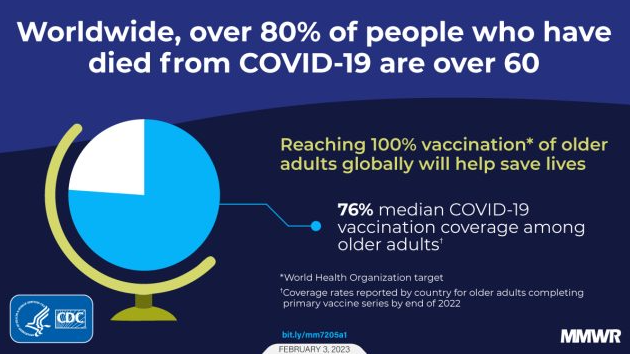
COVID-19 MORTALITY AND PROGRESS TOWARD VACCINATING OLDER ADULTS
COVID-19–associated mortality among persons aged ≥60 years exceeded 80% of total COVID-19 mortality in 2020 and 2021 across all income groups; however, the median reported completed primary series coverage among older adults in 2022 was 76%, substantially below the WHO goal, across all countries, regardless of income.
Efforts are needed to increase COVID-19 primary series and periodic booster dose coverage among older adults as recommended by WHO and national health authorities.
COVID-19 vaccines are safe and reduce COVID-19 mortality. The World Health Organization (WHO) recommends that countries prioritize populations at increased risk, e.g., older adults, for COVID-19 vaccination with a goal of 100% coverage with a completed primary series for populations at-risk.
|
|
NEW SCHOOL AND CHILD CARE IMMUNIZATIONS RESOURCE FOR FAMILIES
DOH has a new School and Child Care Immunization webpage for families. The page is designed to help parents understand the rules around school and child care immunizations. Parent charts have been added in English and 15 other languages. Also note, the school and childcare immunization requirement charts and Individual Requirements Summary document have been updated for the 2023-24 school year.
|
|
2023 IMMUNIZATION SCHEDULES RELEASE
The 2023 Childhood and Adult Immunization Schedules are now available. Every year, the immunization schedules are updated to reflect the latest recommendations for each routinely recommended vaccine. All of these schedule changes were voted on and approved during the October 2022 Advisory Committee on Immunization Practices (ACIP) meeting.
The 2023 Immunization Schedules are available on the Centers for Disease Control and Prevention’s healthcare provider webpage and there’s also a parent friendly schedule. You can learn more about the detailed changes to the schedules by reading the two Morbidity and Mortality Weekly Report (MMWR) articles published online at www.cdc.gov/mmwr.
- The biggest change this year is the addition of the COVID-19 vaccine primary series and other details of authorized or approved COVID-19 vaccines for both children and adults in the Tables and Notes sections of the Schedules.
- Other changes include updated recommendations for influenza and pneumococcal vaccines, addition of a new vaccine for both MMR and Hepatitis B, guidance for additional doses of measles, mumps, and rubella (MMR) vaccine during a mumps outbreak, guidance for the use of inactivated poliovirus vaccine (IPV), and guidance about zoster (shingles) vaccination.
The Department of Health has updated school and child care requirements materials for the 2023-2024 season which align with the ACIP changes. The Department will work to update other immunization materials and web pages as needed.
|
|
PHCC OFFERS RESOURCES FOLLOWING WHITE HOUSE ANNOUNCEMENT ON THE END OF THE COVID-19 NATIONAL EMERGENCY
With plans to end the COVID-19 national emergency declarations on May 11, 2023, health departments, health care providers, community organizations, and others may receive questions about what this means for their constituents. Public health and health care providers might also be asked for their opinion about whether President Biden’s policy announcement was the right decision. The Public Health Communications Collaborative (PHCC) has created tools for you to use:
"As the current news cycle evolves, use bridging statements to stay grounded in core messages. Here is an example of how you might apply the ABC’s of bridging:
- Acknowledge: In the next three months, we’ll keep people closely updated about any changes to policies and what the shift means for them, as we have throughout the pandemic.
- Bridge: Right now, what we do know is that the way we protect ourselves from COVID-19 hasn’t changed…
-
Continue: We have the best tools to stay healthy, and that’s how we’ve made so much progress from where we were a year ago. You should get vaccinated, get the updated booster, use at-home tests, stay home when you’re sick, and wear a high-quality mask when levels are high—these are all ways we can continue to protect ourselves and manage the pandemic."
Additionally, they have updated their Answers to Tough Questions page with information about the announced May 11 end of the national emergency declarations.
|
|
NOVAVAX UPDATE
CDC has acquired a limited amount of Novavax doses for providers to order. These doses expire at the end of April. Please submit your orders in the WAIIS as usual and only order what you need currently. Once this supply is exhausted, this product will be unavailable for ordering until further notice from Novavax or CDC.
There are many doses of Novavax currently in the field in Washington state. If you have this product at your site and no longer need it, please post it to the Vaccine Advertisement Page and put “Novavax” in the comments field. Additionally, if you have ever had this product at your site, but no longer have any physical doses, please ensure your inventory is updated in the WAIIS and VaccineFinder.
|
|
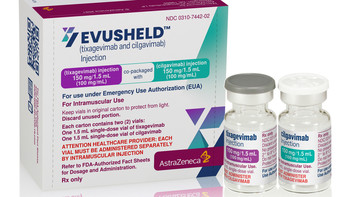
EVUSHELD LOSES EMERGENCY USE AUTHORIZATION IN THE U.S.
Since the beginning of the pandemic, we have seen many variants of COVID-19 sweep throughout the world causing more challenges in the effort of prevention and treatment against serious illness. At one time EVUSHELD was part of a multilayered protection plan, and even became included in the COVID-19 Vaccination schedule for those that were immunocompromised. As present COVID-19 variants continue to evolve, the original variants EVUSHELD was developed to protect against are almost nonexistent in the US today.
The U.S. Food and Drug Administration (FDA) withdrew the Emergency Use Authorization for Evusheld, a prophylactic pre-exposure medication previously used to provide protection for those exposed to COVID-19. Data show Evusheld is unlikely to be effective against current SARS-CoV-2 variants. The withdraw of authorization also reduces patient exposure to potential side effects of the drug.
What to do with unused Evusheld? The FDA has guidance you can share in your communities, on how to dispose of unused drugs at home - Safe Disposal of Medicines | FDA.
Evusheld Letter of Authorization 01262023 (fda.gov)
|
|
DOH LAUNCHES INFLUENZA DATA DASHBOARD
On February 1st, Washington State Department of Health (DOH) launched an Influenza Vaccination Dashboard to better track flu vaccination rates across Washington state. The dashboard displays the number of flu vaccines administered in Washington facilities, as well as the percentage of Washingtonians who have received at least one flu vaccine. Users can make comparisons between the current and previous flu seasons. Data on the dashboard will be updated weekly September 1 – April 30.
It is important to note that there are data limitations. Washington vaccine providers are not required to report flu vaccinations to the state. Only data reported to the Washington State Immunization Information System (WAIIS) are included on the dashboard. As a result, the number of doses administered and coverage data shown may be incomplete. Actual flu vaccination coverage and doses administered may be higher. Figures on the dashboard may also differ from other reports that rely on different sources for flu vaccine data, such as the CDC FluVaxView and the Behavioral Risk Factor Surveillance System (BRFSS).
You can also view the COVID-19 Data Dashboard here.
|
|
SOCIAL MEDIA UPDATE CONCERNING VACCINE MISINFORMATION
Wednesday, February 15th - 11AM PST
Voices for Vaccines is hosting a social media update concerning vaccine misinformation on Feb 15th at 11am PST. The purpose of this webinar is to keep you in-the-know about where misinformation is coming from and where it may be going. We hope you will be able to use this webinar to plan your work.
The webinar will feature Devin Burghart of the Institute for Research and Ethics in Human Rights. Devin Burghart has researched, written, and organized on virtually all facets of contemporary white nationalism since 1992, and is internationally recognized for this effort. Devin began as a research analyst with the Coalition for Human Dignity in Seattle and was co-author of Guns & Gavels: Common Law Courts, Militias & White Supremacy in 1996. In Chicago, he worked as the director of the Building Democracy Initiative, where he reported on white power music and on the new nativism, including a groundbreaking background report of the Federation for Immigration Reform in 2001. He developed new organizing approaches to counter bigotry, including the Turn It Down Campaign to stop the spread of white power music, and the Campaign for a United America to challenge the new nativism. Devin is frequently quoted as an expert by the New York Times, Wall Street Journal, Chicago Tribune, Los Angeles Times, Philadelphia Enquirer, Arizona Republic, Seattle Post-Intelligencer, The Nation, and Rolling Stone. He has appeared on CNN, MSNBC, CBS News and National Public Radio, and other broadcast media outlets.
|
|
IMPROVING THE VACCINATION EXPERIENCE: REDUCING PAIN AND ANXIETY FOR CHILDREN AND ADULTS
Tuesday, February 28th - 10AM PST
Anxiety about needles and injections affects as many as 2 out of 3 children and 1 out of 4 adults; this anxiety can contribute to dreading, delaying, or avoiding vaccinations, even when the importance of preventing illness is understood.
Learn more about the principles behind vaccination pain and anxiety and discuss simple evidence-based strategies to reduce apprehension in this webinar.
|
|
PEER-TO-PEER LEARNING OPPORTUNITY THROUGH POWER OF PROVIDERS
Active Coping in the Long-Term: Health Care Provider Resilience
February 27th from 12:00pm-1:00pm PST
Speaker: Kira Mauseth, Ph.D.
In this peer-to-peer learning opportunity, we will focus on the identification of core values that can provide a foundation for your personal life and professional work, and walk you through the steps needed to create and activate a personal coping plan that is practical, and based around what you are already doing that works.
Registration link
|
|
WASHINGTON PROJECT FIRSTLINE TRAINING
The newly released series of training modules are for professionals working in long-term care facilities. The modules are easily accessible, educational, informative and fun, and take approximately 20-minutes each to complete.
These online, interactive modules will train and prepare long-term care workers to become infection control superheroes who can reduce the spread of disease at work and home.
Staff who complete all six modules will earn free continuing education credits for two contact hours.
The six modules focus on the following:
- Infection Control
- How Germs Can Spread on Surfaces
- How Germs Can Spread via Respiratory Droplets
|
- Proper Hand Hygiene
- Proper Use of Personal Protective Equipment (PPE)
- Cleaning and Disinfection
|
|
ALL modules are available now at firstline.nwcphp.org and available for CEs provided by Washington State Department of Social and Health Services and CNEs through Continuing Nursing Education at the University of Washington School of Nursing.
|
|
|
|
FOR SCHOOLS AND CHILD CARE FACILITIES
FOR LONG-TERM CARE FACILITIES
|
|
SIGN UP FOR THIS NEWSLETTER!
If you aren't already signed up for the COVID-19 Vaccine Partner Newsletter, please visit the Department of Health's email subscribers page here. Once you enter your email, on the next page expand the Immunization topic, select the COVID-19 Vaccine Partner Newsletter, and click submit.
|
|
This newsletter summarizes content from the week of January 29, 2023 and was sent out on February 10, 2023. |
|
|
|
|