|
|
Welcome to the COVID-19 Vaccine Partner Newsletter! Here you'll find the latest news and information on COVID-19 vaccine related topics.
|
|
  Q: HOW IS CLIMATE CHANGE RELATED TO THE COVID-19 PANDEMIC?
A: According to the World Health Organization (WHO), the climate crisis contributes to over 13 million preventable deaths each year due to environmental causes. The climate crisis exacerbates extreme weather, disease spread, poor air quality, water scarcity, pollution and much more. These events have direct health consequences and affect disadvantaged communities more. During the COVID-19 pandemic, inequities have again been highlighted. In the U.S., some populations have had a harder time accessing COVID-19 testing and vaccines, have been more impacted financially, and most importantly, experience higher rates of COVID-19-related hospitalizations and deaths.
Both the climate crisis and the pandemic stress the need for equitable, sustainable, healthy communities. In honor of Earth Day today, we ask for your continued support in fighting the COVID-19 pandemic and hope you find time to get outside and enjoy our beautiful state.
Happy Earth Day!
|
|
HOW TO ADDRESS COVID-19 VACCINE HESITANCY
Recently, a team of experts published an article in the Vaccine journal about how communities can, and should, address COVID-19 vaccine hesitancy.
The article underscores the importance of engaging community stakeholders at all levels to address vaccine hesitancy. They are encouraged to do this through sound immunization policies, by identifying and addressing the needs of vulnerable subpopulations, implementing evidence-based strategies to promote the value of vaccination, and by combating misinformation online.
|
|
ACIP DISCUSSES ADDITIONAL COVID-19 BOOSTER DOSES
ACIP met on April 20 to discuss additional COVID-19 booster doses. The discussion was focused on second booster doses for adults 50+ and individuals 12+ with immunocompromising conditions. The committee also discussed the possibility of emerging variants, the impact on current vaccines, and potential need for the creation of new COVID-19 boosters in the future. The following questions were addressed:
- What does ACIP think should be the primary goal for future COVID-19 vaccines?
- What other data would be important for ACIP to review?
- What are other considerations for future doses of COVID-19 vaccines?
ACIP voting members overall felt that the continued objective of COVID-19 vaccines is to prevent severe disease and death, and that a shared vision and goal is necessary as we move forward. While most members felt that data supports an additional booster dose for adults 50+/12+ with immunocompromising conditions, many felt additional data and information is needed for those who have recently had COVID infection, the impact of Moderna half dose 50 ug boosters, how declining vaccine effectiveness (VE) against infection may predict waning VE against hospitalization/death, and the impacts of Long COVID. The committee also brought up the need for a program for uninsured individuals, and how these vaccines will be funded in the future.
See the full meeting agenda.
Presentation slides will be available here.
|
|
DEMOGRAPHICS FOR AGRICULTURAL WORKERS
Information compiled from Washington State’s Employment Security Department, the Bureau of Labor Statistics, the Department of Labor, and the 2020 US Census ACS is now available for the public to view in the Agricultural Workers dropdown under Community Resources. Demographic profiles were created with Local Health Jurisdictions to support their planning for public health initiatives targeting agricultural workers. The profiles, which are segregated by county or county-pairs, contain data that pertains to workers who are part of the H-2A temporary agricultural program. This program allows agricultural employers who anticipate a shortage of domestic workers to bring nonimmigrant foreign workers to the U.S. to perform agricultural labor or services of a temporary or seasonal nature.
If you have any questions regarding the profiles or use of this data, please contact Tomas Madrigal at tomas.madrigal@doh.wa.gov.
|
|
TEMPERATURE LOGS FOR MARCH - DUE NOW!
Emails with a link to where you can upload your temperature logs have been sent out to the primary and backup Vaccine Coordinators listed on your COVID-19 Vaccine Program Provider Agreement. If they have not received these emails, with a link to your temp log submission screen, please reach out to us at covid.vaccine@doh.wa.gov and we will work with you to ensure we have the correct contacts listed on your provider agreement.
Steps on submitting monthly temperature logs can be found here.
If you have any questions, please email covid.vaccine@doh.wa.gov.
|
|
UPDATED! COVID-19 VACCINE STANDING ORDERS
|
|
AMENDMENT TO EUA PFIZER-BIONTECH COVID-19 TRIS VACCINE: EXTENDED SHELF-LIFE
The Food & Drug Administration (FDA) has approved an amendment to the EUA for Pfizer-BioNTech COVID-19 Tris Vaccine extending the shelf-life of the following Pfizer product formulations from 9 to 12 months:
- Pfizer-BioNTech Pediatric Tris Vaccine (Orange Cap for ages 5-11, with diluent)
- Pfizer-BioNTech Adult Tris Vaccine (Gray Cap for ages 12+, no diluent)
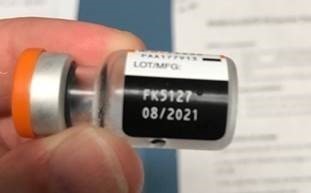
Vials stored consistently in an ultra-low temperature freezer at -90oC to -60oC (-130oF to -76oF) may remain in use for up to 12 months beyond the date of manufacture printed on the vials and cartons. Vials stored in the refrigerator (2oC to 8oC) are NOT eligible for extension, regardless of the expiration date.
*No changes have been made to the vaccine itself to enable extension of expiry dating. This change is based on stability data submitted by the manufacturer to the FDA.
Additional information:
Pfizer-BioNTech Storage and Handling - CDC
Fact Sheet for Healthcare Providers Administering Vaccine (Gray Cap/Adult)
Fact Sheet for Healthcare Providers Administering Vaccine (Orange Cap/PEDS)
|
|
WEEKLY REPORTING BEGINNING MAY 1
Daily reports are no longer required!
As of May 1, 2022, providers must report COVID-19 vaccine supply levels, at least once a week, by close of business on Fridays. All other provisions regarding data remain unchanged.
We appreciate your efforts to update data in VaccineFinder. If you have completed the process, thank you! For those who have not yet updated VaccineFinder information, please see the information below.
How to Add Inventory
To report inventory for COVID-19 vaccines that are not already listed in your COVID-19 Locating Health portal account, please follow the Add Vaccine link to add COVID-19 vaccine NDCs to your location.
You can follow this process for all new COVID-19 vaccines that are authorized and recommended in the U.S. Once added, you can begin reporting the number of doses on hand each day for that vaccine.
Important Tips
- Make sure depots/hubs are updating inventory in VaccineFinder regularly; these facilities represent the largest inventory numbers and greatly impact supply chain estimates.
- Providers no longer participating in COVID-19 vaccination must be zeroed out; old inventory numbers can impact performance metrics.
- Regular reporting of inventory is part of the COVID-19 Vaccination Program Provider Enrollment Agreement.
Guides for reporting inventory and public display information can be found on the Provider Resources page. If you need support, please contact CARS_Helpdesk@cdc.gov or 1-833-748-1979.
|
|
ENABLING EQUITABLE ACCESS TO COVID-19 VACCINES FOR INDIGENOUS POPULATIONS
April 26, 2022 6:00pm ET
As part of a three day virtual event, John’s Hopkins University is offering a presentation entitled “Enabling Equitable Access to COVID-19 Vaccines for Indigenous Populations.” This session will bring together a panel of Indigenous and allied physicians, as well as public health leaders from the U.S. and Australia. They will discuss lessons learned from engaging communities to overcome programmatic hurdles, and encouraging the uptake of COVID-19 vaccines for populations across the life course.
To attend the webinar on Zoom, please register here.
To find out more about other topics being discussed during this virtual event, please visit World Immunization Week webinars at JHU.
|
|
ADDRESSING VACCINE ADMINISTRATION ERRORS
April 27, 2022 12-1pm PT
The Washington Department of Health is pleased to host a webinar on Wednesday, April 27, 2022 from 12-1pm. The webinar will feature Dr. Sarah Schillie with the CDC Immunization Services Division. Dr. Schillie will discuss preventing vaccine administration errors and how to address them if they occur. The webinar is designed for health care providers, including medical assistants, nurses, and pharmacists/pharmacy techs, and any others interested in learning more about this topic.
The webinar will be recorded and continuing education is available for nurses, medical assistants, pharmacists, and pharmacy techs.
Register for the webinar here.
|
|
OFFICE HOURS AND TRAINING SESSION
Wednesday, May 4 12:00 - 12:45pm PT
Please join us for a live presentation with the Washington State Immunization Information System (WAIIS) trainer, who will review helpful tips for COVID-19 vaccine inventory reporting. This will include an open Q & A session as well, so bring any questions you might have.
On the Agenda:
- COVID-19 Inventory Management in the WAIIS
- Receiving COVID-19 Vaccine Orders/Transfers in the WAIIS
- Inventory Decrementing with an HL7 Connection and Troubleshooting with WAIIS Reports
Join the presentation in Teams.
|
|
WHAT HAPPENED TO THE PLANS?
Lessons Observed From COVID-19
May 17-18, 2022
The National Academies of Sciences, Engineering, and Medicine Forum on Medical and Public Health Preparedness for Disasters and Emergencies is hosting a workshop exploring the nation’s Public Health Emergency (PHE) preparedness enterprise, through the lens of COVID-19 in the U.S. The workshop will explore key components, success stories, and failure points throughout the entire PHE preparedness and response enterprise. Participants will also identify opportunities for more effective catastrophic disaster, pandemic, and other large scale PHEs planning at the federal, state, local, tribal, and territorial levels.
This workshop is FREE and can be attended online or in person. Visit here to register.
|
|
|
FOR SCHOOLS AND CHILD CARE FACILITIES
-
Higher Education Recommendations 2021-2022
- This guidance reflects the CDC isolation and quarantine guidelines, including information on staying up to date with vaccinations against COVID-19.
-
Symptom Decision Tree and Contact Tracing Checklist for K-12 Schools (PDF) and Contact Tracing Guide and FAQ for K-12 Schools (PDF)
- These documents align with the current versions of K-12 School Requirements on isolation, quarantine, and the expanded Test to Stay program.
-
K-12 Schools 2021-2022 Requirements (PDF). DOH policy supports in-person learning while maximizing constrained COVID-19 testing supplies.
-
COVID-19 Vaccines: Pediatric Vaccine Toolkit for Schools (PowerPoint) This toolkit provides a variety of resources for schools, including parent handouts, backpack stuffers, and sample communication.
-
Contact Tracing Guide and FAQ for K-12 Schools This guide includes quarantine recommendations and contact tracing priority settings.
-
K-12 Schools 2021-2022 Supplemental Considerations to Mitigate COVID-19 Transmission. Information includes classroom and school closure criteria, contact tracing in high priority settings, timelines for close contact testing, and technical clarifications on antigen testing for Test to Stay programs and performing arts/sporting activities screening testing.
-
Secretary of Health’s Mask Order FAQ, to align with the secretary’s order related to athletes and coaches at large outdoor gatherings.
School and child care guidance can be found on the Department of Health web page here.
|
|
|
FOR LONG-TERM CARE FACILITIES
|
|
|
RESOURCES ON THE PFIZER COVID-19 VACCINE 12-15 AGE EXPANSION
In response to the authorized of Pfizer COVID-19 to children ages 12-15, the CDC has developed several useful tools for parents and clinicians to utilize.
Information for healthcare and vaccine providers provides basic information regarding the COVID-19 vaccine, consent and tools for communication to the community:
|
|
|
SIGN UP FOR THIS NEWSLETTER!
If you aren't already signed up for the COVID-19 Vaccine Partner Newsletter, please visit the Department of Health's email subscribers page here. Once you enter your email, on the next page expand the Immunization topic, select the COVID-19 Vaccine Partner Newsletter, and click submit.
|
|
This newsletter summarizes content from the week of April 17, 2022 and was sent out on April 22, 2022. |
|
|
|
|