|
|
This weekly newsletter provides summarized content on COVID-19 vaccine related topics. This broad level of information is tailored towards health care professionals, partners, and the general public.
WASHINGTON COVID-19 VACCINATION STATUS: ALL AGES 12 AND UP
|
|
STATEMENT FROM THE DEPARTMENT OF HEALTH
COMUNICADO DEL DEPARTAMENTO DE SALUD DEL ESTADO DE WASHINGTON
|
|
|
The Washington State Department of Health (DOH) is aware of the recent death of a King County woman from a blood clot after receiving the J & J vaccine.
“Sadly, this is the first such death in Washington State. We send our deepest condolences to her family and loved ones. Losing a loved one at any time is a tragic and difficult and pain that’s become all too familiar in the last year and a half of this pandemic.” says Umair A. Shah, MD, MPH, Secretary of Health.
Blood clots are a very rare complication associated with the Johnson & Johnson COVID-19 vaccine, and the Centers for Disease Control and Prevention (CDC) has reported only three other confirmed deaths nationwide, with this being the first in Washington state. Adverse events associated with vaccines are reported through the Vaccine Adverse Event Reporting System (VAERS) here.
DOH will continue working closely with Public Health Seattle-King County and the CDC as more details become available.
Read the news release in English.
|
|
El Departamento de Salud del Estado de Washington (DOH, por su sigla en inglés) está al tanto de que, recientemente, una mujer del condado de King murió a causa de un coágulo sanguíneo tras recibir la vacuna de J&J.
“Lamentablemente, se produjo la primera muerte por esta causa en el estado de Washington. Expresamos nuestro más sentido pésame a los familiares y seres queridos de esta persona. La pérdida de un ser querido es algo trágico, difícil y doloroso en cualquier momento, y nos hemos acostumbrado demasiado a ello en el último año y medio de pandemia”, expresó el secretario de Salud, Umair A. Shah, MD, MPH.
Los coágulos sanguíneos son una complicación muy poco frecuente (solo en inglés) de la vacuna contra la COVID-19 de Johnson & Johnson, y los Centros para el Control y la Prevención de Enfermedades (CDC, por su sigla en inglés) solo tienen registro de otras tres muertes confirmadas en todo el país además de esta, que es la primera en el estado de Washington. Los eventos adversos asociados a las vacunas se informan a través del Sistema de Notificación de Reacciones Adversas a las Vacunas (VAERS, por su sigla en inglés), al que se accede desde aquí (solo en inglés).
Leer el artículo en español.
|
|
 PFIZER TO COMIRNATY- WHY A VACCINE GOT A NEW NAME
POR QUÉ LA VACUNA PFIZER RECIBIÓ UN NUEVO NOMBRE: COMIRNATY
|
|
|
A few weeks ago, we talked about some of the changes to watch for with an FDA approval of a COVID-19 vaccine.
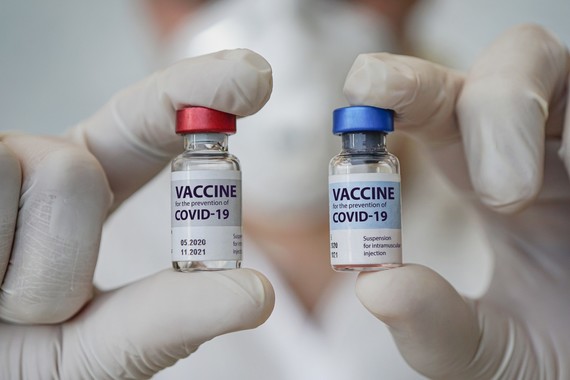
It turns out, one of the most noticeable changes can also be one of the least understood. After Pfizer’s COVID-19 vaccine was FDA approved, it took on a new name: Comirnaty. Even though the name changed, the vaccine remains the same.
So why did it need a name change in the first place? And what does this mean for other vaccines? Read the full blog to discover what’s really in a name.
|
|
Hace algunas semanas hablamos sobre ciertos cambios a tener en cuenta con una aprobación de la FDA de una vacuna contra el COVID-19.
Resulta que uno de los cambios más notables también puede ser uno de los menos comprendidos. Después de que la vacuna contra el COVID-19 de Pfizer fuera aprobada por la FDA, recibió un nuevo nombre: Comirnaty. A pesar de que el nombre cambió, la vacuna sigue siendo la misma.
Leer el artículo en español.
|
|
NEW RESEARCH CONFIRMS HOSPITALIZATION RISK HIGHER WITH FOUR COVID-19 VARIANTS
NUEVAS INVESTIGACIONES CONFIRMAN QUE EL RIESGO DE HOSPITALIZACIÓN ES MAYOR CON CUATRO VAIANTES DE LA COVID-19
|
|
|
People in Washington state infected with Alpha, Beta, Gamma, and Delta variants have a higher risk of hospitalization compared to those infected with non-variant versions of SARS-CoV-2, according to new research from the Washington State Department of Health (DOH), in collaboration with Fred Hutchinson Cancer Research Center, Institute for Disease Modeling at the Bill & Melinda Gates Foundation, and UW Medicine Virology Lab. The variants Gamma and Beta have the highest estimated risk for hospitalization.
Additional research was conducted to examine the risk of hospitalization among people infected with these variants who were vaccinated and those who were unvaccinated. Overall, they found that people infected with Alpha, Beta, Gamma or Delta variants who were vaccinated had a lower risk of hospitalization. When researchers looked at the variants separately, the same pattern of a lower risk of hospitalization for vaccinated people was seen in people infected with the Alpha, Gamma, or Delta variants. The Beta variant was excluded from this analysis due to the low number of Beta infections.
Read the news release in English.
|
|
En el estado de Washington, los contagiados con las variantes alfa, beta, gamma y delta corren un mayor riesgo de hospitalización en comparación con aquellos contagiados con SARS-CoV-2, según una nueva investigación (solo en inglés) llevada a cabo por el Departamento de Salud del Estado de Washington (DOH, por su sigla en inglés) en colaboración con el Centro de Investigación del Cáncer Fred Hutchinson, el Instituto de Modelado de Enfermedades de la fundación Bill y Melinda Gates y el laboratorio de Virología de la Facultad de Medicina de la Universidad de Washington. Las variantes gama y beta suponen el mayor riesgo estimado de hospitalización.
Se realizaron investigaciones adicionales para evaluar el riesgo de hospitalización entre los contagiados con estas variantes que estaban vacunados y los que no estaban vacunados. En general, se descubrió que los contagiados con las variantes alfa, beta, gama y delta que estaban vacunados corrían un menor riesgo de hospitalización. Cuando los investigadores evaluaron las variantes por separado, el mismo patrón de menor riesgo de hospitalización para las personas vacunadas se observó en los contagiados con las variantes alfa, gama y delta. La variante beta se excluyó de este análisis debido a la baja cantidad de contagios de esta variante.
Leer el artículo en español.
|
|
 WHAT DOES IT MEAN WHEN A VACCINE GETS "FDA APPROVAL?"
¿Qué significado tiene cuando una vacuna contra el covid-19 recibe la “aprobación de la FDA”?
|
|
|
It’s been about a month since the FDA granted full approval for the Pfizer COVID-19 vaccine for ages 16+ (under the name Comirnaty). A huge milestone in the fight against COVID-19 — the FDA approval has already had a big impact, with more Americans getting vaccinated.
While FDA approval is the gold standard for proving a product is safe and effective, the process itself usually doesn’t get much attention. This gives way for rumors to spread on and offline (as we’ve already seen in the last several weeks).
Read the full blog in English to learn the differences between FDA approval and Emergency Use Authorization, what goes into the FDA approval process, and some commonly asked questions about FDA approval.
|
|
Ha pasado ya más de un mes desde que la Administración de alimentos y medicamentos, la FDA, dio la aprobación total de la vacuna Pfizer COVID-19 para mayores de 16 años, con el nombre de Comirnaty. Esta aprobación de la FDA ha sido un gran logro en la lucha contra el COVID-19. Esto ha tenido un gran impacto en la vacunación en un mayor número de personas en los Estados Unidos.
La aprobación de la FDA es el modelo por excelencia para demostrar que un producto es seguro y efectivo. Sin embargo el proceso en sí no recibe mucha atención. Por eso es que muchos rumores se difunden dentro y fuera del internet sobre este hecho (como ya hemos visto en las últimas semanas).
Leer el artículo en español.
|
|
REPORTING FRAUDULENT VACCINATION CARDS
Fraudulent CDC vaccination record cards are considered a public safety risk at the federal level. The FBI released a Public Service Announcement on March 30, 2021, saying fake vaccination cards are illegal and punishable by law. The FBI also states that "misrepresenting yourself as vaccinated when entering schools, mass transit, workplaces, gyms, or places of worship, you put yourself and others around you at risk of contracting COVID-19."
The Department of Health has been contacted by concerned citizens about people or businesses potentially creating or owning fraudulent cards. You can report potentially fraudulent vaccination cards on the Health and Human Services website here.
|
|
 LET'S PLAY CATCH-UP ON ROUTINE VACCINES
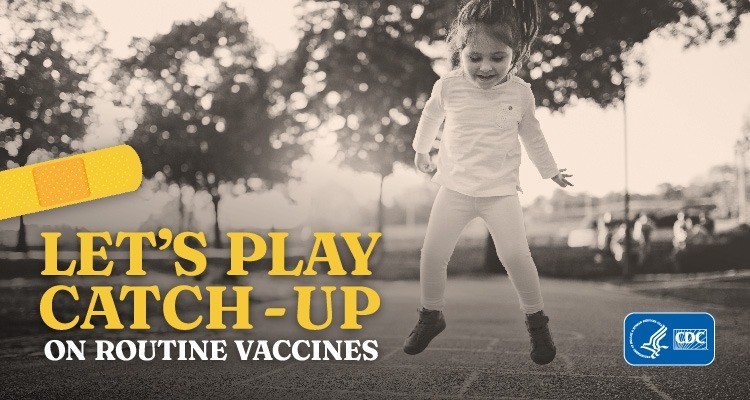
As children catch up on school routines and playdates with friends, it’s more important than ever that they catch up on their routine vaccinations. The Centers for Disease Control and Prevention (CDC) recently developed new resources to help immunization partners and healthcare providers communicate with parents the importance of staying on track with routine childhood vaccinations.
Routine childhood vaccines are essential to helping children and communities stay healthy, but many children fell behind on routine vaccines and well-child visits during COVID-19. CDC provides vaccines for about half of America’s children through the Vaccines for Children program, and in this past year there have been 13.1 million fewer doses ordered for routine vaccinations. CDC is concerned this may place children at risk or vaccine-preventable diseases.
To prevent outbreaks of vaccine-preventable diseases, it’s essential that children stay on track with routine vaccinations. With your support, we can help children get caught up!
Visit our Partner Resource Center to find the latest materials for parents, including a “Let’s Play Catch-Up” website feature (en español) and sample social media content, such as animated GIFs and images to share.
|
|
GUIDANCE ON EXPIRING MODERNA COVID-19 VACCINE
If your facility has Moderna vaccine that will soon expire, please continue to hold onto these doses. Moderna is expected to receive an extension on expiration dates, and information will be available within the upcoming week. Once information has been provided about the expiration extension, please review the Moderna Vial Expiration website.
The Department of Health will also receive more information about Moderna booster doses in the next few weeks. If Moderna booster doses are approved, the dose quantity will be half of a single dose given for the initial COVID-19 series. Providers should keep additional ancillary kits on hand to fulfill the need once boosters are approved. Providers will be able to administer Moderna booster doses from the inventory that is already in the field once approved by the Advisory Council on Immunization Practices (ACIP). Once this approval occurs, Moderna will send out double ancillary kits with all orders to accommodate for administration of booster doses.
Please email questions to COVID.vaccine@doh.wa.gov.
|
|
THE CLINICAL IMMUNIZATION SAFETY ASSESSMENT (CISA) PROJECT
Have you had a clinical question for a patient you are caring for that seems impossible to answer? Does this patient have unique circumstances that are not covered in the Centers for Disease Control and Prevention (CDC) clinical guidance resources? Look no further for support than the CDC’s Clinical Immunization Safety Assessment Project (CISA).
The CISA Project was established in 2001 to address the unmet vaccine safety clinical research needs of the united States. CISA is a national network of vaccine safety experts from the CDC’s Immunization Safety office (ISO), seven medical research center ,and other partners, which provides a comprehensive vaccine safety public health service to the nation.
Healthcare providers or health department can request a consultation from CISA COVIDvax for a complex COVID-19 vaccine safety question that is (1) about an individual patient or (2) not readily addressed by CDC or Advisory Committee on Immunization Practices (ACIP) guidelines.
This request can be mde through CDC-INFO by:
- Calling 800-CDC-INFO (800-232-4636), or
- Submitting a request via CDC-INFO webform
You can find more information about this valuable resource on the Clinical Immunization Safety Assessment (CISA) Project website.
|
|
PFIZER-BIONTECH BOOSTERS IN REVIEW
A couple of weeks ago COVID-19 Pfizer BioNTech vaccines were authorized for a booster dose. There are two primary categories of individuals that are addressed with these recommendations. The first group should receive a booster dose of Pfizer BioNtech COVID-19 vaccine at least 6 months after their 2 dose Pfizer primary series was complete and they are:
- People 65 years
- Residents in long-term care settings .
- People aged 50 to 64 with certain underlying medical conditions
The second group of individuals addressed within this update may receive aPfizer BioNtech COVID-19 vaccine booster dose 6 months after receiving their 2 dose Pfizer primary series based on their individual risks and they are:
- People 18 to 49 who are at high risk for severe COVID-19 due to certain underlying medical conditions
- People aged 18-64 years who are at increased risk for COVID-19 exposure and transmission because of occupational or institutional setting
Those not recommended to receive a booster at this time:
- Anyone who is not in the categories described above.
- Anyone who received Moderna as their primary series.
- Anyone who received Johnson & Johnson (Janssen) COVID-19 vaccine.
Please review the CDC’s webpage for more information on who is eligible for a booster shot.
|
|
 HAVE YOU SIGNED UP FOR THE POP INITIATIVE?
The goal of the Power of Providers (POP) Initiative is to recognize the power all health care providers have in encouraging COVID-19 vaccination in the community. By signing up, providers agree to follow SAVE: Seek, Ask/Educate, Vaccinate, and Empower. All health care providers are encouraged to participate, including those who don't offer vaccinations as part of their practice.
When you sign up, the Department of Health will send you materials and a certificate in the mail to help you promote COVID-19 vaccination. Over 59,000 providers have already signed up in the state!
To sign up, visit the POP Initiative web page and click on the 'sign up' button. The web page also has a variety of resources for providers, including provider discussion guides. talking points, and COVID-19 vaccination guidance.
|
|
PFIZER VACCINE WEBINAR OPPORTUNITIES
Pfizer has a series of standalone training opportunities for healthcare providers to receive training and education on the Pfizer-BioNTech COVID-19 vaccine in the month of October. Events and times are listed below.
2 p.m. (5 p.m. ET)
October 12, 2021
Join here
Password: meDe5qpjG79
9 a.m. (12 p.m. ET)
October 14, 2021
Join here
Password: Ss2ep4bufx2
2 p.m. (5 p.m. ET)
October 19, 2021
Join here
Password: 5GhYFaKfn58
9 a.m. (12 p.m. ET)
October 21, 2021
Join here
Password: JEasE22eJE6
2 p.m. (5 p.m. ET)
October 26, 2021
Join here
Password: vuPhUsbD258
9 a.m. (12 p.m. ET)
October 28, 2021
Join here
Password: 9ywEun8Mjs7
|
|
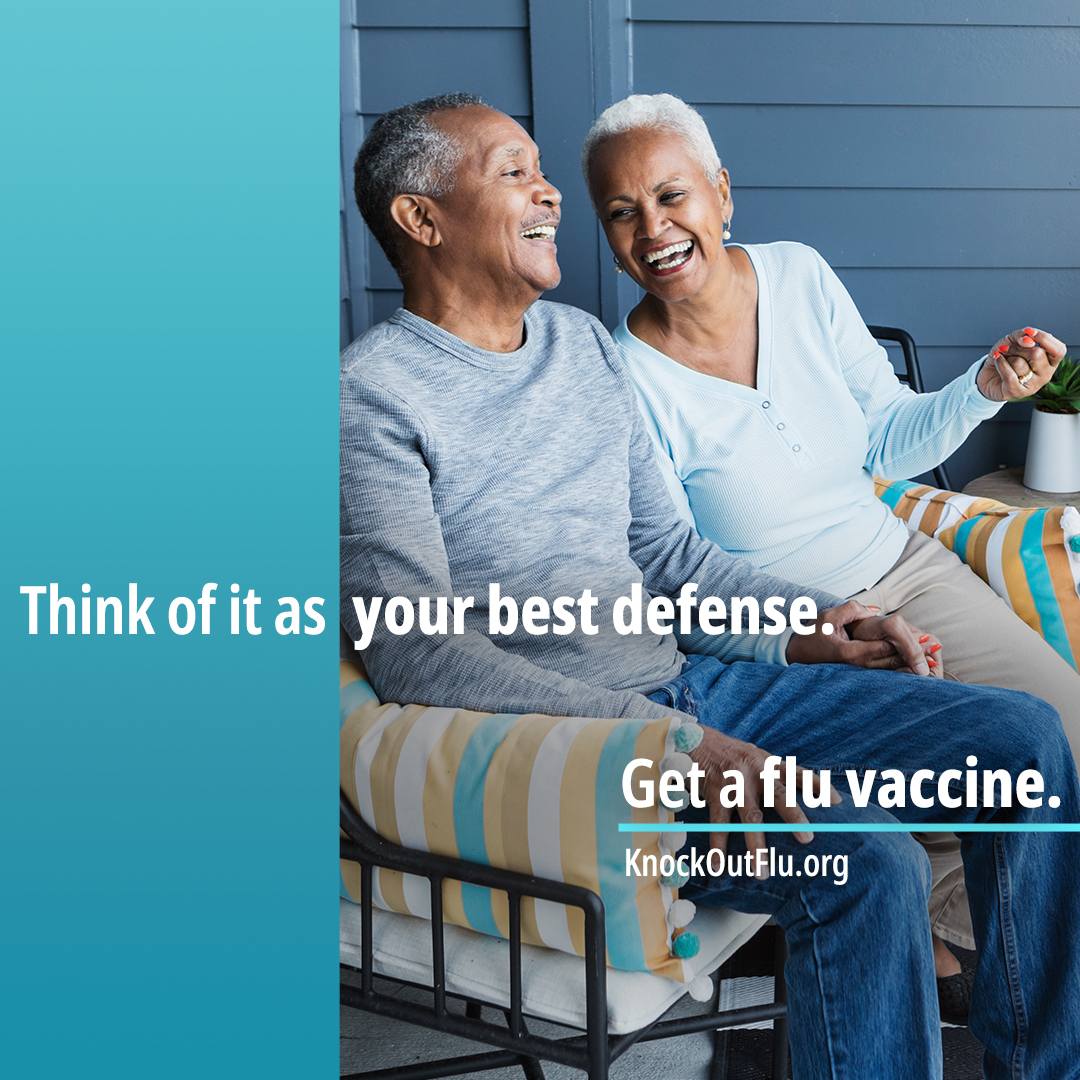 2021-2022 FLU UPDATES WEBINAR
Join Department of Health staff on October 18, 2021 from 12pm-1pm for the 2021-2022 Flu Updates Webinar. The webinar will cover:
- Flu epidemiology
- Flu vaccine availability for the Childhood Vaccine Program
- Updated flu vaccine recommendations from the Advisory Committee on Immunization Practices
- Information on flu communication and health promotion resources
The webinar will be recorded and available for viewing after the live webinar. Continuing education credit will be available for nurses. We are working to obtain continuing education for medical assistants and pharmacists/pharmacy techs.
12:00-1:00 p.m.
October 18, 2021
Register for the webinar
|
|
|
FOR SCHOOLS AND CHILD CARES
School and child care guidance can be found on the Department of Health web page here.
|
|
|
FOR LONG TERM CARE FACILITIES
|
|
|
|
RESOURCES ON THE PFIZER COVID-19 VACCINE 12-15 AGE EXPANSION
In response to the authorized of Pfizer COVID-19 to children ages 12-15, the CDC has developed several useful tools for parents and clinicians to utilize.
Information for healthcare and vaccine providers provides basic information regarding the COVID-19 vaccine, consent and tools for communication to the community:
|
SIGN UP FOR THE NEWSLETTER
If you aren't already signed up for the COVID-19 Vaccine Partner Newsletter, please visit the Department of Health's email subscribers page here. Once you enter your email, on the next page expand the Immunization topic, select the COVID-19 Vaccine Partner Newsletter, and hit submit.
|
|
This newsletter summarizes content from the week of October 3, 2021 and was sent out on October 8, 2021. |
|
|
|
|