|
|
This weekly newsletter provides summarized content on COVID-19 vaccine related topics. This broad level of information is tailored towards health care professionals, partners, and the general public.
WASHINGTON COVID-19 VACCINATION STATUS: PHASE 1B TIER 2
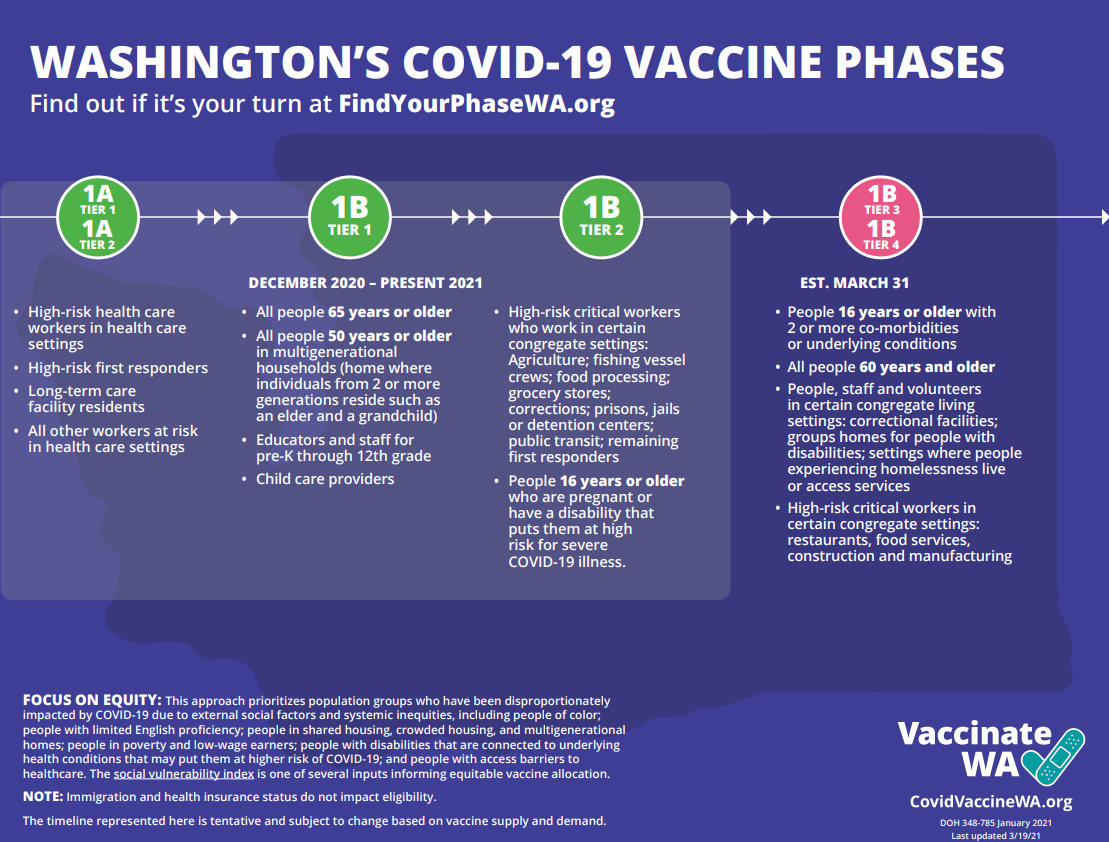 Click to view the vaccine phases visual PDF
|
|
IMPORTANT PHASE FINDER UPDATE
As of March 31, 2021, Phase Finder will no longer be required by COVID-19 vaccine providers to verify eligibility. The Washington State Department of Health (DOH) sees the importance of getting as many vulnerable community members vaccinated as fast as possible before we open May 1 to all people 16 years and older.
Removing Phase Finder speeds up the process and reduces barriers. We trust most people will continue to do the right thing and wait their turn. DOH will follow up with partners soon with additional guidance and resources to help you communicate about this transition.
|
|
COVID-19 DATA SHOW SOME SIGNS OF INCREASING ACTIVITY
On Thursday, March 25, the Washington State Department of Health (DOH) released the latest statewide situation report on COVID-19, which shows the state’s progress in fighting COVID-19 since early January is slowing. These trends are cause for significant concern as variants of the virus that spread more easily and cause more serious illness become more widespread in the state. Report findings include:
- COVID-19 transmission may be increasing.
- Statewide daily case counts have flattened at a relatively high level of around 654 new cases per day as of March 11.
- Many counties are seeing cases plateau, though there is some variation from county to county.
- Cases among people over 60 years old are declining more rapidly as the proportion of vaccinated people in this age group grows.
- Hospital admission rates have declined since early January among all age groups.
- The number of hospital beds occupied by confirmed and suspected COVID-19 patients began increasing in mid-March after steady declines since January.
- The estimated prevalence (percentage of people with active COVID-19 infections) has plateaued since early February, following declines in January.
Read the full news release with additional information on these findings in English.
|
|
STATE MASS VACCINATION SITES ADMINISTER OVER 130,000 DOSES OF COVID-19 VACCINE
The Washington State Department of Health (DOH) is proud of the success our four state-led mass vaccination sites continue to achieve. Thanks to the hard work of DOH staff, the Washington National Guard, and local and private sector partners, since opening January 26, a total of 131,483 doses of COVID-19 vaccine have been given out across the four state-led mass vaccination sites, which includes:
- 28,330 doses in Spokane
- 35,315 doses in Ridgefield
- 30,978 doses in Wenatchee
- 36,860 doses in Kennewick
First dose appointments will be available at all four sites next week. To make an appointment you must first confirm you’re eligible for the COVID-19 vaccine using Phase Finder. Phase Finder does not make you an appointment. Once confirmed through Phase Finder, you can make an appointment at one of the mass vaccination sites listed below. Please note, hours and registration information are different for each location and may be different than in weeks past.
Read the full news release in English and in Spanish.
|
|
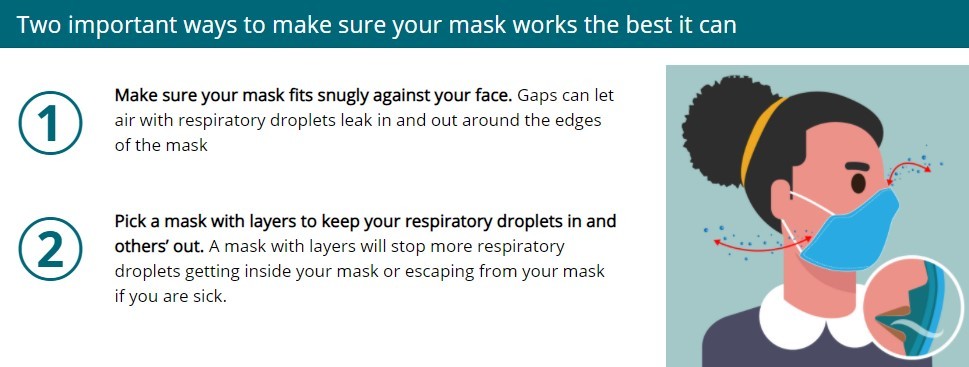 THE LATEST ON MASKS: LAYERED AND SNUG
Even though vaccination rates are improving in Washington, we still need to be careful. There are new COVID-19 variants showing up now that remind us we cannot drop our guard yet. In light of this, and with new guidance from the CDC, we thought we should take a moment to talk about masks again.
To begin, masks are still required at all times for everyone when they are indoors in public. Masks may be removed outdoors in public if you can stay six feet apart from others. This even applies to those who are fully vaccinated, too.
Here are some important things to consider:
- Choose a mask with two or three layers of fabric — cotton is best for breathability. Don’t use single-layer bandanas or gaiters, since they don’t work as well. For cloth masks, look for ones with tightly woven fabric. You can check this by holding the mask up to a light. If light doesn’t pass through, it’s a safe bet that it’s tightly woven fabric.
- Pick a mask with a nose wire. Bend the metal strip over your nose to create a secure fit against the top of your face. This can also help to keep your glasses from fogging up.
- Make sure the mask fits snugly over your nose, mouth, and chin. This helps keep your respiratory droplets in — and other people’s out. You can check the fit by cupping your hands around the edges of the mask. You should not feel air flowing out from the edges or near your eyes. Instead, you should feel warm air coming through the material in the front of the mask when you exhale.
- Don’t use masks with exhalation valves or vents. These can let virus particles escape into the air to spread to others.
- There are also different types of mask for different occasions. This tool from the Department of Labor and Industries can help you choose the right mask for your job setting.
Read the full Department of Health article for more information on mask tips.
|
|
COPING WITH COVID-19: SUICIDE PREVENTION
The Washington State Department of Health's (DOH) podcast on coping with COVID-19 recently discussed suicide prevention with guests from the DOH Suicide Prevention Program Unit and the University of Washington School of Social Work.
The podcast talks about how suicidal thoughts are not uncommon as reactions to painful experiences. As such, it is important to address what people are going through so they can get through it safely and feel supported.
Read the full DOH article or listen to the podcast to hear more about coping strategies, how to support others, and how to ask for help.
|
|
WASHINGTON STATE TRAVEL ADVISORY GUIDANCE UDPATE
On March 19, 2021, Governor Jay Inslee rescinded his November 2020 Travel Advisory and is advising Washingtonians and others visiting Washington to comply with the Center for Disease Control’s (CDC) current COVID-19 travel advisory guidance. Current CDC guidance is more robust, thorough, and specific than the November 2020 travel advisory, and is regularly updated to reflect the latest science, optimal safety practices and protocols, and the current COVID-19 situation here and abroad.
If you must travel, take steps to protect yourself and others.
- If you are eligible, get fully vaccinated for COVID-19.
- Before you travel, get tested with a viral test 1-3 days before your trip.
- Wear a mask over your nose and mouth when in public.
- Avoid crowds and stay at least 6 feet/2 meters (about 2 arm lengths) from anyone who did not travel with you.
- Get tested 3-5 days after your trip and stay home and self-quarantine for a full 7 days after travel, even if your test is negative. If you don’t get tested, stay home and self-quarantine for 10 days after travel.
- Follow all state and local recommendations or requirements after travel.
Read the Governor's full announcement here.
|
|
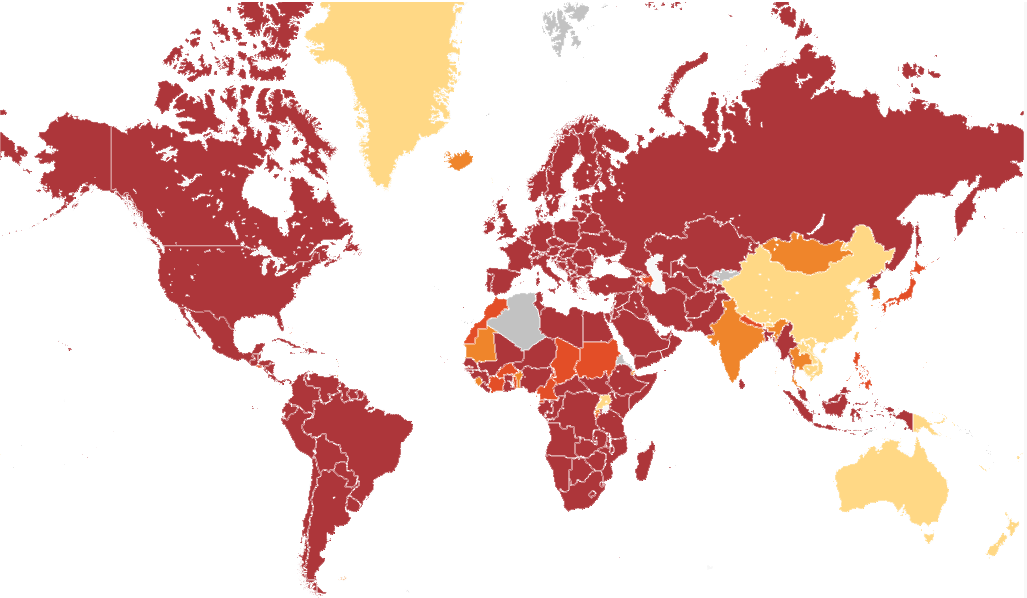 WHAT TO EXPECT WHEN TRAVELING DURING COVID-19
COVID-19 has changed the way we live and travel. States may have different requirements for visiting. The Centers for Disease Control and Prevention (CDC) has developed a COVID-19 Travel Planner for travelers to use when visiting different locations in the United States. To use the tool, input the state you plan to visit and click on the listed guidance for that state.
If you're planning on international travel, make sure to check out CDC's COVID-19 Travel Recommendations by Destination webpage.
|
|
SCHOOL GUIDANCE UPDATED
The Department of Health has announced their plan to update the current K-12 guidance following the announcement from the Centers from Disease Control and Prevention (CDC) last week. Changes will go into effect immediately, and will include the following:
- Updated language to align with CDC recommendations to require at least three feet of physical distancing between students in certain situations.
- Updated Performing Arts section to align with Theatre and Performing Arts guidance.
- Removal of any reference to the DOH K-12 Metrics and Toolkit.
|
|
COVID-19 VACCINE ORDERING REMINDER
COVID-19 vaccine ordering is available for approved providers from Friday at 12pm to Monday at 1pm. All COVID-19 vaccine orders placed outside of this ordering window will be cancelled. If you need to make changes to your submitted orders, email covid.vaccine@doh.wa.gov before 12pm on Wednesday.
Health care providers can enroll in the COVID-19 vaccine program here.
View the provider ordering schedule here.
|
|
A NOTE ON VACCINE WASTAGE
Vaccine providers in Washington have done a great job so far reducing vaccine waste. Since we started getting COVID-19 vaccines in December, the proportion of vaccine waste is significantly lower than for other vaccines. You can help us keep vaccine waste to a minimum by identifying, disposing, and reporting your waste.
|
|
'WHO CAN VACCINATE' CHART UPDATED TO INCLUDE DIFFERENT HEALTH CARE PROVIDERS
The Department of Health has recently updated their "Who Can Vaccinate" Chart to include a variety of new health care providers, including:
- Midwives
- Paramedics
- Intermediate or advanced emergency medical technicians
- Physician assistants
- Respiratory therapists
- Dentists
- Dental hygienists
- Podiatrists
- Optometrists
- Veterinarians
For specific requirements for each profession, please read through the updated guidance here.
|
|
COVID-19 VACCINE ADMINISTRATION RATE CHANGE FOR APPLE HEALTH (MEDICAID)
The Washington State Health Care Authority (HCA) recently put out an alert to notify health care providers the COVID-19 vaccine administration rate will increase to $40.00 per dose of vaccine effect on and after April 1, 2021.
The following CPT® codes will be adjusted: 0001A, 0002A, 0011A, 0012A, and 0031A.
Fee Schedule
The adjusted rate will appear on the COVID-19 fee schedule by April 1, 2021. To access HCA’s current COVID-19 Fee Schedule, see HCA’s Provider billing guides and fee schedules, under COVID-19.
|
|
CDC RELEASES RAPID COMMUNITY ASSESSMENT GUIDE WITH TOOLS TO HELP IMPROVE VACCINATION ROLLOUT IN YOUR COMMUNITY
CDC has developed a Rapid Community Assessment Guide to help state and local health departments diagnose and address access and confidence challenges related to COVID-19 vaccines. The guide follows a 5-step process to:
- Identify objectives and communities of focus.
- Plan for the assessment.
- Collect and analyze data.
- Report findings and identify solutions.
- Evaluate your efforts.
This tool can be customized for many different healthcare affiliated organizations whom are working towards increasing COVID-19 vaccine confidence and uptake in their community.
|
|
PROVIDER COVID-19 VACCINE DISCUSSION GUIDES NOW AVAILABLE
Guidance documents are now available to help health care providers start the conversation about all COVID-19 vaccines with their patients. These flowchart discussion guides provide a conversation pathway to help navigate through difficult topics such as historical trauma, racism, and commonly heard misconceptions to help providers make a strong recommendation to vaccinate and overcome hesitancy concerns.
Discussion guides for currently authorized mRNA (Pfizer & Moderna) and viral vector vaccines (Johnson & Johnson Janssen) include:
These resources, along with other helpful education material, can be found on our COVID-19 Vaccine Toolkit and Resources for Providers page.
|
|
COVID-19 VACCINE FACT SHEETS AVAILABLE IN DOZENS OF LANGUAGES
The FDA has just posted dozens of translations of Fact Sheets for recipients and caregivers for each of the three authorized COVID-19 vaccines. They are great resources to assist you with communicating with patients about the importance of COVID-19 vaccination. The translations can now be found on each of the Vaccine websites within the “Additional Information” section.
Janssen COVID-19 Vaccine | FDA
Pfizer-BioNTech COVID-19 Vaccine | FDA
Moderna COVID-19 Vaccine | FDA
|
|
|
Question: Can people under age 18 get the vaccine?
Answer: Yes. People ages 16 and over can get the Pfizer-BioNTech vaccine when they are eligible in the current phase of vaccination. Youth who are 16 or 17 years of age may need consent from a parent or guardian to get the vaccine, unless they are legally emancipated.
Check with the vaccine clinic about their requirements for showing proof of parental consent or legal emancipation.
|
|
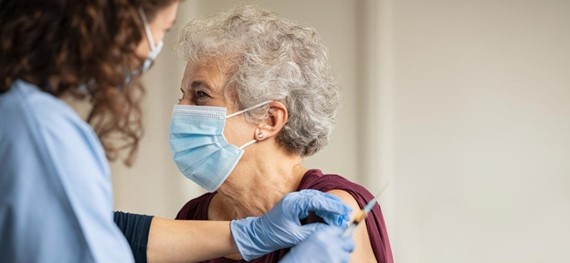 WEBINAR: COVID-19 VACCINE FOR HOMEBOUND OLDER ADULTS
With support from The John A. Hartford Foundation and the Cambia Health Foundation, Trust for America’s Health is offering a webinar to explore the challenges and policy barriers to vaccine access and highlight innovative vaccine distribution practices. Participants will also learn about the complexities of vaccine distribution to homebound individuals, as well as the crucial partnerships among public health departments, aging services and other community stakeholders that are key to expanding vaccine access. The webinar will include time for Q&A from the audience.
12:00 - 1:30 PDT (3:00 - 4:30 EDT)
Wednesday, March 31, 2021
Register here
|
|
WEBINAR: COVID-19 VACCINE UPDATES FOR MARCH
The Washington Department of Health is pleased to host the COVID-19 Vaccine Updates – March webinar on March 31, 2021 at 12pm. Please register for this webinar. The webinar is designed for healthcare practitioners, local health jurisdictions, and school and child care nurses. Continuing education credits are available for nurses, medical assistants, and pharmacists, and will be recorded in case you miss the live event. Dr. Edgar Marcuse and Dr. John Dunn will cover the following topics:
- 5 COVID-19 vaccines: platforms, clinical trials
- Safety data on vaccines administered
- Vaccine recommendation updates
- Addressing COVID vaccine hesitant individuals
- COVID-19 vaccine resources
12pm - 1pm PT
Wednesday, March 31, 2021
Register for the webinar
|
|
WASHINGTON STATE PREPMOD ADMINISTRATIVE TRAINING
The Washington State Department of Health is hosting another PrepMod training for health care providers wishing to learn more about PrepMod or use PrepMod for COVID vaccine scheduling, recording, and reporting.
PrepMod is a web-based software application that manages key aspects of mass vaccination efforts. It is designed specifically for agencies and organizations that do not have an existing electronic health record (EHR) interface to the Washington State Immunization Information System (IIS). To access PrepMod, you will need an approved COVID vaccine provider agreement.
9:00am
Wednesday, March 31, 2021
Register here.
If you have questions, please email the PrepMod inbox at prepmod@doh.wa.gov.
|
|
|
|
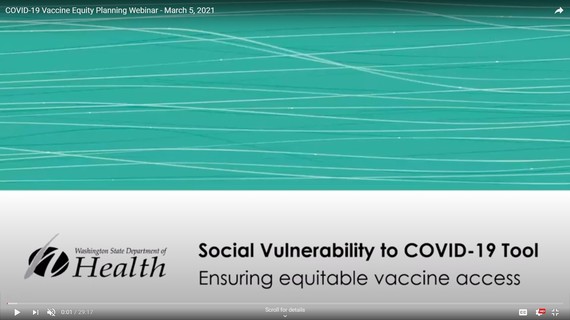 RECORDING: SOCIAL VULNERABILITY TO COVID-19 MAP TOOL TRAINING
In case you missed the Department of Health's (DOH) training on the Social Vulnerability to COVID-19 map tool, or just want to see it again, you can access a recorded version with closed captioning on YouTube.
The webinar training shows participants how to use a DOH created mapping tool to plan equitable vaccine distribution efforts. The mapping tool can help people focus on their highest priority areas of their county, jurisdiction or community.
The webinar is targeted to local health jurisdictions and community health providers. Presenters share:
- What the Social Vulnerability to COVID-19 map is.
- How to use the map to identify priority locations and communities.
- How to incorporate information from the map into your vaccine planning.
If you would like an accessible PDF of the presentation slides, or want to share how you are using this tool, please email elizabet.williams@doh.wa.gov.
|
|
|
FOR THE GENERAL PUBLIC
- Washington gets a limited supply of vaccine and we don’t yet have enough for everyone. Want to know more about how we allocate doses across the state? Visit our vaccine distribution webpage for the latest information.
- The CDC's After Getting the Vaccine page shares what you can expect after getting vaccinated, including common side effects.
FOR INDUSTRY
FOR HEALTH PARTNERS
|
|
This newsletter summarizes content from the week of Month 21, 2021 and was sent out on March 26, 2021. |
|
|
|
|