This season is about gratitude, and at Fairfax County Animal Services (FCAS), we have a lot to be thankful for. Our adopters, volunteers, fosters, staff and community partners show endless support every day.
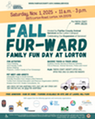
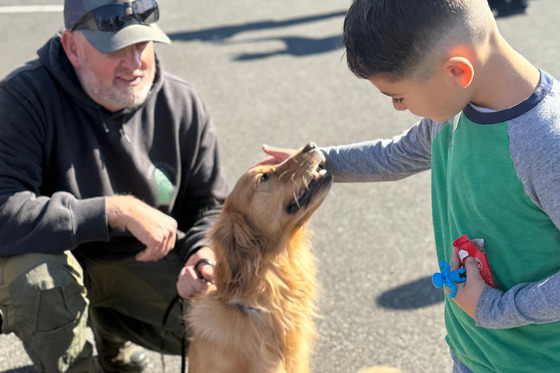
More than 850 people joined us at the Lorton Campus for Fall Fur-ward: Family Fun Day, celebrating community, our expansion to include a Field Services Division and our new name.
Families met Animal Services Officers, explored police and fire vehicles, enjoyed crafts and other hands-on activities, and met adoptable pets.
|
We are grateful to everyone who helped make the day a success. Events like this help residents discover support available year-round. FCAS is more than a shelter; it is a community resource built on teamwork, education and compassion.
Thank you for building community with us.

Here in Fairfax County, many federal employees and contractors serve our nation while caring for their families and pets. This month, we’re highlighting the programs and resources that FCAS offers through our Pet Resource Center to help families care for their pets with less financial strain. The center provides:
-
Low-cost vaccine and microchip clinics for dogs and cats
-
Pet pantry supplies for residents who need short-term assistance
-
Spay and neuter vouchers for eligible residents
-
Financial assistance referrals for veterinary care
Our monthly vaccine and microchip clinics provide affordable, drive-up services for busy families. Each clinic offers rabies and distemper vaccines, microchips and dog licenses at accessible prices: $20 per vaccine or microchip and $10 for a dog license.
Upcoming clinics:
|
Friday, Nov. 21, 9 to 11 a.m.
Fairfax County Animal Services - Lorton Campus
8875 Lorton Road, Lorton
Wednesday, Dec. 3, 9 to 11 a.m.
Fairfax Center Fire Station 40
4621 Legato Road, Fairfax
|
|
 |
No appointments are required. Dogs must be on standard leashes (not retractable), and cats must be in carriers. Please bring previous vaccine records if you would like your pet to receive a three-year rabies or distemper vaccine. Payment is cash only. It’s an easy, affordable way to keep pets healthy and licensed in Fairfax County!
Our Pet Pantry offers free pet food, both dry and canned, and often has other essentials such as crates, carriers, leashes and collars. Supplies can be picked up by appointment at either shelter campus. To arrange a pickup, call 703-324-0299 or email PetResourceCenter@fairfaxcounty.gov.
|
Michael R. Frey Campus
4500 West Ox Road, Fairfax
|
Lorton Campus
8875 Lorton Road, Lorton
|
The pantry is open to any Fairfax County resident experiencing financial hardship. It’s one of the many ways we help pets stay with the people who love them. |
|
 |
Fairfax County residents with qualifying income can apply for vouchers that reduce the cost of spay or neuter surgery at participating veterinary clinics.
Prices start at about $90 for cats and $180 for dogs and include core vaccines and microchipping. Households may qualify if they receive WIC, Medicaid or SNAP, or if their income falls below county thresholds, such as $70,730 for a family of four.

Once approved, residents purchase the voucher, schedule the surgery and redeem it within 60 days. Vouchers are limited each month and often sell out quickly.
|
Unexpected medical expenses can be overwhelming, but help is available. While FCAS does not specifically endorse any outside organizations, we’re sharing information about groups that offer financial aid, grants or flexible payment options that may help pet owners manage costs.
Local and national support programs include:
Bow Wow Buddies Foundation: Grants for emergency veterinary care (dogs)
Brown Dog Foundation: Funding to bridge the gap for lifesaving care
CareCredit: Flexible healthcare financing that includes veterinary care
Dylan’s Hearts: Aid for families struggling to pay for veterinary care
Frankie’s Friends: Funds for lifesaving and specialty treatment
Friends & Vets Helping Pets: Assistance with extraordinary lifesaving veterinary expenses
Harley’s Hope Foundation: Aid for major illnesses and emergency veterinary care
HEAL Foundation USA: Grants for pet owners facing veterinary costs
Lexi’s Legacy: Veterinary assistance program (check eligibility)
Live Like Roo: Cancer-care grants and support packages
Miranda’s People: Cancer-specific financial aid resources for dogs
MRFRS Veterinary Funding Assistance Program: Provides limited aid for cats
Paws 4 A Cure: Help for non-routine veterinary care
Peanut Fund: Financial assistance for veterinary care
Pet Assistance, Inc.: Supports dogs and cats with urgent veterinary needs
RedRover Relief: Grants for urgent or emergency veterinary care
Scratch Pay: Simple, pet-friendly payment plans
The Pet Fund: Help for pets with cancer, heart disease, and other serious conditions
Waggle: Crowdfunding platform that helps pet owners pay for medical care
If your family is affected by a federal shutdown or furlough, visit our Pet Resource Center for support. The same help is available to residents year-round.

Along with practical support like low-cost clinics, vouchers and pantry supplies, there are simple budget-friendly ways to support your pet’s well-being at home. Try one or two of these each day. Most use items you already have!
Dogs
-
Sniff and seek. Scatter part of a meal in the yard or roll kibble in a towel to encourage foraging. Sniffing engages the brain and helps many dogs relax.
-
Muffin-tin puzzle. Place kibble in a muffin pan and cover cups with tennis balls or paper. Problem-solving games burn energy and reduce boredom.
-
Ten-minute scent walks. Let your dog set the pace and follow their nose. Short, scent-focused walks can be more satisfying than long, fast ones.
Cats
-
Cardboard hideouts. Turn a box on its side with a blanket inside. Enclosed spaces help cats feel safe and reduce stress during busy times.
-
DIY food hunt. Split a small portion of kibble into several cups or paper “parcels” around one room so cats can search and pounce.
Small Pets (rabbits, guinea pigs)
-
Forage trays. Fill a shallow box with paper and scatter greens or pellets. Natural foraging builds confidence and steadier moods.
-
Gentle chew and dig options. Offer safe chews and a paper-filled “dig box” to channel normal behaviors.
TIP: Keep sessions short and consistent. A few minutes of enrichment, repeated daily, can absolutely lead to calmer, happier pets! |
|
 |
 Opalite’s Big Bounce-Back Thanks to Friends

Meet Opalite, a 7-month-old kitten whose calm demeanor carried him through a very difficult week. He arrived after being found entangled on a fence with a serious leg injury. After pain control, imaging and evaluation, our veterinary partners at Pender Veterinary Centre recommended a hind-limb amputation to give him comfort and a real chance at a normal life.
Through every step, Opalite has been steady and sweet. He leaned into the Pender team for chin scratches before surgery, purred through rechecks, and greeted shelter staff with gentle head bumps. Three-legged cats adapt quickly. They run, climb and play, and Opalite is already proving it.
This outcome was possible because Friends of the Fairfax County Animal Shelter funded his surgery. Friends bridge the gap when animals need urgent, specialized care and help turn emergencies into recoveries.
Watch for Opalite on our adoption site. He is currently at the Michael R. Frey Campus.
|
Three-legged cats like Opalite (from our Friends feature above) live normal, happy lives. Most adjust within days to weeks and go right back to running, climbing, playing and napping in sunny spots. With a few simple tweaks at home, you can help a tripod cat feel confident and comfortable.
Setting up your home
• Choose a large litter box with a low entry and place it on a non-slip mat.
• Keep food and water near resting spots. Some cats do well with slightly raised bowls.
• Add a small step or ramp to beds and windows and pick cat trees with wide platforms.
• Lay a few rugs or yoga mats on slick floors to improve traction.
Daily care
• Keep play brief and often. A wand toy builds strength with less strain.
• Keep your cat at a lean body weight, and trim nails regularly to improve grip.
• Ask your veterinarian about diet, supplements or medication for joint support.

You should see mobility improve week by week as strength and balance build.
Want to see a tripod in action? Watch for Opalite on our adoption site and meet him at the Michael R. Frey Campus soon!
|
|