|
//Updated: Disability Housing Grants for Veterans//
VA is required by law to match the percentage of cost-of-living adjustments (COLA) made to Social Security benefits. These adjustments help to make sure that the purchasing power of your benefits keeps up with inflation.
|
|
|
The U.S. Bureau of Labor Statistics calculates and reports cost of living each month through Consumer Price Index (CPI) reports. CPI calculations measure the average change over time in the prices paid by urban consumers for a market basket of consumer goods and services. Annual COLA is calculated through monthly Consumer Price Index for Urban Wage Earners and Clerical Workers (CPI-W) reports of the current fiscal year (July, August, September) to the average for the same months of the previous fiscal year.
 |
The August CPI-W was 328,481 (1982-84=100), 3.5% above the baseline of 317.265. A COLA effective for December of the current year, payable in January 2027, is equal to the percentage increase (if any) in the CPI-W from the average for the third quarter of the current year to the average for the third quarter of the last year in which a COLA became effective. If there is an increase, it must be rounded to the nearest tenth of one percent. If there is no increase, or if the rounded increase is zero, there is no COLA for the year. The Consumer Price Index news release for September 2026 is scheduled to be published on Wednesday, October 14, 2026, at 8:30 a.m. (ET). VA will announce official numbers of the 2027 COLA later this fall.
Help enhance Veteran care by forwarding this email to your colleagues.
|
|
|
VA provides housing, automobile, and clothing grants for Veterans and service members with certain service-connected disabilities. VA provides a Specially Adapted Housing (SAH) grant to assist with the cost of building, buying, adapting existing homes or paying to reduce indebtedness on a currently owned home that is being adapted, up to a maximum benefit amount.
- If you qualify for an SAH grant, you can get up to $126,526 for FY 2026. This is the current total maximum amount allowed for SAH grants.
VA may approve a Special Home Adaptation (SHA) grant to assist with the cost of adapting or purchasing a home to live more independently.
- If you qualify for an SHA grant, you can get up to $25,350 for FY 2026. This is the current total maximum amount allowed for SHA grants.

This benefit provides medically necessary improvements and structural alterations to Veterans/Servicemembers’ primary residence. VA provides up to $6,800 in lifetime benefits for service-connected Veterans. Up to $2,000 in lifetime benefits for nonservice-connected Veterans to make home improvements and/or structural changes necessary for the continuation of treatment or for disability access to the Veterans home and essential lavatory and sanitary facilities. This benefit provides medically necessary improvements and structural alterations to Veterans/Servicemembers’ primary residence for the following purposes:
- Allowing entrance to or exit from the primary residence
- Use of essential lavatory and sanitary facilities (e.g. roll in showers)
- Allowing accessibility to kitchen or bathroom sinks or counters (e.g. lowering counters/sinks)
- Improving entrance paths or driveways in immediate area of the home to facilitate access to the home through construction of permanent ramping
- Improving plumbing or electrical systems made necessary due to installation of home medical equipment
All HISA projects must be medically justified for the service connected disability and/or non-service connected disability. Contact VA's Prosthetic and Sensory Aids Service to determine your available lifetime HISA benefits.
 First released in 2001 and regularly updated since then, FDIC Money Smart has a long track record of success in reducing stress and improving financial readiness of Veterans. NW MIRECC started with the FDIC Money Smart program through the 'Helping Veterans #GetBanked and Manage Their Money' training program. The training program provided resources to Veterans Service Organizations, VA special Outreach Program Coordinators, and others who provide direct services to U.S. Veterans and have a direct interest in increasing Veterans’ financial capability.
 Historical Automatic Cost-Of-Living Adjustments received since 1975 as recorded by The United States Social Security Administration
|
July 1975 -- 8.0%
July 1976 -- 6.4%
July 1977 -- 5.9%
July 1978 -- 6.5%
July 1979 -- 9.9%
July 1980 -- 14.3%
July 1981 -- 11.2%
July 1982 -- 7.4%
January 1984 -- 3.5%
January 1985 -- 3.5%
January 1986 -- 3.1%
January 1987 -- 1.3%
January 1988 -- 4.2%
January 1989 -- 4.0%
January 1990 -- 4.7%
January 1991 -- 5.4%
January 1992 -- 3.7%
January 1993 -- 3.0%
January 1994 -- 2.6%
January 1995 -- 2.8%
January 1996 -- 2.6%
January 1997 -- 2.9%
January 1998 -- 2.1%
January 1999 -- 1.3%
January 2000 -- 2.5%
January 2001 -- 3.5%
|
January 2002 -- 2.6%
January 2003 -- 1.4%
January 2004 -- 2.1%
January 2005 -- 2.7%
January 2006 -- 4.1%
January 2007 -- 3.3%
January 2008 -- 2.3%
January 2009 -- 5.8%
January 2010 -- 0.0%
January 2011 -- 0.0%
January 2012 -- 3.6%
January 2013 -- 1.7%
January 2014 -- 1.5%
January 2015 -- 1.7%
January 2016 -- 0.0%
January 2017 -- 0.3%
January 2018 -- 2.0%
January 2019 -- 2.8%
January 2020 -- 1.6%
January 2021 -- 1.3%
January 2022 -- 5.9%
January 2023 -- 8.7%
January 2024 -- 3.2%
January 2025 -- 2.5%
January 2026 -- 2.8%
|
Review 2026 Veterans disability compensation rates. Use our compensation benefits rate tables to find your monthly payment amount. VA base your monthly payment amount on disability ratings and details about dependent family members. VA special monthly compensation (SMC) is a higher rate of compensation that we pay to Veterans as well as their spouses, surviving spouses, and parents with certain needs or disabilities.
VA disability compensation (pay) offers a monthly tax-free payment to Veterans who got sick or injured while serving in the military and to Veterans whose service made an existing condition worse. You may qualify for VA disability benefits for physical conditions (like a chronic illness or injury) and mental health conditions (like PTSD) that developed before, during, or after service. Find out how to apply for and manage the Veterans disability benefits you’ve earned.
 |
 |
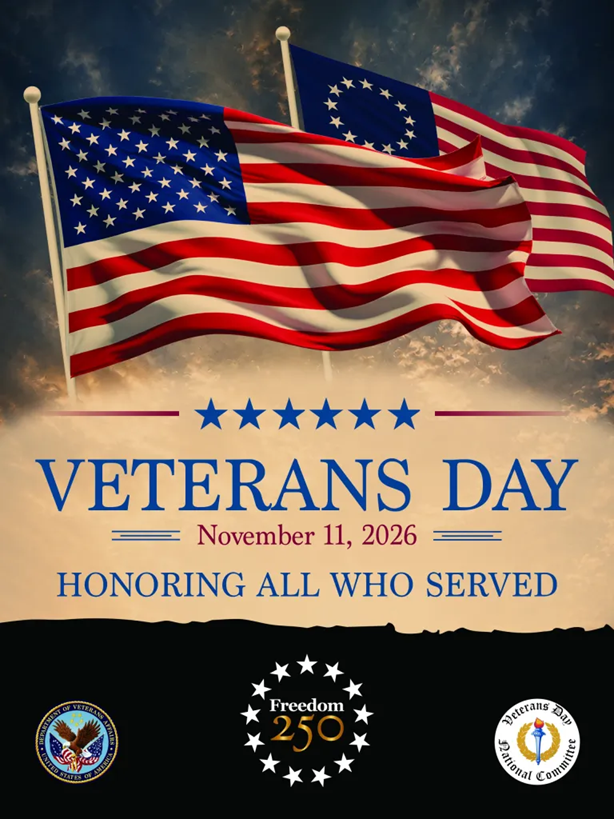
In 2026, the United States will celebrate the 250th anniversary of its independence. While this will be the Department of Veterans Affairs’ first national milestone anniversary since becoming a cabinet-level department in 1989, its predecessor organizations, including the National Home for Disabled Volunteer Soldiers, the Pension Bureau, the Veterans Bureau, and the Veterans Administration, routinely participated in the nation’s previous milestone celebrations. Each served to honor the contributions of American Veterans in preserving our freedom.
|
|

VA's NW MIRECC serves to improve the mental health and well-being of Veterans through research and dissemination of information to providers both within VA and the general public. VHA continually evolves and cultivates ongoing cutting-edge medical research and innovation to improve the lives of America’s patriots. NW MIRECC brings together complementary research, education, and clinical programs from VA Puget Sound (VAPSHCS) and the VA Portland Health Care System (VAPORHCS). The collaborative approach to mental health research, education and treatment has had a profound impact on the lives of Veterans. NW MIRECC was commissioned by Congress and the VA as one of the first three MIRECCs in the United States.
|

The mission of NW MIRECC is to improve the quality of life and function of Veterans by developing, evaluating, and promoting the implementation of effective treatments for Posttraumatic Stress Disorder (PTSD) and its complex comorbidities. PTSD comorbidities include the behavioral consequences of repetitive blast mild Traumatic Brain Injury (mTBI), Substance Use Disorder (SUD), chronic pain (in particular, post-concussive headaches), cognitive impairment, and increased risk for neurodegenerative disorders (chronic traumatic encephalopathy [CTE] and Alzheimer’s disease [AD]). VA MIRECC's provide for the improvement of the provision of health-care services and related counseling services to eligible veterans suffering from mental illness (especially mental illness related to service-related conditions) through—
• the conduct of research (including research on improving mental health service facilities of the Department and on improving the delivery of mental health services by the Department);
• the education and training of health care personnel of the Department; and
• the development of improved models and systems for the furnishing of mental health services by the Department.
|
The Department of Veterans Affairs comprises 5 Veterans Integrated Service Networks or VISNs — regional care systems working together to better meet local healthcare needs and provide greater access to care. NW MIRECC serves VA facilities within Pacific West VISN 5 and the larger VA system. As part of the NW MIRECC mission to enhance access to mental health expertise, the NW MIRECC collaborates and consults with other MIRECCs and Centers of Excellence, as well as with other VA, Department of Defense (DoD), Federal, State departments of Veterans Affairs, community agencies, and experts. The close geographic proximity (40 miles) of DoD Joint Base Lewis-McChord/Madigan Army Medical Center to VAPSHCS has provided an exciting opportunity to develop innovative and productive research, education, and clinical care collaborations with DoD personnel that address PTSD and its associated conditions in their early stages in active-duty Servicemembers.
VA ranks as one of the nation's leaders in health research. NW MIRECC research studies significantly contribute to advancements in our understanding of medical problems that lead to health improvements for Veterans and civilians alike. Research studies at NW MIRECC are currently enrolling Military Veterans, First Responders, Health Care workers, and Civilians in Seattle, Washington. Every year, thousands of research studies are conducted at VA medical centers, outpatient clinics, and nursing homes.
|
|
|
VA Portland Health Care System (VAPORHCS)
Mail Stop: P3MIRECC
3710 SW US Veterans Hospital Road
Portland, OR 97239 |
|
|
|
|