|
|
|
|
By Gerald Sonnenberg
EES Marketing and Communication
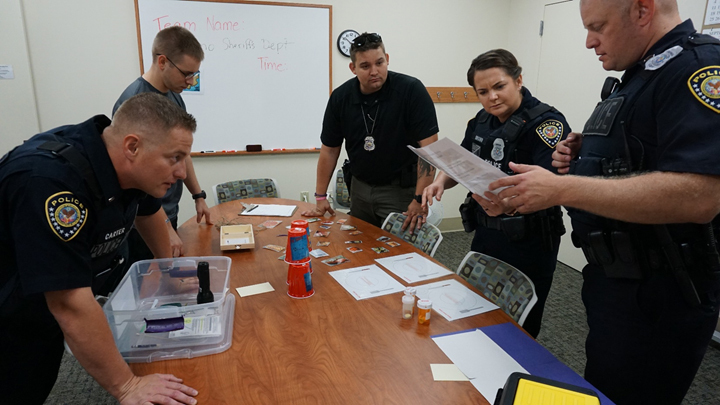
DAYTON, Ohio – Through a VA Office of Rural Health (ORH) initiative the Dayton VA Medical Center (VAMC) created and deployed an escape room to promote teamwork and communication utilizing knowledge of common chronic diseases. Escape rooms have emerged as a new learning opportunity in simulation that fosters teamwork and problem solving through a series of time-limited puzzles. Published literature describes escape rooms as engaging and interactive, while boosting participants’ knowledge of the educational topic presented (Brown, Coronel & Darby, 2019).
For the rest of the story, click here.
In this photo, police services members, Lt. Keith Carter, Andrew Mohr, Lt. James Lawrence, Officer Ashlee Brown and Corporal Robert Dorko, review clues in escape room training designed to promote teamwork and communication. Their team, called “Reno Sheriff’s," ”escaped" the room with a time of 25 minutes, 44 seconds. (VA photo by Kateri Gabriele)
Back to top
|
|
|
By Gerald Sonnenberg
EES Marketing and Communication
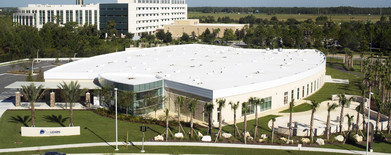
ORLANDO, Fla. – The list of courses offered at the VHA SimLEARN National Simulation Center for the second quarter is below. For more information, check availability, or to enroll in the courses, please refer to the course catalog.
The following courses are scheduled to take place through March 2020:
- Fundamentals of Critical Care Support (FCCS) Jan. 14 and Feb. 11
- Introduction to Clinical Simulation (ICS) Jan. 7, Feb. 19 and March 24
- Maintenance of Certification of Anesthesia (MOCA) Feb. 28
- Musculoskeletal Clinician Training (MSK-C) Jan. 22
- Musculoskeletal Master Educator (MSK-ME) Feb. 19
- Peripherally Inserted Central Catheter Course (PICC) Feb. 4 and 6
- Point of Care Ultrasound (POCUS) Jan. 14 and March 3
- SimLEARN Faculty Instructor Course (SFIC) Feb. 4
- Simulations for Clinical Excellence in Nursing Services (SCENS) Feb. 24
- Trauma Nursing Core Course (TNCC) Jan. 22 and March 3
If you have questions, please contact EES SimLEARN NSC Support EESSimLEARNNSCSupport@va.gov.
For more information about the SimLEARN program, please visit the SimLEARN website.
Back to top
|
|
|
By David J. Adriansen, Ed.D, NREMT, CHSE
VISN 23 Simulation Program Director
Minneapolis VA Health Care System
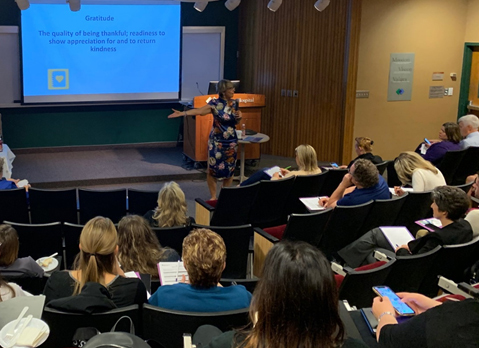
ST. PAUL, Minn. – The HealthPartners Clinical Simulation and Learning Center at Region’s Hospital in here held their annual Simulation Conference Sept. 27-28. This 2-day conference provides an annual opportunity for Midwest Region simulationists to exchange information on simulation in both health care delivery and academic settings. Simulation educators, technologists and program administrators were able to have a forum to discuss current best practices and innovations in simulation.
A highlight this year was having Mary Holtschneider, simulation education coordinator at the Durham, North Carolina Veterans Affairs (VA) Health Care System as the keynote speaker. With over 25 years’ experience as a critical care nurse, Mary co-directs the Durham VA Interprofessional Advanced Fellowship in Clinical Simulation and is the nursing program manager for the Duke Area Health Education Center (AHEC).
For the rest of the story, click here.
In this image, Mary Holtschneider talks about gratitude and celebrating the difference you make in life and simulation during her keynote presentation. (VA photo by Dave Adriansen)
Back to top
|
By Debra Bartoshevich, MSN, RN, CHSE, CEN
Simulation Program Manager
Audie L. Murphy Simulation Center
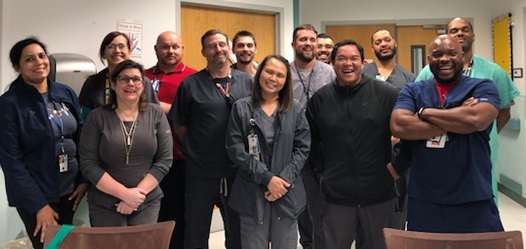
SAN ANTONIO – The Audie L. Murphy Simulation Center (ALMSC) here completed their first Trauma Nursing Core Course (TNCC) in December. With the help of Shiny Thomas and Jerry Mills, faculty from the VA North Texas Health Care System in Dallas, Texas, it was the first VISN 17 TNCC collaboration.
The class was held in the new ALMSC Simulation Center. Trauma Nursing Process (TNP) stations were set-up using intensive care unit rooms, which allowed the opportunity to simulate trauma care areas. Learners used real and simulated equipment to create an interactive learning experience. With the help of staff from the Dallas facility, San Antonio graduated their first class of certified TNCC providers along with future instructors.
In this photo, (Left to right) Nurses Shiny Thomas (faculty), Debra Bartoshevich (faculty), Victoire Taylor, Chad Lester, Andrew Wallace, Ryan Robisheaux, Kate Ong, George Miller, Ira Rubio, Jose Martinez, Daymond Clark, Jerry Mills (faculty), and Joseph Harvey gather for a photo after the training. (VA photo by Debra Bartoshevich)
Back to top
|
By Karen G. Keller, RN, BS, BSN, MSN, APRN-BC
Simulation Fellow/APRN Cardiology
Dayton Veterans Affairs Medical Center
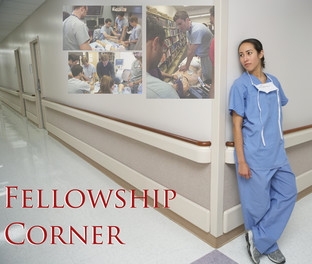
DAYTON, Ohio –An ear examination simulator and high-fidelity mannequin was purchased by the Dayton Veterans Affairs Medical Center (DVAMC) in support of the DVAMC and Office of Rural Health (ORH) Initiative for fiscal year 2019. In utilizing the new equipment, the training objectives for the nursing staff included effective communication with the health care team regarding abnormal ear symptoms and to perform proper ear lavage techniques. The provider’s learning objectives were to identify various ear pathologies, as well as perform proper ear lavage techniques.
Simulation modalities were determined based on the mannequin being cloud based, lightweight, easy to move and able to respond to questions with realistic responses.
For the rest of the story, click here.
Back to top
|
|
|
|
|
|
|