|
|
|
|
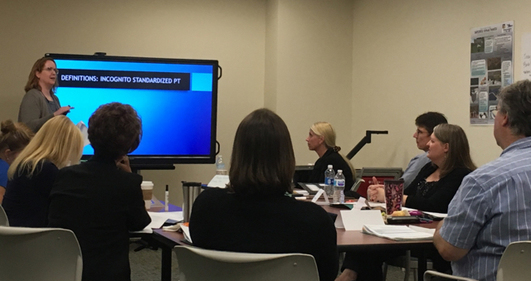
In this photo, Kateri Gabriele leads a discussion on standardized
patients to participants. (VA photo by Traci Ashworth)
By Kateri Gabriele, MS, RN, CHSE, Simulation Center
Operations Manager and Traci Ashworth, MSN, BSN, RN, Simulation Nurse Educator
Dayton VA Medical Center
DAYTON, Ohio -- The newly combined Veterans Integrated
Services Network (VISN) 10 now covers Ohio, Indiana and Michigan. It includes
10 medical centers, 1 ambulatory care clinic and 58 community-based outpatient
clinics (CBOCs) making it the second largest VISN in the VA system with plenty
of Simulation-Based Learning (SBL) opportunities!
Showing
a strong commitment to health care simulation, VISN 10 supported
three separate simulation workshops during the summer and fall of 2017 at the
Dayton VA Medical Center (VAMC) Simulation Center. Simulation best practices were
shared during these workshops with presenters from across the VISN. These
custom-tailored workshops addressed the specific needs identified by simulation
representatives from each of the VAMCs, and they afforded an opportunity for
face-to-face interaction yielding a strong network among the attendees.
Two representatives from each medical center were invited for the first "Simulation Nuts and Bolts." The workshop covered simulation basics and supported learners in programming their mannequins using a commercial application. Plenty of hands-on opportunities enabled the participants to leave with an increase in confidence and competence, as well as new simulation scenarios created during the workshop.
“This was so informative and pertinent that I look forward to more of the same at Dayton,” said one participant. This initial experience laid the groundwork for their next encounter three months later, when they returned for an intermediate workshop.
For the rest of the story, click here.
|
|
|
|
By Lee Morrow, MD, Pulmonologist and Kyle Rhone, RN,
Simulation Educator
Nebraska Western Iowa Veterans Health Care System and Mobile
Simulation Training Team
OMAHA, Neb. – During the week of June 5, Nebraska Western Iowa (NWI)
Veterans Health Care System and the Mobile Simulation Training Team (MSTT)
hosted the first Fundamental Critical Care Support (FCCS) classes in Omaha.
Dr. Lee Morrow and Dr. Adam Highley, two of only a handful of FCCS course
directors in the Midwest, led the course with support from SimLEARN, NWI and
MSTT. FCCS is designed for the
non-critical care provider who is thrust, by circumstances, to care for the
critically ill for up to 24 hours.
For the rest of the story, click here.
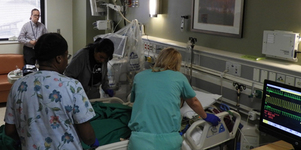
(Left to right) Valerie Reviere, RN; Mary Carmona, RN; and Dr. Natalie Ommen all
from Nebraska Western Iowa Veterans Health Care System are being facilitated by
Dr. Lee Morrow through one of the FCCS Simulations. (VA photo by Kami Willett, RN)
|
|
|

By Gerald Sonnenberg
EES Marketing and Communication
ORLANDO, Fla. – A few simulation training courses at the VHA SimLEARN National Simulation Center (NSC) remain available for fiscal year 2018. These courses include:
Simulation, Technology, Operations, Maintenance, and Practices (STOMP)
The available date for this three-day course is Aug. 28.
For details about this course and how to register, click here.
Trauma Nursing Core Course (TNCC)
The available dates for this two-and-a-half-day course are Aug. 7 and Sept. 11.
For details about this course and how to register, click here.
|

By Gerald Sonnenberg
EES Marketing and Communication
ORLANDO, Fla. – A
recent article published by U.S. Medicine
referenced VHA’s Resuscitation Education Initiative (REdI) as being one of the
factors which may be contributing to a better performance by VA hospitals. The
article “In-Hospital
Cardiac Arrest Has Higher Survival Rates at VA Hospitals,” by Annette M.
Boyle, presented the findings of a research effort conducted at VA hospitals in
Ann Arbor, Michigan. The study was then presented at the American Heart
Association/American Stroke Association 2017 Scientific Sessions and
Resuscitation Science Symposium.
According
to the article, “The
study investigators analyzed data from all Veterans who experienced an
in-hospital cardiac arrest (IHCA) at any VA hospital between January 2013 and
June 2015. A total of 5,252 patients suffered IHCA at 94 facilities. At the VA
hospitals, a median of 33.6 percent of patients survived to discharge. Nationally,
about 200,000 patients suffer in-hospital cardiac arrests, and 18-20 percent
live until discharge, according to a study in the Journal of the American Heart Association. IHCA survival rates at
VA hospitals ranged from 23.2 percent to 56.1 percent, with half of the
hospitals posting rates between 30.1 percent and 36.5 percent. The national
range demonstrated much greater variability, with individual hospital survival
rates of 0 percent to 51.7 percent.”
For the rest of the story, click here.
|

By Racquell
Garrett, DNP, RN, CMSRN, Lead Clinical
Instructor, Simulation Lab
Rola El-Serag,
MD, Medial Director, Women Veterans
Health Program
Alana Nagin, MS,
RN, Clinical
Instructor, Simulation Lab
Michael E.
DeBakey VA Medical Center
HOUSTON – The
Michael E. DeBakey VA Medical Center (MEDVAMC) in Houston started an End Harassment
campaign in April in conjunction with Sexual Assault Awareness Month. It is every employee’s responsibility to
ensure that Veterans feel safe when receiving care at the VA. The educational
training was led by Dr. Rola El-Serag, medical director of the Women Veteran’s
Health Program, in collaboration with the Simulation Teaching Assessment
Resource (S.T.A.R.) lab (MEDVAMC simulation lab).
For the rest of the story, click here.
In this image, Alana Nagin, clinical instructor, and Keith
Hill, assistant nurse manager, participate in a simulated scene of a
female Veteran being harassed in a VA clinic waiting room. (VA photo by Regit
Sasser)
|
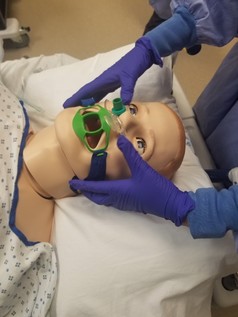 By Michelle Wierman, MSN, RN, Simulation Education Specialist
Tina Smith, MS, BSN, RN-BC, CHSE, Program Manager of Milwaukee VA Simulation Program
Jutta Novalija, M.D., Ph.D., CHSE, Anesthesiologist, Director of Milwaukee VA Simulation Program
Clement J. Zablocki VA Medical Center
MILWAUKEE – In June, gastrointestinal (GI) lab registered nurses and medical instrument technicians participated in two simulations administering reversal agents using a high-fidelity mannequin. GI lab registered nurses and medical instrument technicians perform the majority of moderate sedation procedures hospital wide at the Clement J. Zablocki VA Medical Center. Therefore, the probability of a moderate sedation adverse outcome to occur in the GI lab is much higher than other areas that perform moderate sedation throughout the hospital.
The simulations were held in their department in one of the GI procedure rooms, so staff was already familiar with their environment and where things were located. They utilized the nurse cart available to them in their procedure rooms, which contained medication syringes, saline flushes, IV fluids, airway supplies and medications.
For the rest of the story, click here.
In this image, a chin lift and nasal trumpet with bite block is demonstrated. (VA photo by Amy Pluskota)
|
By Amanda Morrow, BSN, RN
Education Consultant
Roseburg VA Health Care System
EUGENE, Ore. – The Roseburg VA Health Care System’s Simulation Instructor Amanda Morrow and Safe Patient Handling (SPH) Program Coordinator Cindy Germain worked together while performing an annual Mock Code in the Magnetic Resonance Imaging (MRI) area at the Community Health Care Center here. A pre-briefing was held to elevate the confidence of staff and familiarize them with the process.
For the rest of the story, click here.
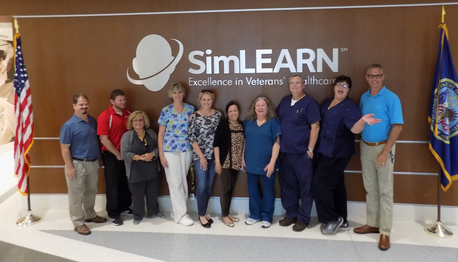 ORLANDO, Fla. - VHA staff attended a Peripherally Inserted Central Catheter course, or PICC class, the week of May 7. This course provides an application-based foundation for nurses who desire to insert PICC lines at their respective facilities and do not have access to standardized education.
The use of simulation provides a unique opportunity to meet the objectives of the course. SimLEARN does not certify any learner to insert PICC lines once back at the duty station. This course utilizes didactics taken from the Infusion Nurses Association standards to obtain certification at your facility.
Participants develop the skills necessary to insert, maintain and remove a PICC. Included in this course are topics such as anatomy and physiology, indications, contraindications, use of ultrasound guided techniques, complications/troubleshooting and documentation.
For more about this course, click here.
In this image, instructors and students pose for a photo after class. (Left to right) Daniel Desmormeaux, SimLEARN education project manager; James Bloodgood, SimLEARN simulation technician; Sherri Boisvert, SimLEARN clinical faculty; and class attendees Linda Smith and Jacqueline Jennings, vascular access nurses; Ma Lea Martin and Jennifer Herbert, registered nurses; Jonathan Steele and Susan Furgeson, vascular access nurses; and Timothy Anderson, Health
Professions Education Evaluation and Research Fellow. (VA photo by Ramon Garcia)
|
By Gerald Sonnenberg
EES Marketing and Communication
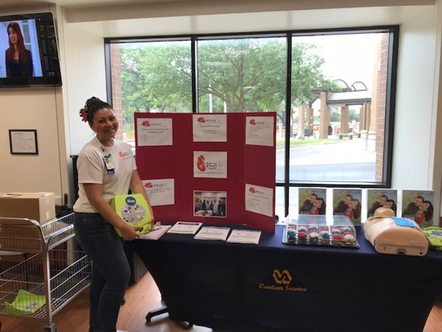
SAN ANTONIO – From June 1-8, staff at the Audie L. Murphy VA Health Care System reached more than 145 Veterans and their family members with information from VHA's Resuscitation Education initiative (REdI) about cardiopulmonary resuscitation (CPR), basic life support (BLS) and advanced cardiovascular life support (ACLS).
"During this week we set up tables with information
provided by the American Heart Association, queried Veterans on their CPR
knowledge, demonstrated the use of Automatic External Defibrillators, and
demonstrated compressions," said Jennifer Inocencio, MSN-Ed, BSN, RN, the REdI BLS and ACLS program director. "Veterans were thrilled to recall their military
training and even brought their children and grandchildren to practice
compressions."
In addition, staff provided 10 Family and Friends CPR Anytime
kits to Veterans and Veteran caregivers. This allows them to
practice CPR in the comfort of their homes at anytime.
For more about REdI, click here.
In this image, Jennifer Inocencio, MSN-Ed, BSN, RN, the REdI, BLS and ACLS program director, poses in front of one of the tables of information and equipment. (VA courtesy photo)
|
|
|
|
|
|
|