|
5 Things You May Not Know About Endometriosis
-
Severe pelvic or abdominal pain during your period, sex, or bowel movements is not normal.
If over-the-counter pain medications don't help and the pain disrupts
everyday tasks for several days each month, it’s time to get help.
-
Early diagnosis matters.
Left untreated, pain and symptoms can worsen. Talk to your VA health care provider about your symptoms and concerns.
-
About 1 in 10 women of reproductive age experience endometriosis.
Despite being common, it often takes years to diagnose due to lack of symptom awareness.
-
Endometriosis can make it more difficult to get pregnant.
Between 30-50% of women with endometriosis may experience infertility.
-
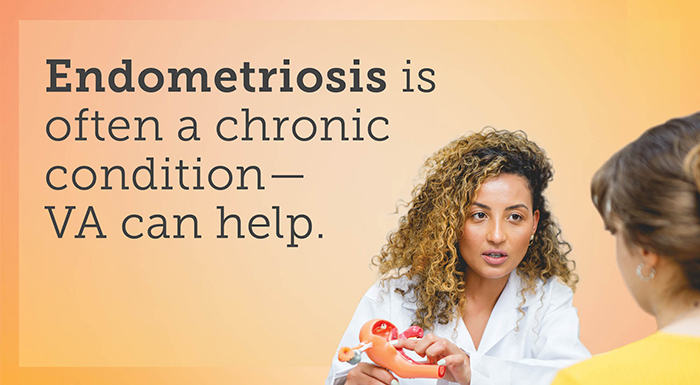
Endometriosis is often a chronic condition—VA can help.
Your VA clinician can diagnose endometriosis and help you manage pain and symptoms through medications, hormone therapy, or surgery.
Are you struggling with Endometriosis? Reach out to your provider for care, The VA can help!
Do you experience painful periods but tend to brush your symptoms aside? Could it be more than just “bad cramps?” If your period pain is so severe that it keeps you from doing normal things for several days every month, it’s time to get help. Severe pain, heavy bleeding, or other symptoms could be signs of endometriosis—a condition that affects 1 in 10 women of reproductive age.
We all expect some discomfort during our period, but severe pain isn’t something you should have to push through. Common symptoms of endometriosis include:
- Severe pain before or during your period
- Painful bowel movements
- Heavy bleeding or bleeding between periods
- Difficulty getting pregnant
- Reoccurring pain during or after sex
- Digestive issues like bloating, constipation, or diarrhea
If you’re nodding along to these symptoms, compassionate VA women’s health primary care providers are available to listen to your concerns and help you find relief. To learn more about endometriosis, download the Women Veterans Endometriosis brochure.
Need help getting started? Call the Women Veterans Call Center, 1-855-VA-WOMEN (1-855-829-6636) to speak to a real person who can help you enroll, schedule an appointment, and connect you to care you can trust.
|
|
 One Veteran swaps cocktails for mocktails
Alyssa Pumford, RD
If you’d like to wake up feeling more refreshed, full of energy and ready to tackle the day, consider trying mocktails instead of cocktails. A mocktail is a drink that contains no alcohol but resembles drinks that do.
A drink might seem like an easy way to unwind, but Cathy, a Veteran who uses the New Mexico VA Health Care System, did not realize the negative effects of drinking four cocktails per night.
Cathy’s VA care team identified her drinking as a likely cause for her sleep problems and irregular eating schedule. By replacing some cocktails with mocktails made using non-alcoholic ingredients, Cathy experienced improved sleep, which in turn helped her eat on a regular schedule. Eating regularly improved her blood sugar, cholesterol and hormonal cycles.
The benefits of drinking less
For Cathy and many others, making the switch from cocktails to mocktails can be life changing, with far reaching positive effects.
Over the past decade, more than one in four Veterans consumed alcohol at levels that risked their health and well-being. Too much alcohol can lead to mental health disorders, relationship difficulties and long-term physical health issues. Current research suggests that drinking even one to two drinks per day is linked with increased risk of several chronic health conditions.
Reducing alcohol consumption can improve sleep quality, increase energy levels, lower the risk of various forms of cancer and improve mood stability. As Cathy discovered, these positive changes contribute over time to a healthier and more fulfilling life.
Easy, tasty mocktail ideas
There are many different mocktail recipes and non-alcoholic wines, spirits and seltzers to choose from. The Healthy Teaching Kitchen page features delicious alternatives to alcoholic drinks, like this blueberry kombucha spritzer.
Here are some other simple mocktail recipes to try:
-
Virgin Mojito: Combine 10 fresh mint leaves, juice from 1 lime, 1 tablespoon of sugar, and 1 cup of sparkling water.
-
Cucumber Cooler: Blend half a sliced cucumber with one-fourth cup of lime juice, a touch of honey, and 1 cup of sparkling water.
-
Non-Alcoholic Sangria: Combine 1 cup orange juice, 1 cup grape juice and a half-cup pomegranate juice with fresh thin slices of apple, orange and lemon, and add 2 cups of sparkling water.
More help
Some Veterans may need more support as they try to drink less. If you or a Veteran you know is experiencing harms related to alcohol use, VA offers a range of services from outpatient treatment to inpatient residential programs.
VA’s online Alcohol and Drug Education course has more information on substance use and treatment. To learn more about programs near you, contact the mental health department at your local VA.
By choosing to raise a glass of a tasty and healthy non-alcoholic drink and accepting help when needed, Veterans can lead healthier lives.
If you’re interested in learning more about nutrition-related topics, contact your local VA nutrition department to speak to a registered dietitian. Cheers to making positive choices!
|
|
 Apple Carrot Salad
Ingredients
- 1 cup shredded carrots
- 3 medium apples, washed, cored and diced with skins on
- 1 tbsp. lemon juice
- ½ cup raisins
- ⅛ cup low-fat mayonnaise
Directions
Combine all ingredients. Chill thoroughly. Serve on salad greens.
Serves about 6
Serving size is about 1/6 recipe.
Each serving provides about 110 calories, 1 g fat, 0 mg cholesterol,140 mg sodium, 25 g carbohydrate, 3 g dietary fiber, 20 g sugar, 1 g protein.
Barbecue Chicken Pizza
(Gout-friendly)
Ingredients
- 1 ready-made 12-inch-diameter thin pizza crust
- 2 tsp. olive oil
- 1 cup sliced onion
- 1/2 cup thin green or red pepper strips
- 1 cup cooked chicken, cut into small cubes
- 1/2 cup bottled barbecue sauce
- 1 cup shredded part-skim, low-moisture mozzarella cheese
Directions
Preheat oven to 450°F. Heat oil in a frying pan and add onion and pepper strips. Saute over medium heat until soft, adding a little water instead of more oil if onion and pepper start to burn.
Add chicken and barbecue sauce. Stir and remove from heat. Place ready-made crust on pizza pan or baking sheet. Spread chicken, onion, and pepper mix evenly on crust. Top with mozzarella. Bake for 10 minutes, watching carefully that cheese doesn't brown too much.
Makes 8 slices
Each slice contains about 220 calories, 26 g protein, 7 g fat, 23 mg cholesterol, 26 g carbohydrates, 1 g fiber, and 469 mg sodium.
This recipe is gout-friendly because it contains food moderate in purines.
|
|
 Only 44% of women Veterans are enrolled in VA health care. Learn about benefits and services available for transitioning service women and recently separated women Veterans in the Women's Health Transition Training Handbook.
A majority of women Veterans are not utilizing their earned benefits. As a result, they do not have access to the VA health care system or the low- or no-cost care it offers.
It's never too late for VA care! Apply now!
|
|
Meet Your Cancer Screening Coordinators
At Eastern Oklahoma VA Health Care System, we believe that preventive care saves lives. One of the most important ways we protect the health of Women Veterans is through early detection of breast and cervical cancer. Behind that effort is a dedicated team of nurses whose sole focus is ensuring Women Veterans receive timely screenings, appropriate follow-up care, and the support they need every step of the way.
We are proud to introduce our Women's Cancer Screening Coordinators:
 |
|
Makyla Clark, RN
Breast Care Screening Coordinator |
 |
|
Stephanie Frink, RN
Breast Care Screening Coordinator |
 |
|
Tia Miller, RN
Cervical Care Screening Coordinator |
Together, these coordinators serve as advocates, navigators, educators, and care coordinators for Women Veterans throughout Eastern Oklahoma VA Health Care System.
Breast and cervical cancers remain significant health concerns for women, but when detected early through routine screening, treatment is often more effective and outcomes are significantly improved. Early detection can mean less invasive treatment options, better quality of life, and, most importantly, more lives saved.
What sets VA apart is our commitment to coordinated care.
In many healthcare settings, patients are responsible for remembering when screenings are due, scheduling appointments, tracking results, and arranging follow-up care. Busy schedules, changes in providers, and fragmented healthcare systems can make it easy for preventive screenings to be delayed or overlooked.
At VA, we take a proactive approach.
Our screening coordinators actively monitor screening recommendations, review records, identify Veterans who are due for services, and work closely with primary care teams, Women's Health providers, radiology departments, and specialty clinics to ensure screenings are completed on time. Their goal is simple: to make sure no Woman Veteran falls through the cracks.
This coordinated approach contributes to the VA's strong performance in preventive health measures. Through dedicated outreach and follow-up, VA continues to achieve breast and cervical cancer screening rates that help ensure Women Veterans receive life-saving preventive care. Rather than waiting for patients to discover they are overdue, our coordinators help identify needs early and connect Veterans with the right care at the right time.
For Women Veterans, this means peace of mind.
You do not have to remember every screening guideline or wonder whether you are due for a mammogram or cervical cancer screening. Our coordinators continuously monitor these important preventive health measures and work behind the scenes to help keep you on track.
Their role extends well beyond scheduling appointments. Makyla, Stephanie, and Tia review screening data, coordinate referrals, track follow-up recommendations, monitor abnormal results, communicate with providers, and help Veterans navigate the next steps when additional testing is needed. If a screening identifies a concern, they help ensure timely follow-up so that evaluation and treatment can begin as quickly as possible.
This level of coordination matters. When cancers are identified at earlier stages, treatment options are often more successful and less complex. Timely screenings and prompt follow-up can make a critical difference in outcomes. By helping Women Veterans stay current with recommended screenings, our coordinators play a direct role in protecting health and improving lives.
Every day, Makyla Clark, Stephanie Frink, and Tia Miller work diligently to ensure that Women Veterans receive the preventive care they deserve. Their efforts reflect VA's commitment to providing comprehensive, patient-centered healthcare that extends beyond the clinic visit.
At Eastern Oklahoma VA Health Care System, we are honored to serve Women Veterans and remain committed to delivering the highest level of care. Through proactive screening, dedicated care coordination, and personalized follow-up, we are working to ensure that every Woman Veteran receives the preventive services she needs—and that no one is ever left wondering whether an important screening has been missed.
When it comes to breast and cervical cancer screening, you are not alone. Your VA healthcare team is here for you, every step of the way.
|
|
 Nationwide, 81% of women in the U.S. report experiencing some form of harassment or assault in their lifetime (compared to 43% of men). A recent women Veteran study found that some women have reported being harassed while on VA grounds, a place where all Veterans deserve respectful and safe care.
These experiences send a negative message to the Veterans VA serves. For women Veterans, harassment in a health care setting can bring up earlier military sexual trauma. This is not acceptable.
What Harassment Looks Like
For women Veterans, harassment can take many forms, including:
Being called inappropriate names like “sweetheart” or “baby”
Enduring catcalling, staring, or leering
Receiving intrusive questions such as, “Are you single?”
Being told, “You don’t look like you belong here.”
Getting unwanted comments about appearance or clothing
Experiencing invasive actions like being touched, followed, or photographed without permission
Being repeatedly referred to as Mister when called for appointments
These behaviors aren’t just uncomfortable; they can also remind the Veteran of past traumatic experiences. Some Veterans may avoid, miss, or delay important health care appointments as a result.
What VA Is Doing and What You Can Do
VA is actively working to eliminate all forms of harassment in its facilities. Here's how:
Zero-tolerance policy: No form of harassment is acceptable. Ever.
Ongoing education: Staff, patients, and visitors are learning to identify and intervene in harassment through public messaging and training.
Support systems: Veterans can report harassment anonymously and receive follow-up support, counseling, and investigation.
If you see or experience harassment at a VA facility, report it. There are several ways you can report harassment, including the following:
VA staff will take you seriously, ensure your safety, and guide you through your options, whether you want to give your name or remain anonymous.
What Happens When You Make a Report
When you report harassment, VA follows a structured, supportive process to ensure your safety, document the incident, and take action. We inspect every report—even if you don’t have all the details. Here’s what you can expect:
- Ensure Your Safety: If you’ve been assaulted or feel unsafe, VA staff will act immediately to protect your physical and emotional well-being. They may contact VA security or local law enforcement if needed.
- Provide Information: VA staff will listen to what happened and may ask for details such as your name or contact info (you can report anonymously), location and date/time of incident, description of what occurred, who was involved (if known), any witnesses, and supporting materials (such as images).
- Conduct an Inquiry: All reports are reviewed within one business day. A fair, thorough inquiry may include speaking with you and any witnesses, reviewing submitted materials, and determining appropriate next steps.
- Take Action: VA will take steps to stop the harassment, hold those responsible accountable, and prevent future incidents. This may involve disciplinary action, training, or other corrective measures.
- Receive Ongoing Support: You’ll receive updates once the inquiry is complete, along with information about counseling and mental health resources. VA staff will remain available to support you throughout the process.
To Women Veterans: VA Has Your Back
Women Veterans belong at VA. We are committed to making sure you feel safe, comfortable, and respected every time you seek care here. If someone makes you feel disrespected or unsafe, it’s not “just a comment” or “no big deal.” It’s harassment, and it’s not acceptable. We will support you and we will take action.
To Everyone Who Enters A VA Facility
Most people don’t intend to harass others, but sometimes they witness it and don’t know what to do. Others may make a comment without thinking twice about how it could make someone else feel. VA encourages everyone—Veterans, staff, family members, and visitors—to learn more about bystander intervention to learn how to safely and effectively intervene when harassment occurs. However, the best thing you can do to help is to report the incident. A single action can stop an incident, support a sister Veteran, and set a new standard of respect.
Let’s continue building a VA culture that respects every Veteran’s service and ensures that no one is ever made to feel like they don’t belong. VA will take every report seriously, act swiftly to ensure safety, investigate thoroughly, and provide follow-up support.
Visit the VA Report Harassment page to learn more or call, text, or chat with the Women Veterans Call Center. To learn more about how VA is building a culture of respect for women Veterans, visit our Women’s Health Culture of Respect page.
|
|
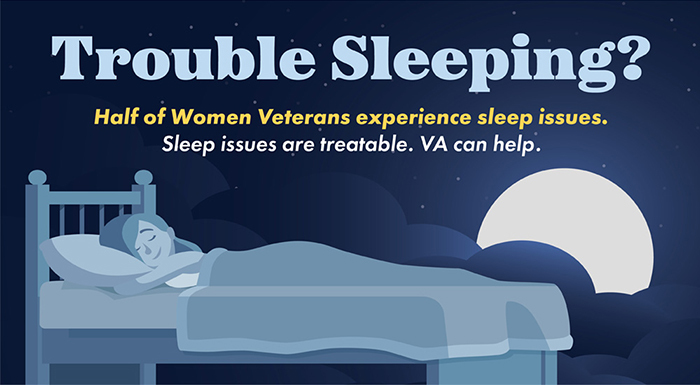 Women Veterans: Trouble Sleeping?
You’re not alone. Half of women Veterans experience sleep issues, but treatment is available! You may experience sleep issues more often and differently than men due to hormonal changes unique to you, like premenstrual syndrome (PMS), premenstrual dysphoric disorder (PMDD), pregnancy, or menopause. Difficulty sleeping could be due to medical problems, such as pain, mental health, a diagnosable sleep condition, and more.
If you’re experiencing the following symptoms, VA can help:
- Frequent or chronic difficulty falling or staying asleep
- Waking up gasping for breath (or your partner says you stop breathing when you sleep)
- Waking up to uncomfortable sensations in your legs (or your partner says you move your legs rapidly during sleep)
- Snoring loudly
- Getting up from sleep more than twice to urinate
- Waking up feeling like you haven’t slept enough or feeling exhausted during the day
VA has several resources to treat insomnia, snoring or sleep apnea, restless leg syndrome, and other issues that may keep you from getting your rest. You may be eligible for treatments such as sleep therapy, at-home devices, medication, and more advanced care.
Don’t snooze on your health! Speak with your VA health care provider about your concerns and listen to our She Wears the Boots podcast episode on insomnia for more information.
|
|
|
Come to our New Veteran Orientation Held Monthly at Ernest Childers Outpatient Clinic in Tulsa.
Are you new to VA health care? Are you a current VA patient, but want to learn more about what services and benefits VA has to offer and how to obtain them?
Join Us For New Veteran Orientation
When: The 2nd Thursday of every month
Where: Ernest Childers VA Clinic 8921 S. Mingo Rd. Tulsa, OK 74113 2nd floor, Rooms 2008 - 2010 (across from optometry)
Time: 1:00 p.m.
Open to all Veterans, family members, caregivers, and community partners.
- Meet representatives from various departments within the VA
- Learn about the processes for getting things done at the VA
- Learn about and sign up for My HealtheVet
- Question and answer session
|
|
 Check out our back-issues for more Women Veterans resources and popular topics.
|
|
|
|
|