Welcome to the 2026 Summer edition of She Served – a newsletter to keep you informed of VA services, upcoming events, and other important information within the Phoenix VA Health Care System.
|
We are pleased to highlight several upcoming events this quarter. Below, you’ll find a save-the-date for the upcoming Women Veterans Tele-Town Hall meeting; an update regarding the women Veterans’ quarterly focus groups, and a very exciting Women Veterans Enrollment Initiative event coming to the Southwest region!
Also included is important information on the Virtual Health Resource Center, the MST program, and educational information that has recently been shared by the VA Office of Mental Health about cannabis use during pregnancy and lactation.
Thank you for your continued commitment and engagement with your healthcare. We look forward to connecting with you during upcoming events. As always, please feel free to contact the Women Veterans Program directly with any questions or comments at 602-277-5551 x 6764.
Kristen Nordquist, LCSW Women Veterans Program Manager
Ryan McGuire, LCSW
Assistant Women Veterans Program Manager
 |
As the United States approaches its 250th Anniversary, there is a unique opportunity to reflect on the history of our Nation, commemorate achievements, and honor those who have served or contributed in other ways. America 250 is a nationwide initiative marking the semiquincentennial of the Declaration of Independence, which was adopted in 1776. This commemoration invites all Americans to attend celebrations, educational programs and moments of reflection, in order to recognize the diverse tapestry and stories that define this great nation.
The U.S. Department of Veterans Affairs plays an important role in the celebrations of America’s 250th Anniversary by celebrating all Veterans and their achievements. Veterans have been at the heart of America’s history for more than 250 years, and VA is committed to honoring Veterans, and highlighting their stories of how they have contributed to history in such a significant way.
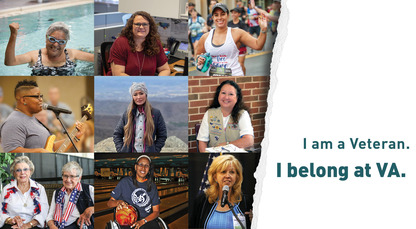
A crucial aspect of America 250 is to highlight the often overlooked stories of Women Veterans. Click on the below links to learn more about some of these outstanding women:
Happy America 250 to our Women Veterans, and as always,
Thank You For Your Service.
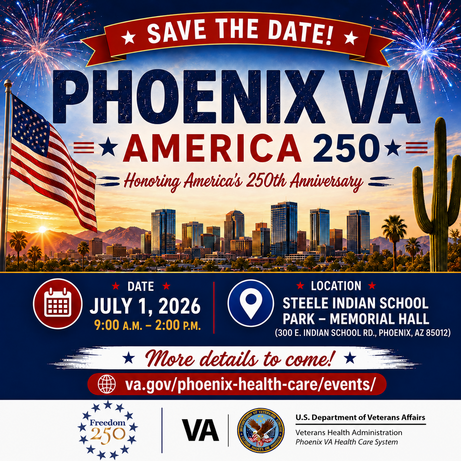
Please save the date for our upcoming America 250 Veteran Resource Fair to celebrate 250 years of Independence, July 1 from 9 a.m. to 2 p.m. As we approach the 250th anniversary of our nation’s founding, we’re not just observing a date on the calendar — we’re honoring the story of America itself. A story Veterans have been at the heart of since the very beginning.
VA is proud to support the whole of government initiative to celebrate America’s 250th birthday — helping the country reflect, remember, and recommit to the values we’ve defended for two and a half centuries.
For more information, check our events page (https://www.va.gov/phoenix-health-care/events/) or follow us on social media closer to this date.
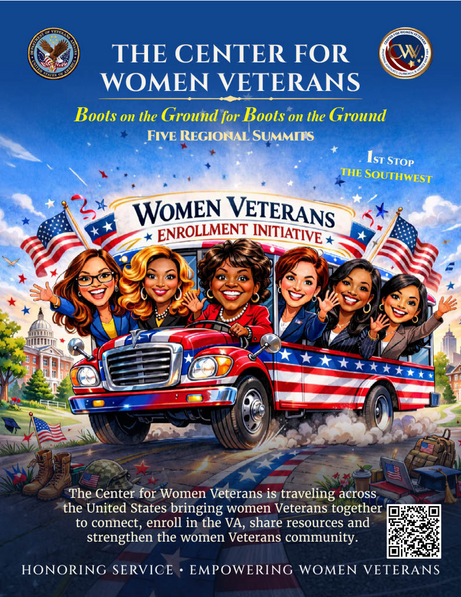
The Center for Women Veterans is launching a new initiative called the Women Veterans Enrollment Initiative, with five regional summits. Each summit will provide an opportunity for Women Veterans to meet with representatives of the VA and discuss issues related to their needs in the areas of employment, whole health, mental health, military sexual trauma, suicide prevention, entrepreneurial resources and end of life planning, among other areas of focus. You will have an opportunity to meet face to face with VA Claims Representatives to submit new or increase disability claims.
This initiative will be made up of five regional summits throughout the United States and will begin in the southwest region in San Antonio, Texas to be joined by women Veterans from Arizona, New Mexico and Oklahoma. The southwest summit has the potential to reach 342,208 women Veterans at the Henry B. Gonzalez Convention Center on Friday, July 24, 2026, and Saturday, July 25, 2026. The final summit will take place in May 2027 with a date and location to be determined.
Please share with your sister Veterans, with your networks, on your social media, in your community and anywhere you know other sister Veterans are. You can secure your spot to attend here:
https://whova.com/portal/registration/bIpBmx5GL4oTJcmYk45h/
From Jacquelyn Hayes-Byrd, Executive Director
Office of the Secretary, VA Center for Women Veterans
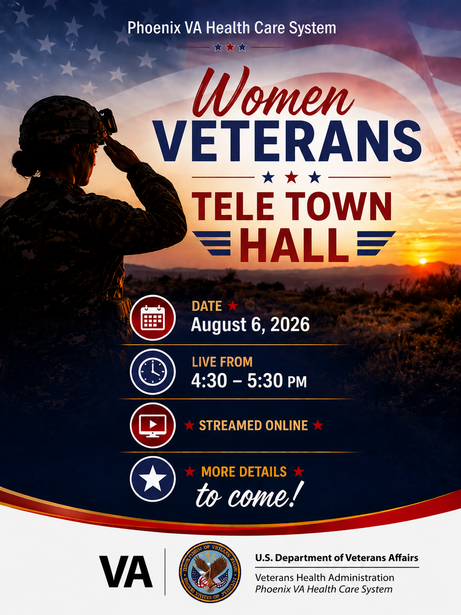
Please save the date for our next upcoming bi-annual Women Veterans Tele-Townhall which will be on August 6, 2026 from 4:30-5:30PM. We will send more information out closer to this date.
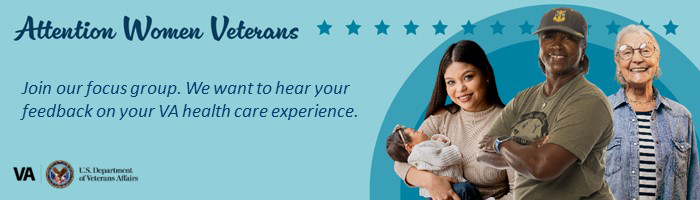
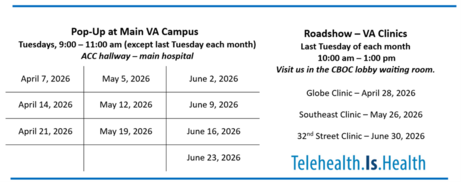
The Phoenix VA Women Veterans Program holds focus groups with the intention of gathering women Veterans to share their experiences, perspectives and feedback regarding VA programs, services, and healthcare. The purpose of these focus groups is to better understand the unique needs, challenges, and concerns of enrolled women Veterans so that we can continue to make improvements in VA services, program development, and policies.
In an effort to gain more participant interest, we are starting an interest list for women Veteran patients who are enrolled with the Phoenix VA Healthcare System. If added to this interest list, we will contact you about the upcoming focus group topic. If you are interested in participating, we can register you for the group!
What is a focus group? A focus group is a type of interview involving a group of up to 9 individuals who share something in common that pertains to the topic of interest. Group interaction on the topic of interest is the primary goal.
How long are focus groups? Focus groups typically last 1 hour and will be moderated by two VA staff with the Women Veterans Program.
Will my personal information be shared? No, we ask that you register so that we can get a final head count, but information shared in the focus group will not be documented in your medical record. We will share general themes discussed back to our national office, but no personal information will be shared.
Where will the focus groups be? Focus group are held in person at one of our sites, but you may also join via VVC (Veterans Video Connect) link if you are unable to come in person.
How do I sign up? Please call the Women Veterans Program at 602-277-5551 x6764 to get on our interest list. Otherwise, we will continue to send out flyers via email, newsletter, and make sure they are posted throughout the hospital and clinics.
When is the next focus group? Our next two focus groups will occur in September and October of 2026. We will include a flyer for the next group in the Fall 2026 She Served Newsletter.
Accessing high-quality VA care has never been easier for Veterans. The Virtual Health Resource Center (VHRC) is a one-stop shop that helps Veterans, family members, and caregivers understand how to use technology (mobile phones, tablets, laptops, etc.) to connect to VA care from the comfort of home. Veterans can receive assistance from VHRC staff to help them use a variety of convenient virtual services: VA Video Visits (VVC), MyHealtheVet (ID.me & login.gov), the Home Telehealth Program, TeleEye, TeleDerm, TeleAudiology, and access to over 100 VA Mobile Apps. Using virtual services allows Veterans more options and access to care beyond the traditional office visit.
VHRC staff are subject matter experts in technology who explain concepts in an understandable fashion, and help Veterans feel comfortable and competent using technology. The VHRC offers an in-person Introduction to Telehealth Class every 3rd Thursday of the month at the Southeast Clinic from 0900-0945 (next class: Thursday, May 21, 26). Enroll by calling 602-277-5551 x 6680. This class provides a basic overview of virtual care services and is perfect for Veterans who need a little help using technology or those who want to learn more about available virtual care services.
Virtual care is literally at your fingertips and can be accessed from anywhere within the United States. If you have a mobile phone, tablet, or laptop, you can take advantage of the numerous virtual care tools available today. Veterans without an internet connected device may qualify for a VA-Loaned iPad for completing video appointments. Contact your Phoenix VA Care team to request a Digital Divide consult. All virtual care services are free of charge for Veterans. Call us for assistance at 602-277-5551 x 6680 and Click-into-Care with the VHRC.
Phoenix VA MST Program/Services
Brief Overview The VA uses the term Military Sexual Trauma (MST) to refer to experiences of sexual assault or sexual harassment that occur during military service. The MST Clinic is a specialty clinic focused on treating Post-Traumatic Stress Disorder (PTSD) related to experiences of MST. The program offers short-term, evidence-based, trauma-focused treatments to help reduce PTSD symptoms and support healing and recovery. Services include individual, group, and couples psychotherapy and focus on helping veterans process traumatic experiences, strengthen coping skills, reconnect with sources of support, and improve overall quality of life.
Overview of SAAPM Activities Sexual Assault Awareness and Prevention Month (SAAPM) is observed each April and serves as an important opportunity to raise awareness about MST and highlight the services and resources available to survivors. This year’s main SAAPM event was an in-person MST Luncheon created to honor, support, and connect veterans impacted by MST. The event included veterans who courageously shared their personal stories of survival and recovery, VA and community vendors providing information about available treatments, self-care items, and lunch. Most importantly, the event created opportunities for meaningful conversations, support, and connection.
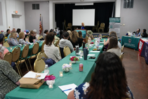
Additional SAAPM activities throughout April included: • An MST resource and information table available throughout the month at the 32nd Street Clinic • An MST Information Session led by the MST Coordinator at the Main Hospital • Staff education and training activities focused on increasing awareness of MST and improving providers’ ability to support survivors
|
Resources
Did You Know?
Use of cannabis during pregnancy has increased in recent years, with an estimated prevalence of 4-16% among pregnant and lactating individuals. Cannabis use is highest in the first trimester, when many patients report using it to manage pregnancy-related nausea and vomiting. Increasing legalization and social acceptability have contributed to pregnant individuals’ perception that cannabis is safe to use during pregnancy with minimal adverse effects—a perception not supported by current evidence.
Common reasons for cannabis use during pregnancy include:
- Nausea
- Anxiety
- Insomnia
- Pain
- Depression
Cannabis use in pregnancy
There are no medical indications for cannabis use during pregnancy. THC (the main psychoactive component) crosses the placenta, and fetal THC concentrations reach approximately 10% of maternal levels. Cannabinoid receptors are present in the fetus as early as 5 weeks of gestation.
Available data demonstrate that cannabis use during pregnancy is associated with:
- Low birth weight
- Preterm birth
- Small for gestational age
- Neonatal intensive care unit admission
- Perinatal mortality
The risk of adverse outcomes increases in a dose-dependent fashion, with heavier use associated with greater risk.
Long-term effects on offspring
Neonates exposed to cannabis in utero demonstrate altered arousal patterns, regulation, and
excitability in the first month of life. Evidence suggests potential risks for:
- Persistent emotional, cognitive, and behavioral adverse effects in offspring.
- Increased risk of developing substance use disorder or psychiatric disorders in adolescence and adulthood
Cannabis use while breastfeeding
Literature on cannabis use during lactation is limited by study quality and sample size. Current evidence shows:
- THC is lipid-soluble and transfers into breast milk.
- THC remains detectable in breastmilk for days to weeks after maternal exposure.
- Breastfeeding infants ingest approximately 0.8–2.5% of the mother's dose of cannabis.
- Motor development of cannabis-exposed breastfeeding infants is slightly reduced at 1 year old compared to unexposed breastfeeding infants, with more pronounced effects in infants of mothers with heavier cannabis use.
- No difference has been found in adverse effects, growth, or neurodevelopment between infants exposed to detectable versus nondetectable THC levels in breastmilk
From Women’s Mental Health, Office of Mental Health
 |