|
Key numbers to know for your heart health!
Cardiovascular disease is the No. 1 killer of women, making it vital for all women to understand their personal risk factors. Knowing your risk starts with knowing four important numbers.
|
|
Total Cholesterol
|
|
What is it?
It’s a soft, fat-like substance found in the blood and in all the body’s cells.
How does it affect your health?
When cholesterol builds in the inner walls of your arteries over time, it hardens and turns into plaque. High cholesterol contributes to a higher risk of cardiovascular diseases, such as atherosclerosis and stroke. High cholesterol usually has no symptoms.
What should you do?
Get your cholesterol checked through a blood test called a lipid profile. A provider will draw blood from your arm or through a finger prick.
What’s a healthy number?
Discuss with your doctor what healthy numbers are for you.
|
|
Blood Pressure
|
|
What is it?
It’s the force of blood against the arteries when the heart beats and rests.
How does it affect your health?
High blood pressure, also known as hypertension, is a condition that makes the heart work harder than normal. High blood pressure usually has no symptoms. If high blood pressure is left untreated, it can scar and damage your arteries, which can greatly increase your risk of heart attack, heart failure and stroke.
What should you do?
It’s important to get your blood pressure checked at least once a year, but regularly monitoring at home is recommended. Measure twice in the morning and twice in the evening.
What’s a healthy number?
Blood pressure numbers of less than 120/80 mm Hg are considered within the normal range for non-pregnant individuals.
|
|
Blood Sugar
|
|
What is it?
It’s the amount of sugar (glucose) in the blood.
How does it affect your health?
High blood glucose, also known as hyperglycemia, can put you at greater risk of developing insulin resistance, prediabetes and type 2 diabetes. Untreated diabetes can lead to many serious medical problems, including heart disease and stroke.
What should you do?
Get your blood sugar levels checked with a simple blood test.
What’s a healthy number?
A normal and healthy range for a fasting blood glucose level is lower than 100 mg/dl.
|
|
Body Mass Index (BMI)
|
|
What is it?
It’s a numerical value of your weight in relation to your height.
How does it affect your health?
Carrying too much fat — especially in the waist — increases the risk for high blood pressure, high cholesterol and diabetes.
What should you do?
Weigh yourself regularly and understand your BMI. If you’re overweight or obese, you can reduce your risk for heart disease by losing weight and keeping it off through healthy eating and physical activity.
What’s a healthy number?
A person’s ideal body weight varies by gender, age, height and frame. Your body mass index and waist circumference provide good indicators of whether you’re at a healthy weight. The recommended range of BMI is 18.6-24.9 and a waistline measurement of no more than 35 inches for women and 40 inches for men. Curious to learn about ranges? Learn more here: heart.org/bmi.
|
|
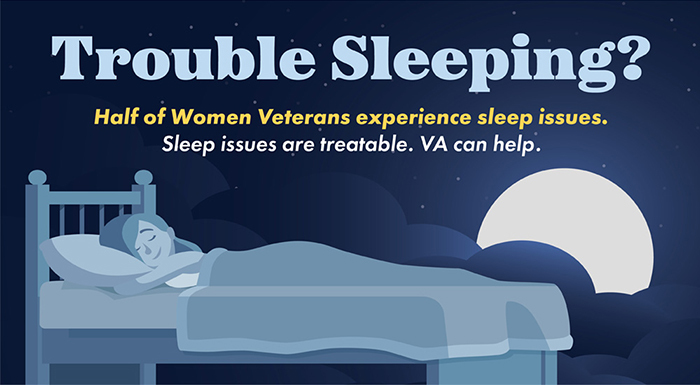 Half of Women Veterans experience sleep issues.
Sleep issues are treateable. VA can help.
If you have trouble sleeping, speak with your VA health care provider to connect with treatment and resources. Difficulty sleeping could be due to medical problems, such as pain, mental health, a diagnosable sleep condition, and more.
VA resources you can access on your own include:
-
VA Insomnia Coach App: A free mobile app created for Veterans to help manage insomnia symptoms through a five-week training plan to reset your sleep system and build healthier sleep habits.
-
Path to Better Sleep Veteran Training: A free four-part training program online that helps you screen for sleep disorders, understand sleep routines, self-manage insomnia, and learn about sleep apnea.
-
VA’s Sleep Diary: An online journal designed to help you track and review your own sleep patterns by logging information daily.
VA facility (or telehealth) resources:
-
Specialists and Cognitive Behavioral Therapy for Insomnia (CBT-I): Specialists who can diagnose and treat your sleep issues. Many of these specialists are trained in CBT-I, which helps change your thoughts and habits around sleep.
-
Sleep Studies: Tests that can help diagnose a sleep disorder (such as sleep apnea) by using a special machine to monitor your sleep, either in a sleep clinic or in the comfort of your own home.
-
Mental Health Care: VA prioritizes your mental health through a variety of care options to address and manage depression, anxiety, trauma, or PTSD. Your sleep issues may be a direct result of or affected by your mental health.
- VA Sleep Treatments: From diagnosis, your VA health care provider or specialist will connect you with the treatment that’s best for you. This may include cognitive behavioral therapy for insomnia, medications, devices (such as CPAP for sleep apnea) and treatment for medical or mental health issues that may be impacting your sleep.
Sleep Issue Symptoms and Self-Help Tips
If you experience the following sleep issues, speak with your VA health care provider to connect with resources for diagnosis and treatment:
- Frequent or chronic difficulty falling or staying asleep
- Waking up gasping for breath (or your partner says you stop breathing when you sleep)
- Waking up to uncomfortable sensations in your legs (or your partner says you move your legs rapidly during sleep)
- Snoring loudly
- Getting up from sleep more than twice to urinate
- Waking up feeling like you haven’t slept enough or feeling exhausted during the day
There are tips you can try at home to improve your sleep before seeking professional help:
- Stick to the same sleep schedule and avoid napping
- Avoid large meals, caffeine, alcohol, and smoking a few hours before bedtime
-
Quitting tobacco fully can help you fall asleep faster, have less interrupted sleep, and have longer total sleep time
- Avoid screens for a minimum of 30 minutes before bedtime
- Create a cool, dark, and quiet sleeping environment
- Exercise several hours ahead of bedtime to help you fall asleep more easily
- Follow a bedtime routine to help you wind down (reading, listening to music, a bath)
- Manage your stress and anxiety as best you can
If none of these recommendations are helping you get your rest, speak to your VA health care provider.
|
|
 Here is what you need to know
Do you experience painful periods but tend to brush your symptoms aside? Could it be more than just “bad cramps?” For many women, severe pain, heavy bleeding, or other symptoms could be signs of endometriosis.
Endometriosis is a condition where tissue that is similar to the inner lining of the uterus grows outside the uterus, causing inflammation, pain, and sometimes irregular bleeding. Here are five things you should know about endometriosis:
-
Severe pelvic or abdominal pain during your period, sex, or bowel movements is not normal. If over-the-counter pain medications don't help and the pain disrupts everyday tasks for several days each month, it’s time to get help.
-
Early diagnosis matters. Left untreated, pain and symptoms can worsen. Talk to your VA health care provider about your symptoms and concerns.
-
About 1 in 10 women of reproductive age experience endometriosis. Despite being common, it often takes years to diagnose due to lack of symptom awareness.
-
Endometriosis can make it more difficult to get pregnant. Between 30-50% of women with endometriosis may experience infertility.
-
Endometriosis is often a chronic condition—VA can help. Your VA clinician can diagnose endometriosis and help you manage pain and symptoms through medications, hormone therapy, or surgery.
VA recognizes how overwhelming it can feel to manage chronic pain. Endometriosis tends to be a chronic condition that requires a long-term treatment plan. Your VA health care provider will work with you to determine the best treatment options for you, which may include medication, hormone therapy, or surgery.
Remember, severe pain during your period is not normal. Compassionate VA women’s health primary care providers are available and will listen to your concerns. To learn more about endometriosis, download the Women Veterans Endometriosis brochure.
Need help getting started? Call, text, or chat with the Women Veterans Call Center at 1-855-VA-WOMEN to speak to a real person who can help you enroll, schedule an appointment, and get connected to care you can trust.
|
|
Subscribe to VBA's newsletter
Want to stay up to date on what’s going on with us than get our newsletter delivered to your inbox.
Our monthly newsletter delivers directly to you information on updates to rulings, education and so much more!
It includes a list of the upcoming events and training to assist you in filing your claims, health care and financial readiness. Our goal is to provide you with information to help you maximize your benefits.
Tips to protect your benefits from claim predators!
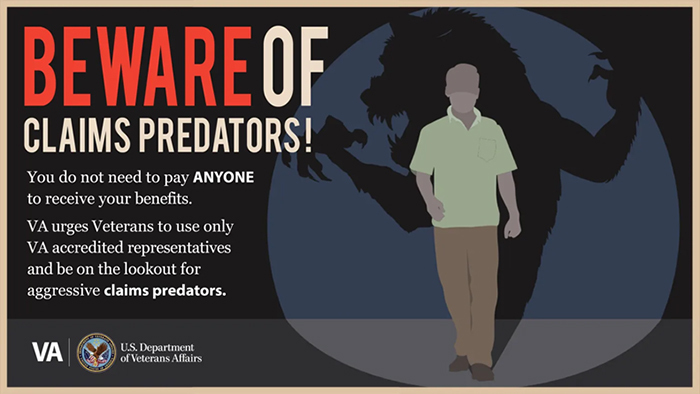 For Veterans, taking advantage of VA benefits after serving their country is crucial. Knowing how to apply securely through the VA claims process, where to find VA accredited attorneys, claims agents, and VSO representatives or verify accreditation before engaging with any individual or company is essential. You do not have to pay a fee to file an initial claim for benefits.
For more guidance on how to protect your benefits, please visit VA's fraud prevention page.
|
|
Is it time to start moving your body more?
An active lifestyle decreases the risks of long-term health problems. Moving regularly decreases inflammation in the body which is at the center of many diseases.
Moving your body on a regular basis lowers your risk for some types of cancer, fatty liver disease, chronic pain, arthritis and even dementia. It also helps relieve anxiety and depression. Some comprehensive practices—which include movement, such as yoga, Tai Chi, and qigong—can also help you practice mindfulness and other skills.
Consider the results you’d like to focus on, such as improving strength, flexibility, balance, range of motion and the mind-body connection.
Moving your body doesn’t have to involve working out in a gym or joining a sports team—you can bike, walk, swim, garden, play a sport, or play with a child or an animal. You can exercise on your own or with a group, or whenever it works for you. Any activity is better than none; even a few minutes a day is beneficial. It’s important to choose activities that you enjoy because you’ll stick with them!
Many activities which include movement, such as yoga, Tai Chi, strength training, and aerobics, can be modified for people with limited mobility due to chronic pain or injury.
Veterans First by SofiaHealth
|
|
 Built by Veterans for Veterans, the Veterans First platform provides access to a wide variety of live health and wellness classes for all who wish for a healthier and happier lifestyle. Virtual classes are available for all fitness levels. Take classes from work or from the comfort of your home.
Yoga
Yoga is a mind and body practice with origins in ancient Indian philosophy. The various styles of yoga typically combine physical postures, breathing techniques, and meditation or relaxation.
Yoga benefit spotlight 📢
Better sleep: Practicing yoga regularly can help you fall asleep quicker, sleep for longer, and go back to sleep after waking up at night. In addition to yoga, people who practiced meditation, tai chi, and qigong experienced improved sleep.
More energy: Recent studies have shown that certain yoga poses reduce fatigue and increase the hormone, cortisol. Low levels of cortisol can zap your energy, leaving you rundown. Enjoying yoga regularly will help you maintain healthy cortisol levels.
Feel better: Yoga has been shown to lower stress hormones in our bodies while simultaneously increasing beneficial brain chemicals like endorphines and GABA (gamma-aminobutyric acid). These feel-good chemicals help decrease anxiety and improve mood.
Tai Chi
Tai Chi is a mind-body exercise combining slow-flowing intentional movements with breathing, awareness, and visualization.
Rooted in the Asian traditions of martial arts, Chinese medicine and philosophy, Tai chi enhances relaxation, vitality, focus, posture,
balance, strength, flexibility, and mood.
Qigong
Qigong is an ancient Chinese healing art, older than, and similar to tai chi, with a focus on cultivating the body’s vital energy or qi. It
involves the coordination of the breath, posture, awareness, visualization and focused movements. Qigong may be a stationary or moving meditation.
 Available Classes
- Health & Wellness
- Yoga & Mindful Movement
- Tai Chi & Qigong
- Meditation & Guided Rest
Reported Benefits
- Improved Sleep, Heart Health, Focus
- Reduced Stress, Chronic Pain, Inflammation
- Decreased Anxiety, Depression, Chronic Fatigue
- Migraine Relief
Whole Health is VA’s approach to care that supports your health and well-being. It focuses on self-care, skill building and support.
Your Whole Health Team is pleased to support your journey to well-being.
|
|
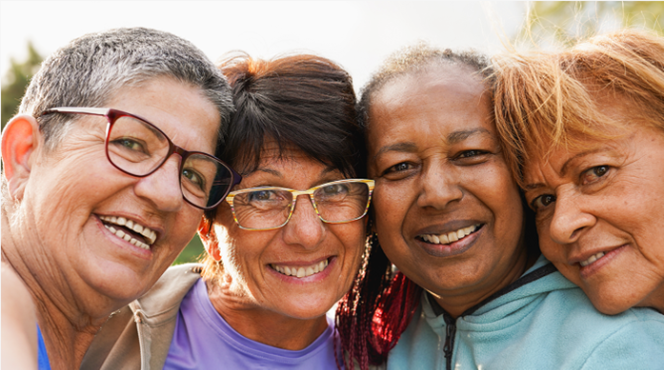 Women Veterans 45 and up:
Don’t Hesitate. Screen for Colon Cancer.
Colon cancer screening is potentially lifesaving and worth it… especially because 90% of colon cancers are preventable with routine screening and a healthy lifestyle. Yet, many women avoid screening due to misunderstandings or hesitations.
|
|
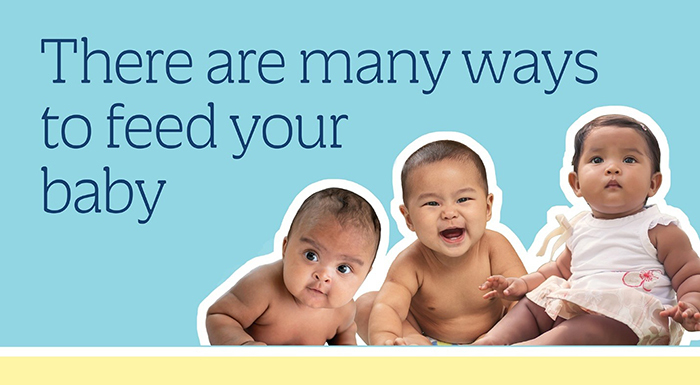 There are Many Ways to Breastfeed Your Baby
Breastfeeding Classes
Practical skills to help you meet your breastfeeding goals.
Postpartum Mental Health Support
Taking care of baby starts with taking care of yourself.
Lactation Consultants
Personalized guidance and support.
Social Workers
Connection to local resources.
Maternity Care Coordinators
Coordination of care, referrals.
Support Groups
Lactation support groups with new mothers.
Supplies you may be eligible for:
- Breast pumps
- Nursing bras and pads
- Nipple cream and shields
- Milk storage bags
Breastfeeding benefits both babies and mothers.
|
|
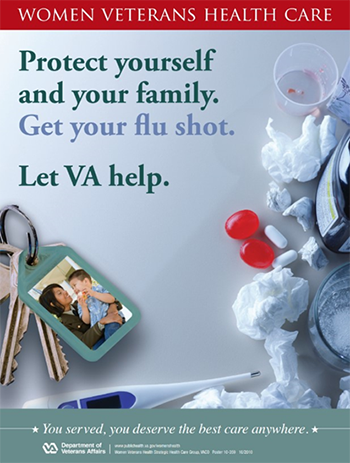
Get your flu shot. Let VA help.
Its that time of year!
Influenza, or "flu," is a contagious respiratory virus. Flu season usually begins in the fall and can continue through late spring.
Anyone can be infected by the flu virus. Flu can be mild or serious for some and deadly for others. Flu causes hospitalizations and deaths, especially among vulnerable groups such as the very young, people ages 65 and older, and those with chronic medical conditions.
Symptoms of flu
- Fever of 100°F or higher
- Body or muscle aches
- Headache
- Feeling tired or weak
- Cough
- Sore throat
- Runny or stuffy nose
- Stomach symptoms, mostly in children
Symptoms can vary in severity from mild to severe. While some people experience mild symptoms, not much different than a cold, others may get a severe infection that requires hospitalization. Know when to seek medical care.
How flu is spread
When a person with flu sneezes, coughs, talks, or laughs, flu virus can spread into the air as droplets. The droplets can spread to people and surfaces up to 6 feet away. Flu virus can spread to your hands if you touch anything that has the virus on it. If you then touch your eyes, nose, or mouth, you might get the flu.
People can spread flu to others about 1 day before they feel sick and up to 5 days after getting sick.
Who is most at risk
If you're in a high-risk group, you can become extremely ill from the flu. Be sure to take special precaution to prevent flu if you have any of the following conditions:
- Asthma
- Chronic bronchitis
- Diabetes
- Heart disease
- HIV
- Kidney disease
- Lung disease
- Weakened immune systems
Get a flu shot every year to protect yourself and help keep the flu from spreading to others. The 2024 flu vaccine is available now at Eastern Oklahoma VA in the vaccine clinics, or thru your Primary Care team.
|
|
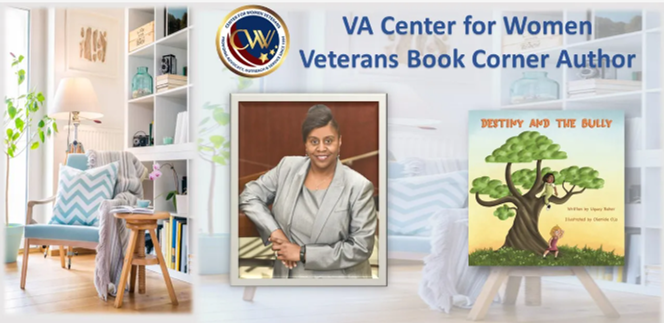 April: Marine Corps Veteran Uquay Baker
This month’s Center for Women Veteran Book Corner author is Army & Marine Corps Veteran Uquay E. Baker, who served in Military Police and communications roles from 1995-2006. She is the author of “Destiny And The Bully.”
Baker was born in Chicago, Illinois, and is the youngest in her family. She holds a master’s degree in psychology from Texas A&M University-Central Texas. She credits her unique experiences of serving with other women in different locations while in the military for igniting her passion for advocating for children everywhere. She uses her unique voice to speak to issues dear to their heart.
Can you share a brief background of your military experience, including your branch of service, years served, and any notable positions or deployments?
I enlisted in the United States Marine Corps in February 1995. What makes me so unique is that I was 30 years old, well above the age of enlistment and had to get an age waiver from the headquarters Marine Corps. After only 2.5 years in the Corps, I had ascended to the rank of sergeant and was selected to go to Drill Instructor school.
I enlisted in the Army on Sept. 11, 2001, and was in the process of swearing in when we got word that the towers had been struck. Since I was prior service, I was one of the few that they let leave MEPS and report to Fort Leonard Wood for Military Police training. I deployed to Mosul, Iraq, in March 2004. I was awarded a combat action badge for multiple engagements with the enemy.
What inspired you to write a book and share your story as a woman Veteran?
I was listening to a news story about the bullying epidemic that is facing our children, and I went to sleep that night and awoken with the name of my characters and just began to write. I completed the book in two hours and 20 minutes.
How has your military background influenced your writing style and the themes you explore in your work?
As a Drill Instructor, I was inspired by the single women who were mothers, while training the next generations of warriors and protecting our country. That is the main reason that I made Destiny the child of a single-parent household. To pay homage and respect to those women who do it every day and make it seem effortless.
How do you hope your book will impact other women Veterans, active duty service members and the public? I
hope that everyone will recognize the epidemic of bullying in this country and that women Veterans have a unique perspective and stories to tell.
What role do you think storytelling and literature play in fostering understanding and support for the women Veteran’s community?
I think they can play a huge role. Most information about Veterans is only from the male perspective. Women Veterans are often invisible or forgotten. While most Veterans prefer privacy and do not share much information about themselves post service, the storytelling gives everyone the opportunity to learn more about Women Veterans and how they can be our ally or support systems.
Can you share a memorable experience or anecdote from your time in the military that has had a lasting impact on your life and writing?
I was the only female squad leader in my unit that led combat missions outside the wire. I had recently added a female team leader and gunner to my team. When we were out on a mission and stopped in the market to speak with local Iraqi police, when the Iraqi girls saw me and the other two women, they pointed at us and said, “Look, they are girls like us.” I can only imagine that this moment was a source of empowerment for them.
How do you believe the Women Veterans Book Corner can help bring awareness to the civilian and military communities, particularly about women Veterans?
I think this is a great opportunity for the civilian community and even our brothers and comrades to hear women Veterans’ voices. I am confident that they exist—a lot of stories about the bravery and challenges that women Veterans have faced, and it may be the first time we hear about their experiences.
|
|
|
Come to our New Veteran Orientation Held Monthly at Ernest Childers Outpatient Clinic in Tulsa.
Are you new to VA health care? Are you a current VA patient, but want to learn more about what services and benefits VA has to offer and how to obtain them?
Join Us For New Veteran Orientation
When: The 2nd Thursday of every month
Where: Ernest Childers VA Clinic 8921 S. Mingo Rd. Tulsa, OK 74113 2nd floor, Rooms 2008 - 2010 (across from optometry)
Time: 1:00 p.m.
Open to all Veterans, family members, caregivers, and community partners.
- Meet representatives from various departments within the VA
- Learn about the processes for getting things done at the VA
- Learn about and sign up for My HealtheVet
- Question and answer session
|
|
 Check out our back-issues for more Women Veterans resources and popular topics.
|
|
|
|
|