|
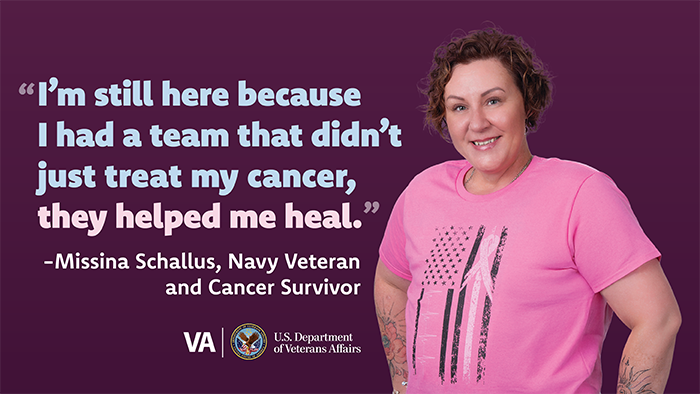 The Navy saved my life first. Then VA did it again.
When Navy Veteran Missina Schallus made the decision to undergo a prophylactic double mastectomy in 2023, she didn’t yet have a breast cancer diagnosis, but she had a gut feeling.
“I had been going through high-risk monitoring for years,” Missina said, due to her previous cancers, radiation to her neck and chest, and her mother’s history. “Every mammogram led to another biopsy. My last one? Seven biopsies. I just couldn’t live in that constant cycle of fear and uncertainty anymore.”
That decision, and that gut instinct, likely saved her life.
“The Navy saved my life first. Then VA did it again”
Missina served 21 years in the U.S. Navy as a Yeoman-Flag Writer, rising to the rank of Chief. “I was headed down a path of trouble before I enlisted. The Navy gave me purpose, structure, and a second family,” she said. “It shaped who I am and helped carry me through everything, even cancer.”
In 2023, Missina underwent preventive mastectomy surgery at the Washington D.C. VA Medical Center. Her care team included “a team of angels,” as Missina calls them.
A few weeks later, her doctor called with unexpected news: pathology revealed early-stage breast cancer.
“She told me she was proud of me, for listening to my body, for advocating for myself,” Missina said. “That moment was validating and overwhelming all at once. I didn’t have to go through chemo or radiation because we had already removed the cancer during the mastectomy.”
"They saw me—not just a patient, but as a person”
Missina describes her VA care as nothing short of extraordinary.
Plastic Surgery Physician Assistant Kim Callaway “held my hand when I cried. She took every call, answered every message, talked me through every fear,” she said. “My nurse, Seblewongel Tessema, greeted me every time with warmth and asked about my kids. They didn’t just treat my diagnosis—they treated me.”
Missina’s journey wasn’t without complications. A few months after surgery, she experienced an emergency with her implant. It was the Friday after Thanksgiving, and she was out of town and called Callaway in a panic.
The experience triggered a chain of physical and emotional challenges, including severe depression. “I was crying ten times a day, trying to work full time and be a present mom,” she said. “I just couldn’t see the light.”
Her VA providers stayed by her side. They listened, adjusted her care, and supported her every step of the way.
“There is no cure for breast cancer’s emotional toll,” she said. “But when you have a team that validates your feelings, listens to your concerns, and helps you reclaim your identity, it makes all the difference.”
“Survivorship means choosing to live”
Missina’s story is one of resilience, but also one of learning to soften. “As a woman Veteran, there’s this pressure to be strong all the time,” she said. “But I’ve learned that asking for help is strength. Vulnerability is courage.”
Now, she sees survivorship not just as surviving cancer but choosing to live after it. “I’m embracing my new normal. I’ve found beauty in my scars, in my story, in this next chapter,” she said. She is now a six-time – four-different cancers survivor (Hodgkin’s Lymphoma, Melanoma, Papillary Thyroid and now Breast Cancer).
|
|
Women Veterans: Listen, advocate, ask for help
To other women Veterans, Missina offers this: “Listen to your gut. You know your body better than anyone. Advocate fiercely for yourself. And surround yourself with providers who truly see you.”
She encourages women Veterans to stay on top of their preventive care, especially mammograms and screenings.
“I’m still here because I had a team that didn’t just treat my cancer, they helped me heal,” Missina said.
VA’s breast health services
We encourage all women Veterans to talk to their provider about their risk for breast cancer, learn which preventive screenings are right for them, and seek support if they’re facing a diagnosis.
Personalized care that supports your physical, mental, emotional, and social well-being is available at VA. Your VA health care team gets to know you as a whole person, focusing on what matters to you most.
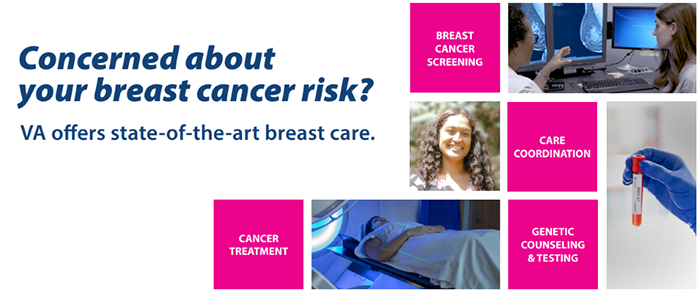
VA offers breast cancer risk assessments, mammograms, breast ultrasounds, magnetic resonance imaging (MRI), biopsies, surgery, genetic counseling, and cancer treatment either at a VA medical facility or in the community.
|
|
 If you are diagnosed with breast cancer, VA offers full oncology services including imaging, surgery, chemotherapy, radiation, and access to clinical trials. Additionally, your VA health care team will support your mental health needs along the way.
Get screened at VA
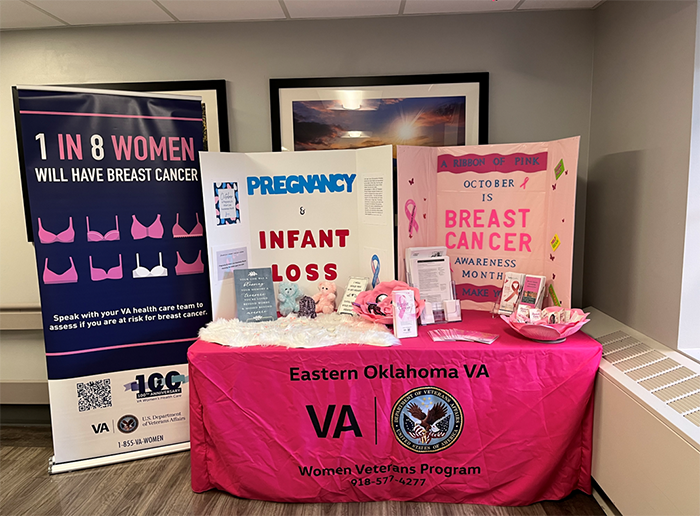
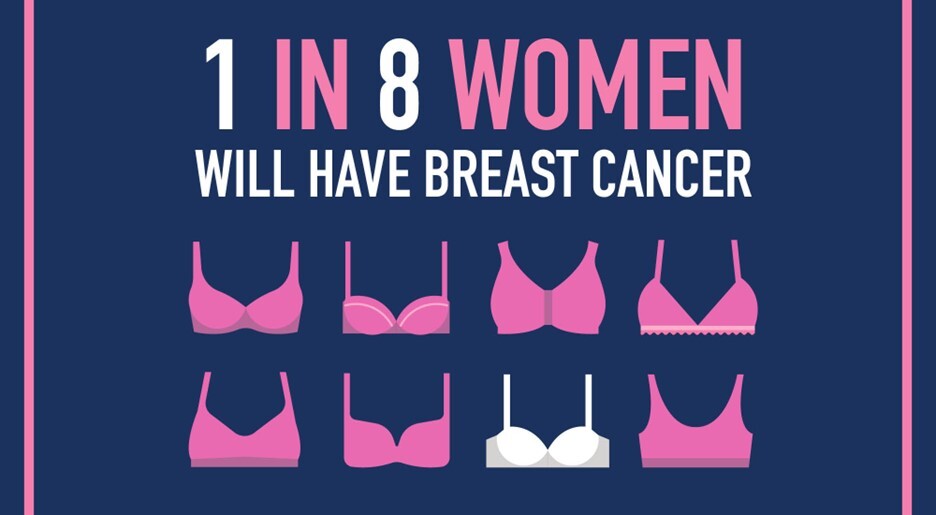
Missina’s story is not typical given her history and high risk for breast cancer, but women should stay up to date with recommended screening. 1 in 8 women will be diagnosed with breast cancer in their lifetime stressing the need for breast cancer screening.
VA recommends that you begin getting mammograms by age 40 and continue screening every other year through age 74. You may choose to be screened annually, or after age 74, after a discussion with your provider about risks and benefits. Mammograms are available on-site at more than 80 VA locations, or through community providers.
Learn more about breast cancer screening and resources at www.womenshealth.va.gov or watch this video about breast cancer screening for women Veterans on YouTube.
|
|
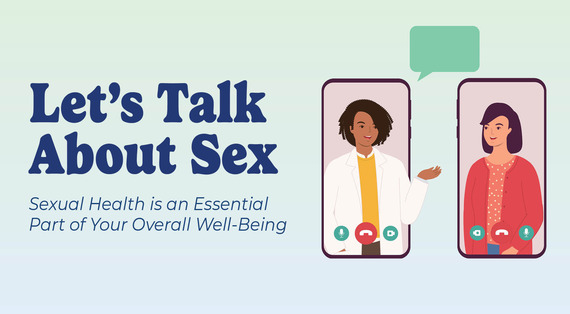 Understanding common concerns, and how VA supports every aspect of women Veterans’ sexual health
Sexual health is an important part of a woman’s overall well-being. For many women Veterans, concerns related to intimacy, desire, or physical comfort may feel difficult to talk about. You are not alone. These concerns are common, valid, and treatable. VA is committed to providing safe, respectful, and personalized care that supports every part of your health, including your sexual health.
Many factors can affect sexual well-being. These may include hormonal changes, medications, chronic pain, trauma, mobility challenges, emotional health, or body image concerns. No matter what you are experiencing, VA providers are here to help with care tailored specifically for women Veterans.
Sexual health concerns are common and treatable
It is not unusual for women to notice changes in sexual desire or function. These concerns can happen at any point in life and may be related to age, menopause, injury, stress, or past trauma. The important thing to remember is that support is available.
Common concerns include:
- Low or no sexual desire
- Difficulty becoming aroused
- Inability to orgasm
- Pain during sex
- Vaginal dryness
- Lack of sexual pleasure or satisfaction
- Pelvic floor muscle problems
- Anxiety or trauma responses during intimacy
- Side effects from medications
- Body image issues that affect confidence
Whole-person care for your sexual health
As a woman Veteran, your experiences and health needs are unique. VA takes a whole-person approach to sexual health, with providers who understand how military service can impact your well-being. We work with you to explore the root causes of your concerns, whether physical, hormonal, emotional, or related to medications, and offer care options that are tailored to your goals and comfort.
Here are some of the services available to support your sexual health:
-
Hormonal medications: Includes treatments like estrogen therapy that relieve menopause-related symptoms such as dryness, irritation, and discomfort during sex.
-
Non-hormonal medications: Offers options to increase sexual desire, improve arousal, and ease vaginal dryness without using hormones.
-
Sexual health devices: Includes tools such as vaginal dilators or the EROS clitoral therapy device to reduce pain and improve arousal. These are especially helpful for women recovering from trauma, surgery, or radiation.
-
Gynecologic care: You have access to providers who specialize in women’s reproductive and sexual health and understand the unique needs of women Veterans.
-
Pelvic floor physical therapy: Helps strengthen pelvic muscles to reduce pain and improve comfort and function during intimacy.
-
Mental health support: Includes couples counseling or therapy to address concerns such as PTSD, depression, anxiety, or military sexual trauma that may affect sexual well-being.
-
Relationship and couples counseling: VA offers services to help improve communication, intimacy, and connection with your partner, supporting your emotional and sexual health together.
Support for your relationships and emotional well-being
Relationships can be a vital source of connection and strength, but they can also be affected by stress, trauma, or changes in health. VA offers support to help women Veterans strengthen their relationships, whether with a partner, family member, or close friend.
If you’re navigating challenges related to intimacy, communication, trust, or emotional closeness, VA provides counseling services, couples therapy, and mental health resources designed with your unique experiences in mind.
Start with a conversation: Your VA provider can guide your next steps
If you are experiencing concerns about your sexual health, a good place to begin is by talking with your VA primary care provider. They can help you understand your options and connect you with the right services and specialists.
Every woman Veteran deserves care that honors your full well-being, including your sexual health.
Women Veterans Call Center: Call or text 1-855-VA-WOMEN (1-855-829-6636) to speak with trained representatives who can help you access services and resources, many of whom are women Veterans themselves.
VA Women’s Health website: Visit www.womenshealth.va.gov/topics/sexual-health.asp to learn more about available sexual health services and additional resources.
|
|
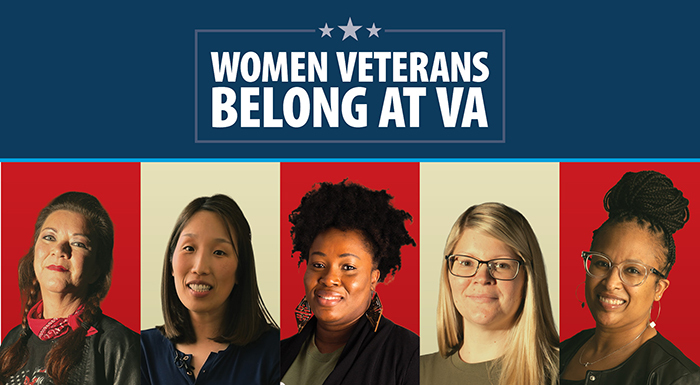 Own your health care journey
You served with dedication and strength. Now, you deserve health care that recognizes your service and supports your whole health. At VA, our mission is to provide care designed for Veterans—including women Veterans—at every stage of life.
A health care system for Veterans, including you
VA is the nation’s largest health care system built for Veterans. Every Veteran who comes to VA brings their own experiences, needs, and goals. Our providers are here to listen, respect your perspective, and work with you to build a care plan that fits your life.
At VA, we’re committed to earning your trust by creating welcoming, inclusive spaces where you feel safe, comfortable, and confident in your care. VA emphasizes trauma-informed service and resources so you can feel confident and in control of how you receive your care. Whether it’s choosing your provider’s gender, requesting a chaperone, or using telehealth, we want to support and deliver care on your terms.
Care designed for Women Veterans
Women Veterans are the fastest-growing group of Veterans, and VA continues to expand services to meet your needs. Your VA health care team is trained to provide personalized, trauma-informed care that supports your physical, emotional, and mental well-being.
When you enroll in VA health care, you unlock access to a wide range of services to support this approach. You have access to routine care and management of long-term disorders, but VA also provides care specifically designed for you as a woman Veteran.
Depending on your needs, VA offers:
-
Primary Care: Patient-centered approach to health care, organized as a Patient Aligned Care Team (PACT) that provides long-term, personalized care for Veterans. Your PACT acts as your first point of contact, coordinating care, promoting health, preventing disease, and managing chronic and acute conditions through a comprehensive, team-based approach with your health professionals, family, and caregivers.
-
Gynecologic Care: From reproductive health to fertility and menopause support.
-
Maternity Care: Prenatal, delivery, postpartum care, and maternity care coordinators.
-
Mental Health Support: Specialists trained in supporting women facing posttraumatic stress disorder, military sexual trauma (MST), depression, or intimate partner violence.
-
Cancer and Preventive Screenings: Early detection for breast, cervical, and colorectal cancer, plus access to oncology care.
-
Whole Health and Complementary Therapies: Options like yoga, acupuncture, meditation, and art therapy to support your wellness.
Convenient Care Options may be available in your area. Be sure to ask about: Expanded hours, telehealth, at-home care, mail-order prescriptions, transportation assistance, and more.
|
|
 Virtual wellness class
Built by Veterans for Veterans, the Veterans First platform provides access to a wide variety of live health and wellness classes for all who wish for a healthier and happier lifestyle. Virtual classes are available for all fitness levels. Take classes from work or from the comfort of your home.
Yoga
Yoga is a mind and body practice with origins in ancient Indian philosophy. The various styles of yoga typically combine physical postures, breathing techniques, and meditation or relaxation.
Tai Chi
Tai Chi is a mind-body exercise combining slow-flowing intentional movements with breathing, awareness, and visualization.
Rooted in the Asian traditions of martial arts, Chinese medicine and philosophy, Tai chi enhances relaxation, vitality, focus, posture,
balance, strength, flexibility, and mood.
Qigong
Qigong is an ancient Chinese healing art, older than, and similar to tai chi, with a focus on cultivating the body’s vital energy or qi. It
involves the coordination of the breath, posture, awareness, visualization and focused movements. Qigong may be a stationary or moving meditation.
 Available Classes
- Health & Wellness
- Yoga & Mindful Movement
- Tai Chi & Qigong
- Meditation & Guided Rest
Reported Benefits
- Improved Sleep, Heart Health, Focus
- Reduced Stress, Chronic Pain, Inflammation
- Decreased Anxiety, Depression, Chronic Fatigue
- Migraine Relief
Whole Health is VA’s approach to care that supports your health and well-being. It focuses on self-care, skill building and support.
Your Whole Health Team is pleased to support your journey to well-being.
|
|
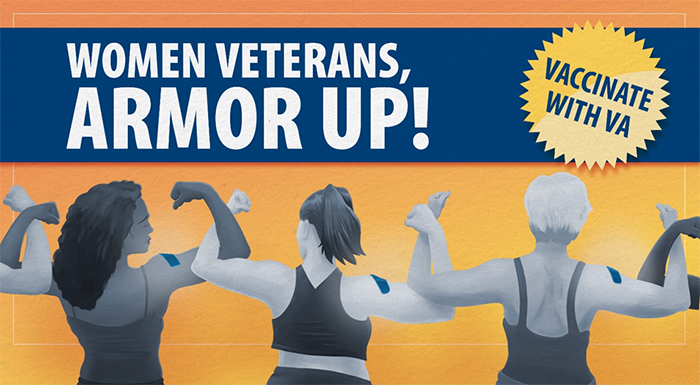 Vaccines help your body create protective antibodies that help it fight off germs or infections. Getting vaccinated is a simple way to protect yourself and others from preventable diseases, serious illnesses, and hospitalization.
It’s important to remember that some preventable diseases can have serious complications or lead to later illnesses. Vaccinating protects against the disease itself and against the dangerous complications or consequences that it can bring.
The protection that some vaccines provide can fade over time, so your provider may recommend you get additional vaccine doses, or boosters, to maintain protection.
By getting vaccinated, you’re also helping to stop the spread of preventable diseases to others, especially those who cannot be vaccinated because they’re too young or have a weakened immune system due to being older or having a serious health condition. If enough people get vaccinated, large outbreaks can be avoided.
Vaccines are safe, but they may come with mild side effects like any other medication, including fever; tiredness; body aches; or redness, swelling, and tenderness where you received your shot. These reactions usually go away within a couple of days. Serious or long-lasting side effects are extremely rare, and vaccine safety is continually monitored.
Recommended Vaccines
VA and Centers for Disease Control and Prevention (CDC) recommend several vaccines based on your age and health.
-
Pneumonia: This vaccine can prevent a serious infection in the lungs (pneumonia) that can lead to respiratory complications and even death. It is recommended for people aged 65 and older and for those younger than 65 with chronic medical conditions (such as diabetes).
-
Human papillomavirus (HPV): HPV is a common sexually transmitted infection that is spread through sexual or skin-to-skin contact, and it can lead to cancers like cervical or vaginal cancer, mouth cancer, throat cancer, and anal cancer. The HPV vaccine is one of the only vaccines that can prevent cancer. All people through age 26 and some who are older should receive this vaccine.
-
Flu: Influenza, or the flu, is a viral condition that can effect anyone but causes more severe sickness in the elderly. The vaccine, needed yearly, can prevent the flu and complications like bacterial pneumonia. Getting a flu shot while you’re pregnant can also protect your newborn by giving them immunity from the flu for the first six months of life.
-
COVID-19: COVID-19 is a respiratory illness that spreads easily. It can be life-threatening in people with other conditions, such as heart disease or poor immune systems. COVID-19 vaccines are recommended for all adults, especially if you’re pregnant or planning to become pregnant.
-
Tdap: The Tdap vaccine protects against three diseases, including tetanus, diphtheria, and pertussis or whooping cough). Most people should get a booster every 10 years. It is especially recommended for people who are pregnant or may come in contact with young children who are not yet vaccinated against whooping cough.
-
Shingles: Shingles is a painful skin rash caused by the same virus as chicken pox. People aged 50 and older should receive this vaccine, which requires two shots, two to six months apart.
-
Hepatitis: Hepatitis is a serious disease caused by a virus that attacks the liver and can cause lifelong infection, cirrhosis (or scarring) of the liver, liver cancer, liver failure, and death. The Hepatitis B vaccine is available and recommended for all age groups.
-
Respiratory syncytial virus (RSV): The RSV vaccine can prevent lower respiratory tract disease. If you are a Veteran who is 60 years and older, talk with your VA health care provider about whether RSV vaccination is right for you, especially if you have an underlying medical condition that may put you at higher risk for severe RSV infection. If you’re pregnant, we recommend you receive an RSV vaccine between weeks 32 and 36 of your pregnancy.
Vaccines and Pregnancy
Pregnant people share everything with their babies—so if you’re protecting yourself through vaccines, you’re protecting your baby. CDC recommends certain vaccines before, during, and after pregnancy. Know that it’s also safe for you to receive many vaccines right after giving birth, even while breast or chestfeeding.
The antibodies you develop in response to vaccines not only protect you, but also help protect your baby from serious diseases early in life. Vaccinating during pregnancy also helps protect you from getting a serious disease and then giving it to your newborn.
It’s important to speak with your VA health care provider if you’re planning to become pregnant or are pregnant, so we can ensure you receive the vaccines you need to keep you and your baby safe. We can also help you understand which vaccines to avoid during your pregnancy journey.
Vaccine Services and Resources
You can conveniently get all the vaccines you need at a VA medical center or clinic. You can get vaccinated at VA, the same place you receive your other health care, and we’ll keep your medical files up to date and track your vaccine history for you!
Call the Women Veterans Call Center at 1-855-VA-WOMEN or visit the Women’s Health Immunizations page to learn more about getting vaccinated at VA.
To learn more about what type of prevention tests and vaccines are recommended based on your age, download our Preventative Health Checklist for Women or visit VA’s Preventative Care page for women Veterans.
You may also:
- Download our Flu Shot Flyer to learn more about why getting the flu vaccine is important for women Veterans, including those who are pregnant.
- Download our HPV Vaccine Brochure to learn more about HPV and how the vaccine can help prevent against cancer.
|
|
 Women Veterans Menopause Treatment Clinic
Eastern Oklahoma VA Health Care System is excited to announce new Menopause related care for our Women Veterans!
Starting on July 23rd we will offer a menopause clinic to help those with various menopause symptoms.
Are you having symptoms of perimenopause or menopause?
Starting July 23, 2025, Dr. Gary Sweet, Women's Reproductive & Mental Health Clinical Pharmacy Practitioner will be seeing Women Veterans on Wednesdays and Fridays. Appointments are available face to face at Ernest Childers Clinic or virtually via VVC appointments.
The clinic will focus on management of all aspects of menopause, including medication, education, osteoporosis prevention, and management of B12, Vitamin D and stress.
If you're interested in an appointment, please contact your PCP and ask them to submit "Menopause Consult".
Women Veterans Pelvic Floor Rehabilitation Clinic
July 24th Eastern Oklahoma VA will be starting a Pelvic floor Physical Therapy clinic on Thursdays in Muskogee.
New state of the art pelvic floor Ultrasound equipment has been purchased and we are excited to offer this service to our Women Veterans as non surgical alternative to treat urinary incontinence.
Ask your PCP if this service could be right for you!
Are you having symptoms of a weakened pelvic floor or urinary incontinence?
Starting July 24, 2025, Ashley Sells, PT, DPT will be seeing Women Veterans in the new pelvic floor rehab clinic. This clinic will be on Thursdays in Muskogee.
The clinic will focus on management of pelvic floor issues, especially urinary incontinence.
If you're interested in an appointment, please contact your PCP and ask them to submit "Pelvic Floor Physical Therapy Consult".
|
|
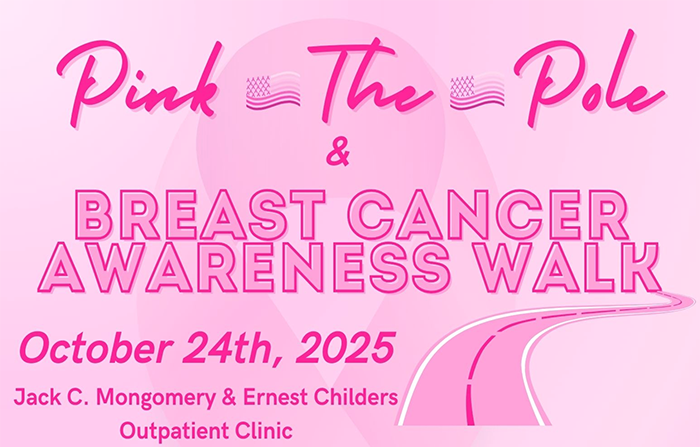 Wear your pink attire and show support for the fight against breast cancer
October 24, 2025 at Jack C. Montgomery VA Medical Center and Ernest Childers VA Clinic.
-
8:45 a.m. - Meet out front at the pink tables to complete your I fight for sign to hold in the group photos.
-
9:00 a.m. - Meet at the flagpole for a few words from the Chaplains and group photos.
-
9:10 a.m. - Begin the Breast Cancer Walk.
|
|
Black bean chili (gluten-free)
Ingredients:
- 1 pound dry black beans
- 2 cups chopped onion (about 2 large)
- 1 cup chopped red, yellow, or green bell pepper
- 3 cloves garlic, crushed
- 2 tsp chili powder
- 2 tsp cumin
- 2 tsp dried cilantro
- 1 (28-ounce) can tomatoes
Directions:
Soak beans according to package directions. Rinse.
Add all ingredients except tomatoes to 3 quarts of water. Bring to boil, then reduce to low heat. Simmer for about 2 hours, until beans are soft and water is gone. Add tomatoes, cooking until tomatoes are heated through. Add salt and pepper to taste. Garnish with fat-free sour cream and chopped scallions.
Serves 6.
Each serving contains about 333 calories, 20 g protein, 2 g fat, 0 mg cholesterol, 63 g carbohydrates, 15 g fiber, and 204 mg sodium.
To make this recipe gluten-free, use only spices or condiments that are gluten-free. Read food labels carefully and contact the company if you have any questions.
Multigrain chicken soup
Ingredients:
- 1/2 cup raw brown rice
- 1/3 cup medium barley
- 1/3 cup red lentils
- 1/3 cup yellow split peas
- 2 large ribs celery, sliced
- 4 large carrots, sliced
- 2 cloves garlic, crushed
- 2 tbsp dried parsley
- 1 tbsp dried thyme
- 1 tsp powdered ginger
- 1 tsp dried marjoram
- 1/2 to 1 tsp salt, depending on taste
- 1/2 tsp ground black pepper
- 1 pound boneless, skinless chicken breasts, cut into bite-sized pieces
- 12 cups water
Directions:
Put all ingredients in a large pot. Bring to a boil. Cover the pot and turn the heat down to simmer. Cook for about 1 hour, until all grains are tender. Adjust seasonings as needed. Soup will be thick. You can thin the soup, if you like, by adding water or chicken stock.
Serves 8.
Each 1-1/2-cup serving contains approximately 218 calories, 30 g carbohydrates, 20 g protein, 2 g fat, 225 mg sodium, and 6 g fiber.
|
|
 Suicide is Preventable and Support is Available
Suicide has no single cause and no one approach can end it—but prevention is possible, especially when women Veterans find support before a crisis happens.
Women Veterans may have unique experiences related to military service, health and wellbeing, or trauma that can increase the risk of suicide. Some also face medical and social issues that affect relationships and quality of life. Military service can lead to readjustment issues, posttraumatic stress disorder (PTSD), trouble sleeping, or even physical injury. Additionally, reproductive health conditions that women Veterans sometimes face may take a toll on their mental health.
VA is committed to offering a growing range of resources and a network of support for all women Veterans, including those who do not, and may never, seek care within the VA health care system. Whether it's mental health care or treatment for chronic pain or other health concerns, VA can provide personalized, gender-tailored care to help women Veterans. Each VA medical center also has a Suicide Prevention Coordinator to connect women Veterans to counseling and services.
Additionally, creating a safety plan now, by identifying coping strategies and sources of support, can help give suicidal thoughts time to decrease and become more manageable in a future crisis. Download the VA Safety Plan app or create one together with your VA health care team.
The Veterans Crisis Line is free, confidential, and available 24/7. You don't have to be enrolled in VA benefits or health care to connect. Veterans, family, and friends can reach out. Dial 988 and press 1, text 828255, or chat online. Visit the VA Women’s Health suicide prevention page for more resources.
Call 1-855-VA-WOMEN (1-855-829-6636) to speak to a real person and connect to VA women’s health care.
|
|
|
Come to our New Veteran Orientation Held Monthly at Ernest Childers Outpatient Clinic in Tulsa.
Are you new to VA health care? Are you a current VA patient, but want to learn more about what services and benefits VA has to offer and how to obtain them?
Join Us For New Veteran Orientation
When: The 2nd Thursday of every month
Where: Ernest Childers VA Clinic 8921 S. Mingo Rd. Tulsa, OK 74113 2nd floor, Rooms 2008 - 2010 (across from optometry)
Time: 1:00 p.m.
Open to all Veterans, family members, caregivers, and community partners.
- Meet representatives from various departments within the VA
- Learn about the processes for getting things done at the VA
- Learn about and sign up for My HealtheVet
- Question and answer session
|
|
 Check out our back-issues for more Women Veterans resources and popular topics.
|
|
 Oklahoma Arts Council, Muskogee Area Arts Council, OK Department of Veterans Affairs – Women's division proudly present a series of art lessons for the Veteran women of Oklahoma.
Get your creativity on!!!
July thru December on the first Monday of the month at the Muskogee Art Guild.
-
Fiber Art: November 3, 2025
-
Acrylic Painting: December 1, 2025
|
|
|
|
|