|
Navigating Menopause with VA |
|

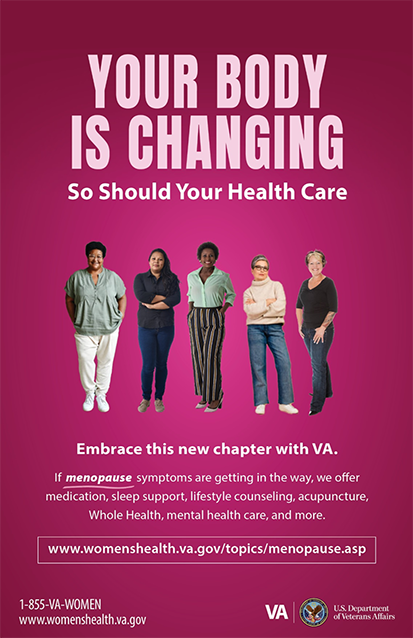
If your menopause symptoms are getting in the way, we can help!
Menopause is a natural part of life, marking the end of menstrual periods and changes in reproductive hormones.
While all women go through this transition, research has shown that women Veterans may experience earlier or more symptoms. Just like other transitions you’ve faced, you don’t have to go through this one alone.
VA offers support and care to help you manage these changes with confidence and comfort.
Understanding menopause phases
Menopause doesn’t happen overnight. It unfolds gradually in three phases: perimenopause, menopause and post-menopause. Each phase brings different changes and knowing what to expect can help you manage symptoms more effectively.
-
Perimenopause: Perimenopause is the adjustment period before menopause and often begins in your 40s. During this time, your ovarian function begins to decline. You may notice changes in your menstrual cycle, such as periods that are heavier, lighter, longer, or shorter. Hot flashes, mood changes, night sweats, weight gain, thinning hair and trouble sleeping can also begin during this phase.
-
Menopause: Menopause occurs when you have not had a menstrual period for 12 consecutive months. Most women reach this point in their early 50s, though it can happen earlier or later. Hot flashes, mood changes and other symptoms may continue. At this point, your body adjusts to lower hormone levels and you may need extra care to manage symptoms.
-
Post-Menopause: After menopause, your body continues to change. While some symptoms may ease, your risk increases for health conditions like heart disease, osteoporosis and urinary incontinence. Ongoing care can help you stay healthy and manage these long-term changes.
|
 |
Menopause as a Veteran
As a woman Veteran, you’re more likely to experience earlier or more intense menopause due to a combination of military-related stressors and exposures. Chronic stress, posttraumatic stress disorder, trauma and higher rates of depression can disrupt hormones and worsen symptoms. Smoking or increased tobacco use is linked to earlier menopause. At the same time, exposure to environmental hazards like burn pits and chemicals may impair ovarian function.
Managing menopause
No other health care system understands your experience as a Veteran better than VA. We recognize your unique needs and tailor our services to meet your specific requirements. You may be eligible for services including:
|
|

Whole Health: Whole Health offers acupuncture and other options for managing symptoms.
Mental health support: VA offers counseling, medication and peer support to help with mood changes, stress or emotional shifts.
Lifestyle counseling: VA helps you build healthy habits around diet and weight, exercise and stress management through various therapies and medications.
Bone density testing: VA monitors bone density to detect early signs of bone loss and personalize plans to prevent or manage osteoporosis.
Vaginal therapies: VA offers therapies for vaginal and urinary symptoms, including topical medications and pelvic floor physical therapy.
In addition to receiving care from the VA, you can take steps on your own to alleviate symptoms such as hot flashes, mood changes, and irritability.
Here are some tips that may help:
- Dress in layers to manage temperature fluctuations.
- Avoid hot beverages and limit alcohol consumption.
- Practice mindfulness to reduce stress.
- Exercise regularly to improve your overall well-being.
- Eat a healthy, balanced diet to support your health.
Embrace this New Chapter with VA
Visit the VA Women’s Health Menopause page or download the Women Veterans Menopause brochure to learn more.
Call the Women Veterans Call Center (1-855-VA-WOMEN) to speak to a real person who can help you enroll, schedule an appointment and connect you to care you can trust.
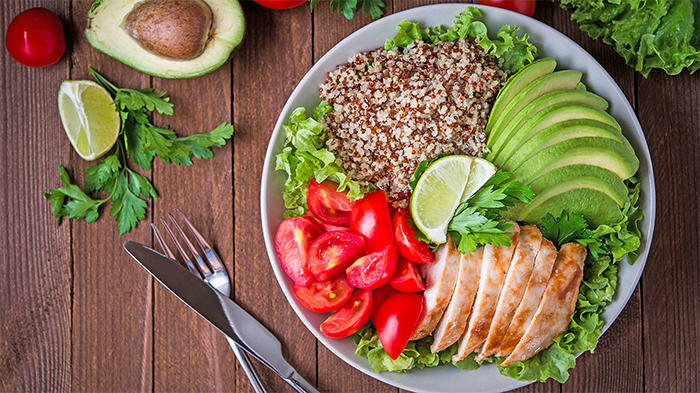
Eating well during menopause can ease symptoms and keep your body healthy. VA offers nutrition counseling, healthy cooking classes and more to help you make informed, personalized choices.
Visit Nutrition and Food Services. 🥗
|
 |
For many, the Food Pyramid was our first introduction to thinking about diet, nutrition and making healthy food choices.
The earliest food guides for Americans are over 100 years old and studying them today shows a fascinating history reflecting on the challenges and concerns of nutrition at the time. These food guides evolved from basic recommendations to address nutritional needs during difficult times, like the Great Depression and or when the wars led to wartime shortages; modern guides simplify healthy eating for an environment currently filled with a plethora of food choices.
- In the 1940s, specific dietary recommendations were established for calories, protein and certain vitamins and minerals.
- The Basic Seven food guide was published in 1943 to help families plan meals with limited access to certain food supplies during World War II.
- In 1956, the Basic Four was released to focus nutrition recommendations on four large food groups: milk, meat, produce and grains.
- By the 1970s, emphasis shifted from encouraging the public to eat enough nutrients toward limiting overconsumption of fat, sugar and sodium.
- In 1984, the Food Pyramid was first released by the U.S. Department of Agriculture. The Food Pyramid visually represented the recommended daily intake of different food groups.
The Food Pyramid was replaced in 2011 with MyPlate to simplify dietary recommendations and serve as a visual reminder to consumers to choose a variety of foods.
An easy way to think about food patterns
Designers switched from the pyramid to the plate shape to grab consumers’ attention. The MyPlate guide is not intended to provide specific messages or strict directives. Rather, it offers an easy way to think about food patterns on your plate at home or when dining out.
The visual of a plate was tested and found to be a familiar mealtime symbol for many Americans. The use of the word “My” was chosen to continue the idea of personalization that was born with MyPyramid.
For more guidance on how many servings of each food group to eat, as well as serving sizes of common foods, you can access the MyPlate Plan.
There are many resources available for eating a healthier diet. Start Simple with MyPlate and the MOVE! Coach app are both free apps that are available on all smart phone platforms. For healthy recipes and cooking tips, check out the VA Healthy Teaching Kitchen YouTube channel.
Finally, if you’re interested in learning more about MyPlate or another nutrition-related topic, contact your local VA to speak with a registered dietitian.
|
|
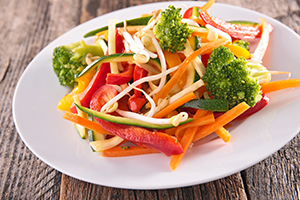
Marinated Vegetables
Prep: 15 minutes | Cook: 0 minutes |
Chill: 30 minutes | Total: 45 minutes
Yield: 8 servings | Serving Size: ½ cup
Ingredients
- ¾ cup olive oil
- ¼ cup red wine vinegar or white wine vinegar
- 1 teaspoon lemon juice
- 1 teaspoon garlic powder
- 1 teaspoon dried oregano
- 1 teaspoon dried basil
- ½ teaspoon onion powder
- ½ teaspoon salt
- ½ teaspoon ground black pepper
- 1-3 pinches crushed red pepper flakes, to taste
- 4 cups fresh vegetables, trimmed and cut into ½- to 1-inch pieces (one type or a combination; e.g. tomatoes, cucumber, broccoli, cauliflower, carrots, snap peas, yellow squash, mushrooms, zucchini, baby corn, red onion
Directions
- To a medium mixing bowl or a jar with a lid, add the oil,
vinegar, lemon juice, garlic powder, oregano, basil, onion
powder, salt, and black pepper.
- Whisk together the oil-vinegar mixture in the bowl or place the lid on the jar and shake, mixing until combined to make
a marinade.
- Place the selected vegetables in a large bowl.
- Pour the marinade over the vegetables and toss until evenly
coated.
- Set the vegetables in the refrigerator to marinate, at least
30 minutes and up to overnight.
- Serve cold, or cook as desired and serve warm.
Recipe Notes
- The marinade can be made ahead of time and stored in the refrigerator if desired.
- These marinated veggies are best when prepared at least 2 hours before serving or cooking
Nutrition Facts Per Serving
Calories: 185 | Total Fat: 19 g | Saturated Fat: 2.5 g Sodium: 165 mg | Total Carbohydrate: 5 g | Dietary Fiber: 2 g | Protein: 1 g
|
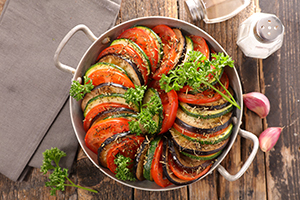
Summer Vegetable Ratatouille
Prep: 20 minutes | Cook: 40 minutes |
Total: 1 hour | Yield: 4 servings |
Serving Size: 1½ cups
Ingredients
- 3 large tomatoes (or 6 medium Roma tomatoes)
- 1 medium bell pepper, cut into bite-sized pieces (about 1½ cups)
- 1 medium eggplant, peeled and cut into bite-sized pieces (about 3 cups)
- 1 medium zucchini, cut into bite-sized pieces (about 2 cups)
- 1 medium yellow squash, cut into bite-sized pieces (about 2 cups)
- 1 medium onion, cut into bite-sized pieces (about 1½ cups)
- 2 tablespoons olive oil, divided
- ¼ teaspoon salt
- 2 cloves garlic, minced
- ¼ teaspoon dried oregano
- ¼ teaspoon ground black pepper
- ⅛-¼ teaspoon crushed red pepper flakes, to taste
- 2 tablespoons chopped fresh basil
Directions
- Preheat oven to 425°F.
- Using a box grater, grate the tomatoes over a medium
mixing bowl. Pour off excess juice, as desired. Set aside.
- Place the bell pepper, eggplant, zucchini, squash, and onion
on a baking sheet. Add 1½ tablespoons of the oil and the
salt. Toss to combine, then spread into a single layer.
- Roast in the oven until well-browned and fork tender, about
20-25 minutes., tossing halfway through the cooking time.
- While the vegetables are roasting, heat a large saucepan or
stockpot over medium heat.
- Add the remaining ½ tablespoon of oil and heat until
shimmering.
- Add the garlic and cook until fragrant, about 30-60 seconds.
- Add the grated tomatoes, oregano, black pepper, and crushed red pepper.
- Bring to a simmer over medium-high heat, then reduce the heat to maintain a low simmer. Cook, stirring occasionally, for 5 minutes.
- Add the roasted vegetables. Continue cooking for 7-10 minutes.
- Remove from the heat and stir in the basil.
- Serve warm.
Recipe Notes
- Serve over rice, pasta, or crusty bread.
- Top with a sprinkle of parmesan or feta, if desired.
Nutrition Facts Per Serving
Calories: 145 | Total Fat: 7.5 g | Saturated Fat: 1 g | Sodium: 225 mg | Total Carbohydrate: 19 g | Dietary Fiber: 7.5 g | Protein: 4 g
|
|
|
Women Veterans Menopause
Treatment Clinic |
|
|
Are you having symptoms of perimenopause or menopause?
Starting July 23, 2025, Dr. Gary Sweet, Women's reproductive and Mental Health Clinical Pharmacy Practitioner, will be seeing women Veterans on Wednesdays and Fridays.
Appointments are available in-person at Ernest Childers VA Clinic or virtually via VA Video Connect (VVC) appointments.
The clinic will focus on management of all aspects of menopause, including medication, education, osteoporosis prevention, management of B12, vitamin D, and stress.
If you're interested in an appointment please contact your PCP and ask them to submit menopause consult.
Eastern Oklahoma VA is excited to announce new menopause care for our women Veterans! Starting on July 23, 2025, we will offer a menopause clinic to help those with menopause symptoms.
|
|
Women Veterans Pelvic Floor
Rehabilitation Clinic |
|
|
Are you having symptoms of a weakened pelvic floor or urinary incontinence?
Starting July 24, 2025, Ashley Sells, PT, DPT will be seeing women Veterans in the new pelvic floor rehab clinic. This clinic will be held on Thursdays in Muskogee.
The clinic will focus on management of pelvic floor issues, especially urinary incontinence.
If you're interested in an appointment, please contact your PCP and ask them to submit pelvic floor physical therapy consult.
July 24, 2025, we will start a pelvic floor physical therapy clinic on Thursdays in Muskogee.
New state of the art pelvic floor ultrasound equipment has been purchased and we are excited to offer this service to our women Veterans as a non surgical alternative to treat urinary incontinence.
Ask your VA provider if this service is right for you!
|
|
Respect and a Safe Place to Receive Care |
|

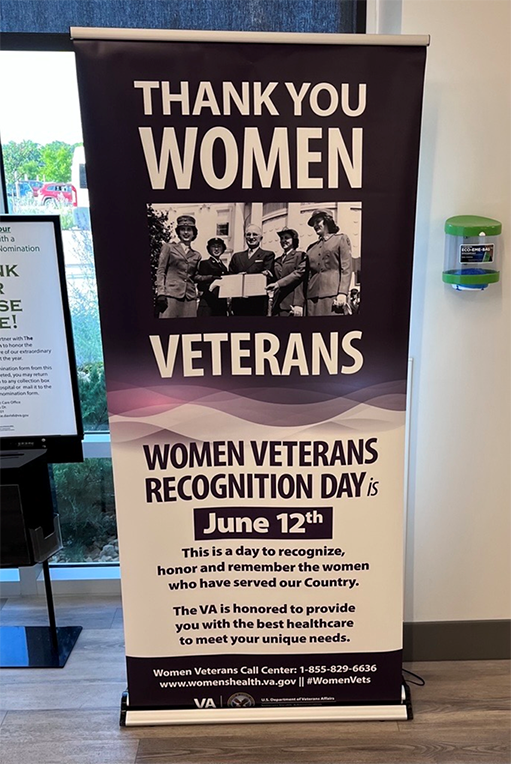
To mark the occasion of Women Veteran Recognition Day, Eastern Oklahoma VA Women Veterans Program placed 6-foot banners in multiple locations throughout Jack C. Montgomery VA Medical Center and Ernest Childers VA Outpatient Clinic to thank our brave women Veterans and show our unwavering support for them.
|
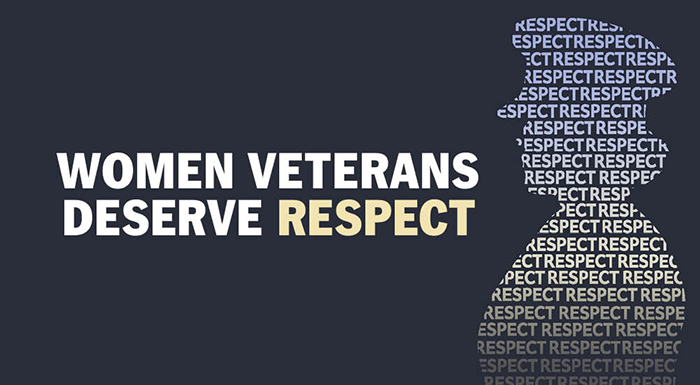
Women Veterans deserve respect. VA promises to be a safe place to receive care
Nationwide, 81% of women in the U.S. report experiencing some form of harassment or assault in their lifetime (compared to 43% of men). A recent study of women Veterans found that some reported being harassed on VA grounds, a place where all Veterans deserve respectful and safe care.
These experiences send a negative message to the Veterans VA serves. For women Veterans, harassment in a health care setting can bring up earlier military sexual trauma. This is not acceptable.
What harassment looks like
For women Veterans, harassment can take many forms, including:
- Being called inappropriate names like “sweetheart” or “baby”
- Enduring catcalling, staring, or leering
- Receiving intrusive questions such as, “Are you single?”
- Being told, “You don’t look like you belong here.”
- Getting unwanted comments about appearance or clothing
- Experiencing invasive actions like being touched, followed, or photographed without permission
- Being repeatedly referred to as Mister when called for appointments
Some Veterans may avoid, miss or delay important health care appointments as a result.
What VA is doing and what you can do
VA is actively working to eliminate all forms of harassment in its facilities. Here's how:
-
Zero-tolerance policy: No form of harassment is acceptable. Ever.
-
Ongoing education: Staff, patients and visitors are learning to identify and intervene in harassment through public messaging and training.
-
Support systems: Veterans can report harassment anonymously and receive follow-up support, counseling and investigation.
If you see or experience harassment at a VA facility, report it.
There are several ways you can report harassment, including the following:
VA staff will take you seriously, ensure your safety and guide you through your options, whether you want to give your name or remain anonymous.
What happens when you make a report
When you report harassment, VA follows a structured, supportive process to ensure your safety, document the incident and take action. We inspect every report—even if you don’t have all the details. Here’s what you can expect:
-
Ensure your safety: If you’ve been assaulted or feel unsafe, VA staff will act immediately to protect your physical and emotional well-being. They may contact VA security or local law enforcement if needed.
-
Provide information: VA staff will listen to what happened and may ask for details such as your name or contact info (you can report anonymously), location and date/time of the incident, description of what occurred, who was involved (if known), any witnesses and supporting materials (such as images).
-
Conduct an inquiry: Every report is reviewed within one business day. A fair, thorough inquiry may include speaking with you and any witnesses, reviewing submitted materials and determining appropriate next steps.
-
Take action: VA will take steps to stop the harassment, hold those responsible accountable and prevent future incidents. This may involve disciplinary action, training, or other corrective measures.
-
Receive ongoing support: You’ll receive updates once the inquiry is complete, along with information about counseling and mental health resources. VA staff will remain available to support you throughout the process.
No one is ever made to feel like they don’t belong
VA will take every report seriously, act swiftly to ensure safety, investigate thoroughly and provide follow-up support. Visit the VA Report Harassment page to learn more or call, text or chat with the Women Veterans Call Center. To learn more about how VA is building a culture of respect for women Veterans, visit our Women’s Health Culture of Respect page.
To women Veterans: VA has your back
We are committed to ensuring that you feel safe, comfortable and respected every time you seek care here.
If someone makes you feel disrespected or unsafe, it’s not “just a comment” or “no big deal.” It’s harassment and it’s not acceptable. We will support you and we will take action.
To everyone who enters a VA facility
Most people don’t intend to harass others, but sometimes they witness it and are unsure of how to respond. Others may comment without thinking twice about how it could make someone else feel.
VA encourages everyone—Veterans, staff, family members and visitors—to learn more about bystander intervention to learn how to safely and effectively intervene when harassment occurs. However, the best thing you can do to help is to report the incident. A single action can stop an incident, support a sister Veteran and set a new standard of respect.
Let’s build a VA culture that values every Veteran’s service and makes sure everyone feels included. VA will take all reports seriously, respond promptly to keep everyone safe, thoroughly investigate the matter and offer support afterward.
Visit the VA Report Harassment page to learn more or call, text, or chat with the Women Veterans Call Center.
To learn more about how VA is building a culture of respect for women Veterans, visit our Women’s Health Culture of Respect page.
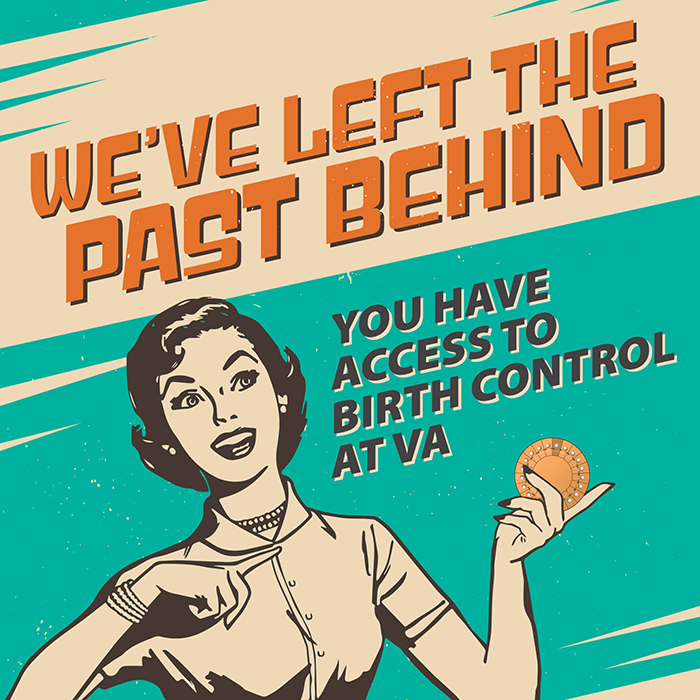
Birth control is available at VA, and we want to talk about it. While there is no one “best” method of birth control, there is the best choice for you, and VA can help you decide. VA offers birth control pills, male and female condoms, intrauterine device (IUD) placement, hormonal injections and implants, tubal ligations, same-day emergency contraception and more. Talk to your VA provider about what options may be best for you.
|
|
Veteran Suicide is Preventable |
|
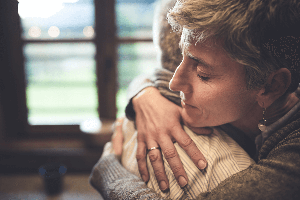
Suicide is preventable and support is available.
Suicide has no single cause, and no one approach can end it—but prevention is possible, especially when women Veterans find support before a crisis happens.
Women Veterans may have unique experiences related to military service, health and well-being, or trauma that can increase the risk of suicide. Some individuals also face medical and social issues that impact their relationships and quality of life. Military service can lead to readjustment issues, posttraumatic stress disorder (PTSD), trouble sleeping or even physical injury.
Additionally, reproductive health conditions that women Veterans sometimes face may take a toll on their mental health.
VA is committed to offering a growing range of resources and a network of support for all women Veterans, including those who do not and may never seek care within the VA health care system.
|
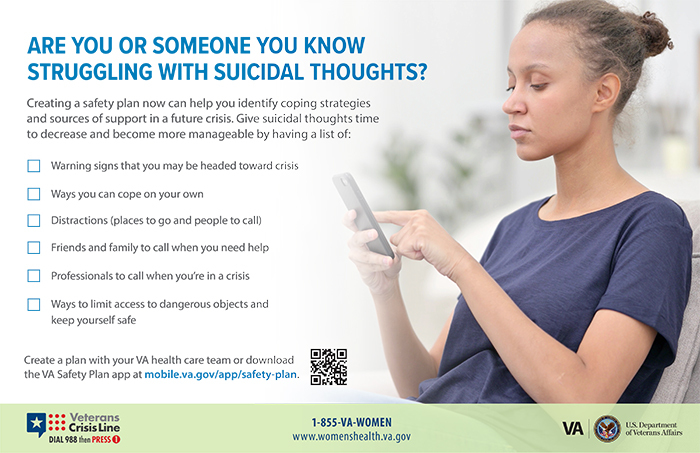 |
Whether it’s mental health care or treatment for chronic pain or other health concerns, VA can provide personalized, gender-tailored care to help women Veterans. Each VA medical center also has a Suicide Prevention Coordinator to connect women Veterans to counseling and services.
Additionally, creating a safety plan now by identifying coping strategies and sources of support can help give suicidal thoughts time to decrease and become more manageable in a future crisis. Download the VA Safety Plan app or create one together with your VA health care team.
The Veterans Crisis Line is free, confidential and available 24/7. You don’t have to be enrolled in VA benefits or health care to connect. Veterans, family and friends can reach out.
Dial 988 and press 1, text 828255, or chat online. Visit the VA Women’s Health suicide prevention page for more resources.
Call 1-855-VA-WOMEN (1-855-829-6636) to speak to a real person and connect to VA women’s health care.
|
|
Join Us for VETFEST Grove – Saturday, August 2nd at Grove Community Center!
Presented by Cherokee Nation Warrior Wellness & Eagle OPS Foundation
VETFEST Grove is more than an event—it’s a mission in motion.
Event Details
Date: August 2, 2025
Time: 10:00 a.m. to 3:00 p.m.
Location: Grove Community Center
As proud partners in the SSG Parker Fox Suicide Prevention Grant, Cherokee Nation Warrior Wellness and Eagle OPS are working together to build stronger bridges between veterans and the resources that serve them. This day is about connection, access, and action.
Whether you're a veteran needing support or a family member seeking guidance, VETFEST Grove brings essential services directly to you—with on-site experts available to help with:
-
Applying for VA Benefits
- Start your VA benefits application with guided support.
-
Claim Status & Advice
- Get updates and answers on existing claims.
-
Filing Disability Claims
- Submit or update service-connected disability claims.
-
Updating Dependents & Filing Survivor Benefits
- Make changes to your VA record or get help filing for Dependency and Indemnity Compensation (DIC) and other survivor benefits.
This family-friendly day also includes:
- Games and activities for all ages
- Fresh-grilled burgers (while supplies last)
- A relaxed, community-centered atmosphere
- Veteran-specific community resource booths
- Connection opportunities with fellow veterans and service organizations
Come out, bring the family, and experience a day of unity, support, and purpose—because together, we’re stronger.
Make sure to RSVP for a chance to win a $50 Gift Card from AMAZON!
*Be sure to complete the Warrior Wellness Check in at the event to be eligible for the drawing!
|
Women Veterans of Oklahoma Art Lessons
Oklahoma Arts Council, Muskogee Area Arts Council, OK Department of Veterans Affairs – Women's division proudly present a series of art lessons for the Veteran women of Oklahoma.
Get your creativity on!!!
July thru December on the first Monday of the month at the Muskogee Art Guild
-
Pottery: July 7, 2025
-
Watercolor: August 4, 2025
-
Acrylic Pours: September 8, 2025
-
Scratchboard: October 6, 2025
-
Fiber Art: November 3, 2025
-
Acrylic Painting: December 1, 2025
Come to our New Veteran Orientation Held Monthly at Ernest Childers Outpatient Clinic in Tulsa
Are you new to VA health care? Are you a current VA patient, but want to learn more about what services and benefits VA has to offer and how to obtain them?
Join Us For New Veteran Orientation
When: The 2nd Thursday of every month
Where: Ernest Childers VA Clinic
8921 S. Mingo Rd. Tulsa, OK 74113 2nd floor, Rooms 2008 - 2010 (across from optometry)
Time: 1:00 p.m.
Open to all Veterans, family members, caregivers, and community partners.
- Meet representatives from various departments within the VA
- Learn about the processes for getting things done at the VA
- Learn about and sign up for My HealtheVet
- Question and answer session
Interested in Past Newsletter Issues?
|
|
Your Eastern Oklahoma VA Women Veterans Program Team |
|
|
|
|