
Women Veterans Monthly Newsletter - June 2025
Veterans Health Administration sent this bulletin at 05/30/2025 10:00 AM EDT
WOMEN VETERANS HEALTH CARE |
|
|
Eastern Oklahoma VA Health Care System |
|
Women Veterans Program Newsletter
|
Thank you to all Women Veterans |
||
|

Memory loss and dementia |
|
Dementia is caused by damage to or changes in the brain. The most common symptom of dementia is serious memory loss. There is a difference between normal forgetfulness and a serious memory problem. Serious memory and cognitive problems, such as difficulty learning and thinking, can significantly impact your daily life, making it hard to perform everyday tasks. The most common types of dementia are Alzheimer's disease, vascular dementia, frontotemporal dementia, and Lewy body dementia. Common symptoms of dementia include:
What services does VA provide for evaluating and managing memory loss?If you are having memory loss or symptoms related to dementia, please let your primary care provider know. Your VA primary care provider will perform an exam to determine whether changes in your memory are due to dementia or another problem. The exam may include:
How do I access services for memory loss and dementia at VA?If you are experiencing memory loss or are having symptoms caused by dementia, schedule an appointment and speak to your VA primary care provider. If you don’t have a VA primary care provider, you can call your nearest VA medical center and ask for the Women Veterans Program manager (WVPM). They can help coordinate the services you may need. If you don't use VA, use the following tools to:Where can I find more information, help and resources on memory loss?
|
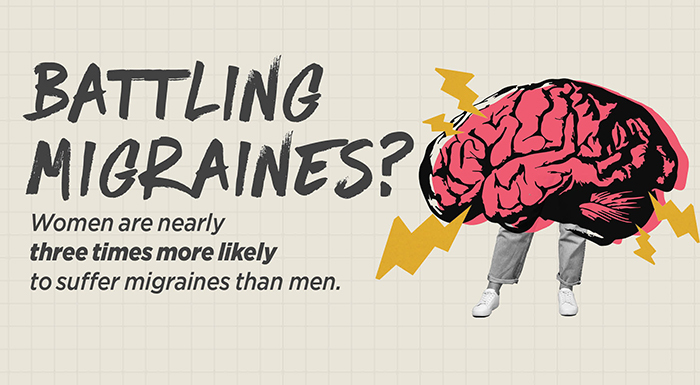
Battling migraines? |
||||||||||||||||||||||
|
|
||||||||||||||||||||||
Are you a woman Veteran battling migraines?Women Veterans are three times more likely to experience migraines than men. Migraines are not just regular headaches—they can disrupt your entire day. Everyday triggers, such as stress, light, noise, smells, disrupted routines and lifestyle habits can make them worse. So can prior military experiences and hormonal changes. It’s important to recognize the symptoms, know your triggers and get the support you need. Understanding migrainesMigraines are intense, throbbing headaches that can occur at any time, lasting from a few hours to several days. Women tend to experience migraines more frequently and intensely than men, with symptoms including:
Red Flags: Some symptoms are a warning sign of something more serious. If you experience any of the following, head to the ER right away:
Know your triggersMigraines are especially common in women of childbearing age. Hormonal changes, such as periods, menopause, birth control or pregnancy, can trigger attacks, along with everyday factors like light, noise, smells, weather, disrupted routines and lifestyle habits. Add your prior military experience, and you’ve got a perfect storm for more frequent migraines. Tracking your migraines, including when they happen, how long they last and symptoms, will help you and your VA health care team create a solid treatment plan. Don’t forget to note your family history and any medications you are taking. Get support from VAIf migraines impact your life, reach out to VA. Together with your provider, you can create a treatment plan to manage your pain and reduce future attacks. We offer services to treat disabling and chronic pain, including medications, injections, acupuncture and other non-drug therapies like occupational and physical therapy, biofeedback, massage, mindfulness, and cognitive behavioral therapy. Our Whole Health approach also addresses stress, sleep, nutrition, and exercise to manage triggers that contribute to your migraines. Visit VA Women Veterans Health Care to learn more or call the Women Veterans Call Center (1-855-VA-WOMEN) to speak to a real person who can help you enroll, schedule an appointment and connect you to care you can trust.
Women's health care you can trust |
||||||||||||||||||||||
|
||||||||||||||||||||||
Visit us online! |

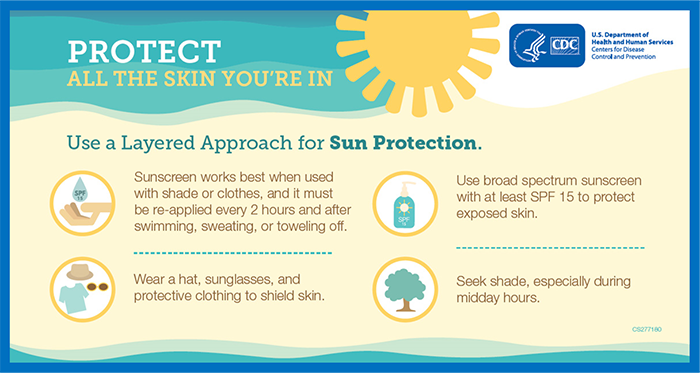
Protect your skin |
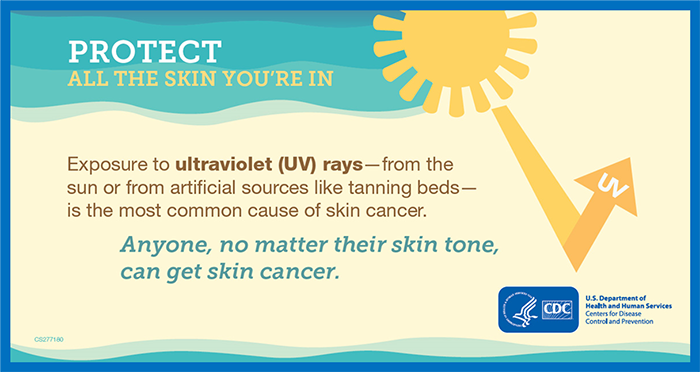
Skin cancerAccording to the Centers for Disease Control and Prevention (CDC), skin cancer is the leading form of cancer in the United States. The skin is the body's largest organ, consisting of several layers of different cell types that can lead to various types of skin cancers. The two most common types of skin cancer are basal cell and squamous cell cancers. Melanoma is the most serious type of skin cancer, but it is far less common. Basal and squamous cell cancers can usually be cured, but often lead to scarring. Melanoma causes the most skin cancer deaths, as it can spread to other parts of the body, including the internal organs. Most cases of skin cancer are caused by overexposure to ultraviolet (UV) rays from the sun, tanning beds or sunlamps. Veterans may be at higher risk for skin cancers depending on their level of exposure to the sun and their role in the military. |
|
|
What services does VA provide for skin cancer?VA provides skin cancer care on-site or through a community health care facility. Your VA primary care provider can examine your skin during routine appointments and can refer you to a dermatologist if needed. If caught early, skin cancers can be treated successfully. Your provider can check for lesions with warning signs of melanoma and other skin conditions, such as:
|
|
|
How do I access services for skin cancer at VA?If you have a VA primary care provider, let them know about any concerns you have with your skin or if you want to get your skin checked. |
|
|

Reducing gender-based harassment at VA |
|
|
Report harassment here:Women Veterans Program Manager |
|
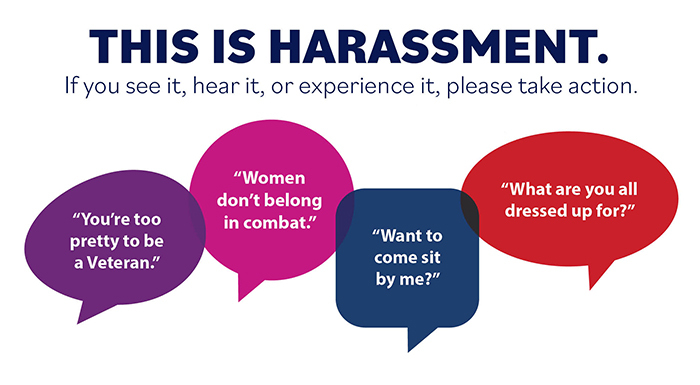
We continue to expand our anti-harassment efforts so that everyone who enters our facility can recognize harassment when they see it, hear it or experience it. Women Veterans have faced different kinds of harassment, including gender-based harassment (harassment tied to one’s gender). Examples include:
We are working to make VA a more comfortable and welcoming environment for women to receive health care services. From the moment you arrive in the parking lot to the time you spend in the waiting room and during interactions you have with other Veteran patients, VA providers and staff. We acknowledge that most people do not harass others, and sometimes providers and staff also experience harassment. To learn more about what you can do to help stop harassment, read up on Bystander Intervention Techniques. If you see, hear, or experience harassment, please report it. Tell VA police, security, facility leadership, a Patient Advocate, a Women Veteran Program manager or call or text the Women Veteran’s Call Center (1-855-829-6636). We are listening and taking action. Read more about our harassment policy. |
Mammograms and breast health |
|
|
|
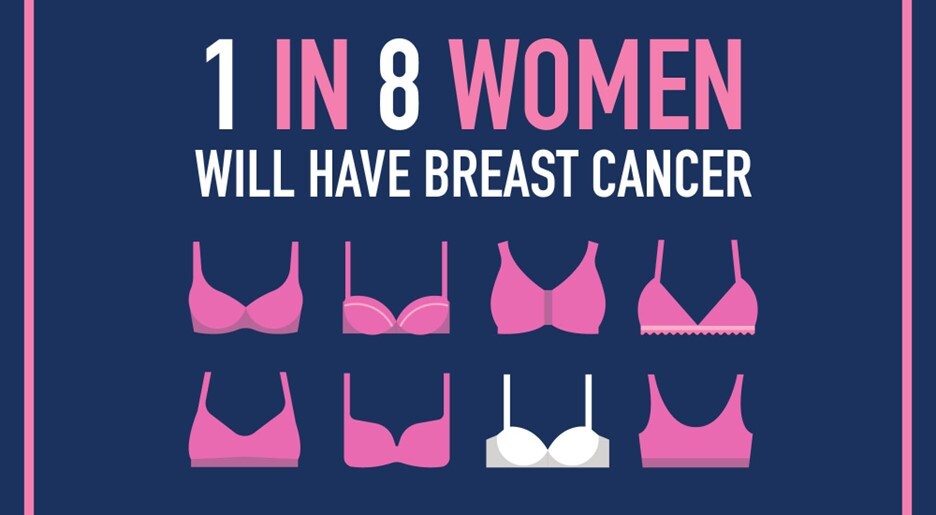
1 in 8 women will be diagnosed with breast cancer in their lifetime. VA provides screening mammograms to detect breast cancer early, when it is most treatable. Breast cancer screeningBreast cancer is a disease where cells in the breast grow uncontrollably. It is the most common cancer among American women, following skin cancer. Breast cancer screening involves checking for signs of cancer before symptoms appear, with a mammogram. A mammogram is a specialized X-ray that helps detect breast cancer in its early stages, making it easier to treat. Regular mammograms can significantly lower the risk of dying from breast cancer. Some warning signs of breast cancer
For any questions regarding your personal breast health, please reach out to your primary care provider! How do I access services for breast health at VA?If you have concerns about your breast health, start by having a conversation with your VA primary care provider. They can help you schedule a mammogram or any other necessary screening. If you do not have a primary care provider, call the Women Veterans Program manager at your local VA. All VA medical centers have Women Veterans Program managers to help women Veterans in accessing VA benefits and health care services. Find the VA medical center nearest you or call 1-877-222-8387. What services does VA provide for breast health?Every VA facility has a Women Veterans Program manager and women's health primary care providers, ensuring women Veterans have access to appropriate care and treatment. They will connect you to the services you may need. Breast care resources available at VA include:
We offer mammograms on-site at Ernest Childers Outpatient Clinic. For women receiving care at sites without mammography, we provide screening services at conveniently located community facilities. We also have breast cancer screening coordinators who contact women due for mammograms, follow up on abnormal results and help our patients navigate the breast cancer screening process. VA exceeds the private sector in mammography screening rates. For women diagnosed with breast cancer, we offer full-service oncology treatment that includes imaging, surgery, chemotherapy, radiation and other advanced state-of-the-art treatments as needed, on-site or in the community. VA patients are eligible for enrollment in clinical trials. VA Eastern Oklahoma resourcesWomen Veterans Program manager Breast care nurse navigators Stephanie Frink, RN (Tulsa) For more information on breast cancer, please visit: Women Veterans Health Care | Mammogram/Breast Health CDC: CDC | Breast Cancer |
Maternity care at VA |
|
|
What to expect from your maternity care coordinatorMaternity Care Coordinators will help you navigate and access maternity care within and outside VA. Pregnant Veterans: Every VA facility has a Maternity Care Coordinator ready to support you, provide health screenings, and ensure you have access to needed education, resources, and supplies throughout your pregnancy and the year afterward. Maternity Care Coordinators understand the unique needs of women Veterans, and having one at your side means you’ve got an advocate to ensure you and your baby receive the best care. What is a Maternity Care Coordinator?For pregnant Veterans using VA maternity care benefits, a Maternity Care Coordinator is a member of your VA health care team who specializes in helping you navigate your maternity care. Maternity Care Coordinators are uniquely trained to support you. They have a deep understanding of both Veteran needs and maternal care, ensuring you receive trusted, specialized health support. The Support You NeedYour Maternity Care Coordinator will contact you every trimester of pregnancy, after delivery and quarterly in the year after delivery. During these 8 calls, your Maternity Care Coordinator will make sure you get the care you need by helping you:
Regular calls with your Maternity Care Coordinator ensure essential health screenings are completed and follow-up for medical conditions, such as gestational diabetes and high blood pressure, is coordinated. Your Maternity Care Coordinator will also discuss risk factors, birth spacing, family planning options and baby safety, provide educational resources and refer you for additional care as needed. How to Get StartedWhether it’s your first pregnancy or you’re adding to your family, your Maternity Care Coordinator is in your corner, ready to provide guidance, resources and compassionate care. You don’t have to navigate the system alone; we’re here for you and your growing family. Contact your VA health care provider or your local Women Veterans Program manager to connect with your Maternity Care Coordinator. We are here to ensure you have the support and resources you need. Learn more by visiting the VA Women’s Health Maternity Care page. |

Interested in Past Newsletters? |
|
|

New Veteran Orientation |
|
Come to our New Veteran Orientation Are you new to VA health care? Are you a current VA patient, but want to learn more about what services and benefits VA has to offer and how to obtain them? Join Us For New Veteran Orientation |
|
When: Where: Time: |
|
Open to all Veterans, family members, caregivers, and community partners.
|
Your Eastern Oklahoma
|
 |
Michele Reeves, BSN, RN Email: Michele.Reeves@va.gov |
 |
Makyla Clark, MSN, RN, CLC Email: Makyla.Clark@va.gov |
 |
Kellie Zimmerman, RN Email: Kellie.Zimmerman@va.gov |
 |
Stephanie Frink, RN Email: Stephanie.Frink@va.gov |
 |
Tia Miller, BSN, RN Email: Tia.Miller@va.gov |
Keep updated & let us know how we're doing. |
 |
 |
 |
 |
 |
|
You have received this message because you are subscribed to Veterans Health. Access your Subscriber Preferences to make changes to your subscription or Unsubscribe. Get this as a forward? Sign Up to receive updates from Veterans Health. Having questions or problems? Please visit subscriberhelp.govdelivery.com for assistance. |
||
 |
 |