|
|
|
Share this email with your colleagues to make sure they get the latest VHA IE news: SUBSCRIBE
|
|
|
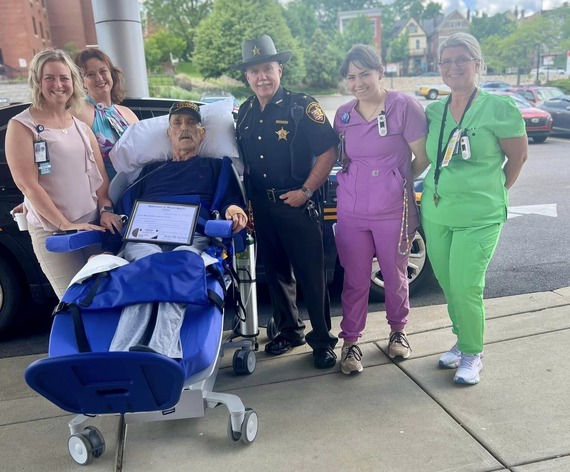 Cincinnati VA has launched the Hero’s Hope initiative, a program designed to fulfill the final wishes of Veterans in hospice care. By creating moments of joy and purpose, the initiative provides comfort to Veterans and their families during life’s most challenging moments.
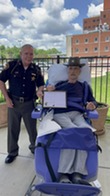
One moving example is the story of Bob, a Vietnam War Veteran who dreamed of becoming a deputy sheriff. Though he pursued military service in the Army and Marine Corps, life never aligned for him to realize his dream. Years later, he shared his story with nurse Jamie Kuhlman, who, along with the Cincinnati VA team, worked to make it a reality. Sheriff Gordon Ellis of the Brown County Sheriff’s Department deputized Bob as an honorary deputy, complete with a patch and certificate. Bob wore his new badge of honor every day until his passing in June 2024.
Beyond individual stories, Hero’s Hope offers every Veteran in hospice care a commemorative coin as a token of hope and remembrance. The program, still in its early stages, aims to expand nationwide, inspiring communities and providing solace to more Veterans.
Hero’s Hope exemplifies the Cincinnati VA’s commitment to honoring Veterans, showing that even in their final days, their dreams and sacrifices are deeply valued.
|
 The 2024 VHA State of Innovation report is available online! With the theme “From Promise to Progress: Evolving Veterans Healthcare,” the 2024 SOI report has a clear mission: educate Veterans on the ways in which VHA OHIL is advancing and redefining VA health care, and empower them to access these resources. This year’s report is divided into four sections—access to care and services; mental health and social connection; collaboration to deliver innovation; and the future of Veteran health care. The State of Innovation Report feature series will share sneak peaks inside the 2024 SOI report to explore each of the core sections. This week’s newsletter features projects included in the “Healthcare on the Horizon: Advancements in Care" section of the report.
VA has expanded the boundaries of medical imaging and care delivery with the use of Wireless Ultrasound Technology. This technology has improved precision in procedures, allowing for exact targeting and error reduction, which ultimately improves the quality of care for Veterans. This innovation is the result of collaborative efforts between VHA IE’s National Center for Collaborative Healthcare Innovation (NCCHI), based at VA Palo Alto Health Care System (VAPAHCS), and Medivis, a New York City-based medical technology company harnessing augmented reality (AR) and artificial intelligence to advance medical imaging.
In 2024, the integration of wireless ultrasound technology into the Medivis platform expanded its applications exponentially. Now, wireless ultrasound technology is pioneering additional use cases for advanced ultrasound technology, including the development of advanced imaging capabilities through simultaneous registration of radiographic images with the Veteran’s body. Read more on page 59 of the report.
|
Pharmacogenomics (PGx) is a simple solution to a complex problem. PGx tests determine how an individual’s genes affect pharmaceutical response, allowing providers to optimize the dose or type of medicines they prescribe and prevent adverse drug events. VA conducts its PGx testing with outside labs, which requires manual entry into different parts of Veterans’ electronic health records (EHR); this delays PGx test results being made available to VA providers and may potentially delay lifesaving, personalized prescriptions. Dr. Rona Margaret Relova, a Research Health Scientist at VA Palo Alto Health Care System and 2024 VHA IE Senior Innovation Fellow, spearheaded a novel solution to allow PGx results to be rapidly and accurately transmitted into Veterans’ EHR using scalable, automated tools. Dr. Relova’s project has successfully piloted the automated push of PGx test results in three VA facilities and may potentially impact 5,000 Veterans per month. Read more on page 63 of the report.
|

The November edition of The Exchange featured a presentation by Dr. Amanda Lienau, VHA IE's Director of Open Innovation, and Dr. Stacie Kalvels, National Manager for Innovation in VHA's Office of Suicide Prevention, on Mission Daybreak. Mission Daybreak launched in 2022 as a Grand Challenge to find innovative solutions for Veteran suicide. Dr. Lienau shared, “We’ve seen incredible engagement from the Veteran community and private sector innovators,” highlighting over 1,300 submissions and multiple pilots in VA medical centers. In 2024, Mission Daybreak transitioned to a new phase with the launch of a Broad Agency Announcement (BAA), which will continue funding promising projects.
Kalvels emphasized the initiative’s collaborative nature: “By combining our expertise and resources, we can create a comprehensive support network for Veterans that extends beyond traditional health care settings.” As Mission Daybreak moves forward, VA is encouraging staff to become Champions, dedicating time to pilot and support innovative solutions.
Catch the next edition of the Exchange by registering here!
|
|

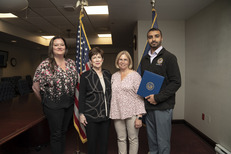
National Tele-Neurology program (NTNP), a 2022 VHA Shark Tank winning practice, was recently awarded the National HeRO Award for non-clinical teams by Under Secretary for Health, Dr. Shereef Elnahal. This award is the highest level of High Reliability Organization (HRO) recognition within VHA and is reserved to honor employees who advance VHA’s journey to High Reliability through the demonstration of VHA’s HRO Principles in Action.
NTNP serves Veterans residing in rural parts of the country or residing in areas underserved in neurological services, either through VA or non-VA community partners. There are 2.8 million rurally residing Veterans enrolled in VA care, with many of these areas having little to no neurology coverage and access to vital neurological care.
Through the program, Veterans have gained access to services like nurse-led headache education clinics, neuropsychology services and assessment, speech-language pathologists, and clinical pharmacy specialists.
One participant of the program stated “The NTNP VA neurologists have been a life changer for me!” While another reported “My provider was professional, thorough, and genuinely cared about me and listened to me. Great job!”
|
|
|


“This pilot will provide over 100 licenses to HTM technicians across VISN 1, expanding our focus on preventative maintenance of biomedical equipment and potentially delivering safer outcomes,” said Leandro DaSilva, NECIE's Director.
The new system has the potential to offer more timely documentation, increased work order reliability, reduced technician burnout, and overall better user satisfaction. It will also serve as an educational resource for new employees, supporting their training in hospital equipment.
|
|
|
|
|
|