|
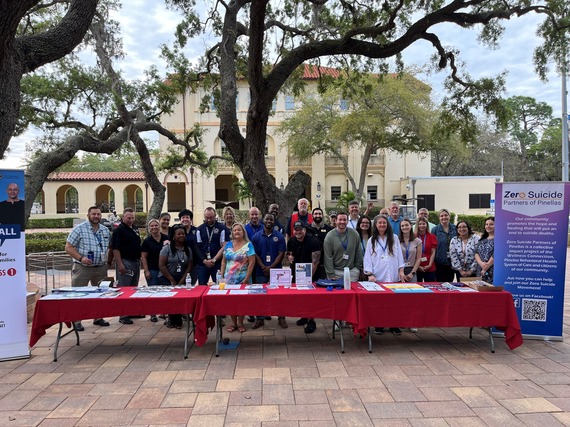
Veterans Socials are weekly, peer-led, community-based social events that aim to strengthen the bonds among Veterans. The goal is to lessen Veterans’ sense of isolation by facilitating social connections. As a VHA IE Entrepreneur in Residence, Dr. Jay Gorman, the Education Director of the VISN 1 Mental Illness Research, Education, and Clinical Center (MIRECC) at the VA Bedford Healthcare System, provides support and resources for those across the country looking to organize local Veteran Socials.
During his Fellowship with VHA IE, Dr. Gorman has relied on dedicated VA employees, community collaborators, and Veteran leaders to support Veterans Socials by fostering community among Veterans in Pinellas County, Florida. Dr. Gorman believes Veterans Socials are grounded in the idea that Veteran to Veteran connection is a powerful force that can help one another solve problems, learn about relevant resources and to enjoy support and connect to make communities more resilient. These Socials serve as more than just avenues for resource dissemination; they foster genuine connections and combat loneliness among Veterans. “We have data that suggests that 41% of Veterans that attend Veteran socials do not utilize VA services, but about 1 in 4 of those Veterans eventually become connected to VA,” says Dr. Gorman.
Trudy Beeler, who works with the Pinellas County Veteran Socials, shared touching anecdotes of Veterans forming “lasting friendships and finding a sense of belonging they thought they had lost since leaving the service.” Randy Lee, Bay Pines VA Peer Specialist, echoed this sentiment, underscoring how “these gatherings provide a lifeline for Veterans navigating post-military life.”
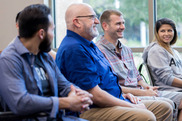
Ingrid Bethel-Constable, a Suicide Prevention Specialist at Bay Pines VA, says “It’s a breath of fresh air seeing my fellow Veterans being happy. They police each other. They feel it’s more welcoming because [a Veterans Social] doesn’t feel like a therapy session."
The organizers highlighted the organic growth of friendships, with Veterans also meeting outside of scheduled events for meals or activities, creating a supportive network that extends beyond Veteran Socials. Eric Gary, a Peer Specialist at Bay Pines VA, stressed the importance of community partnerships in reaching Veterans who might not have connected with VA resources otherwise, saying “We have several who do that. Some clique and hang out after and get dinner and plan activities independent of the VS. They’re making friends and introducing each other to each other’s hobbies. It’s all about connectivity."
|
The July edition of The Exchange was a discussion that brought together leading experts in diabetes care and management. The event highlighted the latest innovations and collaborative efforts to improve health outcomes for Veterans with diabetes.
Jamie Olsen, a Registered Dietitian Nutritionist and Certified Diabetes Care and Education Specialist, began the discussion with an overview of the Diabetes Self-Management Education and Support (DSMES) program. DSMES helps Veterans with diabetes manage their condition better, lowers A1Cs, reduces hypoglycemic events, and leads to fewer hospitalizations. There are currently 52 VA sites offering DSMES, with 31 sites slated to offer it in the future.
Dr. Jeffrey Robbins, Director of VHA’s National Podiatry Service, continued the conversation by explaining the evolution and impact of the Remote Temperature Monitoring of Diabetic Foot Ulcers There have been 27,000 patient outreaches, 7,747 information check-ins, 923 advisories, and 654 escalations since the project's inception. RTM of DFU has led to a 17% reduction in ulcers, 37% reduction in amputations, and $88 million reduction in admission costs. Dr. Robbins highlighted the significant outcomes achieved through this effort, noting that the program’s focus on early detection and treatment has led to a substantial decrease in amputation rates.
Dr. Nichol Salvo, Chief of Podiatry and Limb Preservation Program Director at the Atlanta VA Health Care System, shared insights into the High-Risk Eye and Limb Preservation Program (HELPP) she is developing as a 2024 Senior Innovation Fellow. This innovative program uses former military medics, known as Intermediate Care Technicians (ICTs), to deliver basic foot care to Veterans in rural areas under the telesupervision of podiatrists to address the critical need for accessible foot care and help prevent amputations. “HELPP allows Veterans to receive foot and eye care where they were not previously able to,” Dr. Salvo said. “HELPP is implemented in rural outpatient clinics underserved in podiatry.”
Amy Thompto, a Weight Management Program for Veterans (MOVE!) Coordinator, and Dr. Kendrick Murphy, a Clinical Pharmacist Practitioner, both out of Western North Carolina VA Health Care System, discussed their first-place winning 2024 Shark Tank project, Carbohydrate Reduction Empowering Wellness (CREW). Their program aims to improve metabolic health outcomes for Veterans with diabetes through carbohydrate reduction and lifestyle interventions. Thompto and Dr. Murphy shared the science behind CREW and its impressive outcomes, including an average weight loss of 5%, A1C reduction by 0.4%, and improvements in triglycerides and blood sugar among patients enrolled in CREW.
The panel discussion underscored the VA’s commitment to innovation and collaboration in diabetes care and management. By leveraging technology, patient-centered approaches, and interdisciplinary efforts, these experts are making significant strides in improving the health and well-being of Veterans with diabetes.
|