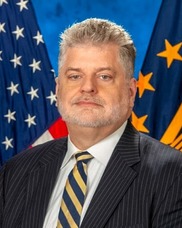
In a display of recognition for his dedicated service and unwavering commitment to Veterans and the Department of Veterans Affairs (VA), John Oswalt, Deputy Chief Information Officer (DCIO) for Freedom of Information Act (FOIA), Records Management and Assessment Compliance and VA Chief Privacy Officer (CPO), was recently recognized with the 2024 Patriot Award by the Department of Defense (DoD).
The DoD Patriot Award is a prestigious honor bestowed on federal employees who demonstrate outstanding support for members of the National Guard and Reserve forces. Recipients of this award are nominated by members of the National Guard or Reserve who were positively impacted by the support they received from the nominee while balancing their military duties with their civilian employment. This esteemed accolade is a testament to Mr. Oswalt's outstanding contributions, underscoring his profound impact on the lives of Veterans and his remarkable devotion to his duty and their honor.
The award presentation was held on Tuesday, March 12, 2024, in the presence of Office of Information and Technology (OIT) Executives and staff members. Mr. Dewaine Beard, OIT Principal Deputy Assistant Secretary, and Brigadier General (Retired) Larry Gillespie of the Department of Defense (DoD), presented the award to Mr. Oswalt and recognized the significance of his achievements.
Mr. Beard reflected on Mr. Oswalt’s contributions to the Veteran workforce and dedication to serving transitioning service members from active duty to their new role as U.S. civilians. Mr. Beard stated, “I am super proud of John and his commitment to that [Reservist] workforce and to the VA. Thank you so much John for everything you’ve done, and I just want his [Mr. Oswalt’s] story and the stories I’ve told to inspire you all to value that [Reservist] workforce.”
Mr. Gillespie shared words of praise from fellow service members who stated, “Mr. Oswalt consistently goes above and beyond what is required to support service members called to active duty.” Mr. Gillespie continued by adding “He [Mr. Oswalt] provides both the time and public support to ensure that the service member is able to focus on their mission and have confidence that their civilian position is ready and waiting upon their return”.
John Oswalt is a Senior Executive Service (SES) member within Compliance, Risk and Remediation (CRR), a service area within the Department of Veteran Affairs, OIT. In August 2022, Mr. Oswalt assumed the role of CPO and DCIO for the FOIA, Records Management and Assessment Compliance Division. As CPO, Mr. Oswalt administers VA’s Enterprise-wide Privacy Program on behalf of Mr. Kurt DelBene, Assistant Secretary for Information and Technology and Chief Information Officer (CIO) and VA’s Senior Agency Official for Privacy (SAOP). Additionally, as the DCIO, Mr. Oswalt directs VA Records, FOIA and Assessment Compliance activities concerned with the analysis, evaluation, and development of a robust gold standard VA FOIA Service, VA Enterprise Records Management Service, and a critical assessment compliance directorate.
|
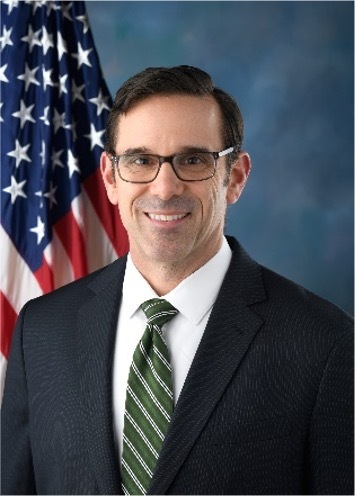
Effective March 10, Mr. Nicholas (Nick) Antonetti assumed the position of Director of the Data Breach Response Service (DBRS) filling the position left vacant by Mr. Ken Hartmann’s retirement.
With over 15 years of dedicated service within VA, and almost 25 years of Federal service, Mr. Antonetti is a trusted leader in privacy, security, and governmental affairs. Since 2015, Mr. Antonetti has been a member of the national Data Breach Response Service, as part of the team entrusted with providing expert analysis and incident response to breaches involving Personally Identifiable Information (PII) and Protected Health Information (PHI). Prior to joining the DBRS, Mr. Antonetti had a proven track record of leadership and strategic business acumen, having previously served in pivotal advisory and executive support positions within OIT. Mr. Antonetti’s commitment to excellence through common sense and mission accomplishment, coupled with his ability to navigate complex governmental landscapes, underscores his dedication to always safeguarding the interests of our nation's Veterans and upholding the highest standards of service and professionalism within OIT and VA.
Mr. Antonetti truly embraces the core mission of VA; from the military to continuing to serve at VA, he has always been ready and willing to answer the call. Before joining VA in 2008, Mr. Antonetti served honorably for 8 years in the United States Marine Corps. His service included combat operations in support of Operation Iraqi Freedom. Taking advantage of VA’s Post 9/11 GI Bill, Mr. Antonetti obtained his bachelor’s degree from West Virginia University.
 Privacy Officers collectively function as VA’s greatest mechanism for the protection of personally identifiable information held by VA. VA’s Privacy Training Program provides Privacy Officers and Stakeholders with knowledge and resources to protect PII. This training corner will provide resources and tools to assist Privacy Officers with protecting PII.
-
Roles and Responsibilities Document for Privacy Officers – The PO Roles and Responsibilities document consolidates Department of Veterans Affairs (VA) Privacy Officer duties from several VA Handbooks and Directives into a single, centralized source. The goal is to facilitate Privacy Officers’ access, understanding, and consistent implementation of their defined responsibilities.
-
OIG Video – Each year, the Office of the Inspector General (OIG) conducts its annual Federal Information Security Modernization Act (FISMA) and Federal Information System Control Audit Manual (FISCAM) audits to evaluate the performance of VA's security and privacy controls. In order to support Privacy Officers whose facilities are selected for an audit site visit, Privacy Service has developed a video series on the OIG audit process.
-
Part 1 - Audit Preparation can be found here
For questions or concerns regarding the VA Privacy Service’s Training Program, please contact Quinn Martin, Training Lead, at Quinn.Martin@va.gov.
|
VA Privacy Service will host a Lunch and Learn with Anthony J. Monaco, Senior Agent in Charge- Major Case Unit, of the Social Security Administration - Office of Inspector General and dive into Fraud Forecast 2024: Anticipating Trends and Securing Tomorrow. Mr. Monaco has an impressive background in scam prevention, with more than 30 years of experience, and will present on the up-and-coming trends seen in fraud that face government employees, citizens and our nations Veterans.
Wednesday, April 17, 2024
12:00 PM – 1:00 PM Eastern Time
Virtual Event via Microsoft Teams
Register Here
For questions, contact Privacy Service at vaprivacycommunications@va.gov
|
|
 |
Information Security and Privacy Awareness Week (ISPAW) is an outreach initiative co-hosted by the Office of Information Security (OIS) and VA Privacy Service (PS). ISPAW is designed to shine a spotlight on VA’s security and privacy efforts in safeguarding Veteran and employee information. ISPAW presents facts and tips to Veterans and VA employees to ensure the security of their data, both on-and-offline.
This year, ISPAW will be recognized May 6 through May 10. The theme of ISPAW is, "Be a Data Guardian: Save the Digital Universe, One Click At a Time." A call to action, encouraging you to continue to be a data defender, protecting the personally identifiable information (PII) of our nation’s esteemed Veterans. This annual event goes beyond mere acknowledgment, serving as a dynamic platform to impart essential facts and actionable tips to Veterans and VA employees. Unlock your secret power: Privacy Knowledge! Keep a look out for ISPAW materials coming soon.
In 2022, the Federal Trade Commission (FTC) received over 195,000 complaints from military consumers, with Veterans and military retirees accounting for over 150,000 of these reports. The military community reported monetary harm exceeding $414 million from fraud, reflecting an increase of more than 50% from the previous year.
The most common methods of tax identity theft are using stolen personal information to file false tax returns and engage in employment related fraud. Criminals may obtain Veterans personal information through various means, such as data breaches, phishing scams, or social engineering. Armed with Veterans sensitive information, perpetrators file fake tax returns to claim refunds and credits, often before Veterans even file their legitimate return. Criminals may also use a Veteran’s social security number to gain employment, leading to discrepancies in reported income on their tax return.
Here are some best practices that you can share with Veterans to protect themselves against tax identity theft:
- Secure their personal information by safeguarding their social security number, tax documents, and financial records in a secure and locked place.
- Be cautious about sharing personal information online and only provide it to trusted entities.
- Use strong and unique passwords that contain capital and lowercase letters, as well as symbols and numbers.
- Enable two-factor authentication whenever possible for an additional layer of security.
- Monitor their financial accounts closely by regularly reviewing their bank statements, credit reports, and other financial accounts for any suspicious activity.
- Report any unauthorized transactions or discrepancies immediately.
- Don’t get hooked by a phishing attempt. Stay vigilant against phishing emails claiming to be from tax agencies. The Internal Revenue Service (IRS) does not initiate contact through email.
- File as early as they can as a preventive strategy. They should submit their tax return as early as possible to reduce the window of opportunity for identity thieves to file a fraudulent return in their name.
If a Veteran believes they have been affected by tax identity theft, they can do the following:
- Contact the IRS immediately! If they suspect or confirm tax identity theft, contact the IRS Identity Protection Specialized Unit at 1-800-908-4490.
-
File an identity theft report with the FTC through the Identity Theft website or by calling 1-877-IDTHEFT.
|

Authored by the United States Postal Inspection Service (USPIS)
Many Veterans have heard the adage, “If it sounds too good to be true, it probably is!” In an ever-changing financial environment, this still rings true today.
In a landscape where you can be contacted in multiple ways, including telephone, email, text messages, and the U.S. Mail, fraudsters are always looking for an opportunity to get a piece of your financial “pie.” Investment scams are an example of this.
Fraudsters send enticing and official-looking mailings urging consumers to call. They also use emails and text messages, making it easy for them to reach millions of potential victims.
If you receive a pitch by phone, mail, or computer that promises you’ll get rich quick, receive high returns with a low risk, or that urges you to invest now — be careful. Even the most experienced investors can fall for an investment scam. Whether they sell bogus securities or commodities, oil wells or gold coins, these fraudsters will try to get you to invest your money — and lots of it.
While older Americans are primarily targeted because they possess most of the nation’s individual wealth, all consumers are targets for these scams, including Veterans. Every year, thousands lose between a few dollars up to their entire life savings to these fraudsters.
U.S. Postal Inspectors warn Veterans, “Don’t take the bait — these ‘offers’ could cost you plenty.” Postal Inspectors urge you to protect yourself:
- Take your time before deciding to invest — don’t rush into accepting a “high-return, low-risk” offer.
- Get all information in writing before you consider investing.
- Check out the firm by calling the Better Business Bureau, state attorney general or consumer protection agency.
- Put your phone number on the National Do Not Call Registry at 1-888-382-1222 or at donotcall.gov.
- Visit Additional Resources – United States Postal Inspection Service (uspis.gov) for fraud resources available online and to print.
For more information on fraud, visit www.uspis.gov. Remember – “If it sounds too good to be true, it probably is!”
|
|