|
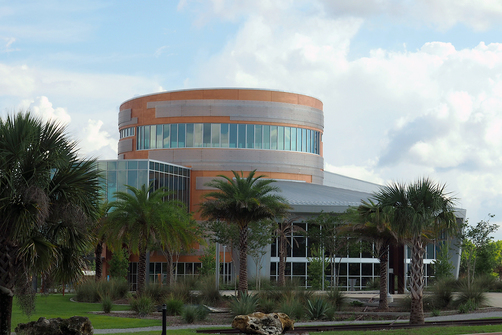
The Cade Museum
“The Cade Museum for Creativity & Invention will have a high impact on education, reaching thousands of students every year through the new facility. The partnership with Gainesville’s education community that will impact 11,000 students from low-income families – through interactive on-site activities, year-round academic mentoring, technology and engineering jobs training – was an important factor in our decision to fund this worthy project.”
Nelson Black
Chief Lending Officer
Florida Community Loan Fund
This story was originally published on the CDFI Fund's Impact Blog. Interested in seeing more? Sign up to receive CDFI Fund Impact Stories as we release them.
With help from the Florida Community Loan Fund, the redevelopment of downtown Gainesville, Florida now includes an anchor institution that will provide an important link between low-income communities and Gainesville’s Innovation District: the Cade Museum for Creativity and Invention.
With a mission to inspire creative thinking, invention, and entrepreneurship, the Cade Museum for Creativity and Invention
provides STEAM (science, technology, engineering, arts, and mathematics) education and experiences to low-income residents throughout the greater Gainesville area. The museum, named after Dr. J. Robert Cade, the lead inventor of Gatorade, was originally located in a small concrete building, but quickly outgrew its space and required extensive renovations.
The construction cost for the renovation of the museum was $11.7 million. While the Cade Museum was able to raise $7.4 million through loans, a capital campaign, and grant funding, it was unable to raise all of the funding necessary to complete construction. The Florida Community Loan Fund provided an allocation of $4.3 million in New Market Tax Credits (NMTCs) to fill the gap. The renovated museum was completed in 2018.
The new 21,000 square-foot facility houses an interactive classroom and lab space. It engages with university professors, undergraduate college volunteers, graduate researchers, entrepreneurs, and scientists to provide an array of educational and professional opportunities for the city’s disadvantaged youth. These programs include an Early Entrepreneur and Living Inventor series, where 100 percent of the students are low-income and work with STEAM professionals and mentors on a curriculum of educational programming.
Ultimately, the museum will develop a pipeline of highly-prepared
low-income students to go into college or career opportunities in light manufacturing. The museum also aims to play a role in the effort to attract high-tech businesses and light manufacturing to the city center.
CDFI Fund New Markets Tax Credit Program Allocatee:
- Florida Community Loan Fund (FCLF)
Community Profile: Gainesville, Florida
- 34.8% Poverty Rate
- 3.6% Unemployment Rate
- Population: 132,249
- Household Median Income: $32,716
Financing Overview
- $4.3 million from NMTC Investment
- $7.4 million provided by loans, capital campaign, and grant funding
- Total Project Cost: $11.7 million
Project Highlights
- Creation of neighborhood-based educational after-school programs, camps and mentoring
- Nearly 20,000 students served annually-over 11,000 are low-income
- 150 learning disabled students served annually
- 19 permanent jobs created and 209 construction jobs
- Estimated 20 additional jobs to be created over the next 5 years
Florida Community Loan Fund, Inc. (FCLF) is a nonprofit, multifaceted financing entity with a 20+ year history of providing flexible capital and expertise across Florida to maximize opportunities for people and places outside the economic mainstream. FCLF indicates it has financed $323 million through 300 loans in Florida, making possible over $940 million in new investments in low-income communities. The organization also indicates that their financing to nonprofits and mission-focused for-profits has resulted in 4,600 housing units, 129 community facilities (2 million square feet), 11,000 jobs created or retained, and 325,000 Floridians reached annually with essential social services. For more information go to the FCLF website at www.fclf.org.

|