|
|
A Message from CISE Leadership
Dear CISE community.
Last month I traveled to India to meet with Indian government officials and industrial leaders to discuss ways that US-India research collaborations can help CISE-funded researchers advance in their work. We discussed a range of prospective areas of collaboration including artificial intelligence, data science, cybersecurity, climate and sustainability, and many other topics, as well as the development of a mechanism for networking among research institutions from both sides, and exchange of research personnel. During this trip, I also had the pleasure to meet with Dr. Preeti Banzal, Scientific Advisor for the Indian government. A video discussion on how we can support women in pursuing careers in STEM can be found at the following link: https://www.youtube.com/watch?v=sDUmqUj7XCU.
The discussions from my trip fed into a subsequent US-India dialog held in Washington, D.C., that included the January 31 signing of an implementation arrangement between NSF and India's Department of Science and Technology (DST). We are excited about the future of US-India partnerships that advance innovation in benefit of both nations and beyond.
On a different topic: Do you have the research infrastructure you need? Would you like more/better/different infrastructure supporting your work? CISE research needs compute, data, and software infrastructure, and I want to encourage you all to consider writing proposals to NSF infrastructure programs. In particular, starting February 28, 2023, NSF is offering three webinar series. These webinars will help you compete more effectively for NSF research infrastructure awards by developing basic knowledge and skills on project management, methods applied to planning, and performance management. The webinars' content are especially valuable for anyone who is submitting proposals to NSF’s Mid-scale RI-1 and RI-2 programs, current Mid-Scale RI awardees, and other researchers wishing to add to their project management knowledge. (Recall that Mid-Scale RI-1 funds infrastructure awards from $4-20 million, and Mid-Scale RI-2 funds infrastructure awards from $20-$100 million).
Scroll down to the "Events" section of this newsletter for more information about webinar registration and please share this information with your colleagues and networks that might benefit from this event.
Our February newsletter covers various funding opportunities and news from across our communities. If you have exciting news that you would like us to include, please reach out to our program officers so we can highlight your work.
Respectfully,

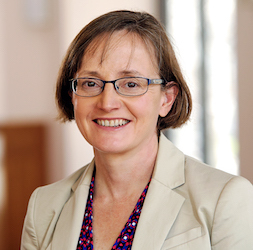
Margaret Martonosi
NSF Assistant Director for CISE
|
|
Funding Opportunities and Deadlines |
|
 Future of Semiconductors (FuSe). Supports codesign of computing, engineering, and materials systems, as well as workforce development to advance semiconductor design and manufacturing.
Full proposal deadline: April 24, 2023.
|
 Accelerating Research Translation (ART). Supports institutions of higher education that seek to build capacity and infrastructure for translation of fundamental academic research into tangible solutions.
Full proposal deadline: May 9, 2023.
|
|
News & Announcements

NSF, in partnership with Australia’s national science agency, CSIRO, announced grants to accelerate groundbreaking research in responsible and ethical artificial intelligence solutions to societal challenges, including pandemic preparedness, drought resilience and harmful environmental emissions.
|

In this article, CISE staff present some of the efforts that have supported Broadening Participation in Computing throughout the years and call upon the entire computing community to take on the important goal of addressing underrepresentation in computing disciplines.
|

Nominate a peer or colleague deserving of special recognition by reason of their outstanding cumulative contributions to knowledge in the physical, biological, mathematical, engineering, or behavioral or social sciences, in service to the Nation. Nominations are open February 6 to March 26, 2023.
|

Applications are now open for the 2023 Departmental Broadening Participation in Computing Plan Workshop. Departments will have the opportunity to learn more about BPC efforts from NSF, how to create a Departmental BPC Plan, and how to best support faculty PIs submitting NSF proposals that require a BPC Plan.
|

The U.S. National Science Foundation announced a cross-sector partnership with Ericsson, IBM, Intel, and Samsung to support the design of the next generation of semiconductors as part of its Future of Semiconductors (FuSe) initiative.
|

The National Artificial Intelligence Research Resource (NAIRR) Task Force released its final report, a roadmap for standing up a national research infrastructure that would democratize access to the resources essential to artificial intelligence (AI) research and development.
|
Get more NSF News
|
|

Fatemeh Afghah, Ph.D., is a tenured associate professor in the Department of Electrical and Computer Engineering and a Faculty Scholar in the School of Health Research at Clemson University, where she is also the director of the Intelligent Systems and Wireless Networking Laboratory. Prior to joining Clemson University, she was an associate professor in the School of Informatics, Computing and Cyber Systems at Northern Arizona University.
Afghah is a recipient of a 2019 Airforce Office of Scientific Research Young Investigator Award, Northern Arizona University’s Most Promising New Scholar Award in 2020, and has been a visiting faculty at Air Force Research Laboratory in 2016 and 2017. Her research projects focus on wireless communication networks, decision-making in multi-agent systems, unmanned aerial vehicles networks, security, and artificial intelligence in healthcare.
In addition, she has been the lead principal investigator on multiple NSF awards, including a CISE Research Initiative Initiation award and an NSF CAREER Award that supports a project developing algorithms that will enable a fleet of smart and autonomous drones to operate in unknown environment, assess situations, change course, stand up against environmental factors like wind, communicate with other drones and coordinate a strategy together, all with limited support from humans.
“The support from NSF enabled me to establish a multi-institution partnership on utilizing autonomous and semi-autonomous drones for wildfire management. Drones can reach to remote and hard-to-reach areas much faster than fire trucks, provide an assessment of impacted areas and help the first responders to optimize the fire management strategies to reduce the damages caused by wildfires.”
Fatemeh is a Senior Member of the Institute of Electrical and Electronics Engineering, and serves as associate editor for Elsevier Computer Networks, Elsevier Journal of Network and Computer Applications, Elsevier Ad Hoc Journal, and ACM Transactions on Computing for Healthcare. She is an inventor/co-inventor of 6 US patents.
|
|
|
Division of Information and Intelligent Systems (IIS)
Supports research and education on the interrelated roles of people, computers, and information to advance knowledge of artificial intelligence, data management, assistive technologies, and human-centered computing.
Office of Advanced Cyberinfrastructure (OAC)
Supports the conceptualization, design, implementation, and operation of research cyberinfrastructure to advance and transform research and education in science and engineering.
|
|
|
|
|