|
Fast Links and Funding Opportunities
Research Experiences for Teachers in Engineering and Computer Science
Cyberinfrastructure for Sustained Scientific Innovation (CSSI)
Computer and Information Science and Engineering: Core Programs
Small Projects: Proposals Accepted Anytime.
Medium Projects and OAC Core Projects: December 22, 2022.
A Message from CISE Leadership
This month, I would like to focus my letter on the CHIPS and Science Act of 2022. As you may know, last month, President Biden signed this legislation to fund domestic semiconductor manufacturing, and boost federal scientific research and development. On the “CHIPS” side, the Act appropriates $200 million for NSF over five years to advance on semiconductor workforce. Also related to these efforts is the newly released Request for Information (RFI) regarding the draft National Strategy on Microelectronics Research. Please read and respond with your input!
On the “Science” side of the legislation, NSF is also a significant focus. The legislation has $81 billion over the next five years in authorizing language that touches on many aspects of NSF including the new Technology, Innovation and Partnership (TIP) Directorate, STEM Education, expanding the geography of innovation, and bolstering NSF’s core research funding. The Act has the potential for tremendous impact on America’s STEM research and researchers, technology innovation, and cutting-edge industries like semiconductor research and manufacturing. Noting the distinction between authorization language and appropriations language, we are hopeful to see the CHIPS and Science Act reach its full potential, and we look forward to it being able to expand discovery through innovation anywhere, and opportunities everywhere.
I hope you enjoy our September newsletter, and I encourage you to share it with your colleagues and networks.
Best,
 Margaret Martonosi
NSF Assistant Director for CISE

|
|
News & Announcements

Image Credit: iStock.com/peterschreiber.media, monsitj, smartboy10
Nearly $26 million in new awards from the U.S. National Science Foundation (NSF) will support interdisciplinary investigations and collaborations that aim to predict and prevent the next infectious disease outbreak, significantly contributing to national security, public health and economic stability.
|

Image Credit: Shuttershock
NSF announces a new Center of Excellence, SGX3, that enhances the creation, use, and ongoing sustainability of science gateways—a web-based platform that allows large audiences of researchers, educators, students, and the public to access complex, expensive resources such as supercomputers, scientific instruments, and large data sets.
|
Get more NSF News
|
|
Program Spotlight

The Predictive Intelligence for Pandemic Prevention initiative is an NSF-funded program that aims to prevent pandemics that have not yet happened. The multi-directorate initiative calls for researchers from a broad range of scientific disciplines—computing and information science, biology, engineering, and social, behavioral and economic sciences—to work together to address the complex challenges involved in forecasting and avoiding future pandemic-scale outbreaks.
Specifically, PIPP seeks to foster fundamental research in the multidisciplinary areas related to the dynamic nature of pathogen and disease emergence; thus, significantly contributing to national security, health and economic stability, by creating new knowledge and employing novel paradigms in computing, including machine learning algorithms, smart sensor networks, cutting-edge modeling systems to forecast critical data, to name a few.
The first phase of the initiative provides support for projects that identify major challenges involved in predicting and preventing pandemics, and how those challenges could be overcome through the creation of multidisciplinary research teams and activities.
A solicitation for phase two is expected to be released in 2023.
In the next section, we highlight three PIPP-funded programs that showcase examples of the PIPP’s multi-disciplinary approach to pandemic research and prevention.
|
|
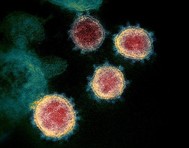
Image Credit: NIAID
Led by Lehigh University, this research aims to contribute to global pandemic prediction and prevention by advancing knowledge about pandemic dynamics within isolated and underserved populations. Specifically, the investigators will examine how pandemics of infectious disease affect and are affected by their spread in Indigenous communities. The focus will be on how specific features of these communities influence various aspects of epidemics, such as the initial spillover to humans, the human-to-human spread of the pathogen, the biological behavior of the pathogen, and countermeasures that can mitigate the impact of the disease. The project will innovate collaboratively in the fields of engineering, biology, data science, and cognitive psychology along four interlinked thrusts:
-
community understanding of cause and prevention;
-
predicting virus spillover and spread;
-
engineering devices for point-of-care sensing; and
-
biological differentiators: predicting infection, which will investigate virus-host cell interactions, and phenotypic and genotypic differentiators.
|

Image Credit: Patrick E. McGuire, University of California, Davis
This research led by North Carolina State University focuses on plant disease outbreaks, which are increasing and threatening food security for vulnerable populations in the US and around the world. This research will characterize how human attitudes and social behavior of stakeholders impact plant disease transmission and adoption of sensor, surveillance and disease prediction technologies. The team will engage a diverse group of postdoctoral associates, graduate students and research staff through research and workshop participation and foster partnerships for a future Plant Disease Pandemic Preparedness Center.
In addition, the research team plans to work collaboratively with a broad group of stakeholders including scientists; growers; extension specialists; personnel at the US Department of Agriculture Animal and Plant Health Inspection Service, Plant Protection and Quarantine; Department of Homeland Security inspectors; and diagnosticians in the National Plant Diagnostic Network.
|

Image Credit: Alissa Eckert, MS; Dan Higgins, MAM
Led by University of Kentucky, the overarching goal of this project is to address the challenges associated with the development and deployment of “universal” environmental surveillance strategies for pathogens of pandemic potential. To advance this goal, the project team will leverage the PIPP funding to lay the foundation for the establishment of the Center for the Discovery of Emerging Environmental Pathogens (C-DEEP) — a Center with globally linked network of environmental surveillance tools that would be deployed in emerging infectious disease hot spots.
The mission of the C-DEEP will be to advance the science of environmental surveillance and metagenomics, especially in low-resources or remote settings where pandemics are likely to emerge and where current disease surveillance processes are inadequate. In collaboration with partners in Sub-Saharan Africa and Southeast Asia, the project team plans to extend existing expertise in environmental surveillance of emerging pathogens by building transdisciplinary collaborations, critically defining knowledge and technology gaps, and conducting preliminary research designed to enrich the capabilities of the C-DEEP.
|

Nina H. Fefferman, Ph.D., and her dog companion, Baldur
Professor of Ecology and Evolutionary Biology & Mathematics
University of Tennessee, Knoxville
Image Credit: Homayoun Saleh
Nina H. Fefferman, Ph.D., is a professor of ecology and evolutionary biology, and of mathematics at University of Tennessee at Knoxville. Her work focuses on mathematical and computational models of biological systems, and generally falls into one or all the following categories: epidemiology; evolutionary and behavioral ecology; conservation biology; and bioinspired algorithms. As one aspect of her work, Fefferman leads a team of researchers now funded by the NSF PIPP program.
"I am interested in the effects of animal behavior, ecology, and infectious disease epidemiology on one another. I model disease in both human and animal populations and am interested in how disease and disease-related behavioral systems can affect the short-term survival and long-term success of a population,” Fefferman said.
Some of her current projects focus on the modeling of social insect populations and their susceptibility to pathogens based on their behavior and nesting ecology, the effects of stress and resource limitations on populations in fluctuating environments, and how best to maintain human societal infrastructure in the face of pandemic disease.
“Mathematically, I am interested in Complex Systems: the mathematics of studying the conclusions or outputs of systems where each component is relatively simple (governed by a small set of logical rules), but when you put a lot of them together, they react to each other and create highly organized systems and incredibly complex behaviors. Not only are these systems fascinating and beautiful by themselves, but they have direct applications to the types of biological problems mentioned above.”
Fefferman has published numerous scholarly works, and in addition, Fefferman has received many accolades and awards. These include the 2021 University of Tennessee Chancellor’s award for Success in Multidisciplinary Research and the 2011 Virginia Governor’s Technology Award for Cross-Boundary Collaboration.
|
|
|
Office of Advanced Cyberinfrastructure (OAC)
OAC supports and coordinates the development, acquisition and provision of state-of-the-art cyberinfrastructure resources, tools and services essential to the advancement and transformation of Science and engineering.
|
|
|
|
|