| |
Fast Links and Funding Opportunities
CISE Research Initiation Initiative (CRII)
Full Proposal Deadline: September 19, 2022.
Graduate Research Fellowship Program (GRFP)
Full Proposal Deadline for Computer and Information Science and Engineering and Other Areas of Research: October 18, 2022.
Multiple Deadlines for Other Areas of Research
Full Proposal Deadline: October 25, 2022.
Dear Colleague Letter: Supplements for Access to Semiconductor Fabrication (ASF)
A Message from CISE Leadership
Last month the NSF launched the Science Happens Here campaign to invite our communities to participate in showcasing the amazing work that is powered by NSF. Many of you have seen me use examples of your work and its impact in talks I give. With this campaign, NSF’s goal is to ensure we get even more such stories, so we can highlight them through many of our communication platforms. For more information on how to share your stories, please click on the following link: https://beta.nsf.gov/science-matters/science-happens-here-share-your-nsf-powered-stories. We know you’re doing great work, so please tell us about it either via the social media approaches at the link, or via emails to me or your NSF program officers.
Another way you can contribute to the NSF mission is by joining us here to work! At the leadership level, we are currently searching for the next Director of our Office of Advanced Cyberinfrastructure (OAC) and for the Division Director for our CISE Division of Computer and Network Systems (CNS). These are unique opportunities to truly change the world of computing by planning and executing on the future investments that will make it happen. For more information on these positions, please refer to the Career Opportunities section of this newsletter and also feel free to reach out to me or other NSFers.
In addition, I want remind you that the Alan T. Waterman Award call for nominations are open and will run through September 16, 2022. This award is one of the Nation’s highest honors for early-career science and engineering achievements. Please work to nominate your research colleagues in any field of science or engineering supported by the NSF.
And, speaking of early-career awards, this newsletter begins a sequence of highlights we will offer on recent CISE-funded recipients of the Presidential Early-Career Award for Science and Engineering (PECASE). We will continue to highlight our PECASE awardees, clustered by topic areas, in future iterations of our newsletter. Please stay tuned!
I hope you find our newsletter information and please continue to share it with your colleagues and networks.
Best,
Margaret Martonosi
NSF Assistant Director for CISE
|
|
News & Announcements

NSF, in collaboration with Amazon, announced the 2022 recipients of the Program on Fairness in Artificial Intelligence in Collaboration with Amazon awards. The 2022 awardees will receive up to $9.5 million in financial support for research that involve rooting out unfairness and bias in artificial intelligence and machine learning technologies.
|
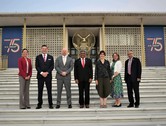
In collaboration with six Technology Innovation Hubs supported by the Indian Department of Science and Technology, NSF announced the selection of U.S. supplemental funding awards totaling $2.8 million to support the U.S. side of research projects that will focus on areas like artificial intelligence, data science and edge computing.
|
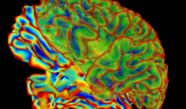
U.S. National Science Foundation-supported researchers at Boston University have developed a new tool that could automate the process of neuropsychological exams and eventually allow it to move online. Their machine learning-powered computational model can detect cognitive impairment from audio recordings of neuropsychological tests — no in-person appointment needed.
|
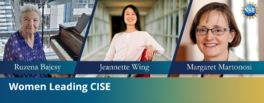
A U.S. National Science Foundation Distinguished Lecture, “Reflections and Visions,” brought together three distinguished scientists, academics and thought leaders: Ruzena Bajcsy, Jeannette Wing and Margaret Martonosi, who shared their personal, academic and professional journeys, as well as their thoughts on the future of women and girls in STEM.
|

The U.S. National Science Foundation announced an investment of $25.4 million to advance ambitious research and center-scale projects in cybersecurity and privacy. The NSF grantees will work to strengthen open-source supply chain security, increase computing privacy for marginalized populations, and ensure trustworthy cloud computing.
|
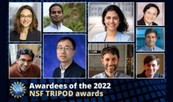
The U.S. National Science Foundation announced two new Transdisciplinary Research in Principles of Data Science, or TRIPODS, Phase II awards totaling $20 million that bring together scientists and engineers from different research communities to further the theoretical foundations of data science through integrated research and training activities.
|
Get more NSF News
|
|
Program Spotlight
The Faculty Early Career Development (CAREER) program is a Foundation-wide activity that offers the U.S. National Science Foundation's most prestigious awards in support of early-career faculty who have the potential to serve as academic role models in research and education, and to lead advances in the mission of their department or organization. Activities pursued by early-career faculty build a firm foundation for a lifetime of leadership in integrating education and research. NSF encourages submission of CAREER proposals from early-career faculty at all CAREER-eligible organizations, and especially encourages women, members of underrepresented minority groups, and persons with disabilities to apply.
NSF also participates in an all-of-government selection process for the Presidential Early Career Awards for Scientists and Engineers (PECASE). In NSF’s case, these are selected from among the most meritorious recent CAREER awardees. These awards foster innovative developments in science and technology, increase awareness of careers in science and engineering, give recognition to the scientific missions of the participating agencies, enhance connections between fundamental research and national goals, and highlight the importance of science and technology for the Nation’s future. Individuals cannot apply for PECASE. These awards are initiated by the participating federal agencies. At NSF, up to 26 nominees for this award are selected each year from among the PECASE-eligible CAREER awardees most likely to become the leaders of academic research and education in the twenty-first century. The White House Office of Science and Technology Policy makes the final selection and announcement of the awardees.
The most recent set of PECASE awardees were announced in 2019. Here we highlight four of the CISE-funded PECASE recipients from the 2019 class. We will sequence through these highlights in coming newsletters, this time focusing on those in topic areas related to robust intelligence.
|
|
CISE PECASE Awardees Deep Dive
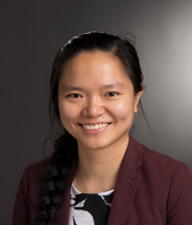
Linwei Wang, Ph.D.
Rochester Institute of Technology
Image Credit: Rochester Institute of Technology
Linwei Wang, Ph.D., received an NSF CAREER award in 2014 to support the development of computational foundation for integrating physics-based models into data-driven inference, which later found application in a computational system for non-invasive imaging of patient-specific cardiac rhythm disorders.
The NSF CAREER award resulted in a PECASE award for pioneering three-dimensional imaging of the heart through innovations in modeling large, complex systems in order to improve patient care, and for her outstanding record of leading collaborative progress in the scientific community and commitment to education.
|

Mark Davenport, Ph.D.
Georgia Institute of Technology
Image Credit: Georgia Institute of Technology
Mark Davenport, Ph.D., received an NSF CAREER award in 2014 for his work on the fundamental role that low-dimensional models and optimization play in machine learning, signal processing, and statistical inference.
The NSF CAREER award resulted in a PECASE award for his seminal research revolutionizing learning algorithms, which draw meaningful information from nonmetric data and have transformative potential in personalized learning and online education, building upon his record of teaching excellence.
|
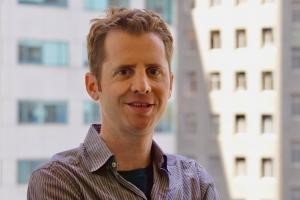
Jeff Clune, Ph.D.
University of British Columbia
Image Credit: University of British Columbia
Jeff Clune, Ph.D., received an NSF CAREER award in 2015 when he was an assistant professor at the University of Wyoming for his work on harnessing the power of evolution to make artificially intelligent robots.
The NSF CAREER award resulted in a PECASE award for pioneering advances in understanding and developing resilience and adaptability in neural network architectures leading to robotic systems that recover from unforeseen circumstances, and for his unparalleled dedication to engaging students and the public in robotics through online videos and robotics clubs.
|
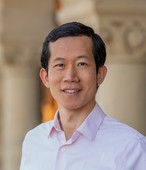
Percy Liang, Ph.D.
Stanford University
Image Credit: Stanford University
Percy Liang, Ph.D, received an NSF CAREER award in 2016 to develop a new interactive framework for building a semantic parser, where the system, acting like a foreign speaker of English, asks users to paraphrase words that the computer already understands into ones that the computer doesn't.
The NSF CAREER award resulted in a PECASE award for his groundbreaking innovations in machine learning and semantic parsing for natural language processing, which together are transforming how computers understand spoken language, and for his commitment to efficient and reproducible research, and innovative and engaging artificial intelligence education.
|
Faces of CISE: Carla Gomes, Ph.D.

Carla Gomes, Ph.D.
Ronald C. and Antonia V. Nielsen Professor of Computer Science
Director of the Institute for Computational Sustainability
Cornell University
Carla Gomes is the Ronald C. and Antonia V. Nielsen Professor of Computing and Information Science and the director of the Institute for Computational Sustainability at Cornell University.
Gomes received a Ph.D. in computer science in artificial intelligence from the University of Edinburgh. Her research area is artificial intelligence, focusing on large-scale constraint reasoning, optimization, and machine learning.
Recently, Gomes has become deeply immersed in research on scientific discovery for a sustainable future and, more generally, in research in the new field of computational sustainability, which aims to develop computational methods to help solve some of the critical environmental, economic, and societal challenges to help put us on a path toward a sustainable future.
Gomes has been the lead principal investigator of two NSF Expeditions in Computing awards. She has co-authored over 200 publications, which have appeared in venues spanning Nature, Science, and a variety of conferences and journals in artificial intelligence and computer science, including five best paper awards.
Gomes was named the “most influential Cornell professor” by the Merrill Presidential Scholars (2020). Gomes is the recipient of the Association for the Advancement of Artificial Intelligence (AAAI) Feigenbaum Prize (2021) for “high-impact contributions to the field of artificial intelligence, through innovations in constraint reasoning, optimization, the integration of reasoning and learning, and through founding the field of Computational Sustainability, with impactful applications in ecology, species conservation, environmental sustainability, and materials discovery for energy.”
Gomes is also the recipient of the 2022 ACM/AAAI Allen Newell Award for foundational contributions to artificial intelligence and contributions bridging computer science and other disciplines. Gomes is a Fellow of the Association for the Advancement of Artificial Intelligence (AAAI), Association for Computing Machinery (ACM), and American Association for the Advancement of Science (AAAS).
|
|
|
Office of Advanced Cyberinfrastructure (OAC)
OAC supports and coordinates the development, acquisition and provision of state-of-the-art cyberinfrastructure resources, tools and services essential to the advancement and transformation of Science and engineering.
|
|
|
|
|