| |
Fast Links and Funding Opportunities
Resilient & Intelligent NextG Systems - Virtual Organization (RINGS-VO)
Full Proposal Deadline: August 1, 2022.
Improving Undergraduate STEM Education: Computing in Undergraduate Education (IUSE: CUE)
Full Proposal Deadline: September 19, 2022.
Computer and Information Science and Engineering (CISE) Research Initiation Initiative (CRII)
Full Proposal Deadline: September 19, 2022.
Privacy-Enhancing Technologies Prize Challenge
Concept Paper Deadline: September 19, 2022.
A Message from CISE Leadership
As 2022 progresses, I know that many of us are using the summer months to catch up on long-term projects and to plan out future ones. Below are a few items I particularly want to highlight for you:
CloudBank Opportunities. Last May we issued a Dear Colleague Letter (DCL) for CloudBank that aims to provide commercial cloud computing resources to NSF-funded projects just-in-time as opposed to requiring PIs to budget for resources at the time of proposal submission. The DCL hopes to make the best use of the elasticity of cloud resources and provide users with computing cycles when they need them. Please take a moment to read the DCL and use the following link to submit your cloud computing request: www.cloudbank.org.
Broadening Participation in Computing (BPC) Plans. Also, I want to remind you that applications are now open for the upcoming Broadening Participation in Computing (BPC) Plan Workshop hosted by BPCnet.org, which will be held from August 3 to August 5, 2022, in person in Denver, Colorado. In this workshop, departments will have the opportunity to learn more from NSF and other colleagues about NSF BPC efforts, how to create a Departmental BPC Plan, and how to best support faculty PIs submitting NSF proposals that require a BPC Plan. Consultants from BPCnet.org, that is, your research colleagues and peers from around the country, will be available to answer questions and provide real-time feedback about the departments’ BPC Plans. The early application deadline was June 26, but applications are being accepted on a rolling basis until workshop capacity limit is reached. All computing departments, regardless of the status of their BPC Plans, are invited to apply.
I hope you find our newsletter informative and please continue to share it with your colleagues and networks.
Best,

Margaret Martonosi
NSF Assistant Director for CISE
|
|
News & Announcements

Image Credit : Larry Lamsa/Wikimedia Commons
To support the analysis and integration of data and advance the use of data-intensive approaches and training in environmental science, the U.S. National Science Foundation has announced the creation of the Environmental Data Science Innovation and Inclusion Lab, or ESIIL, through a $20 million, five-year award to the University of Colorado Boulder.
|

Image Credit : Binghamton University
NSF-funded researchers will address vulnerabilities that could affect the availability, reliability and resiliency of wireless edge networks, which make response times faster by putting computation and data-storage capabilities as close as possible to the source of a request instead of a larger data center further away.
|

Image Credit: ©Blue River Technology
NSF-funded PAWR—short for Platforms for Advanced Wireless Research—program in collaboration with Ericsson have struck an agreement under which the vendor will provide its radio access network and related equipment and services to the Agriculture and Rural Communities testbed at Iowa State University.
|

Image Credit : NOAA
NSF-funded Frontera supercomputer is enabling scientists to devise new and novel simulation methods for enabling our deeper understanding of climate change.
|

Image Credit : Alessandro Zangrilli/Wikimedia Commons
NSF-supported researchers, Maxim Bazhenov and Timothy Tadros of the University of California San Diego School of Medicine developed a modeling approach that may explain the underlying mechanisms that strengthen or create new relational memories during sleep.
|
Get more NSF News
|
|
Career Opportunities
Division Director, Division of Computer and Network Systems
Opening and Closing Dates: July 11, 2022 to October 11, 2022.
Office Director, Office of Advanced Cyberinfrastructure
Opening and Closing Dates: July 11, 2022 to October 11, 2022.
Events
July 27-28, 2022
NSF Convergence Accelerator Expo 2022
August 1, 2022
AccelNet Webinar
August 3-5, 2022
Broadening Participation in Computing Workshop
Applications for this workshop are being accepted on a rolling basis until workshop capacity is reached.
August 11, 2022
Chat Live with Scientists in Antarctica
|
|
Program Spotlight
The CRII program seeks to provide essential resources to enable early-career principal investigators launch their research careers. CRII is intended to provide start-up support for early-career faculty without access to the necessary resources, in particular faculty at institutions of higher education not currently classified as a Doctoral University with “Very High Research Activity” (R1 institutions) according to the Carnegie Classification.
CRII encourages potentially transformational proposals to help increase its investments in the development and growth of the research capabilities of future generations of computer and information scientists and engineers, including computational and data scientists and engineers.
|
|
SciComm Corner: How CISE is Impacting Your Community

Image Credit: Shutterstock/everything possible
The National AI Institute, named Athena, seeks to kindle, and fuel a transformation in modern edge computing by leveraging next generation networks. Led by Duke University, Athena taps the ongoing revolution in Artificial Intelligence (AI) and brings together a multidisciplinary team from seven universities: Duke University, Massachusetts Institute of Technology, North Carolina Agricultural and Technical State University, Princeton University, University of Michigan-Ann Arbor, University of Wisconsin-Madison, and Yale University.
Researchers of this Institute are investigating the possibility and feasibility of architecting an energy efficient and compact hardware accelerator for real-time triage prediction using Transformer-based models in a federated learning scenario. Transformer-based models produce accurate classification and top-K results but consume a large memory footprint for the model itself and for training and inference, making this an important to work on.
|
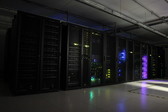
Image Credit: Hyacinthe C./Flickr
Most computing is done in centralized hubs called datacenters, which are estimated to consume about 1 to 2 percent of worldwide electricity production. Datacenter computing and its energy use are projected to continue to grow rapidly, possibly doubling every few years. The Treehouse project aims to improve the energy efficiency of datacenter computing by making users accountable and reducing unnecessary waste.
Led by Columbia University, Treehouse provides end users the tools to understand and reduce their individual carbon use from cloud services. For example, the team is building a system that can trace the energy consumption and carbon emissions of an application. This can fundamentally change the way the cloud computing industry thinks about datacenter energy use. Datacenter operators can provide new energy efficient computing models at lower cost. Through outreach and new educational materials, Treehouse will pioneer the training of a new type of energy-aware engineer to meet societal needs for an energy-efficient computing infrastructure.
|

Image Credit: U.S. National Science Foundation
Tiny energy harvesting computers tap into the sun, radio waves, vibration, and other sources to power all their sensing, computing, and communication tasks. By leaving batteries behind, these devices can function maintenance-free, potentially for decades, enabling numerous applications in the Internet-of-Things. These battery-free devices can lose power at any point because of fluctuations in energy availability, which makes programming, debugging, and deployment challenging. Led by Northwestern University, this project aims to develop the systems and tools that make these devices resilient to power failures, dependable, easier to program, and able to function in unpredictable environmental and energy conditions.
BFree—a system that makes it possible for makers, hobbyists, and novice embedded programmers to develop battery-free applications—is a result of this research and has opened the path for a battery-free Game Boy, the first battery-free, personal mobile gaming device powered by energy harvested from the gamer actions and sunlight.
|
|
|
Office of Advanced Cyberinfrastructure (OAC)
OAC supports and coordinates the development, acquisition and provision of state-of-the-art cyberinfrastructure resources, tools and services essential to the advancement and transformation of Science and engineering.
|
|
|
|
|