|
|
A Message from CISE Leadership
Dear CISE community,
This March newsletter arrives in the middle of Women’s History Month, offering us all an opportunity to recognize and honor women who have contributed in so many ways to computing and to our Nation. From Grace Murray Hopper and the women programmers of early computing systems to the present, I would like to acknowledge all the trailblazing women in STEM. Their efforts and accomplishments made the path easier for those of us who have followed in their footsteps, and the technologies they developed have offered lasting and transformative benefits.
This month, NSF announced the establishment of the Directorate for Technology, Innovation and Partnerships, or TIP. This directorate is envisioned to serve as a unique crosscutting platform at NSF, working with programs across the Foundation as well as with other federal and non-federal organizations to bolster and scale our investments in use-inspired, solutions-oriented research as well as translational research. We in the CISE directorate are eager to work with TIP and the rest of NSF on these important initiatives, while continuing of course to envision and expand important foundational research in CISE topic areas.
Next, I want to call your attention to the 2022 National Medal of Science call for nominations, which will be open until May 20. The National Medals of Science are awarded by the President of the United States to individuals deserving of special recognition by reason of their outstanding cumulative contributions to knowledge in sciences and engineering, including CISE topic areas, in service to the Nation. Please nominate your colleagues and visit the NSF National Medal of Science website for more information: https://www.nsf.gov/od/nms/medal.jsp
As you work on preparing your next NSF grant proposal, please check out the open-source repository created by a group of volunteers at NSF for collaboration on samples to use in the Research.gov Proposal Preparation system. In particular, this site offers samples of LaTeX templates that may be useful as you select formatting for use with Research.gov. This effort is still evolving, and please note that these samples are not policy-endorsed documents and are not official NSF or Research.gov templates. Nonetheless, we hope they are useful to PIs looking for templates to format proposals.
Lastly, the feature items later in this newsletter highlight our NSF/VMware Partnership on the Next Generation of Sustainable Digital Infrastructure (NGSDI) program. NGSDI supports research projects that explore fundamental and systematic approaches in measurement, design, development and management of digital Infrastructure resources and workloads that will enable significant progress toward maximizing sustainability.
I hope you find this newsletter informative and please continue to share it with others in our community.
Best,
 Margaret Martonosi
NSF Assistant Director for CISE
|
|
News & Announcements

Image Credit : WOCinTech Chat
Michigan State University and Spelman College in Atlanta are teaming up to create a new educational pipeline for data science, one of the fastest growing fields in the country. The U.S. Bureau of Labor Statistics projects that, by 2026, the nation will have created more than 11 million data science jobs.
|

Image Credit : U.S. National Science Foundation
NSF answers your questions regarding the Civic Innovation Challenge, a multi-agency, federal government research and action competition that aims to fund ready-to-implement, research-based pilot projects that have the potential for scalable, sustainable, and transferable impact on community-identified priorities.
|

Image Credit : Times-Republican
NSF-funded researchers at Iowa University, in collaboration with Iowa communities are studying Shrink Smart communities in the hopes of sharing insights into what’s working to keep quality of life high while population goes down.
|
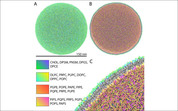
Image Credit : Alex Bryer et al/University of Delaware
Scientists have used supercomputers to complete the first-ever biologically authentic computer model of the HIV-1 virus liposome, its complete spherical lipid bilayer. The scientists are hopeful this basic research into viral envelopes can help efforts to develop new HIV-1 therapeutics.
|
Image Credit : Texas Advanced Computing Center
Through this Dear Colleague Letter, NSF announces two new steps undertaken to implement the NSF vision for developing and sustaining a diverse and dynamic cyberinfrastructure workforce.
|
Get more NSF News
|
|
Program Spotlight
Image Credit: VMware
The goal of this joint program between NSF and VMware is to foster novel, transformative research in fundamental and systematic approaches that bring dramatic increases in the environmental sustainability of digital infrastructure, leading to practical methodologies and tools. Digital Infrastructure is broadly defined as the totality of software, hardware, and the methods for managing them for the purpose of efficient computation. This research includes, but is not limited to, computer software and systems; management of distributed software, digital infrastructure, and data center power sourcing; and resource allocation and scheduling. Critical to initiating such research is to set its objectives through the definition of novel metrics and benchmarks that capture the sustainability challenges of all components in the entire computation chain.
The program also aims to support a research community committed to advancing research and education at the confluence of management technologies for software, hardware and power for sustainable digital infrastructure, and to transition research findings into practice. A new generation of innovation would build on many recent advances such as passive and active measurements, statistical analysis and inference, learning for automated control and complex optimization, workload isolation and management, agile development, convergence of development and production environments, and architecture-optimized language translation.
The two projects highlighted here take different approaches to the problem of application developers targeting the cloud or datacenter space that currently do not have tools that they can use to have direct control over, or even knowledge of, the energy used by the systems they are developing. Without those tools, application developers cannot optimize their own systems for energy and resource usage. These tools and ideas could revolutionize how developers, and datacenter operators, think about and optimize for sustainability and energy usage.
|
|
SciComm Corner

Image Credit: Jane Boyko/Flickr
Computing requires energy— sometimes substantial amounts of energy. This energy is used in the computation, and also in the communication required to move data from storage to the computation hardware. This requires even more energy as computation moves from local hardware into centralized hubs called datacenters. Datacenters currently consume an estimated 1 to 2 percent of worldwide electricity production. Datacenter computing--and its energy use is projected to continue to grow rapidly, perhaps as fast as doubling every few years. This is simply not sustainable. Unfortunately, tools do not currently exist to let application developers have direct control of the energy used by their programs, or even to know how much energy their systems are consuming in the datacenter. The Treehouse project, led by the University of Washington aims to improve the energy efficiency of datacenter computing by making energy use accountable to users at a fine-grained level and by reducing unnecessary waste in the most frequently used parts of datacenter computation.
Treehouse improves datacenter energy efficiency in several ways. Treehouse introduces a new computational abstraction that allows new energy optimizations by both application developers (by making application energy use visible at a fine-grained level) and systems designers (by identifying when energy-efficient optimizations can be safely performed without compromising user goals for application performance and reliability). Additional strategies include reducing unnecessary software bloat, reducing resource stranding, and developing new algorithms to exploit the opportunity posed by new types of hardware with complex tradeoffs between performance and energy use.
Beyond better energy and resource management, Treehouse provides end users the tools to understand and reduce their individual carbon use from cloud services. This can fundamentally change the way the cloud computing industry thinks about datacenter energy use. Datacenter operators can provide new energy efficient computing models at lower cost. Through outreach and new educational materials, Treehouse will pioneer the training of a new type of energy-aware engineer to meet societal needs for an energy-efficient computing infrastructure.
|

Image Credit: Learntek/Flickr
Cloud computing (or datacenter) platforms continue to grow exponentially and are becoming the foundation of our information-based economy. While the cloud’s energy demand grew slower than expected over the past decade due to aggressive energy-efficiency optimizations, there are few remaining optimization opportunities using traditional methods. As a result, the cloud’s continued exponential growth will translate into exponentially rising energy demand, which will position it as one of the primary contributors to global carbon emissions. To address the problem, this project, led by the University of Massachusetts elevates carbon to a first-class metric in designing a sustainable and reliable cloud-edge software infrastructure that can enable continued exponential growth.
The project's foundation is a software-defined energy virtualization layer that provides applications visibility into, and control of, their own energy and carbon usage. The project will leverage this foundation to develop higher-level systems abstractions for supporting carbon-efficient applications at different geographical scales including: a cluster balloon technique, which automatically adjusts applications’ energy usage to match a volatile clean energy supply at local edge sites; edge hopping mechanisms, which exploit lower regional energy volatility to balance energy across edge sites; and carbon capping policies, which track the applications’ global grid carbon emissions and restrict grid energy after reaching the cap.
The project has the potential for significant societal impact by enabling commercial cloud platforms to sustainably continue their exponential growth. The project will conduct outreach by incorporating topics from the proposal into summer programs for local middle and high school students at the partner institutions. The project will also impact the curriculum at these institutions by adopting elements of edge, cloud, and sustainable computing into graduate and advanced undergraduate courses. Finally, the project will recruit a diverse group of students by leveraging institutional diversity efforts and will involve undergraduate students through Research Experience for Undergraduate (REU) projects.
|
Faces of CISE: Susan E. McGregor

Susan E. McGregor
Associate Research Scholar
Columbia University Data Science Institute
Photo Credit: Gabriela Bhaskar
Susan E. McGregor is an associate research scholar at Columbia University’s Data Science Institute, where she co-chairs the Center for Data, Media & Society. She is the author of two books: Information Security Essentials: A Guide for Reporters, Editors and Newsroom Leaders (Columbia University Press, 2021) and Practical Python: Data Wrangling and Data Quality (O'Reilly, 2021).
McGregor’s research primarily centers on security and privacy issues affecting journalists and media organizations. Her current work includes an NSF-funded project to provide readers with stronger guarantees about digital media by incorporating cryptographic signatures into digital publishing workflows. She works with natural language processing experts to develop novel classifiers for detecting abusive speech on Twitter, and is researching effective models for peer support with a focus on the media space. Her work in these and related areas has received support from the NSF, the Knight Foundation, Google, Columbia University, among others.
As an educator, McGregor is committed to increasing the reach of data science education to help ensure that essential literacies about data-driven systems are accessible to learners of every age and background. In fall 2021, she undertook a partnership with the Bard High School Early College (BHSEC) program in New York City (NYC), in which she designed and led an introductory data science course for 22 high-school students. Following the success of this effort, she hopes to expand her work to other schools and programs in NYC and beyond.
Prior to her work at Columbia University, McGregor was the senior programmer for the News Graphics team at the Wall Street Journal (WSJ), a front-end programmer at the photo wire service MediaVast (acquired by Getty Images), and a reporter for The New York Amsterdam News. McGregor was named a 2010 Gerald Loeb Award winner for her work on the WSJ’s What They Know series, and she was a finalist for the Scripps Howard Foundation National Journalism Awards for Web Reporting in 2007. In 2011 and 2015, her work was nominated for two Webby awards.
In addition to her technical and academic work, McGregor enjoys using artistic methods to generate new approaches to technological challenges; in the process, she occasionally creates small prototypes and installations. She holds a master’s degree in Educational Communication and Technology from New York University and a bachelor’s degree in Interactive Information Design from Harvard.
|
|
|
Office of Advanced Cyberinfrastructure (OAC)
OAC supports and coordinates the development, acquisition and provision of state-of-the-art cyberinfrastructure resources, tools and services essential to the advancement and transformation of Science and engineering.
|
|
|
|
|