|
|
A Message from CISE Leadership
Dear CISE community,
As always, this newsletter seeks to offer some news about recent NSF activities, as well as some updates on research funded by NSF. Please do send us your own research highlights for potential use in future communications.
On February 2, I participated in a virtual panel hosted by the Networking Channel on how to improve diversity and inclusion in the systems and networking community. These events are very important because they bring together leaders representing different parts of our scientific community to discuss how to shape our broadening participation goals and how we can best achieve them. Please check out the recording linked above and consider new ways that you can engage!
Also on February 2, the Office of Science and Technology Policy issued a Request for Information on the Update of the National Artificial Intelligence Research and Development Strategic Plan. I encourage you to submit ideas for impactful updates to the Plan, focusing on the goals, priorities, and metrics that Federal agencies should use to guide AI research and development investments. The deadline to submit responses is March 4, 2022.
In addition, I want to draw your attention to a new NSF program, Pathways to Enable Open-Source Ecosystems (PEOSE), that is highly relevant to the CISE community. The goal of the PEOSE program is to fund new managing organizations for existing mature Open-Source Ecosystems (OSE), each responsible for the creation and maintenance of infrastructure needed for efficient and secure operation of an OSE based around a specific open-source product or class of products. Since so many CISE-funded projects open-source aspects of their research results, we hope that PEOSE offers many of you a great pathway to larger usage and impact for these open-source efforts.
I hope you enjoy our February newsletter, which highlights our Designing Accountable Software Systems program and recently funded research awards.
Best,
 Margaret Martonosi
NSF Assistant Director for CISE
|
|
News & Announcements

Image Credit : Alissa Eckert, MS; Dan Higgins, MAM
Budding, the researchers explained, is how the virus’ genetic material is encapsulated in a spherical envelope—and the process is key to the virus’ ability to infect. Despite that, they say, it has hitherto been poorly understood:
The Conduit team—comprised of Logan Thrasher Collins (CTO of Conduit), Tamer Elkholy, Shafat Mubin, David Hill, Ricky Williams, Kayode Ezike and Ankush Singhal—sought to change that, applying for an allocation from the White House-led Covid-19 High-Performance Computing Consortium to model the budding process on a supercomputer.
|

Image Credit : Wired Magazine
Computer scientist Amit Sahai, PhD, is asked to explain the concept of zero-knowledge proofs to 5 different people; a child, a teen, a college student, a grad student, and an expert. Using a variety of techniques, Amit breaks down what zero-knowledge proofs are and why it's so exciting in the world of cryptography.
|
Image Credit : Better Scientific Software
The BSSw Fellowship Program gives recognition and funding to leaders and advocates of high-quality scientific software. Each 2022 Fellow will receive up to $25,000 for an activity that promotes better scientific software, such as organizing a workshop, preparing a tutorial, or creating content to engage the scientific software community.
|

Image Credit : Shutterstock/Michele Ursi
Thomas Ristenpart, an associate professor of computer science at Cornell, is working with a multidisciplinary team of researchers to navigate the technological, legal and social challenges to develop safer and more secure online communications for users of these messenger apps.
|
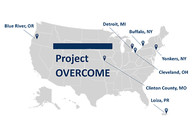
Image Credit : US Ignite
Project OVERCOME, funded by the U.S. National Science Foundation with support from Schmidt Futures, is helping communities prepare for new broadband funding by supporting pilot network deployments and gathering insights to ensure Federal dollars are put to their most effective use. In seven areas across the country, US Ignite is working with Project OVERCOME teams to understand the technical, operational, and community engagement challenges to universal connectivity – and to institutionalize the best practices needed to overcome them.
|
Get more NSF News
|
|
Program Spotlight
Image Credit: U.S. Consumer Product Safety Commission
Society is becoming highly dependent on software applications, systems, and platforms, as aspects of business, government, communication, and other parts of everyday life are increasingly implemented through software. These parts of life are often subject to laws and regulations, which come from multiple sources, are sometimes ambiguous, and in may areas are rapidly evolving. Complying with these regulations, then, poses a difficult challenge for software systems, requiring a solid understanding of the regulatory and social contexts they operate in and the ability to adapt to changes in them.
The DASS program aims to build teams with the expertise needed across law, social sciences, and software design to develop new knowledge at the intersection of regulation and software design. This knowledge includes better understanding of how regulation and software design might affect each other or evolve together; new understanding of the regulatory, social, behavioral, and economic forces that shape the needs of software in socially relevant domains; and rigorous and reproducible methodologies for software design and engineering that incorporate both societal goals as well as technical aspects of software development.
For more information, view the DASS solicitation here. The next DASS deadline is January 27, 2023.
|
|
SciComm Corner
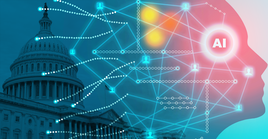
Image Credit: Larry/stock.adobe.com, Dan Rentea/stock.adobe.com
Millions of people with accessibility needs resulting from sensory, cognitive, and motor impairments are impacted by software every day. This software is increasingly using Artificial Intelligence (AI) and machine learning (ML) technologies that are used to personalize people’s technology experiences, make predictions about their likes, needs, and behaviors, and suggest courses of action. However, these AI services are only as good as their datasets, which can cause biases both because people with disabilities are likely to be underrepresented in a dataset relative to the population as a whole, and because the data collected may reflect social biases against those people.
Through interviewing people with disabilities, developers, and regulators of these systems, along with a thorough review of existing systems and regulations that target disabilities and accessibility issues, the project team will develop a model of the accessibility risks that can arise in developing systems with AI and ML components, along with guidelines for mitigating those risks and methods to assess them. This will in turn set up opportunities where people with disabilities play a more active role in co-designing these systems, in ways that are more likely to meet everyone’s needs.
“This work matters because although there are laws that protect people with disabilities, how those laws should be realized in software systems is a hard problem,” said NSF Program Director Dan Cosley. “Realizing them in AI and ML algorithms is an especially interesting case, because questions of fairness and bias in general are increasingly on the radar for both developers and regulators around these algorithms—but the opaqueness of both the algorithms themselves and the processes for developing them raises extra challenges for assessing compliance.”
|

Image Credit: Kevin Harber/Flickr
School districts struggle to increase equal educational opportunities and avoid racial isolation for their students. Many districts use a school-assignment software system to further these goals. Today, more than 100 school districts across the US have adopted school-assignment software systems. Some of these systems have been subject to legal challenges, both successful and unsuccessful, to the approach the school districts used to advance equal opportunity.
This study examines how best to ensure that these software systems are designed to respond to legal and economic constraints and democratic community participation in order to ensure both legal compliance and legitimacy in the eyes of the community. Improving these software systems will impact access to education for thousands of students.
“This is timely research at the intersection of policy, education and software design that has the potential to enhance democratization and equality in school districts across the country. It demonstrates the strength of collaborative expertise in social science and computer science coming together to advance a significant societal and educational goal,” said NSF Program Director Reggie Sheehan
|

Image Credit: U.S. Department of Transportation
Software, regulation, and society interact with unpredictable and sometimes undesirable dynamic feedback effects. This project studies how agent-based models (ABMs) of social contexts can improve the design and regulation of accountable software systems to fill the gap between legal requirements and software design. The goal of this project is to help regulators, domain experts, software designers, and other stakeholders assess the potential societal implications of particular software and regulatory systems. Agent-based modeling (ABM) is a social scientific research method that involves bottom-up modeling of complex systems and computationally determining their emergent properties by running simulations. The investigators use ABMs to model elements of the social and regulatory environment in which a software system operates, and to guide the crafting and enforcement of technology regulations.
NSF Program Director Nina Amla said, "this is a promising approach for improving the accountability of software deployed in social contexts like advertising software, fair housing, contact tracing, and privacy."
|

Image Credit: United States Capitol Police
This research project sets out a new approach to designing software that is accountable to law, referred to as Principled Software Design and Accountability (PSDA). Legal principles will be distilled from legislation or the common law and augmented by a series of concrete questions whose answers will guide software developers through the process of designing legally compliant software systems. The research will engage diverse stakeholders including legal experts, regulators, sociologists, and software developers, and will explore the integration of PSDA into software design and analysis techniques. The interdisciplinary nature of the work, and the need to engage legal experts, psychologists, and software engineers creates a challenging research space which will be explored through focus groups, grounded theory, and design research techniques. Delivering PSDA requires weaving together a holistic, multi-disciplinary solution supported by deep learning technologies to provide full life-cycle traceability and the creation of persistent, tamperproof records of PSDA flows for creating digital reports. PSDA logs will be built upon relationship-preserving auditable flows, representing design decisions and their rationales, and capable of generating legally compliant paper documents that bind to the digital thread to provide full lineage and rationale behind PSDA decisions.
|
Faces of CISE: Tanya Berger-Wolf, Ph.D.
Tanya Berger-Wolf, Ph.D.
Professor, Computer Science and Engineering
Ohio State University
Photo Credit: Jenny Fontaine
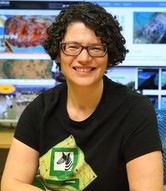
Tanya Berger-Wolf, Ph.D., is a professor of computer science engineering, electrical and computer engineering, and evolution, ecology, and organismal biology at The Ohio State University (OSU), where she is also the director of the Translational Data Analytics Institute. Prior to joining OSU in January 2020, Berger-Wolf spent 15 years at the University of Illinois, Chicago.
Berger-Wolf is among the founders of the field of computational ecology, leading research at the unique intersection of computer science, wildlife biology, and social sciences. She creates computational AI and data science solutions to generate, collect, analyze, and derive insight from data to answer questions and make decisions in ecology, environment, and wildlife conservation. Tanya is passionate about creating a human-AI partnership to address the greatest conservation challenges of our planet. As a legitimate part of her work, she gets to hang out of an ultra-light airplane in Kenya, taking a hyper-stereo video of zebra populations and learning how to identify each one of them by the unique stripe pattern. She works with many teams of brilliant people who do cool, amazing, and impactful things.
She has received numerous awards for her research and mentoring, including University of Illinois Scholar, University of Illinois Chicago (UIC) Distinguished Researcher of the Year, NSF Faculty Early Career Development Program (CAREER), Association for Women in Science Chicago Innovator, and the UIC Mentor of the Year. Berger-Wolf has given hundreds of talks about her work, including at TEDx (featured on TED.com) and UN/UNESCO AI for the Planet.
Taking research to conservation action and policy, Berger-Wolf is also a director and co-founder of the conservation software non-profit, Wild Me, home of the Wildbook project, which brings together AI, computer vision, crowdsourcing, and conservation. Wild Me enables the work of many conservation organizations and government agencies, such as the World Wildlife Fund, Bureau of Ocean Energy Management, National Oceanic and Atmospheric Administration, Kenya Wildlife Service, Grevy’s Zebra Trust, Giraffe Conservation, and many others. Wildbook has been recently chosen by the United Nations Educational, Scientific and Cultural Organization as one of the top AI 100 projects worldwide supporting the United Nations Sustainable Development Goals.
Most of Berger-Wolf’s research has been supported by NSF. The graduate research fellowship and the CAREER awards helped launch her career. Her collaborative interdisciplinary research in computational approaches to understanding (animal) sociality was supported by several CISE and cross-cutting awards. Her passion for engaging kids in science and for educating the next generation of interdisciplinary scientists was supported by Broadening Participation in Computing and educational grants. NSF also supported the initial stages of research that became the foundation of Wild Me which is now powering conservation worldwide.
NSF's large-scale AI and data science programs, such as Transdisciplinary Research in Principles of Data Science, National AI Research Institutes, and Harnessing the Data Revolution, are designed to foster the exploration of data science and AI, from foundations to applications. Berger-Wolf’s vision for collaborative interdisciplinary research in computational ecology and for turning images into the source of information about life on the planet has recently got a big boost from NSF. She and a team of interdisciplinary scientists have been awarded a $15-million grant to establish a new Harnessing Data Revolution Data-Intensive Research in Science and Engineering Institute, founding a new field of study: Imageomics. It will use AI and other computational approaches to extract biological information, particularly traits, from images, leading to new understanding of evolution and ecology.
Tanya Berger-Wolf is a great example of how NSF supports scientists in their early and late stages of their research careers.
|
|
|
Office of Advanced Cyberinfrastructure (OAC)
OAC supports and coordinates the development, acquisition and provision of state-of-the-art cyberinfrastructure resources, tools and services essential to the advancement and transformation of Science and engineering.
|
|
|
|
|