|
COMPUTER & INFORMATION
SCIENCE AND ENGINEERING |
|
|
A Message from CISE Leadership
First, I want to congratulate the winners of the 2021 Golden Goose Award for their work on automotive security! In 2010 and 2011, NSF-funded faculty members, Tadayoshi “Yoshi” Kohno and Stefan Savage worked with lead senior Ph.D. students, Stephen Checkoway and Karl Koscher and other researchers from the University of California San Diego and University of Washington to publish papers in which they demonstrated that internet-connected vehicles could have critical engine and braking functions overridden by a remote attacker using different wireless and digital techniques. Ten years later, this work is being recognized for its impact in how automakers and regulators are approaching automotive security. If you’re not familiar with it, the Golden Goose Award was created to recognize the impacts and benefits of federally-funded scientific research.
Next, I would like to congratulate the recent awardees of our NSF-funded projects, Harnessing the Data Revolution Institutes (HDRI) and CIVIC Innovation Challenge.
Last month, NSF announced a $75 million investment to establish five new HDRIs that bring together researchers from different fields to advance solutions in areas like medicine, autonomous driving, remote sensing -- just to name a few. We are excited to see how these investments continue to contribute to our Nation’s leadership in cutting-edge science and engineering.
Also last month, NSF, in partnership with the U.S. Department of Energy and the U.S. Department of Homeland Security, announced the Civic Innovation Challenge Stage 2 awardees. Seventeen teams are receiving up to $1 million to implement research-based pilot projects that address their community challenges over a one-year period. We are very proud of the winning teams and everyone who participated in this program. If you are interested in contributing your ideas, please visit the CIVIC Ideas Festival.
Before ending this letter, I want to share a good opportunity for all proposers and reviewers to provide feedback on our merit review process. In mid-October, NSF will be sending the 2021 Merit Review Survey to proposers and reviewers who have submitted and/or reviewed proposals between October 1, 2018, and September 30, 2020. I encourage you to participate -- your feedback is vital to our ongoing efforts to assess the merit review process.
Best,
 Margaret Martonosi
NSF Assistant Director for CISE
|
|
Career Opportunities
CISE is looking to fill the following vacancies:
- Deadline:
-
Division Director in the Information and Intelligence Systems Division. Deadline: October 20, 2021
-
Interdisciplinary Program Director in the Computer and Network Systems Division – NeTS cluster. Deadline: October 25, 2021
- Interdisciplinary Program Director in the Office of Advanced Cyberinfrastructure Deadline: November 5, 2021
-
Deputy Office Director in the Office of Advanced Cyberinfrastructure. Deadline: December 4, 2021
- Program Director in the Computing and Communication Foundations Division. Deadline: Open until filled
- Multiple Program Director positions in the Information and Intelligent Systems Division. Deadline: Open until filled
- Interdisciplinary Program Director in the Computer and Network Systems Division – all clusters. Deadline: Open until filled
News & Announcements

Photo Credit : NSF
NSF strives to engage the research community in the pursuit of fundamental research in data science and engineering, development of a cohesive, federated, national-scale approach to research data infrastructure, and the development of a 21st-century data-capable workforce.
|

Photo Credit : NSF
This paper articulates a blueprint for a National Strategic Computing Reserve (NSCR) that could be accessed during any emergency.
|

Photo Credit : NSF
Throughout the COVID-19 pandemic, there has been much uncertainty about how long immunity lasts after an unvaccinated person is infected with SARS-CoV-2. Now a team of scientists led by faculty at the Yale School of Public Health and the University of North Carolina at Charlotte have an answer: Strong protection following natural infection is short-lived.
|
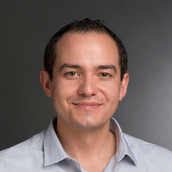
Photo Credit : Rochester Institute of Technology
The National Science Foundation is giving a Rochester Institute of Technology professor an esteemed award to help him expand the capabilities of artificial intelligence systems using new brain-inspired methods.
|

Photo Credit : goldengooseaward.org
Led by Tadayoshi “Yoshi” Kohno and Stefan Savage along with lead senior PhD students Stephen Checkoway and Karl Koscher, a team of researchers from the University of California, San Diego and the University of Washington proved that internet-connected vehicles could have their critical functions (including the engine, lights, and brakes) overridden by a remote attacker via a range of digital pathways. Their trailblazing work, published in a pair of landmark papers in 2010 and 2011, led to a revolution in how automakers, the federal government, and other stakeholders approached automotive security.
|
Get more NSF News
|
|
Program Spotlight
In 2016, NSF unveiled a set of “Big Ideas,” 10 bold, long-term research and process ideas that identify areas for future investment at the frontiers of science and engineering. The Big Ideas represent unique opportunities to position our Nation at the cutting edge of global science and engineering leadership by bringing together diverse disciplinary perspectives to support convergence research.
The Harnessing the Data Revolution (HDR) Big Idea includes a $75 million investment to establish five new institutes to support convergence between science and engineering research communities, bringing together expertise in data science foundations, systems, applications and cyberinfrastructure. Together, these institutes will enable breakthroughs through collaborative, co-designed programs to formulate innovative data-intensive approaches for addressing critical national challenges.
A summary of each HDR institute award is provided below:
NSF Institute for a New Frontier of Biological Information Powered by Knowledge-Guided Machine Learning — Led by The Ohio State University, the institute will establish a new field of Imageomics, in which biologists utilize machine learning algorithms to analyze vast stores of existing image data, such as publicly funded digital collections from national centers, field stations, museums and individual laboratories.
NSF Institute for Accelerated AI Algorithms for Data-Driven Discovery — Led by the University of Washington, the institute aims to construct the knowledge essential for real-time applications of artificial intelligence in three fields of science: high energy physics, multi-messenger astrophysics and systems neuroscience.
NSF Institute for Harnessing Data and Model Revolution in the Polar Regions — Led by the University of Maryland, Baltimore County, the institute will serve as a research hub where experts in data science, Arctic and Antarctic science and cyberinfrastructure — from academia, government and private sectors — come together to address national priorities and challenges related to climate change, sea level rise and the rapidly changing Arctic.
NSF Institute for Data Driven Dynamical Design — Led by Colorado School of Mines, the institute aims to address the challenge of predicting dynamical processes in materials, including ion and molecular transport, catalytic pathways, and phase transformations in metamaterials, with a focus on discovering fundamentally new mechanisms and pathways.
NSF Institute for Geospatial Understanding through an Integrative Discovery Environment, I-GUIDE — Led by University of Illinois Urbana-Champaign, the institute will create an integrative geospatial discovery environment that harnesses geospatial data to understand interconnected interactions across diverse socioeconomic-environmental systems — with a goal of enhancing community resilience and environmental sustainability.
For more information, view the Harnessing Data Revolution webpage here.
|
|
SciComm Corner: How CISE is Impacting Your Community
NSF Civic Innovation Challenge
For this month's SciComm Corner, we have decided to highlight three awardees of the Civic Innovation Challenge. The Civic Innovation Challenge is a multi-agency, federal government research and action competition that aims to fund ready-to-implement, research-based pilot projects that have the potential for scalable, sustainable, and transferable impact on community-identified priorities.

Privacy Enhanced Data-Driven Health Monitoring for Smart and Connected Senior Communities
Source: U.S. Department of Veterans Affairs
This project led by Emory University aims to build a multidisciplinary team, including academic researchers with complementary expertise (big data, privacy and security, machine learning, human-computer interaction, sociology, and mobile health) and community stakeholders (seniors, community service providers, healthcare providers, and government agencies), to develop and deploying a health monitoring system for senior communities.
In addition, the project includes a set of community engagement activities in order to develop a research agenda that can empower the senior communities to improve their health and well-being, and enable data-driven medical research that improves population health at large.
|

Source: Marcos Gasparutti/Flickr
A team of researchers at Bentley University is laying the groundwork for developing predictive models to improve social agencies work processes that benefit underserved populations – in particular the homeless population in Boston, Massachusetts. The planned integrative research of this project includes predictive modeling to assess the needs of the homeless guests to improve their match to the right services, and process modeling to improve triage work at homeless shelters. The project aims to improve data quality and completeness, and work processes at a homeless shelter.
|
Source: Adrian Levesque, Martins Innus and Adam Koniak, Center for Computational Research IBC Digital
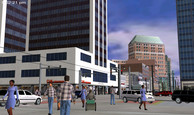
With the new wave of growth in urban areas, ensuring public safety is an essential precursor toward “smart” cities and communities. This project, conducted by the University of North Carolina at Charlotte, is developing a novel “intelligent” policing technology as a transformative solution to efficiently enhance law enforcement, while minimizing unnecessary interactions and maintaining resident privacy. This technology offers a network of smart cameras that do not require continuous monitoring, but instead are trained to generate alerts on the spot in real-time. Additionally, because these cameras are designed to identify behaviors and not identities, they can reduce biases, minimize false alarms, and protect personal privacy. By demonstrating the use of powerful emerging edge computing technologies, this project will highlight the applicability and adaptability of such technologies to tackle many community challenges and broader smart cities and cyber-physical systems (CPS) applications, including smart transportation and pedestrian safety.
|
Faces of CISE: Dr. Vishal Patel
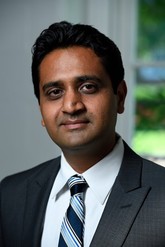
Dr. Vishal Patel
Associate Professor
Department of Electrical and Computer Engineering
Johns Hopkins University
Vishal M. Patel is an associate professor in the Department of Electrical and Computer Engineering (ECE) at Johns Hopkins University, and recipient of NSF’s Faculty Early Career Development Program (CAREER) Award, which recognizes early stage scholars with high levels of promise and excellence. Through the CAREER award, Dr. Patel and his team plan to develop data-driven, learning-based approaches for restoration and understanding of images degraded by atmospheric turbulence.
Leading to his CAREER award, Dr. Patel received multiple CISE awards including a 2016 Communication and Information Foundations grant for a project on visual recognition methods and techniques, a 2019 Secure and Trustworthy Cyberspace award for research on biometrics systems and attacks, and a 2019 Robust Intelligence grant for work on domain shifts in machine learning – among several others. His awards trajectory is one of many examples of how CISE invests in scientist development pathways to build a strong and diverse computing and information science and engineering workforce.
“The NSF funds have allowed me to work on some exciting projects involving real-world applications and support graduate students. My research accomplishments would not have been possible without the NSF's support,” Patel said.
Prior to joining Hopkins, he was an A. Walter Tyson Assistant Professor in the Department of ECE at Rutgers University and a member of the research faculty at the University of Maryland Institute for Advanced Computer Studies (UMIACS). He completed his Ph.D. in Electrical Engineering from the University of Maryland, College Park, in 2010.
Dr. Patel is an Associate Editor of the IEEE Signal Processing Magazine, IEEE Transactions on Pattern Analysis and Machine Intelligence Journal, Pattern Recognition Journal, and serves on the Machine Learning for Signal Processing (MLSP) Committee of the IEEE Signal Processing Society. He served on the Information Forensics and Security (IFS) TC from January 2017 to December 2019. He also serves as the vice president of conferences for the IEEE Biometrics Council.
|
|
|
Office of Advanced Cyberinfrastructure (OAC)
OAC supports and coordinates the development, acquisition and provision of state-of-the-art cyberinfrastructure resources, tools and services essential to the advancement and transformation of Science and engineering.
|
|
|
|
|