|
Mathematical and Physical Sciences |
|
|
A Message from the Assistant Director for NSF’s Mathematical and Physical Sciences Directorate
MPS recognizes that the COVID-19 pandemic has been a challenging time for the research community. While some researchers were able to pivot their work to address an immediate need for knowledge about the virus, others felt the strain as their institutions limited in-person work, group gatherings, and travel. The National Science Foundation provided RAPID grants, extended deadlines, and used other funding flexibilities to enable continued support for researchers whose projects were impacted.
Our directorate has several existing funding mechanisms designed to enable cutting edge research while supporting scientific training across career stages. As the pandemic has particularly strained early career researchers and those at historically underserved universities, we must continue to find innovate ways to support the scientific enterprise. Below are two new such opportunities, and we urge you to share this news with colleagues who could benefit.
We know the researchers in the physical sciences share NSF's mission of advancing the progress of science and national health and welfare. On the other side of this pandemic is a wealth of new discoveries, and we hope to achieve that together through the continued support of the researchers and infrastructure that make that research possible.
 Sean Jones
|
|
|
A Legacy of Excellence: MPS celebrates Black History
Month
Read More ›
Recognizing Women in the Quantum Revolution
Read More ›
Look for employment opportunities Read More ›
|
Recent Events
March 10 and 12, 2021
MPS Advisory Committee Meeting
March 18, 2021
Exploring Environmental Interfaces - Dr. Vicki Grassian
Distinguished Lecture
|
|
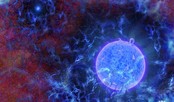
Humans have always looked to the stars and studied them. Over the past century, science has revelated the fundamental role stars play for nearly everything in existence, including the elements on the Periodic Table.
|

Program officers are the heart and soul of NSF. Don't be intimidated to reach out to a program officer - they are there to help.
|

How far is far? Probably 13 billion light-years from Earth... Alma Observatory has discovered the most distant quasar known.
|
|
|
MPS Divisions
Division of Astronomical Sciences (AST)
The Division of Astronomical Sciences (AST) supports research in all areas of astronomy and astrophysics as well as related multidisciplinary studies.
Division of Chemistry (CHE)
The Division of Chemistry (CHE) supports innovative research in chemical sciences, integrated with education, through strategic investment in developing a globally engaged U.S. chemistry workforce.
Division of Materials Research (DMR)
The Division of Materials Research (DMR) supports research and education activities in the United States through funding of individual investigators, teams, centers, facilities, and instrumentation.
|
The Division of Mathematical Sciences (DMS) supports a wide range of projects aimed at developing and exploring the properties and applications of mathematical structures.
Division of Physics (PHY)
The Division of Physics has primary responsibility for the health of research and education in many areas of physics in the nation's colleges and universities.
|
|
|
|