|
|
Dear Colleagues,
As always, we hope that these weekly links focused on what is currently happening in the information environment prove to be helpful to you and the good work you do.
This week we include a podcast from the Modern War Institute co-hosted by Julia McClenon, from here in Defense Analysis. The article discusses why hostage taking is used as a weapon. Some of the points made during the podcast are that every administration has had to deal with hostage taking and the approach has changed over time; and hostage taking may be used by a weaker group to gain leverage against a larger group that cares about its citizens. The hosts discuss hostage taking as both coercion, that you can get your adversaries to do something you want or deterrence, you can convince your adversaries to not do something. A no concessions policy is discussed as deterrence by denial. Theoretically, if adversaries know they will not be rewarded for taking hostages, they will not. The hosts discuss this as a policy that only applies if the hostage taking is about coercion, not necessarily for the other reasons a group might take hostages.
The fog of war now includes digital fog. Last Tuesday an explosion at a hospital in Gaza was quickly, and inaccurately, attributed to Israel and spread quickly over social media. A video of Putin giving a speech about Ukraine last year was widely disseminated on social media with subtitles creating the narrative that he was warning the West not to intervene in the Israel-Hamas conflict. Disinformation always increases during conflict, but the digital fog in this day and age is much thicker than it has been in the past making it difficult to discern true information from fully fabricated, or enhanced information.
There is such a thing as disinformation-for-hire. These companies are used in both ways - to create, and to discern. The Washington Post article details accounts of Israeli company Percepto which was hired to arrive in Burkina Faso, coercively use social media and news outlets and create support for Kabore's government while simultaneously breaking down his opponents. What they found when they got there was that Russian campaigns had taken over local media and social media in attempt to influence a breakdown of Burkina Faso's government as well as surrounding democracies.
Stay safe, stay healthy, and stay diligent,
Dr. Ryan Maness
Rebecca Lorentz
DoD ISRC at The Naval Postgraduate School
Compiled and summarized by Rebecca Lorentz. Please email tips or contributions to DoDISRC@nps.edu.
|
|
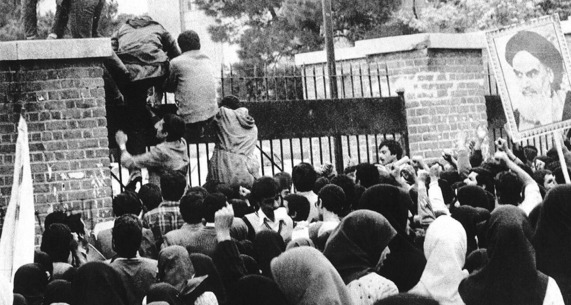
Their discussion addresses the incentives for states, as well as nonstate actors, to engage in hostage taking instead of relying on other, more traditional instruments of power. They also describe the means with which the United States and others secure the safety of their citizens against hostage taking, along with how concepts like deterrence apply to the unique challenge of hostage taking.
|
|
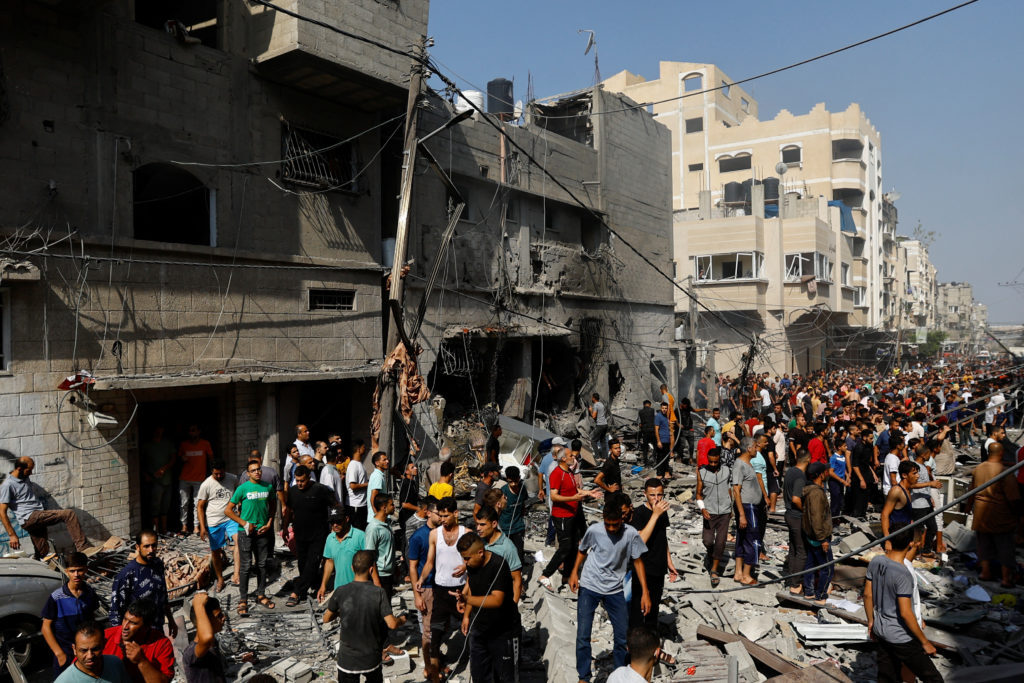
As the Israel-Hamas war rages, regulators and analysts say a wave of online disinformation risks further inflaming passions and escalating the conflict in an electronic fog of war.
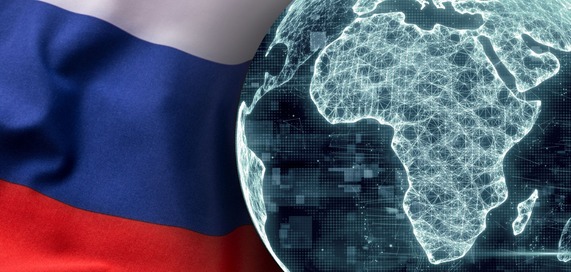
When Israeli businessmen Royi Burstien and Lior Chorev touched down in the busy capital of the West African nation of Burkina Faso, they had an urgent message for the country’s embattled ruler.
|
|
|
|