|
|
Greetings!
We are back on the water with the Shipshape summer 2026 newsletter. Catch up on what we have accomplished over this past year. This edition focuses on milestone events that are defining our future success to carry out missions.
My tour as Marine Operations Director will be wrapping up by year’s end, and I’ve been reflecting on all that we’ve accomplished over the past three years. We have been part of celebrating America’s 250th anniversary in several parts of the country, including as part of the International Naval Review in New York City. We have maintained professional mariner staffing levels on our ships (and we’re hiring, see more details below). We have three ships that are in some stage of completing service-life technology upgrades. We have expanded rotation crewing across the fleet to improve work-life balance.
We also have four new ships under construction and plan to welcome them to the fleet over the next few years. One of these is Navigator, which we celebrated in December at a keel-laying event. It was wonderful to see Rear Adm. Evelyn Fields (ret.) who is the ship’s sponsor.
All that we do reflects NOAA’s mission of science, service and stewardship. Read on to learn more about how NOAA Ship Nancy Foster is helping to support restoring corals in the Gulf of America and NOAA Ship Fairweather restoring navigational channels in Alaska.
I’m proud of what we’ve done to support NOAA’s marine operations. I know that Capt. Sam Greenaway will continue leading the fleet when he assumes the director position by year's end.
Take care of your shipmates!
Capt. Jesse Stark, NOAA Corps
Director of Marine Operations
NOAA Marine and Aviation Operations
As a reminder, anyone can subscribe to Shipshape by clicking here.
|
|
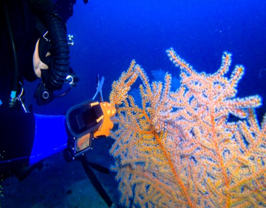
During a spring mission aboard NOAA Ship Nancy Foster, NOAA Fisheries scientists worked to restore delicate coral ecosystems damaged by the 2010 Deepwater Horizon oil spill. Working in the mesophotic zone, divers used closed-circuit rebreathers that allowed the team to safely reach depths exceeding 230 feet to precisely plant lab-grown coral and sample critical habitat. It is a demanding discipline that requires extensive training and precise safety protocols overseen by NOAA’s Diving Program.
|
 |
|
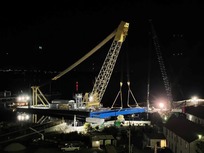
NOAA leadership officially opened NOAA’s newest maritime home port, the Charleston Port Facility in North Charleston, S.C., in July. The upgraded infrastructure features a state-of-the-art 62-by-360-foot floating pier with shoreside power, a dedicated warehouse and a small boat pier. This maritime expansion provides designated berths for homeported vessels, increased mission capabilities, and added strategic value. |
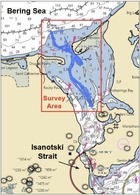
A joint operation between NOAA Ship Fairweather and U.S. Coast Guard Cutter Cypress recently identified and reopened a critical navigation channel in Bechevin Bay, Alaska, just ahead of the Bristol Bay sockeye salmon fishing season. Severe winter ice had destroyed almost all previous navigation aids and left behind dangerous submerged hazards. Connecting the Bering Sea and the Gulf of Alaska, this route through False Pass allows mariners to save up to 160 nautical miles and 20 hours of sailing time, though navigating its narrow, shallow waters requires precise timing around heavy tidal currents.
|
 |
|
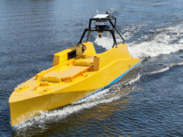
NOAA announced a $21.6 million award to purchase uncrewed marine systems to be used on new charting and mapping vessels being built for the agency. This will support NOAA’s mission to deliver tools and information to help mariners safely navigate the nation’s ports and harbors. The contract was awarded to Chance Maritime Technologies LLC., from Lafayette, Louisiana. |
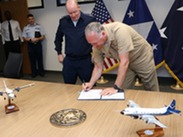
NOAA Marine and Aviation Operations and the U.S. Coast Guard have solidified a 10-year, $2 billion agreement to coordinate the planning, design and construction of maritime infrastructure nationwide. This formal partnership aims to boost mission readiness and streamline facility delivery across shared locations. |
|
 |
Meet the Crew
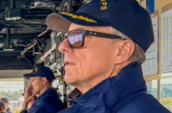
Capt. Marc Moser recently retired, but did so with the recognition that he is the NOAA Corps officer with the most days at sea in his career. Read more about his career and how he discovered the NOAA Corps.
Bravo Zulu and fair winds, Capt. Moser.
|
Heritage
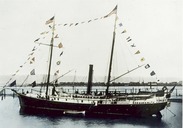
In keeping with naval traditions, NOAA ships honor holidays and special events through ceremonial flag displays. Full dressing of a ship is mandatory from sunrise to sunset on President's Day and Independence Day—or the following Monday if a holiday falls on a Sunday—and optional or aligned with nearby vessels on other occasions. When fully dressed in port, vessels display specific official flags, pennants, personal officer flags, and an organized arrangement of signal flags spanning from bow to stern. This long-standing custom dates back over a century.
|
Featured Photo
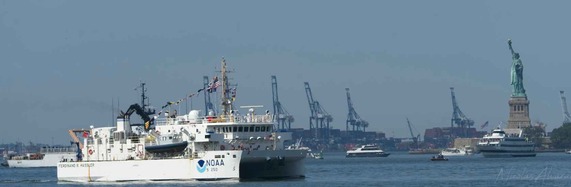 NOAA Ship Ferdinand R. Hassler heads up the Hudson River as part of America's 250th celebrations. Credit: NOAA/Nicolas Alvarado
NOAA research ship jobs hiring event in San Diego
NOAA Marine and Aviation Operations will hold a hiring event in San Diego to recruit professional mariners to work aboard NOAA’s ocean research ships. The event will be held on Sept. 9 or also apply at any time through the hiring portal at marinerhiring.noaa.gov.
|
|
|
|