|
|
Greetings!
Welcome to the Spring 2026 issue of Flightlines!
This year, we are proud to celebrate 50 years of service for our NOAA WP-3D Orions, “Kermit” and “Miss Piggy.” We are honoring these aircraft and the many people who have worked around the clock for five decades to advance NOAA’s science in service to the nation.
Throughout the year, we will share stories and archival footage of these aircraft and the teams behind them. You can follow the journey on Facebook, Instagram, and X using #50YearsofNOAAP3 and at omao.noaa.gov/P3-50th.
Even as we celebrate this milestone, our missions continue across the country. Our crews are currently hard at work on projects ranging from marine mammal surveys to snow survey missions.
With the start of hurricane season right around the corner, we all should do our part to be prepared before the storms begin. Get more information about hurricane preparedness and tips to keep you and your loved ones safe at noaa.gov/hurricane-prep and ready.gov/hurricanes.
I am looking forward to another great year ahead at NOAA’s Aircraft Operations Center. Thank you for your continued support.
-Skipper
Capt. Nate Kahn, NOAA Corps
Commanding Officer
NOAA Aircraft Operations Center
|
|
G-IV Missions Support National Winter Storm Forecasts

While NOAA Gulfstream IV-SP “Gonzo” is well known for its hurricane flights, the aircraft was instrumental in improving the forecasts for a major winter storm that recently impacted much of the U.S. In January, the G-IV remained busy collecting high-altitude atmospheric data across four missions and over 18 flight hours. Deploying more than 70 dropsondes, the G-IV provided the vital data needed to improve the accuracy and timeliness of the National Weather Service forecasts during this significant weather event.
|
A Look Back at the 2025 Hurricane Hunter Missions

While the U.S. mainland was not threatened with a landfalling storm for the first time in a decade, the NOAA hurricane hunters were hard at work this season. Throughout the 2025 Atlantic hurricane season, our crews flew 63 missions into tropical storms aboard the WP-3D Orions and Gulfstream IV-SP, logging more than 400 flight hours. These missions improve forecasts and expand our understanding of tropical systems.
Read the full 2025 season recap to learn more about our flight operations and research findings.
|
NOAA Twin Otter Transports cold-stunned sea turtles
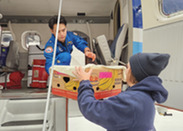
A NOAA Twin Otter transported 12 cold-stunned Kemp’s ridley sea turtles from Massachusetts to Florida on Dec. 22. The turtles will continue rehabilitation at Clearwater Marine Aquarium and Mote Marine Laboratory until their release. The Twin Otter crew is no stranger to protecting marine life, having also flown North Atlantic Right Whale Surveys throughout the east coast of the United States and Canada.
|
NOAA G-IV collects crucial atmospheric rivers data
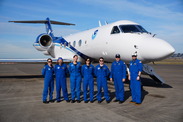
The G-IV flew 17 missions from Portland, Oregon to track atmospheric rivers across the Pacific. The crew recorded over 150 flight hours and deployed over 520 dropsondes to gather crucial data on these “rivers in the sky.” This high-resolution data gives forecasters, water managers, and the public up to five days of advance notice for extreme precipitation that can cause flash flooding, mudslides, and catastrophic damage.
Learn more about how our crews support atmospheric river missions in this mission explainer video.
|
Featured Photo
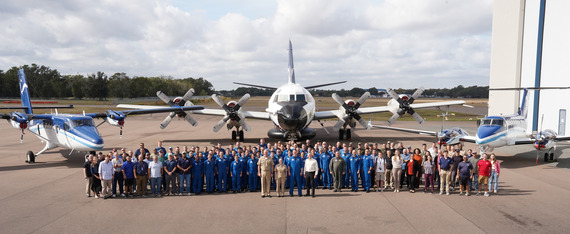 Rear Adm. Cary and Rear Adm. Goeller joined the Aircraft Operations Center for the Annual Safety Conference in December. Photo credit: Thomas Iddings/NOAA
Heritage: Celebrating 50 years of the NOAA P-3
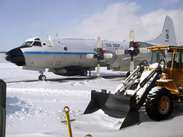
Throughout its 50 years of service to the nation, the P-3 has conducted several missions across the globe. Pictured here in the snow during a 2007 mission in Nova Scotia, the aircraft continues to support critical Ocean Winds research today. Learn more about what the mission is like today here.
|
On the Radar
As our aircraft wrap up their spring missions, we are gearing up for exciting opportunities this summer.
This May, our crews will undergo annual training to prepare for the 2026 Atlantic hurricane season. Meanwhile, our maintenance team is working diligently to ensure our aircraft remain in top condition and mission-ready.
Join us at this year’s Smithsonian Innovations in Flight Event on June 13. Visit us for an exciting opportunity to meet our crews and see some of our aircraft up close.
We are looking forward to sharing accomplishments from our summer season with you in the next issue of Flightlines. You can subscribe to the newsletter by signing up here and be sure to follow us on social media!
www.facebook.com/NOAAHurricaneHunters
www.twitter.com/NOAA_HurrHunter
Find us on Instagram @FlyNOAA
|
|
|
|