|
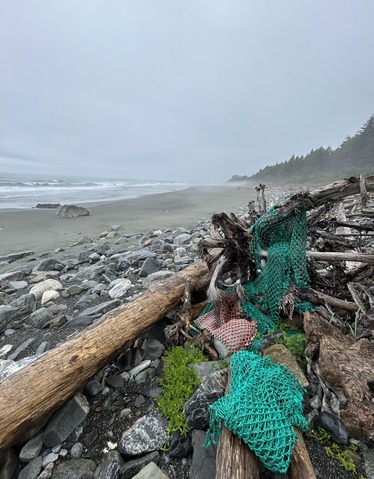
Derelict fishing nets litter the wrack line on Ankau Beach in Yakutat, Alaska (Photo Credit: Hava Rohloff/Ocean Conservancy).
Ocean Conservancy, with support provided by a 2024 award from the NOAA Marine Debris Program, requests applications for their Large Marine Debris Removal Project for the removal of large marine debris, including derelict fishing gear, from remote and hard-to-reach marine environments, including the Great Lakes. Successful projects will remove, prevent, and monitor large marine debris and derelict fishing gear that is too difficult to remove by hand due to its size, volume, or location.
Applications are due on May 31, 2026 by 5:00 PM Eastern Daylight Time (EDT)
Learn more on Ocean Conservancy’s Large Marine Debris Removal Project’s website.
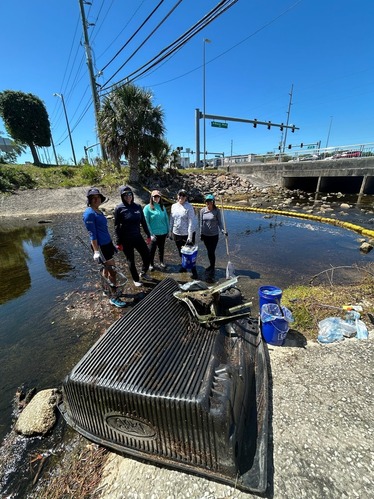
A truck bed liner, among other debris, is captured in Bear Creek by a litter boom installed by the University of Florida’s Operation TRAP team in Pasco County, Florida (Photo Credit: Water Warrior Alliance).
When the University of Florida’s Operation TRAP, in partnership with Florida Sea Grant, and St. Andrew and St. Joseph Bays Estuary Program hosted by Florida State University, each independently received NOAA Marine Debris Program funding to remove marine debris (in 2023 and 2024, respectively), the question became not who would win — but how they would work together. To address the threat of urban trash clogging their waterways, both programs are implementing proven interception technologies in their respective communities.
Learn more about these projects.
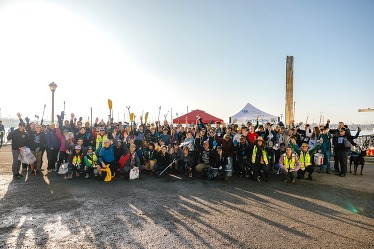
A group of volunteers that participated in a community cleanup in Jack London Aquatic Center, Estuary Park, and the waters and shorelines of the Oakland Estuary (Photo Credit: Bénédicte Lassalle Photography).
With support from the NOAA Marine Debris Program through a 2024 award to the City of Oakland, I Heart Oakland Alameda Estuary led a community cleanup in January 2026 to remove marine debris from local shorelines and waterways. A total of 152 volunteers, including 35 paddlers, removed 5,660 pounds of debris from Jack London Aquatic Center, Estuary Park, and the waters and shorelines of the Oakland Estuary. It was a true example of teamwork, with local businesses and clubs contributing volunteer time, incentives, gear for getting on the water, and more.
Learn more about this project.
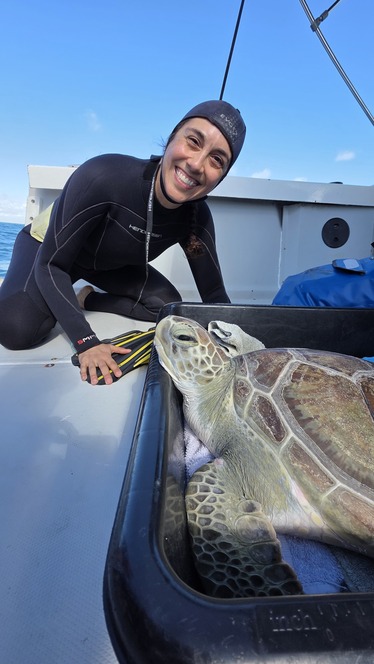
Ana Zangroniz sits on a boat with the green sea turtle, nicknamed “Oscar,” rescued from fishing gear in Biscayne Bay, FWC Marine Turtle Permit MTP-25-024 (Photo Credit: Frank Reyes).
In summer 2025 in southern Biscayne Bay, efforts to remove lost fishing gear led to an unexpected rescue and a second chance for an endangered green sea turtle. With support from a 2023 award from the NOAA Marine Debris Program, the College of William and Mary’s Batten School and the Virginia Institute of Marine Science National Trap, Removal, Assessment, and Prevention Program, in partnership with the University of Florida Institute for Food and Agricultural Services Extension Miami-Dade County Sea Grant Program, led a team to remove abandoned and derelict traps used to catch blue crab, stone crab, and spiny lobster from Biscayne National Park. Note: It is illegal to handle sea turtles without a permit. This rescue was conducted under Florida Fish and Wildlife Conservation Commission (FWC) Marine Turtle Permit MTP-25-024. If you see a sea turtle in distress in Florida waters, call FWC at 1-888-404-3922.
Learn more about the removal efforts in Florida. |